Between Tusks and Tides: Tales from Sri Lanka’s Southern Edge
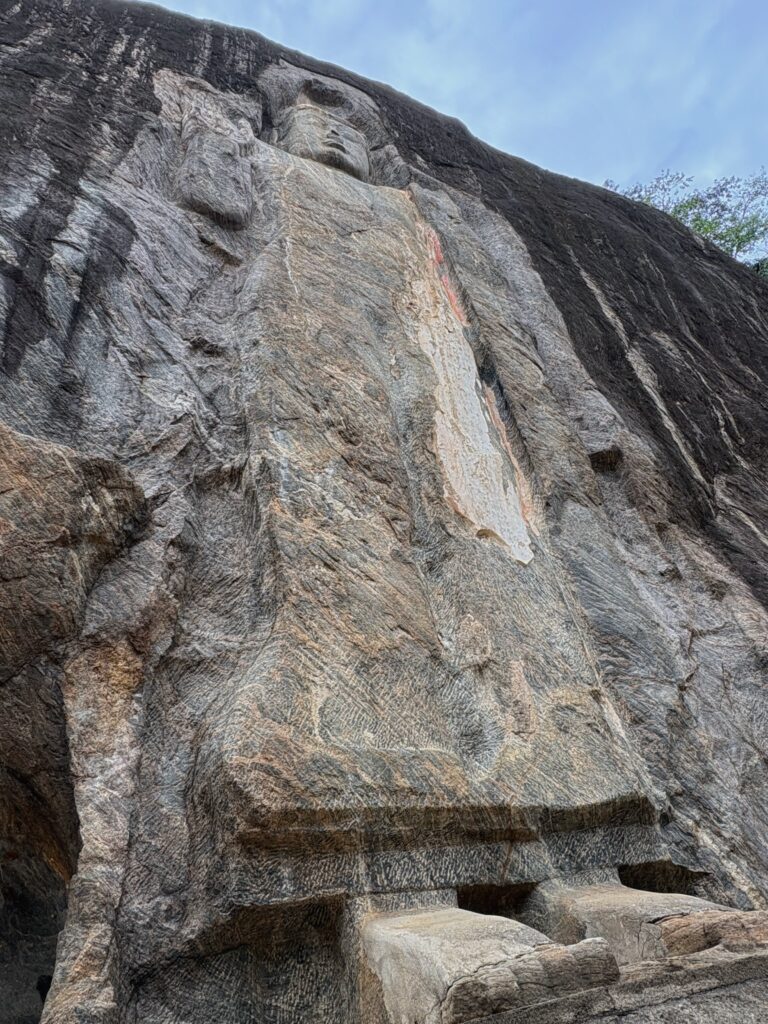
With our time in Sri Lanka winding down, we were on our way to Sri Lanka’s south coast for the final leg of this wayward adventure. Along the route, we passed several waterfalls and admired the coastal plain unfolding below us during the descent. We made a brief detour to visit Buduruwagala Temple, home to Sri Lanka’s tallest Buddha statue, standing 16 metres tall. Having descended from the mountains, the rain finally abated, and sunny breaks began to appear in the clouds.
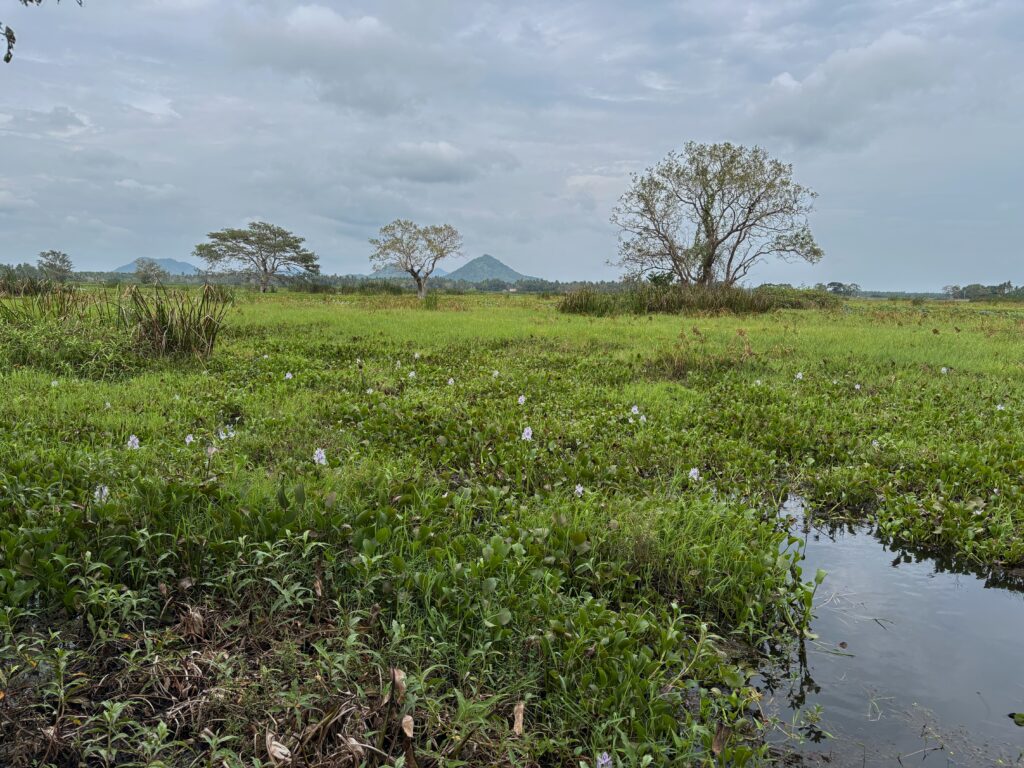
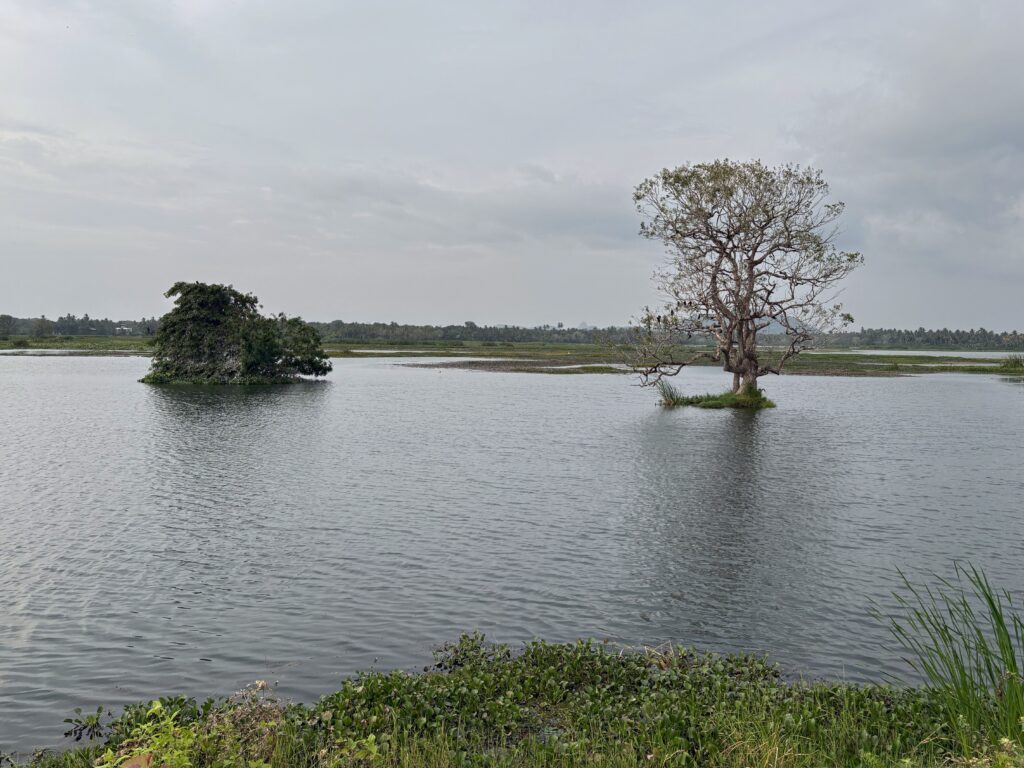
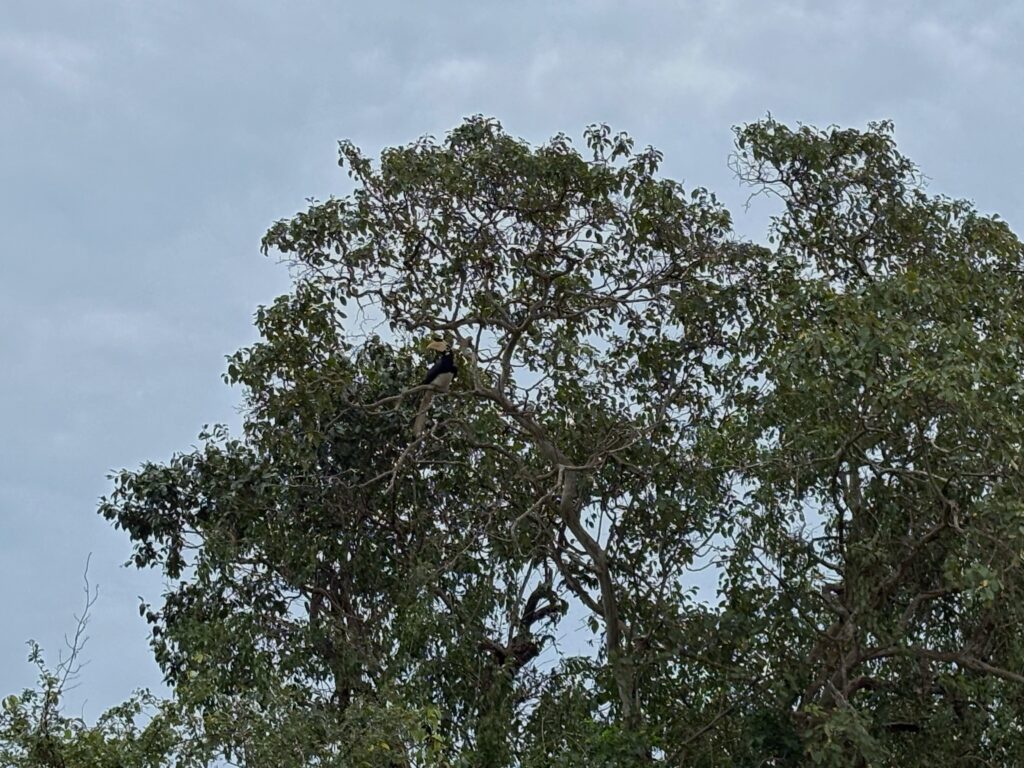
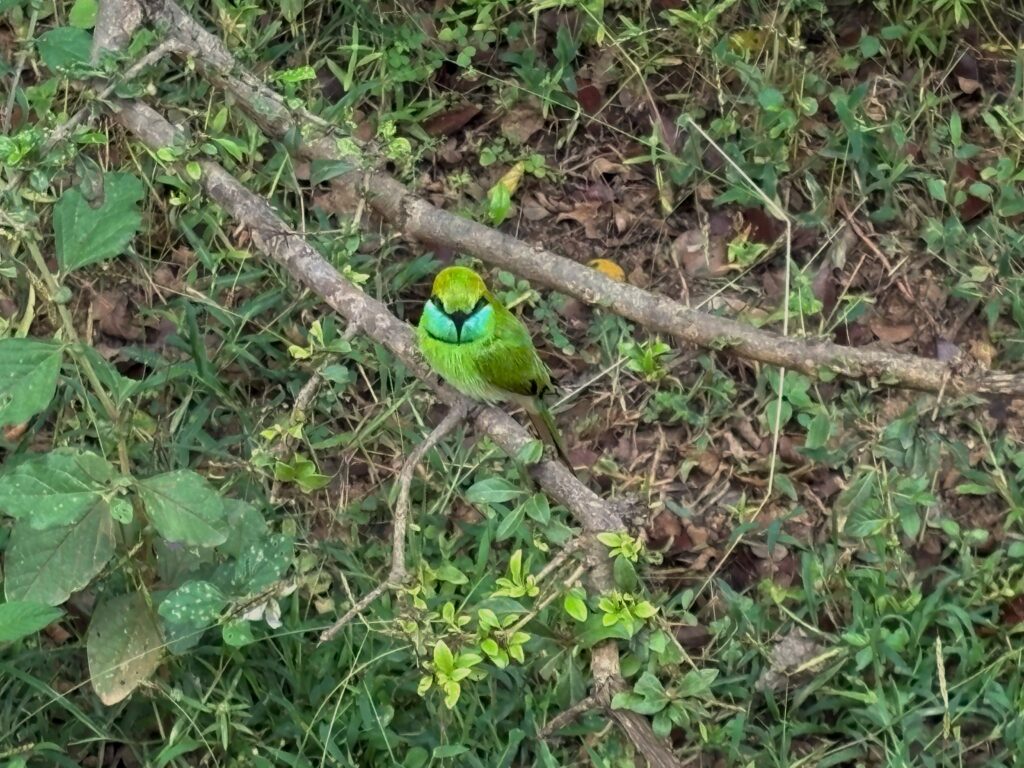
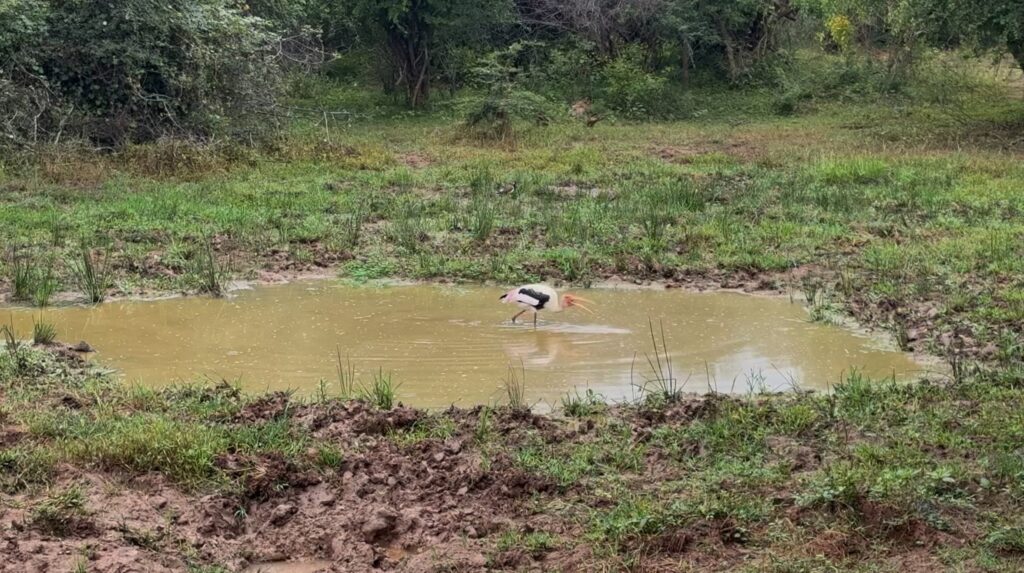
By early afternoon, we arrived at our accommodations for the next two nights, the New Cormorant Lake Resort, where we would base ourselves for a full-day safari in Yala National Park the following day. Our host, Gayan, not only booked our safari at a very reasonable rate, but also included several complimentary excursions and restaurant transfers on our first evening, which was an unexpected bonus. The first excursion was a tuk-tuk–based sunset trip around Cormorant Lake and another nearby shallow lake to spot endemic and overwintering birds in the region. During frequent stops, we spotted numerous species, including rare songbirds, large fruit bats, Malabar hornbills, kingfishers, various waterbirds, and a few freshwater crocodiles.
The second excursion involved me and our guide jumping on his motorbike and heading around the lakes in search of the Indian fishing cat. These cats are slightly larger and stockier than the common house cat and, as the name implies, their predominant prey is small fish caught along the lakeshore at night. With high-powered lights, we scanned the shoreline for the tell-tale reflection of bright eyes. We hunted hard until just past midnight when we finally spotted one in the distance, stalking along the waterline.
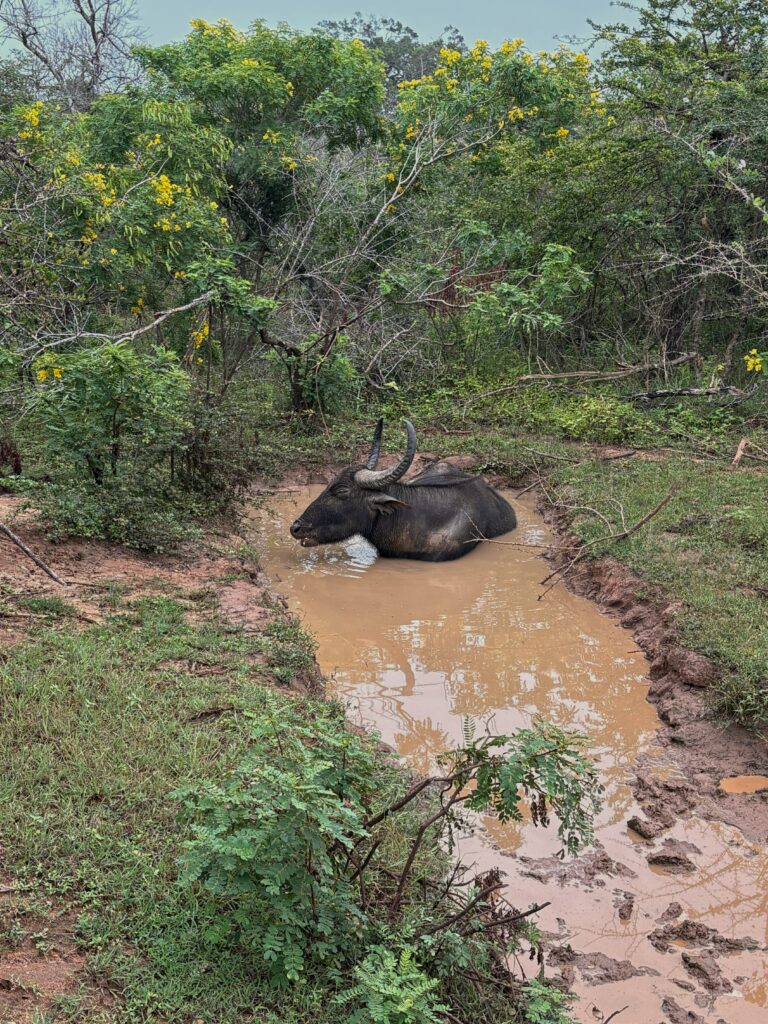
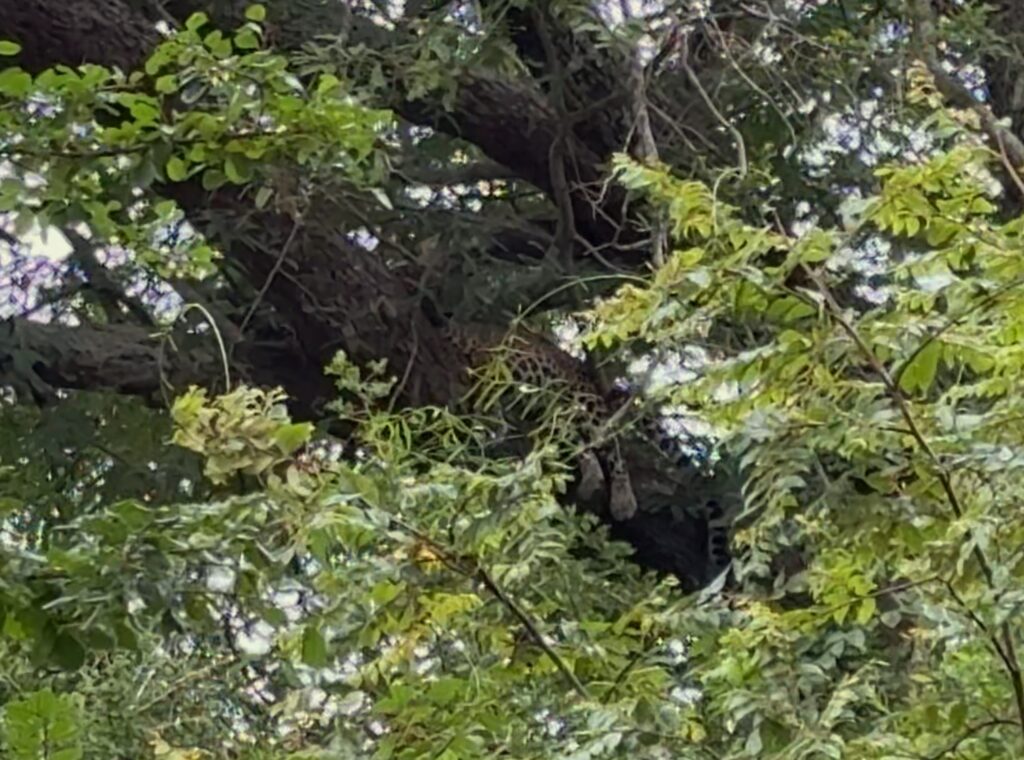
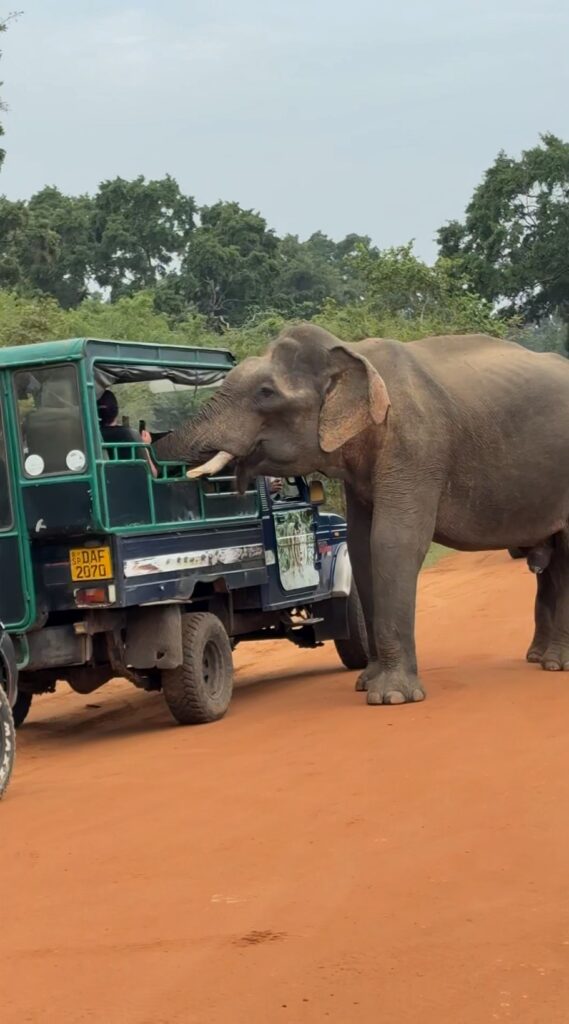
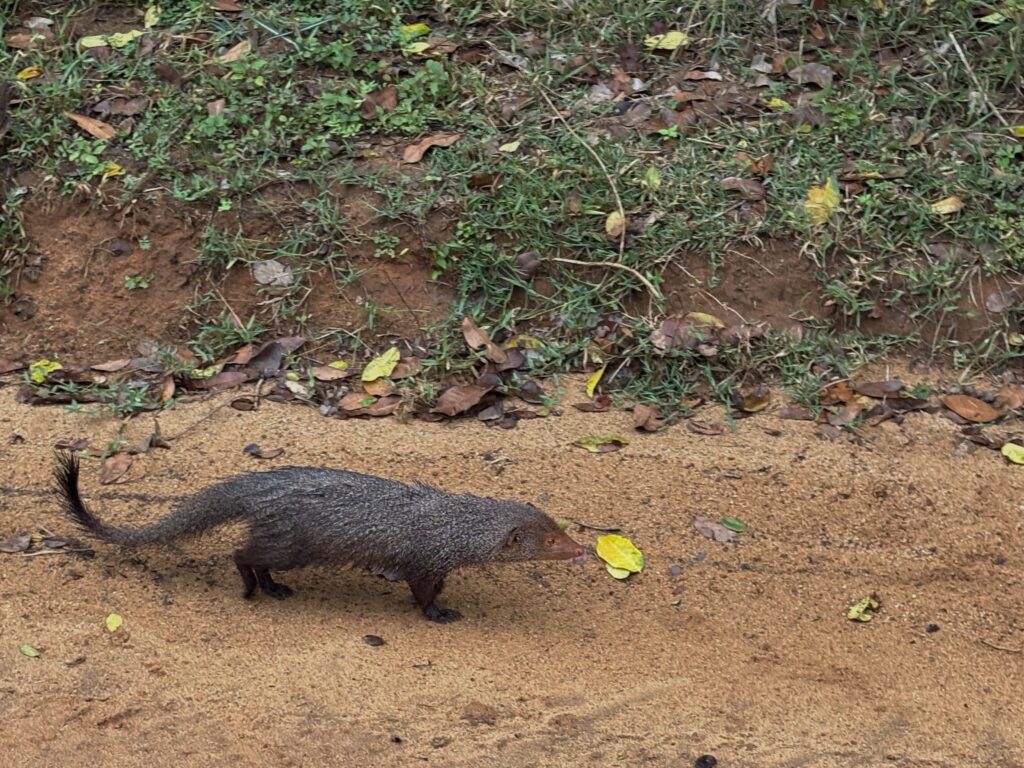
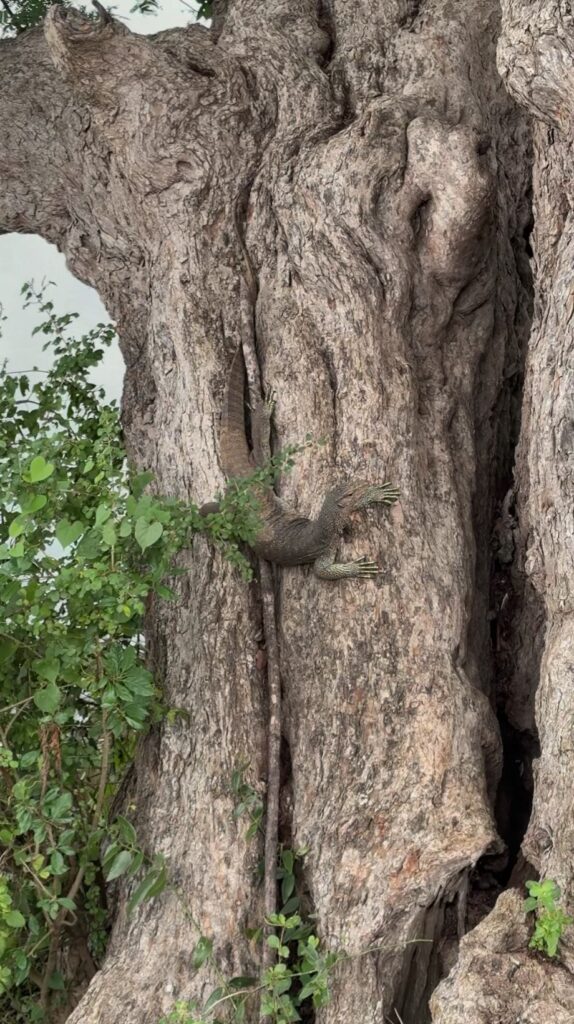
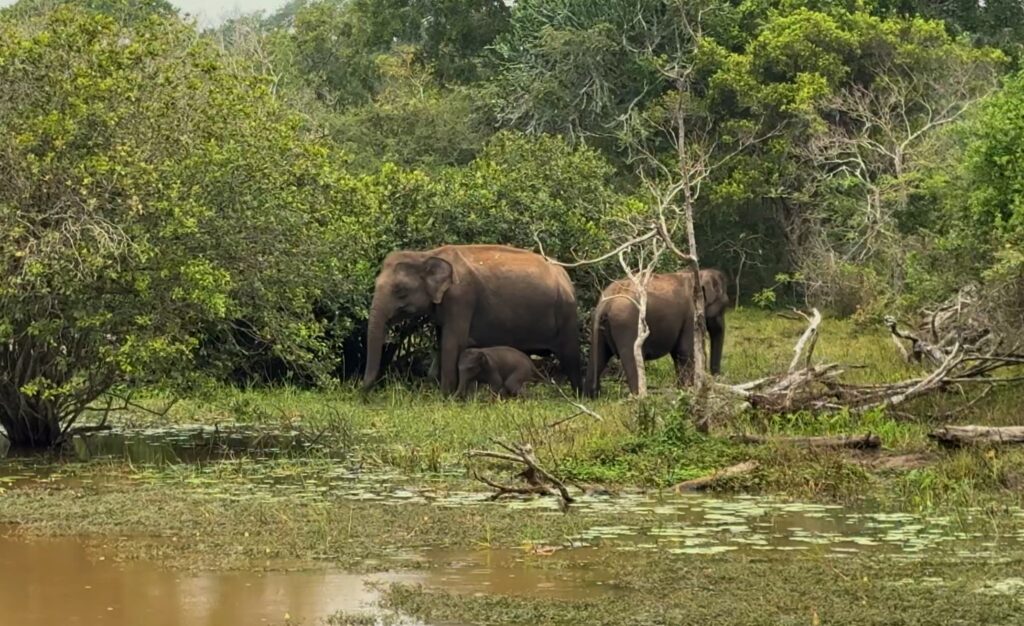
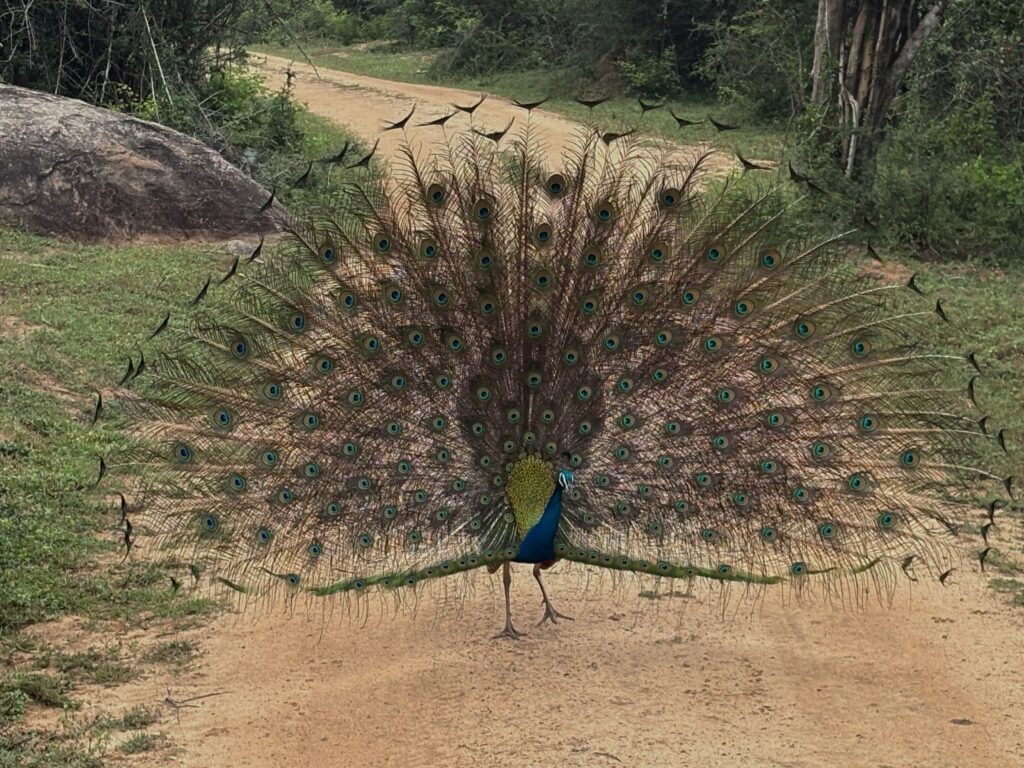
Morning wake-up came much too early with a quick 4:15 a.m. tea before loading into our safari truck for a full-day safari in Yala National Park. After picking up another couple from the Netherlands, we were off to the park gates to await the 06:00 opening in a growing line of vehicles. As dawn broke, we entered the park and soon spotted a golden jackal, chital deer, and a glimpse of a baby elephant. Although the park was busy, the safari produced wildlife sightings every few minutes, including sambar deer, notable bird species such as fishing eagles and crested serpent eagles, two leopards, and a particularly bold elephant.
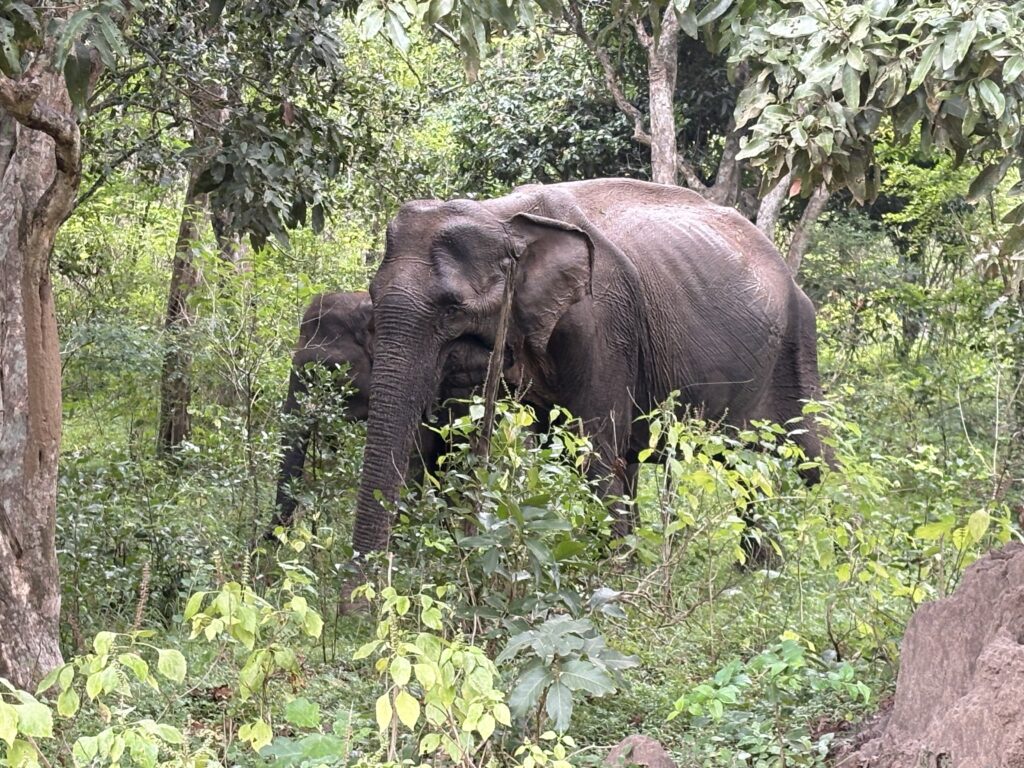
Both leopard sightings revealed the cats resting lazily in the crooks and branches of large trees. The large bull elephant moved from vehicle to vehicle, vigorously searching for food with his long trunk. When our driver saw him approaching, he quickly had us pass our packed lunches and day packs into the safety of the cab and out of the reach of the marauding elephant.
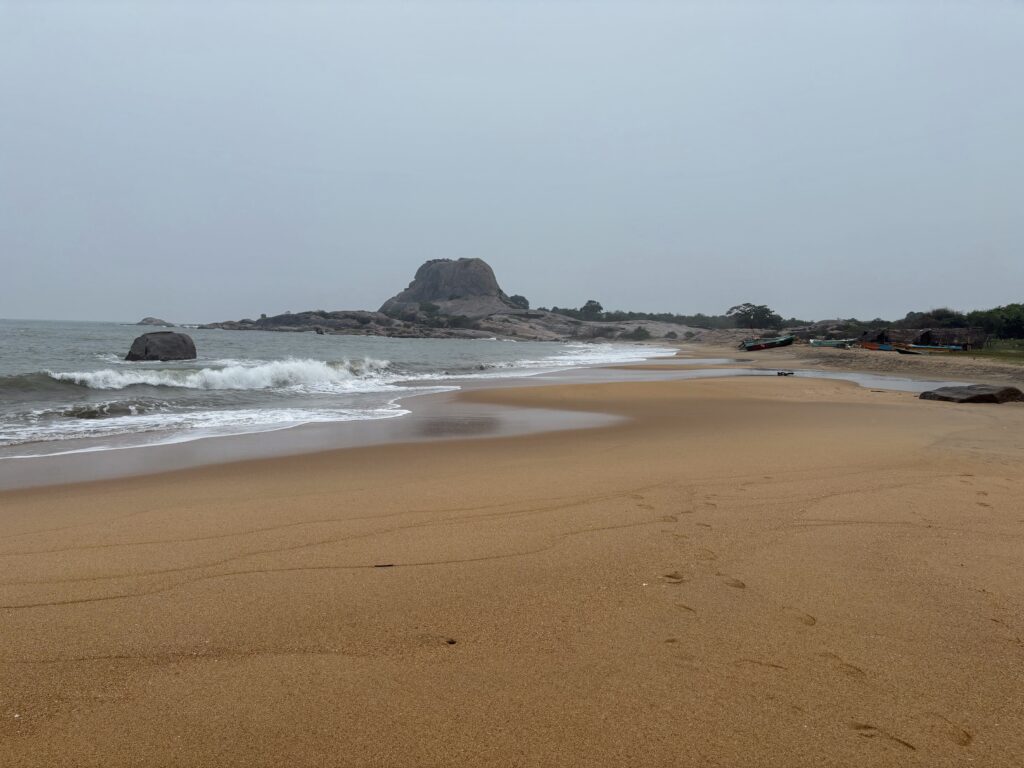
After the morning’s excitement, we headed to the designated coastal rest area for coffee, breakfast, and a bathroom break. The stretch of sand and surf made for a stunning setting — a surreal backdrop for a safari stop. Being on safari in such an idyllic location reminded me of Namibia’s coastal parks, but lush and green instead of stark desert. After the break, wildlife sightings continued, including another leopard in a tree — the closest of the three. We also had another close elephant encounter with a bull intent on inspecting our vehicle for snacks.
As the elephant reached into the truck with its trunk, gripping a small branch, a terrified Mylo retreated to the back row, fearful of being jabbed by the bull’s protruding tusks. Curious now, the elephant probed after him with its trunk, apparently convinced he was hiding food. The look in Mylo’s eyes will be forever imprinted in my mind and gives me something to razz him about for years! The elephant then turned its attention to our Dutch friends before finally investigating me. I was videotaping the whole encounter and elated as he probed then laid his rough yet surprisingly sensitive trunk across my lap — a magical encounter I will never forget.
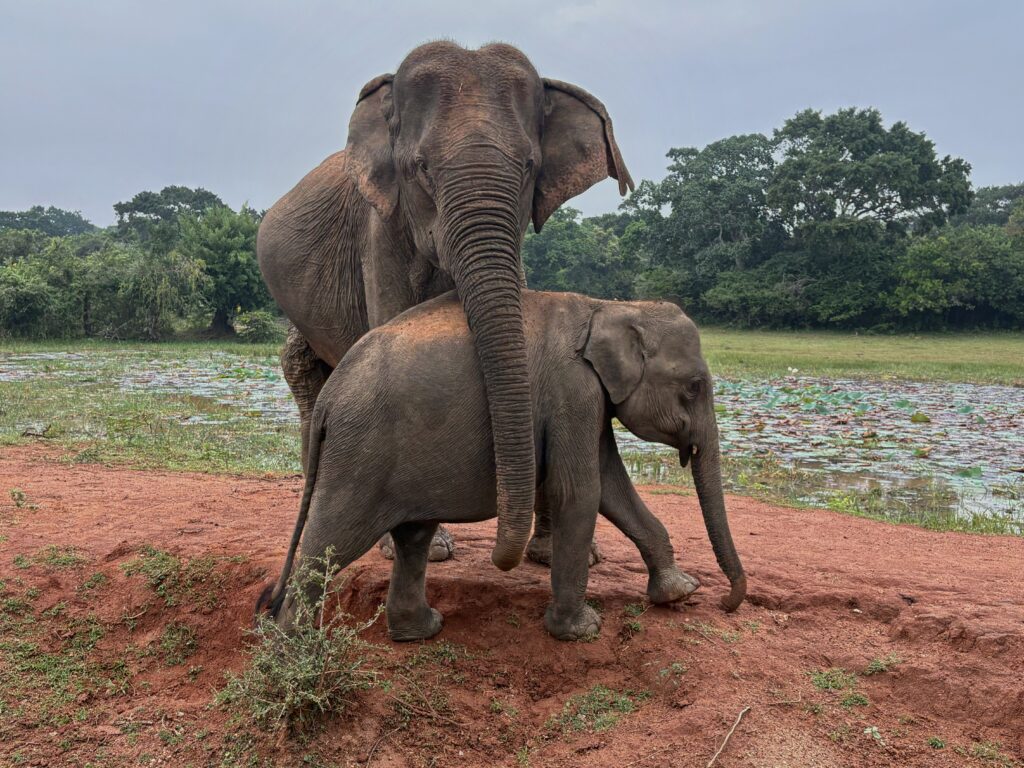
We later returned to the beachfront rest area for a two-hour lunch break, which gave us time to wander north and south along the shore, stretching the boundaries of the warning signs just a little. The thrill of strolling along a tropical, surf-wracked beach — knowing that an elephant or leopard could emerge at any moment — was pure adrenaline. In the afternoon, we explored a new section of the park, adding more species to our growing list while admiring rock outcrops, open plains, and lotus-dotted waterbodies. Although we had no further intimate leopard encounters, the day remained exceptional, highlighted by numerous elephant interactions, including small herds with calves playfully bathing in waterholes.
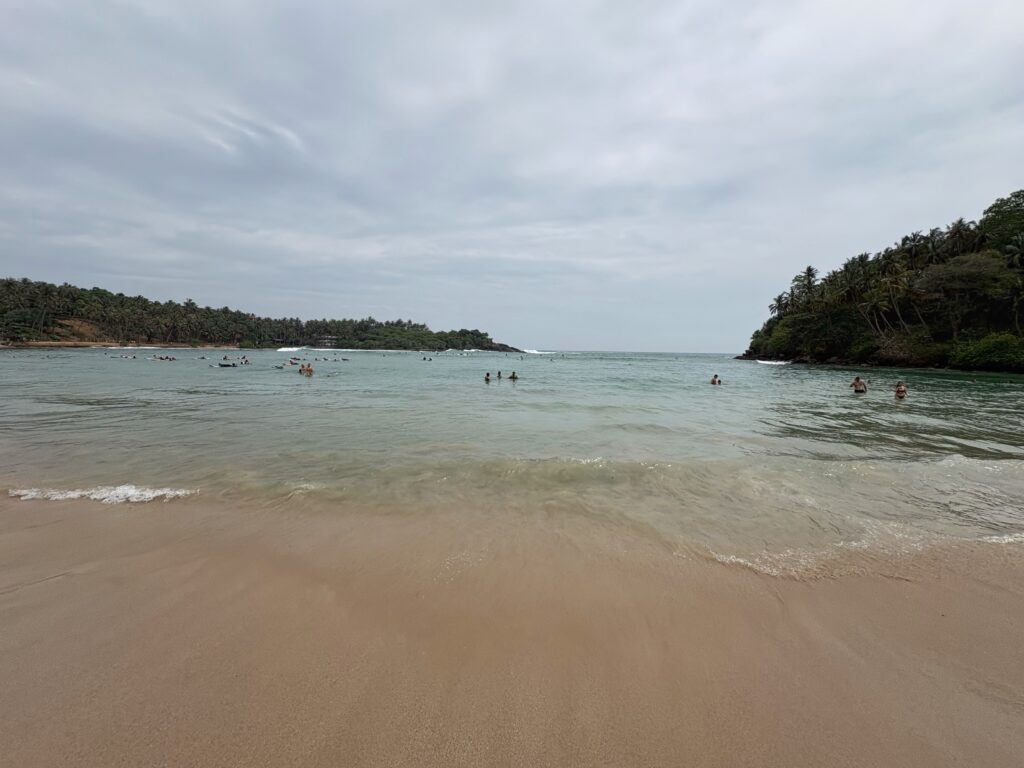
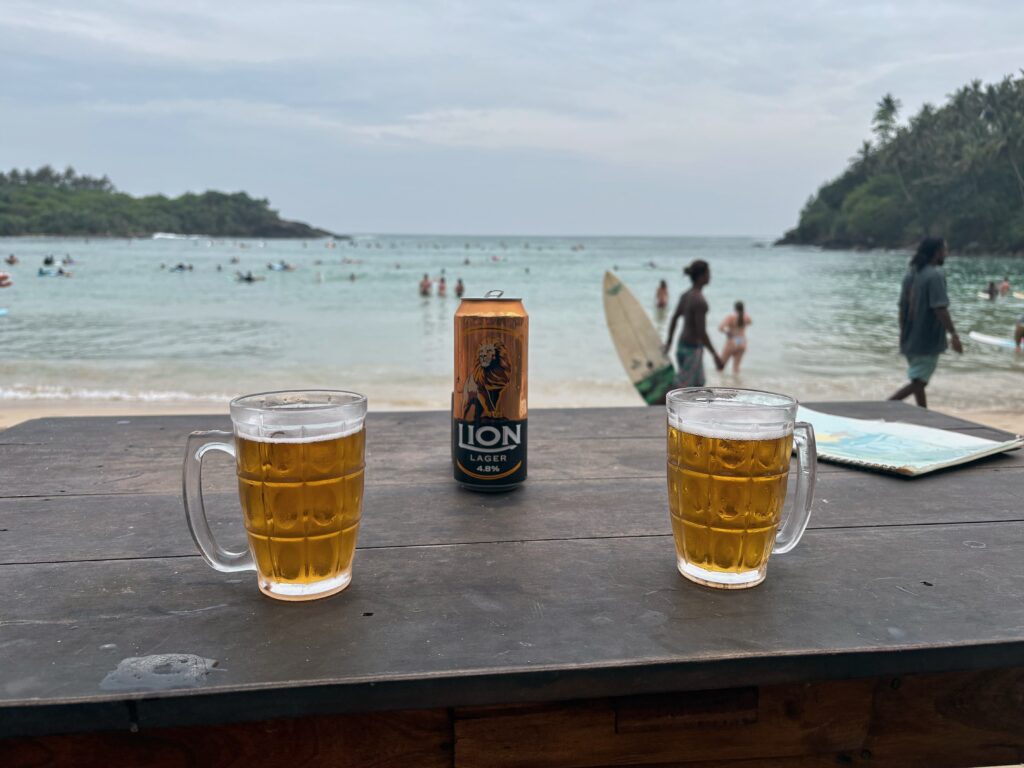
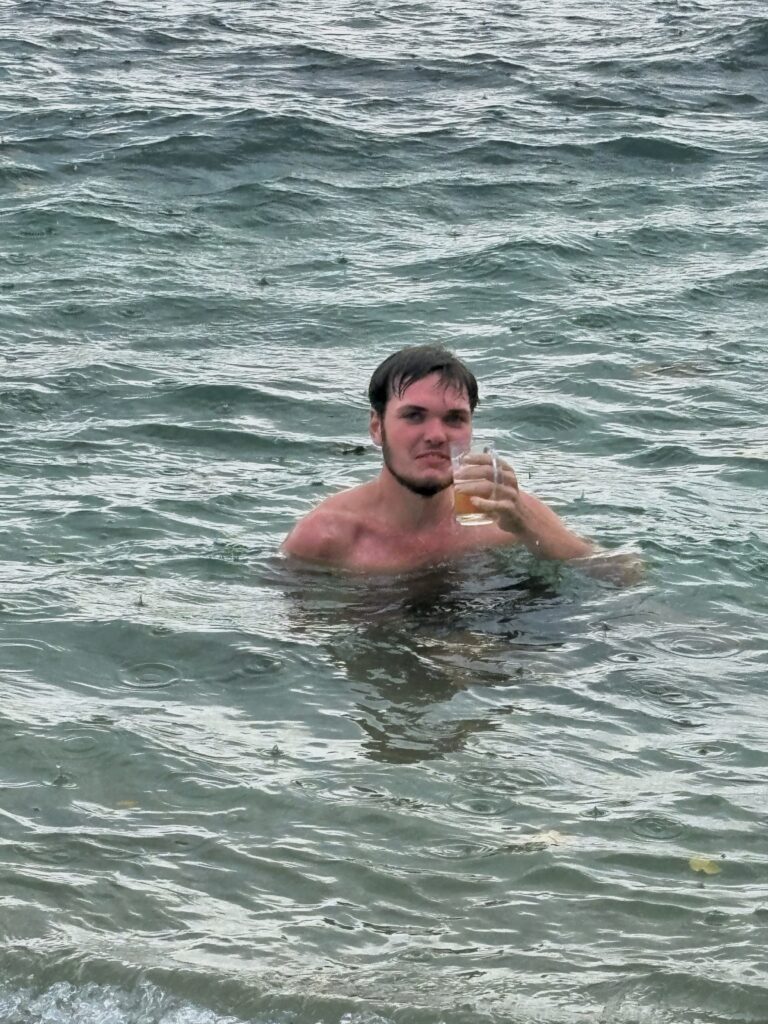
The next morning, we began exploring Sri Lanka’s south coast beaches. Our first stop was picturesque, horseshoe-shaped Hiriketiya Beach, popular with beginner and intermediate surfers. Mylo eagerly rented a surfboard at rates that seemed impossibly cheap by Canadian standards and was soon “crushing” the waves — at least by his own assessment. I prefer surf kayaking or paddleboarding with kayak paddles, but since those weren’t available, I joined the throngs for swimming and some body surfing. When we’d had enough, we settled onto the narrow, lively beach for cold beers and music.
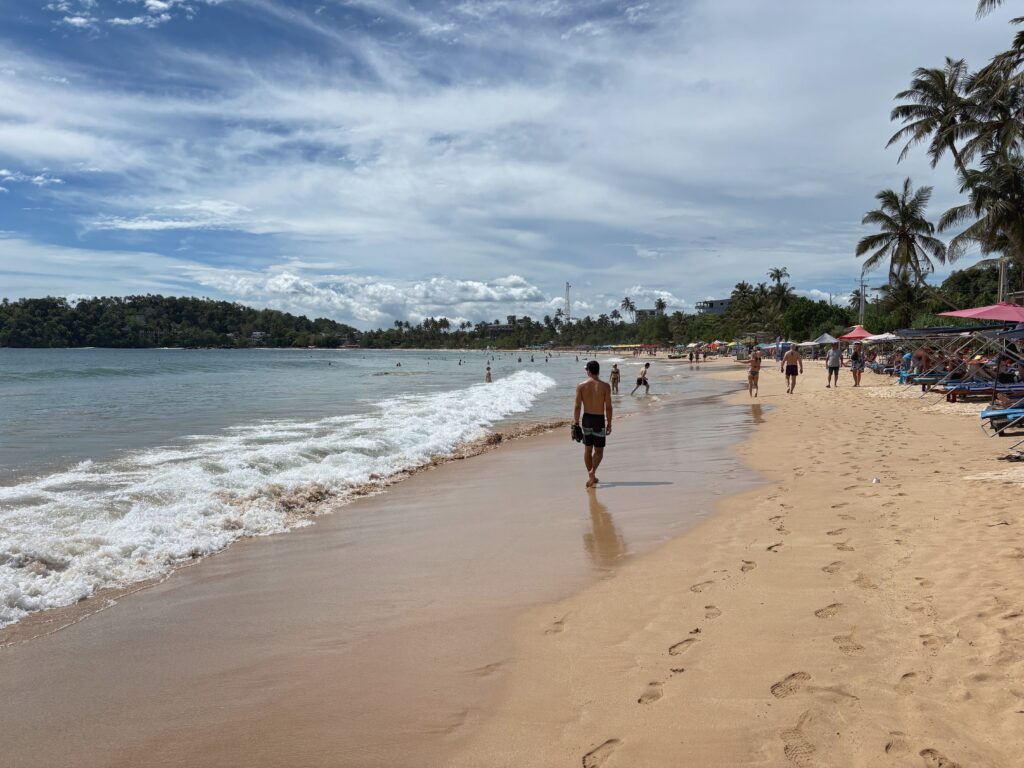
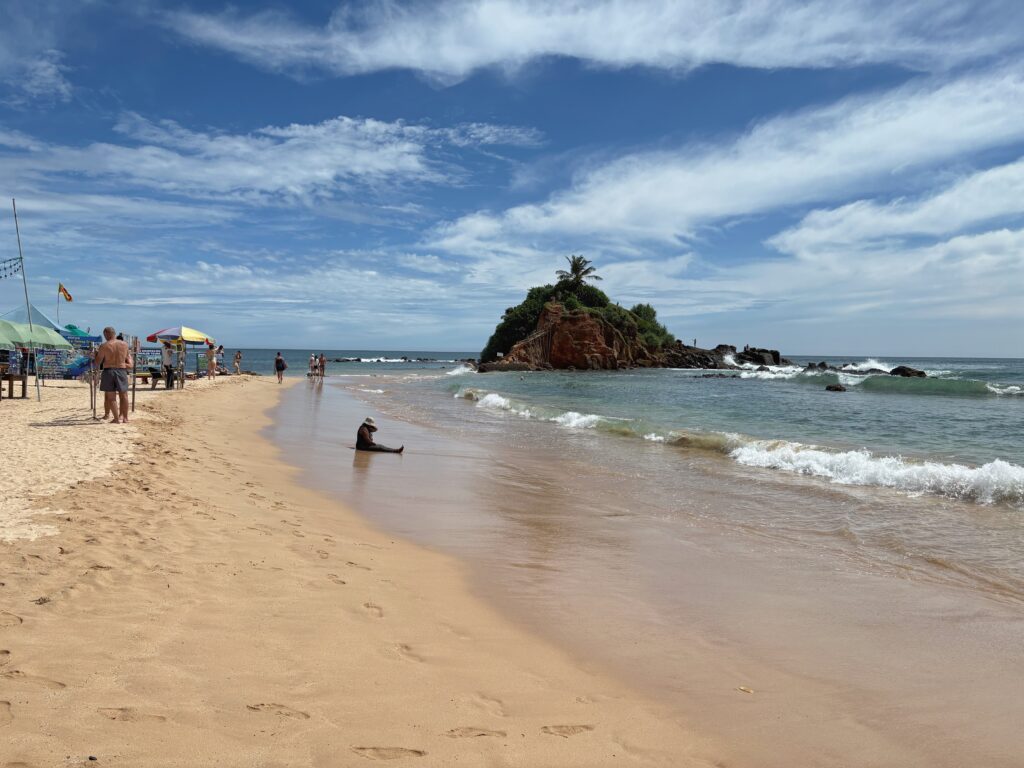
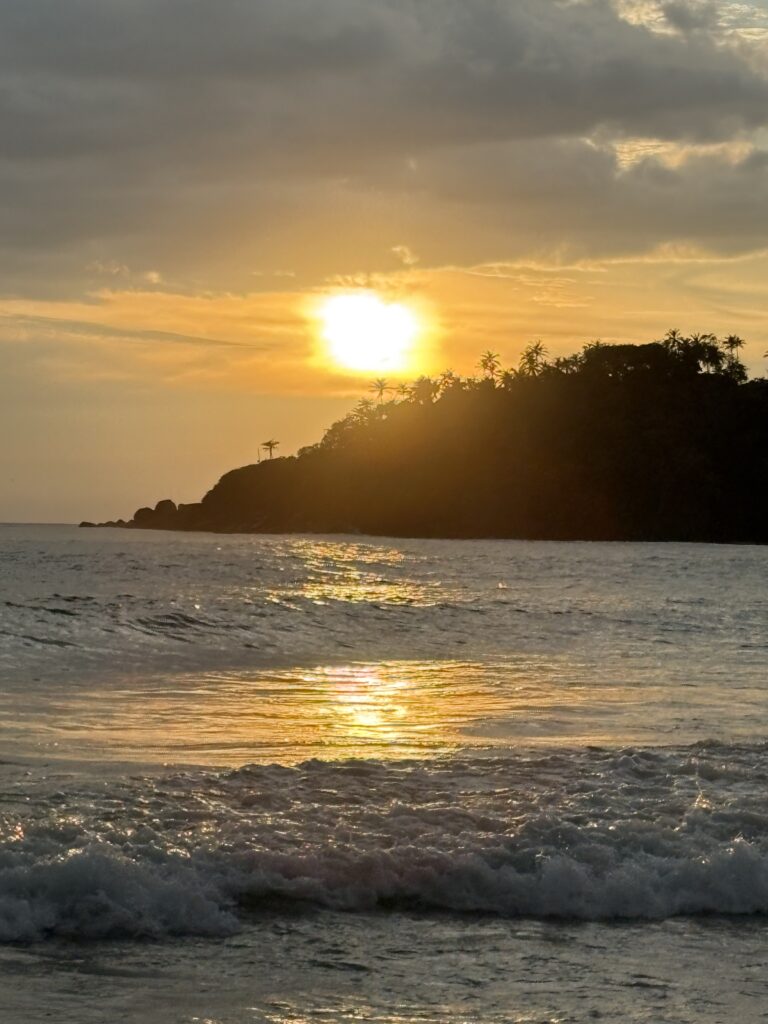
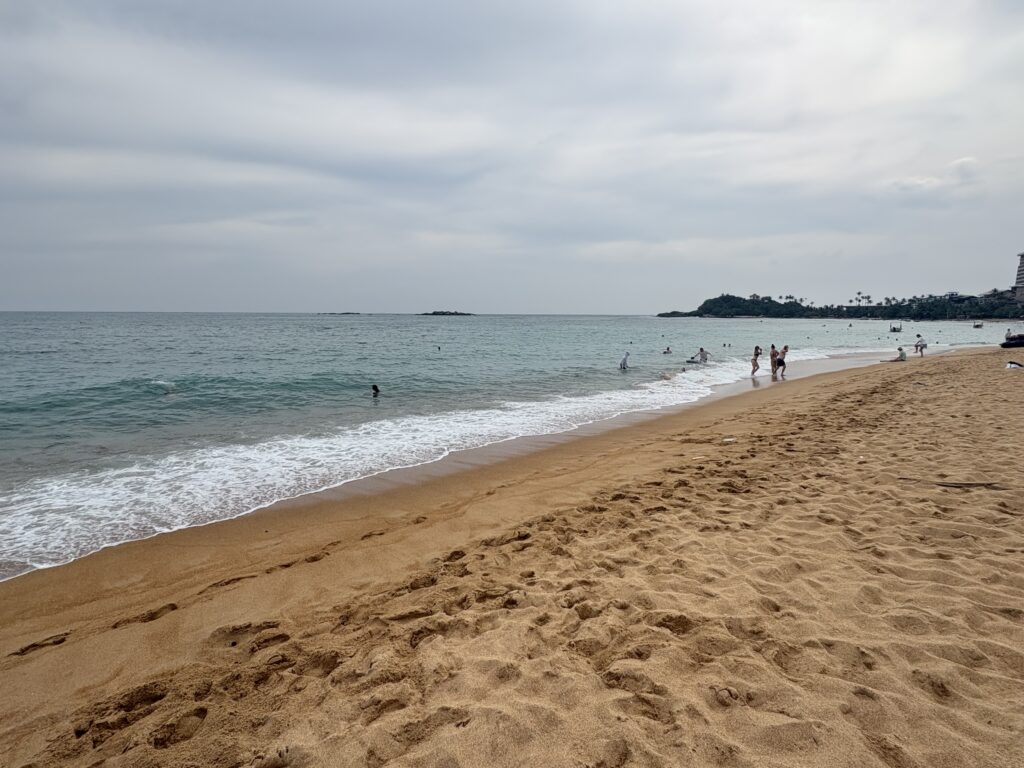
Sri Lanka’s south coast offers a plethora of beaches for every taste, so the following day we drove an hour farther west to Mirissa Beach, where we would spend three nights. We wandered along its two kilometres of golden sand and gentle surf before retreating to beachside eateries to sip cold drinks and cool off with intermittent swims in the 32-degree heat and heavy humidity. We continued sampling coconut curries and devilled prawns throughout our stay, each meal seemingly better than the last.
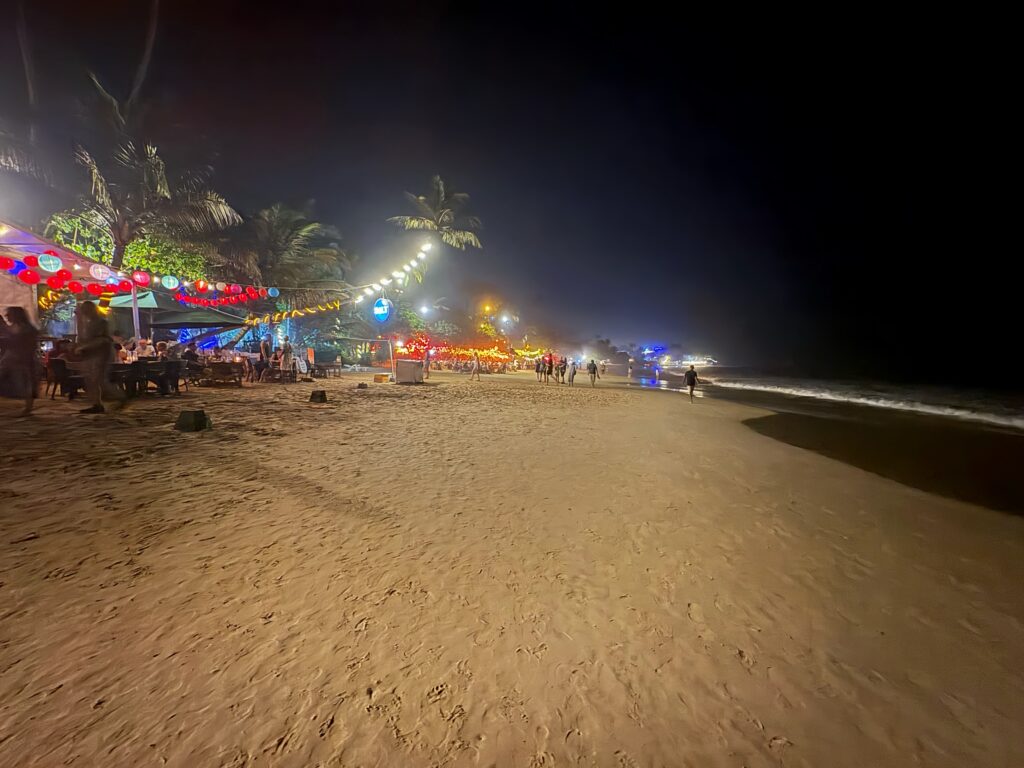
That evening, after sharing a small bottle of Arawak, a locally produced cane spirit, to break from the usual beers, we joined the nightly beach party. Fireworks, Klieg lights, and lasers signaled the chosen venue, drawing everyone toward music and dancing under the stars.
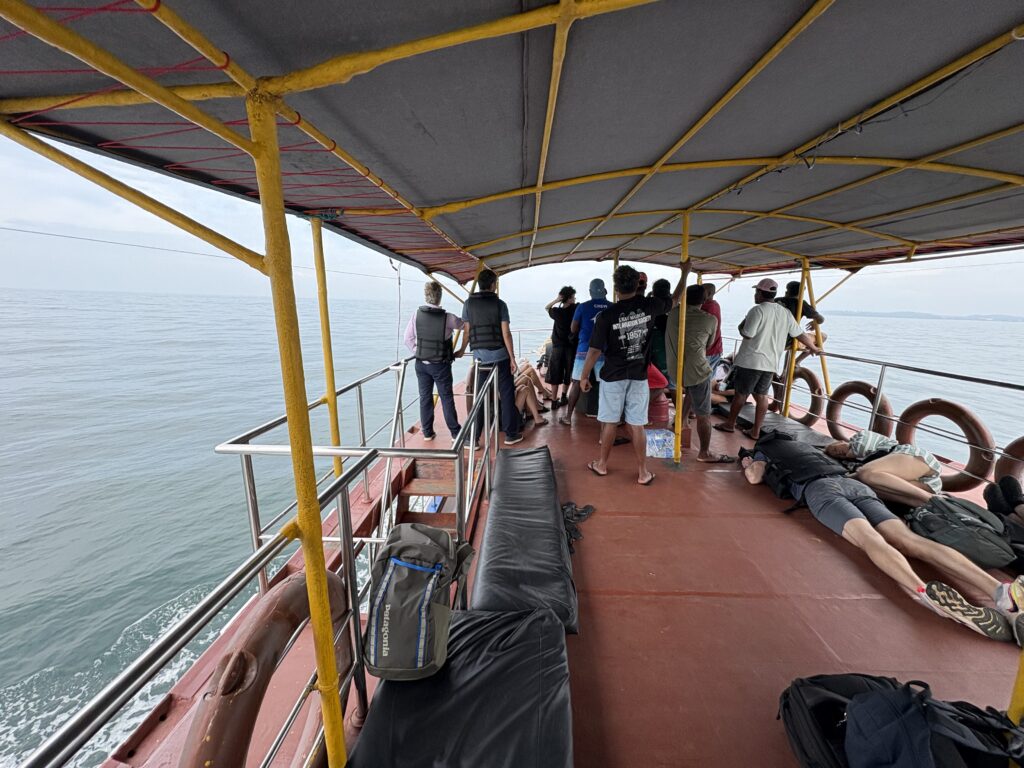
Our 6:00 a.m. whale-watching pickup came too soon after the late night festivities. Slightly worse for wear, we boarded the two-deck vessel bound for deep offshore waters in search of the blue whale. The swells rolling north from Antarctica tossed the boat, sending a few passengers reaching for sick bags while we dozed. We awoke to cries of “dolphins!” and scrambled to the upper deck, gripping handholds to photograph a lively pod of spinner dolphins.
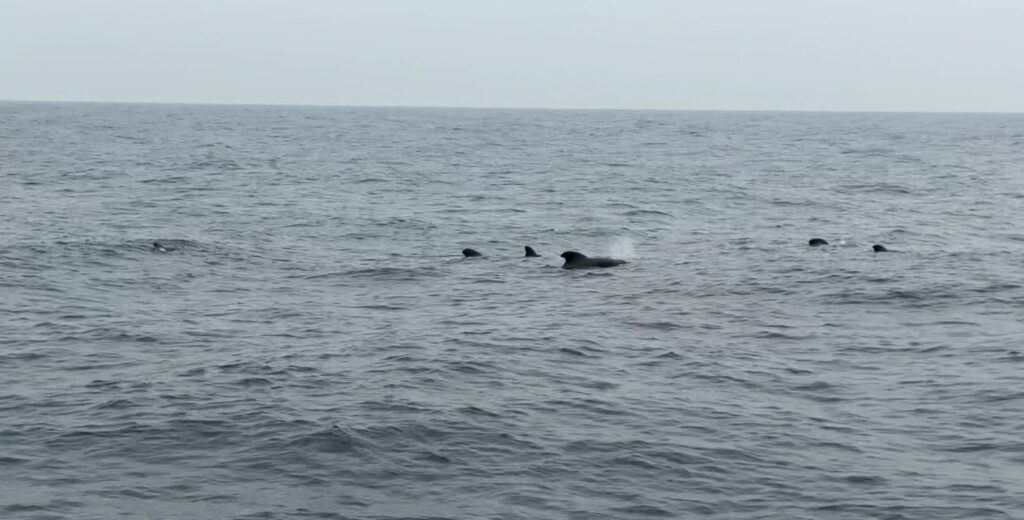
Soon after, we located a large group of pilot whales resting at the surface or spy-hopping to inspect the flotilla of whale watching boats. Bottlenose dolphins joined them, bow-riding and weaving playfully alongside us. Later, a local fisherman informed our crew of a blue whale surfacing nearby for the past hour, prompting a tense search for the unmistakable 30-foot spout. Despite waiting patiently — blue whales can remain submerged for over 30 minutes — the giant never reappeared. Though disappointed, we were grateful for the experience and the time spent scanning the vast Indian Ocean knowing the planet’s largest creature was somewhere close by.
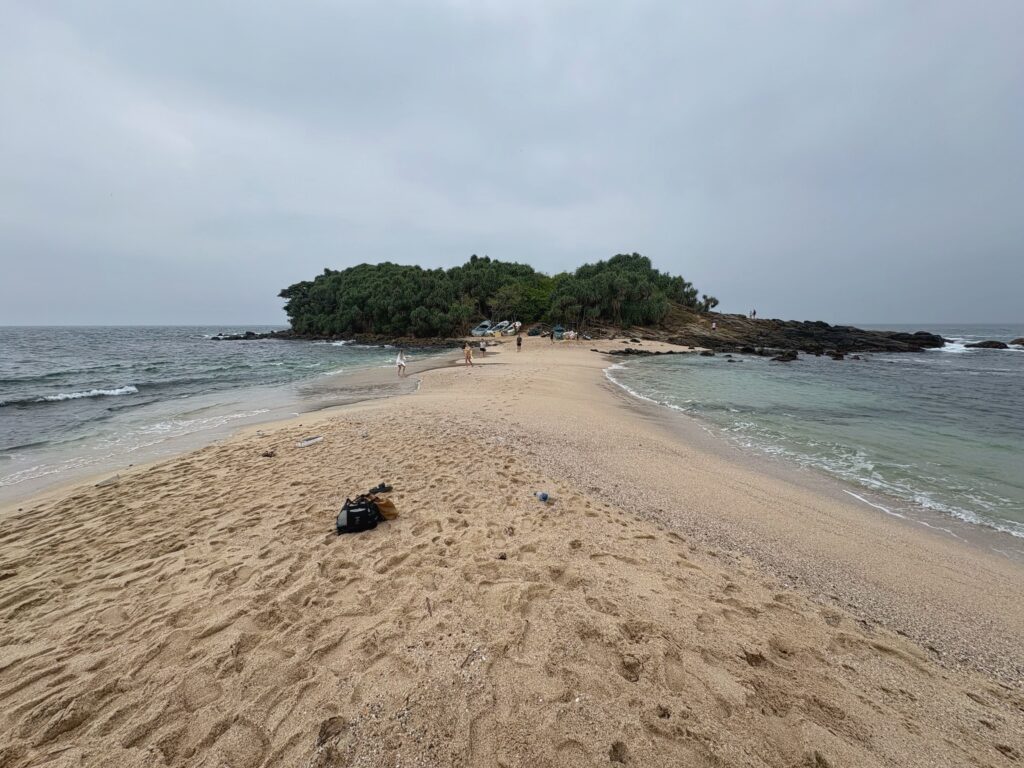
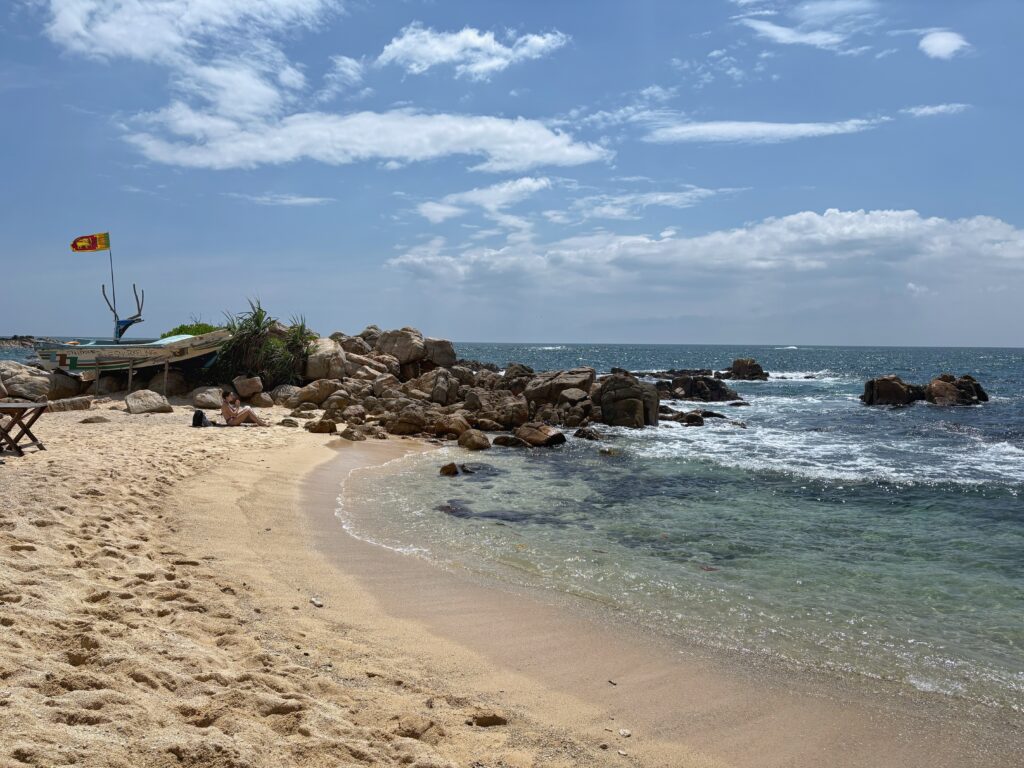
On our final full day in Mirissa, we visited Secret Beach, divided into two small coves by a rocky point. We relaxed on lounge chairs just steps from the water, alternating between cold drinks and snorkelling in the calm lagoon. That evening, we opted for Thai cuisine and were delighted by a prawn Penang curry and pad Thai that rivaled anything we’d tasted in Southeast Asia. My spice tolerance, well-honed over five weeks, was now strong enough to warrant extra chilies from the side bowl.
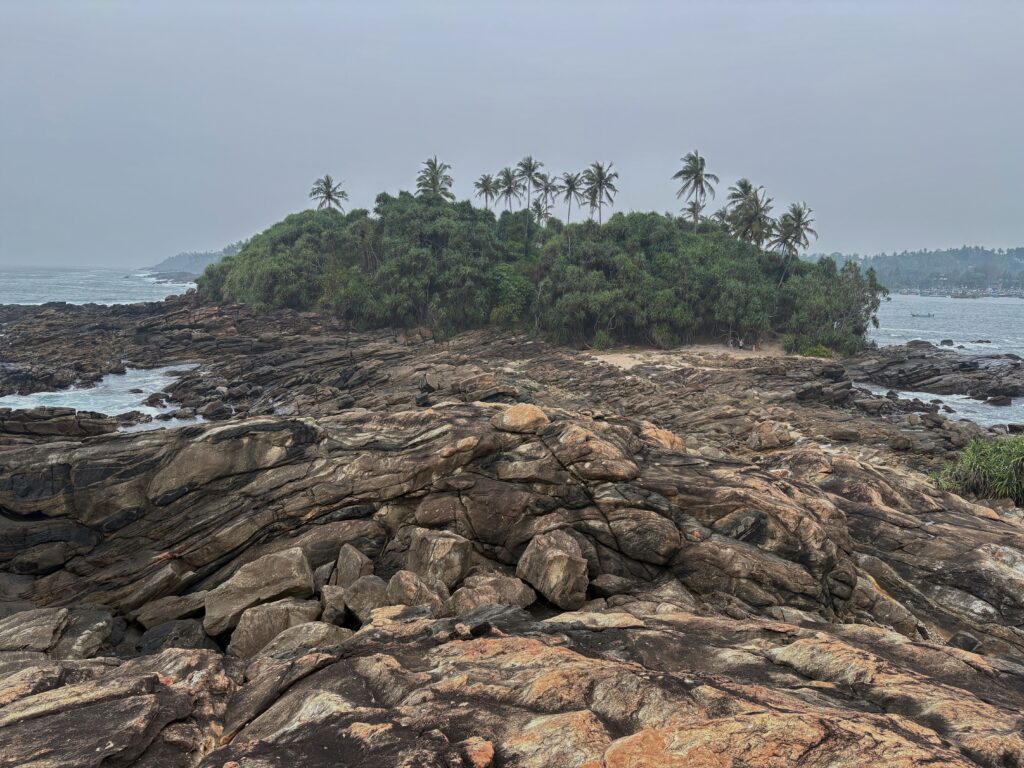
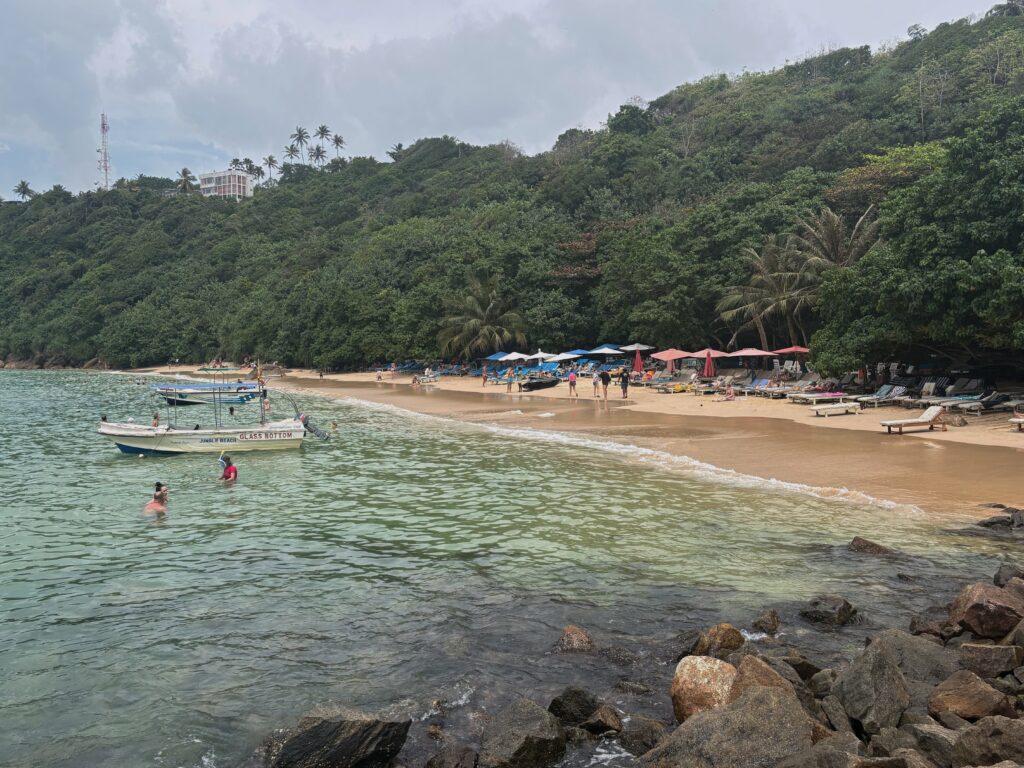
Our final destination was the historic fort city of Galle. After arriving early, we first visited Jungle Beach and then Unawatuna Beach, where I swam nearly three-quarters of a mile out to the snorkelling grounds of a rocky islet, reassuring amused paddleboarders I’d accept rescue if needed. Forty-five minutes later, I returned happily exhausted and ready for some well-earned beachside beers.
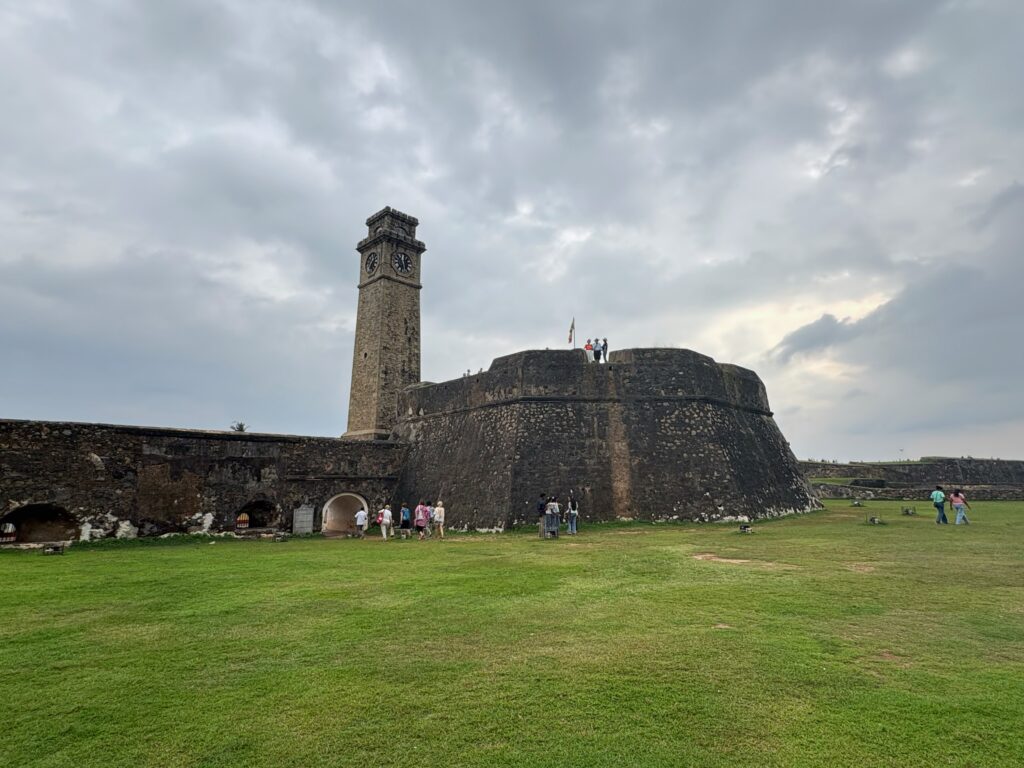
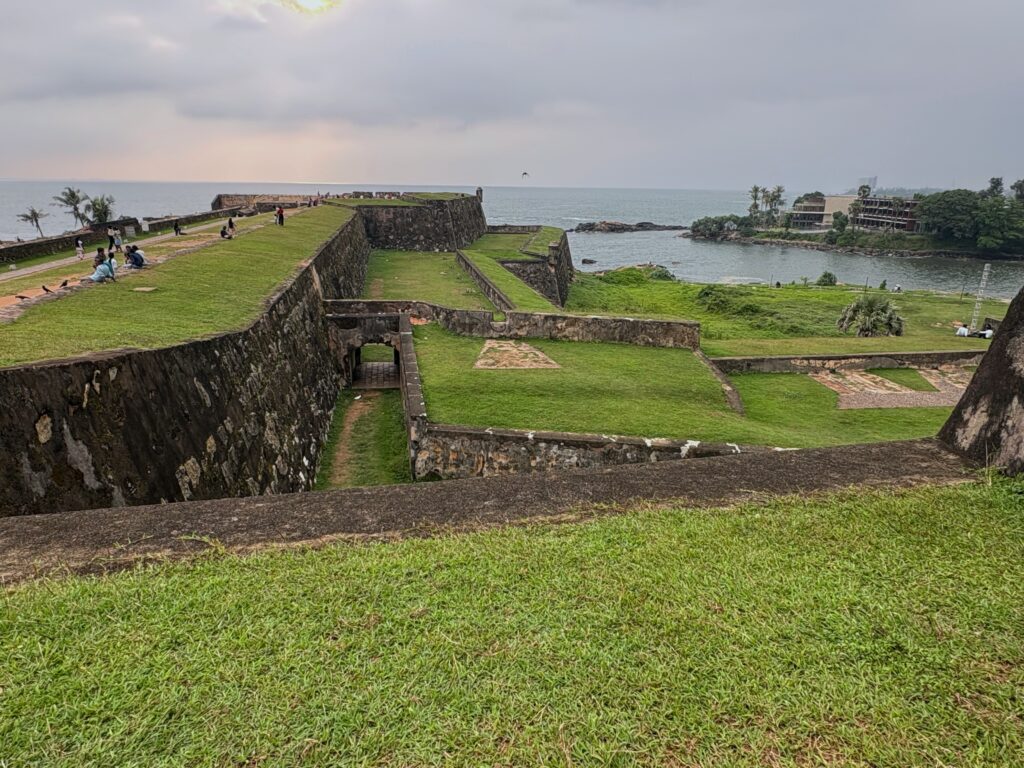
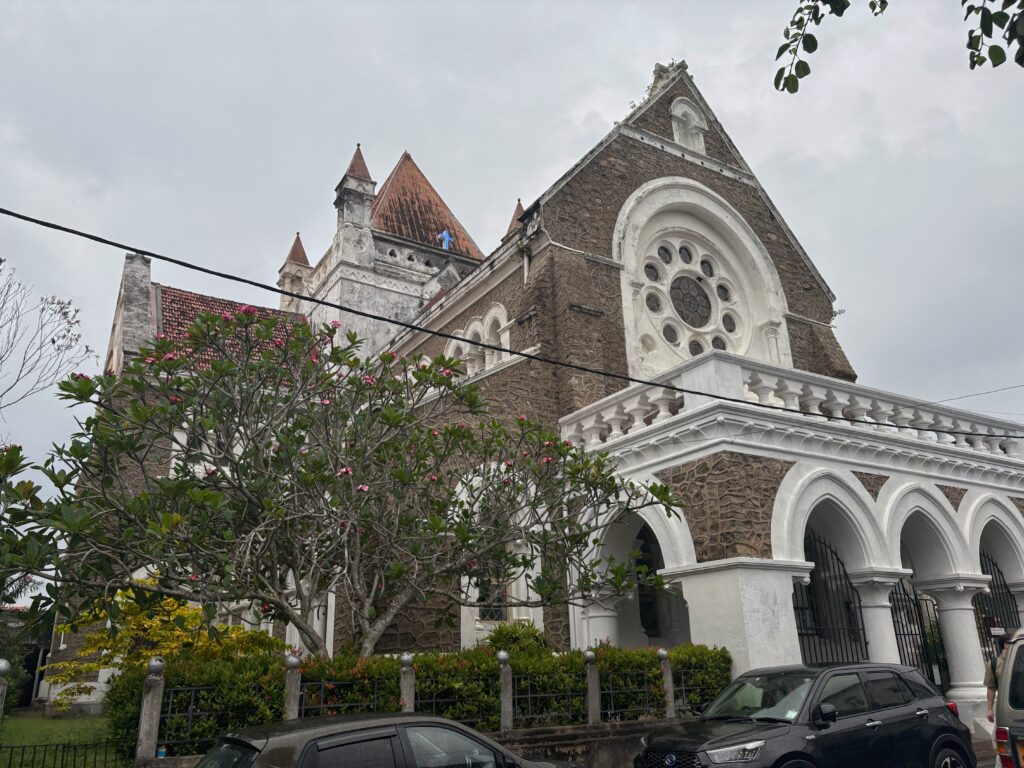
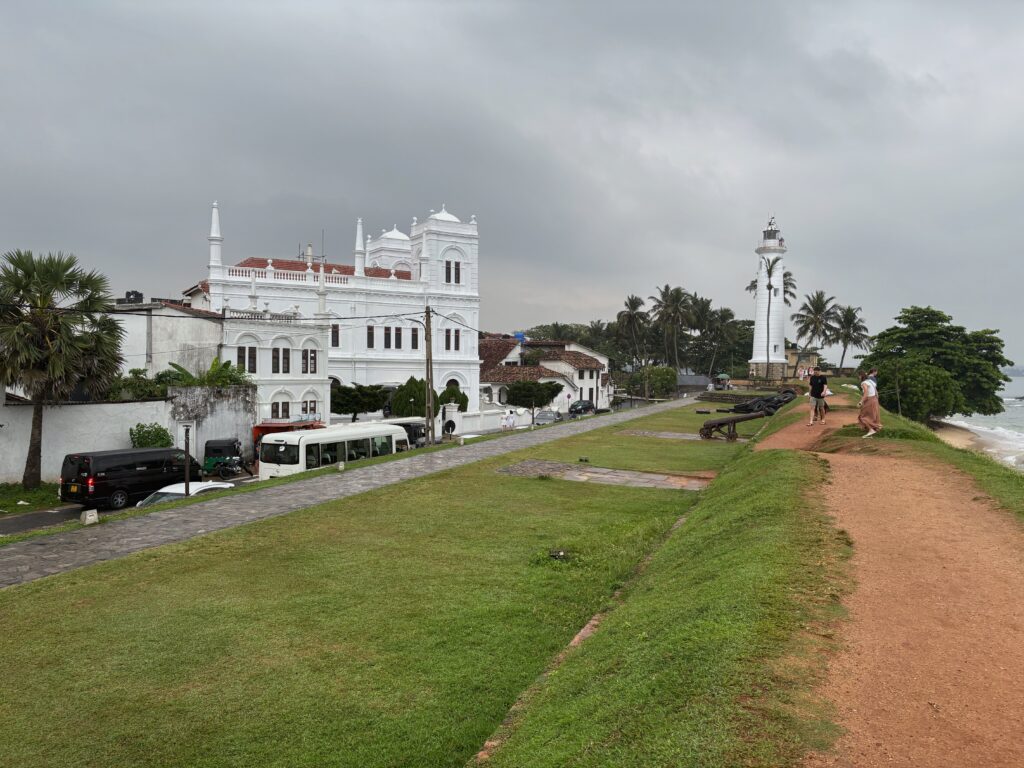
n the late afternoon and early evening, we explored Fort Galle, originally built by the Portuguese, expanded by the Dutch, and later controlled by the British. As daylight faded, we walked the ramparts overlooking the sea, admiring colonial architecture now housing boutiques and cafés. We finished at the lighthouse before enjoying a final indulgent jumbo prawn coconut curry.
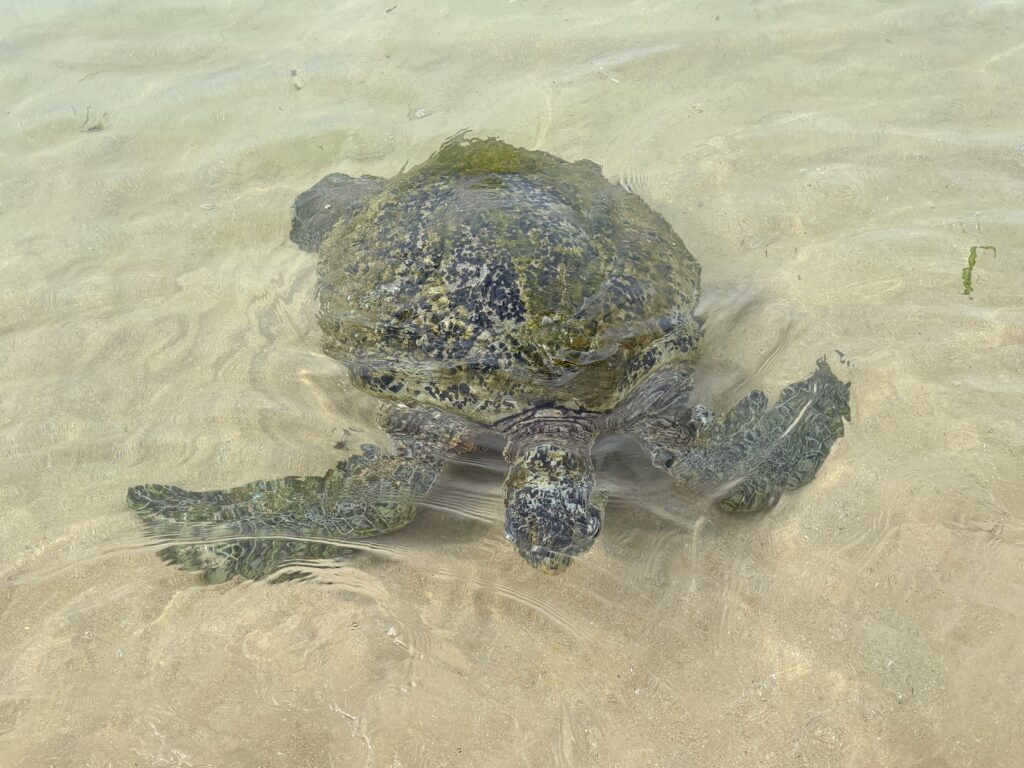
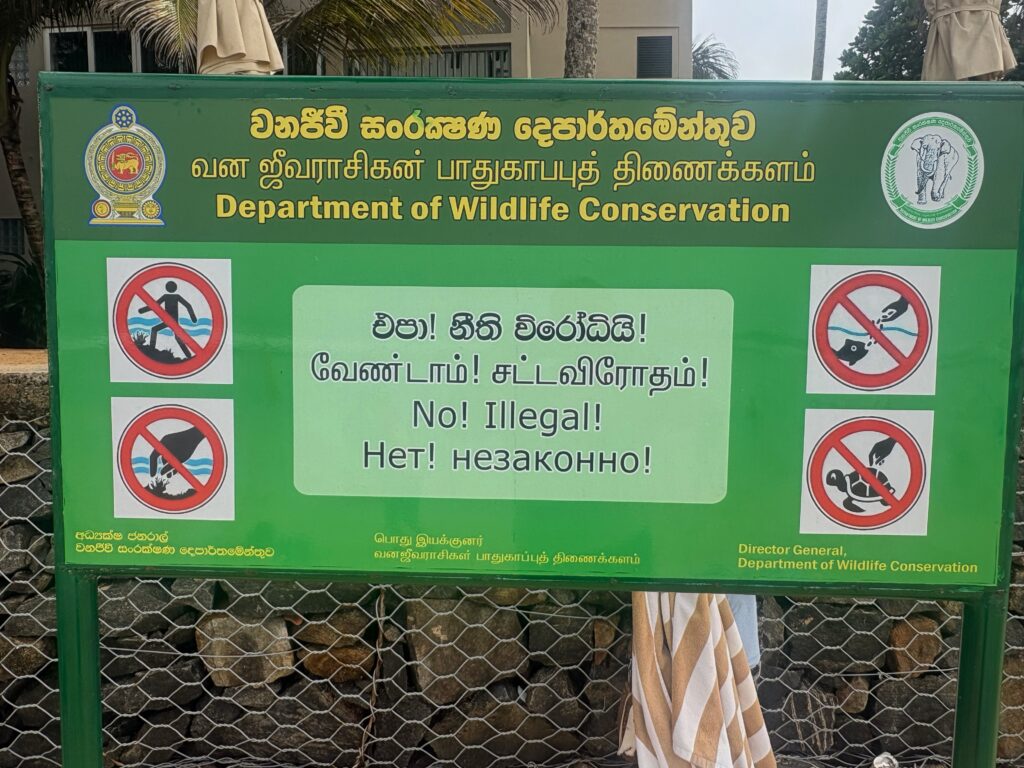
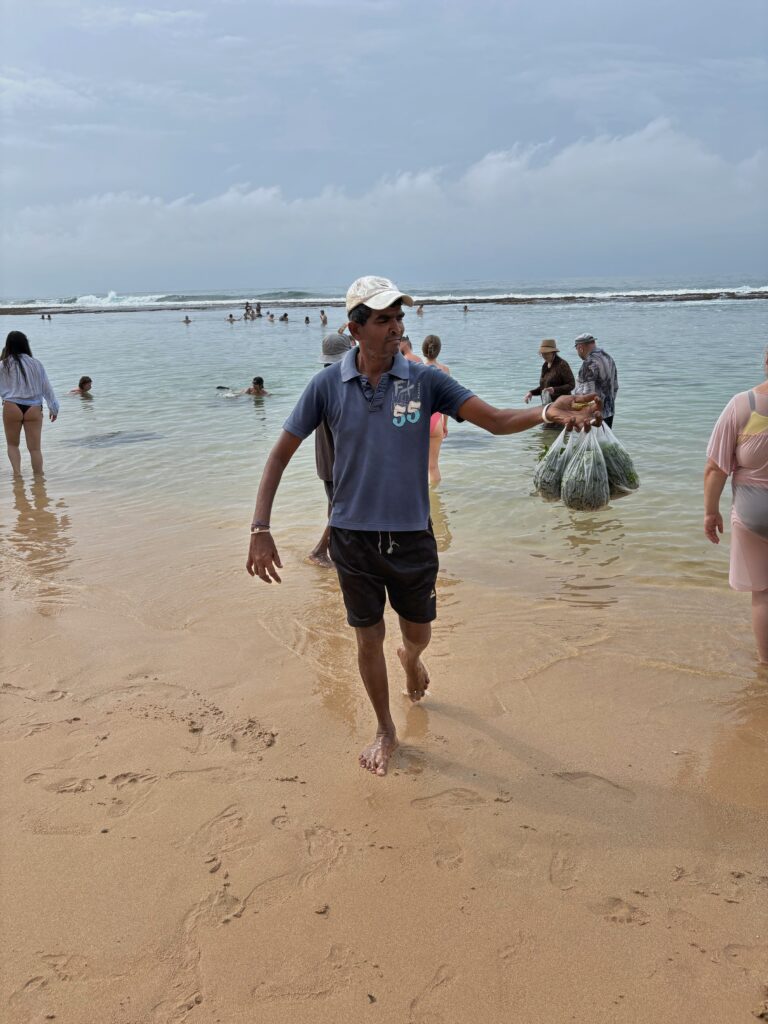
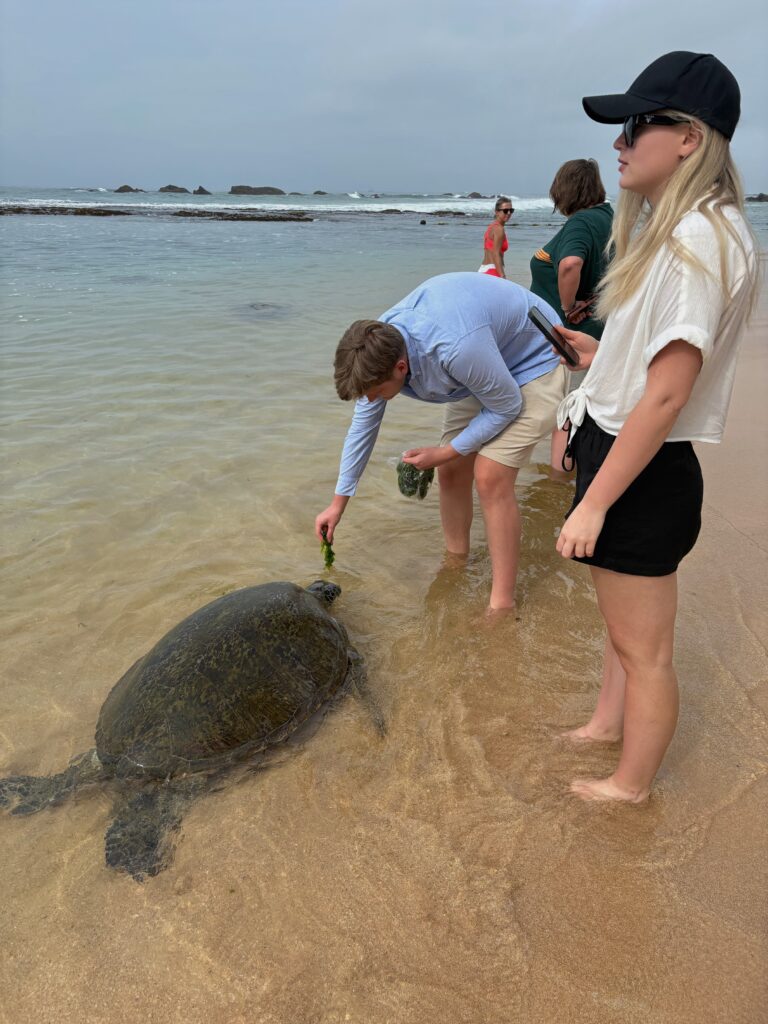
On our final morning, we rose early for one last beach outing, this time to Dalawella’s renowned sea turtle beach. Arriving before the crowds, we swam with and watched turtles grazing on the green seaweed in the shallow lagoon. Unfortunately, despite clearly posted prohibitions, some tourists were feeding and touching the turtles, encouraged by local vendors selling bags of sea lettuce. The vendors’ irritation at my photographing them suggested they were fully aware of the rules they were ignoring.
After a quick souvenir stop in Unawatuna, we showered and began the two-hour drive to Colombo airport to begin our journey home. During the drive, I reflected on my experiences and on the challenges the country has faced. Sri Lanka has endured immense hardship over the years — civil war, natural disasters, and economic strain — yet its people remain warm and optimistic. Our only regret was not having a few extra weeks to explore further and connect more deeply with its people. As always, the journey home brings a mixture of excitement and melancholy. Soon I will begin to cast my mind toward new travels, dreaming and planning the adventures yet to come. I hope you’ve enjoyed following along on this one.