Venice of the East: Kerala’s Story Written in Ripples
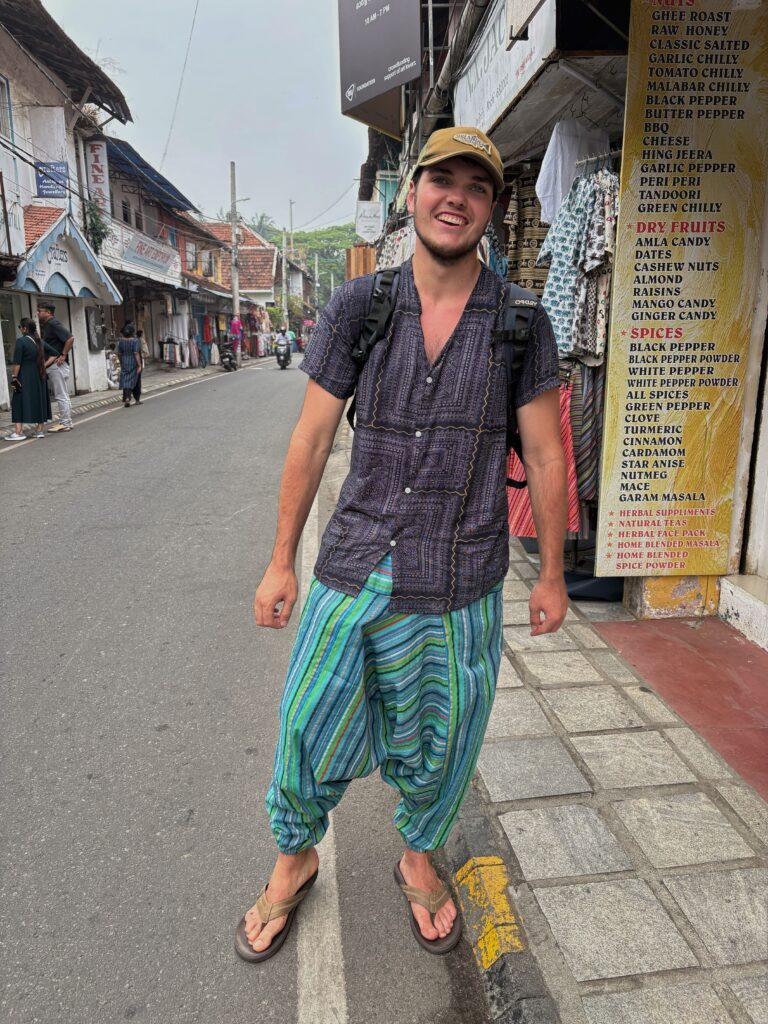
After the overnight train from Goa, we arrived in the vibrant port city of Kochi (formerly Cochin) at about 7:30 am. A quick auto-rickshaw ride later, we were at the ferry terminal for a short 20-minute scoot across to the historic area of Fort Kochi. The region is actually an archipelago of islands and mainland areas, making ferries a great way to get around. After locating our accommodations and dropping off our packs, we headed out to find some breakfast and grab a coffee before beginning our explorations.
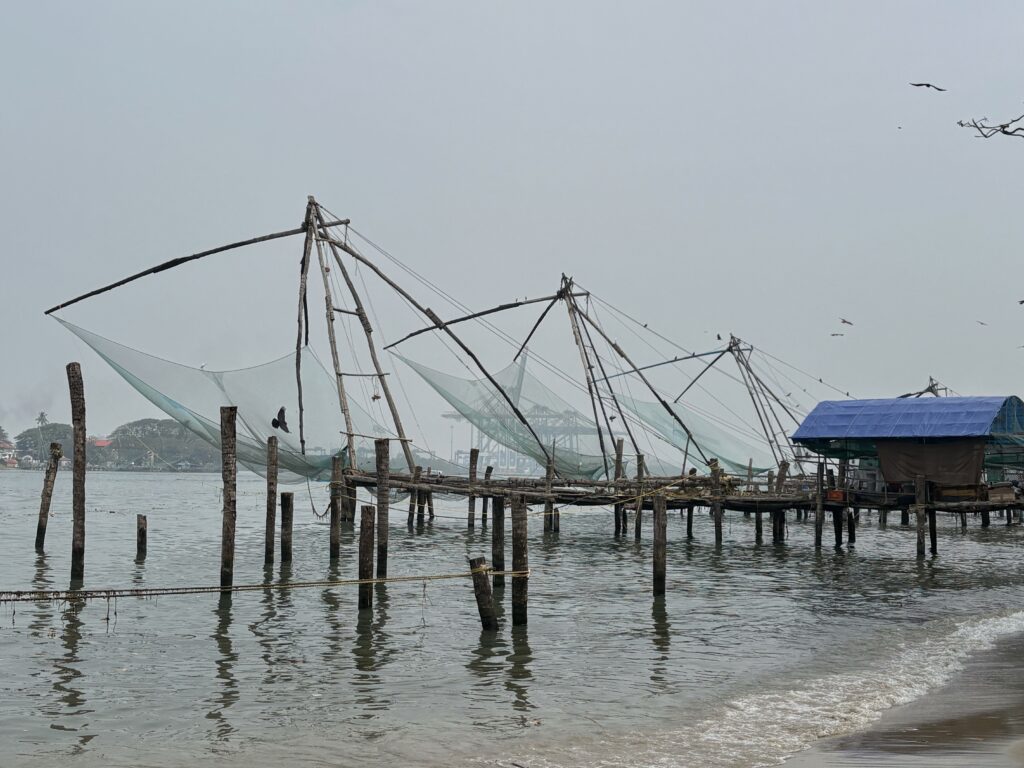
Kochi has been a major spice trading centre since the 14th century, attracting explorers and traders from around the globe. It is a melting pot of cultures, with the Portuguese, Dutch, and English arriving from the West beginning in the early 1500s, and Arab, Chinese, and Jewish traders arriving even earlier. The highlights of our morning included viewing the iconic Chinese fishing nets. Introduced by emissaries from the court of Kublai Khan in the 14th century, these nets saw further refinements—including the use of teak and bamboo—by the Portuguese and local Konkan people. The cantilevered nets are lowered into the water at a fixed location where the incoming and outgoing tides carry scores of fish to be scooped up as the nets are raised. While modern fishing techniques have largely replaced their commercial value, a number are still in use daily and are fascinating to witness.
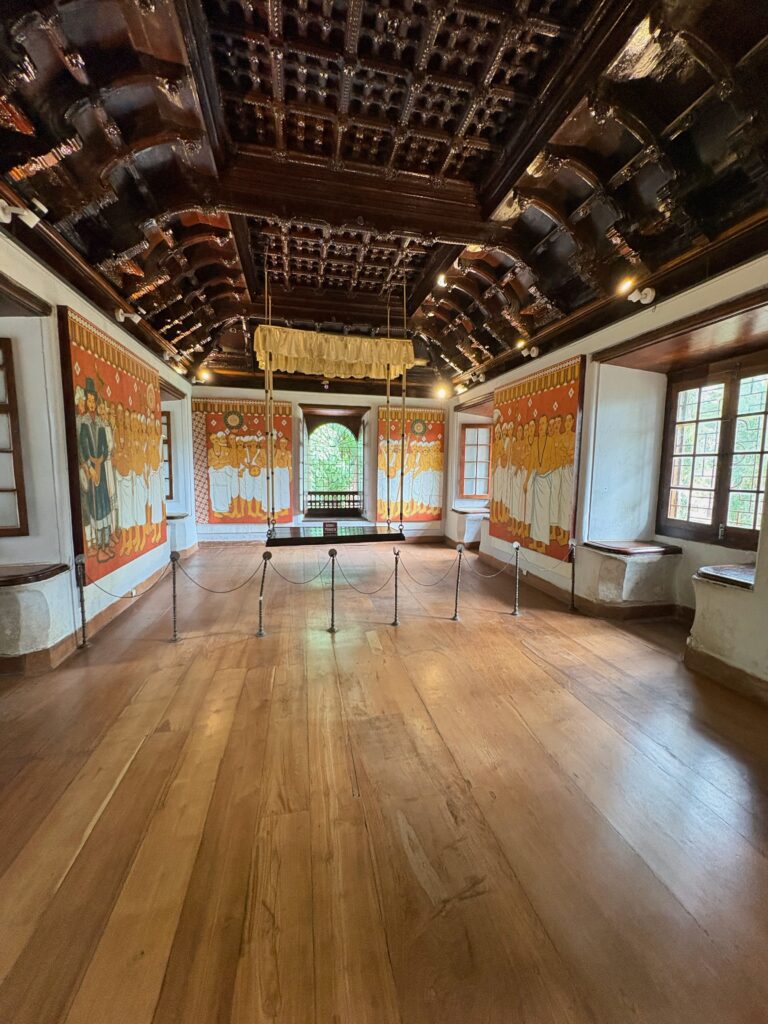
In the afternoon, we decided to walk to the Mattancherry neighbourhood about three kilometres away. We were struck by the vendors selling wonderful-looking fruits and vegetables in huge quantities. Piles of avocados especially caught our eye, and we hatched a plan to pick some up along with the other necessary ingredients to whip up a large batch of guacamole. Upon our arrival in Mattancherry, we first visited the Mattancherry Palace, also known as the Dutch Palace. Interestingly, it was built by the Portuguese as a gift to the Raja of Kochi around 1545, but was later extensively renovated by the Dutch who captured Kochi in 1663. The building itself, while large, was somewhat plain on the outside but exhibited stunning Kerala murals within.
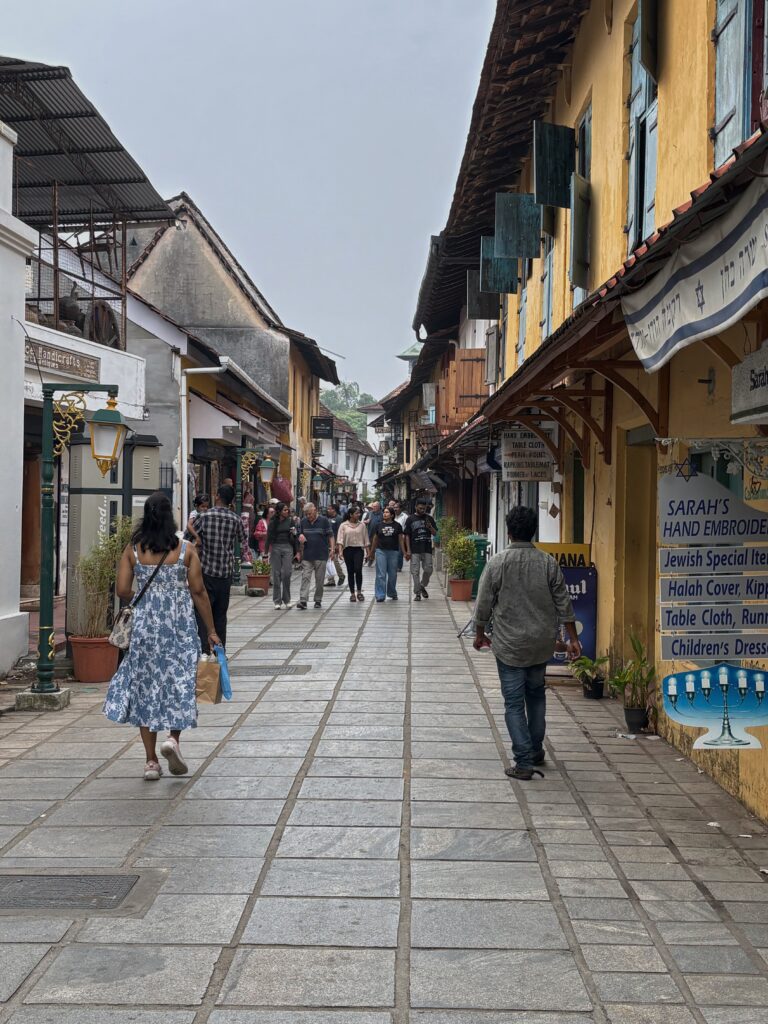
We next wandered a little further to reach Jew Town, a historic narrow street that served as the heart of India’s oldest Jewish community for centuries. Some accounts suggest that the first Jewish merchants arrived in India around the 10th century BCE, with later waves of refugees arriving around 70 CE after the destruction of the Second Temple in Jerusalem. Jew Town itself formed between the 14th and 16th centuries when the Raja of Kochi awarded the community sanctuary and land near his palace as they fled persecution. The Jewish quarter also houses the Paradesi Synagogue, one of the world’s oldest active synagogues.
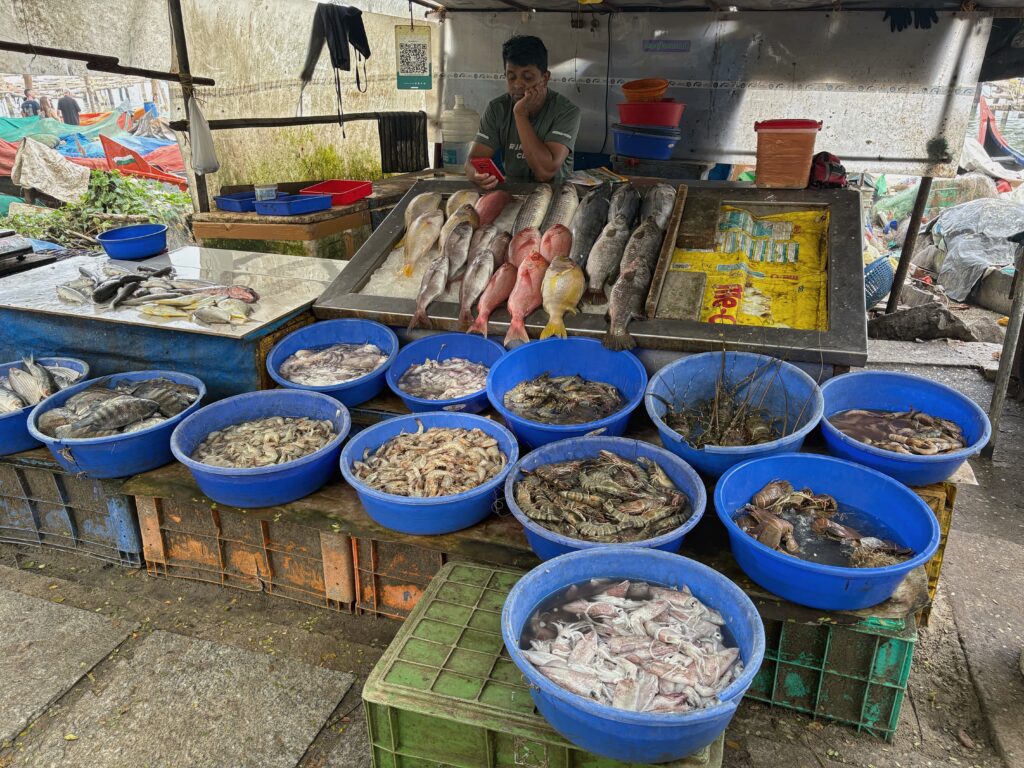
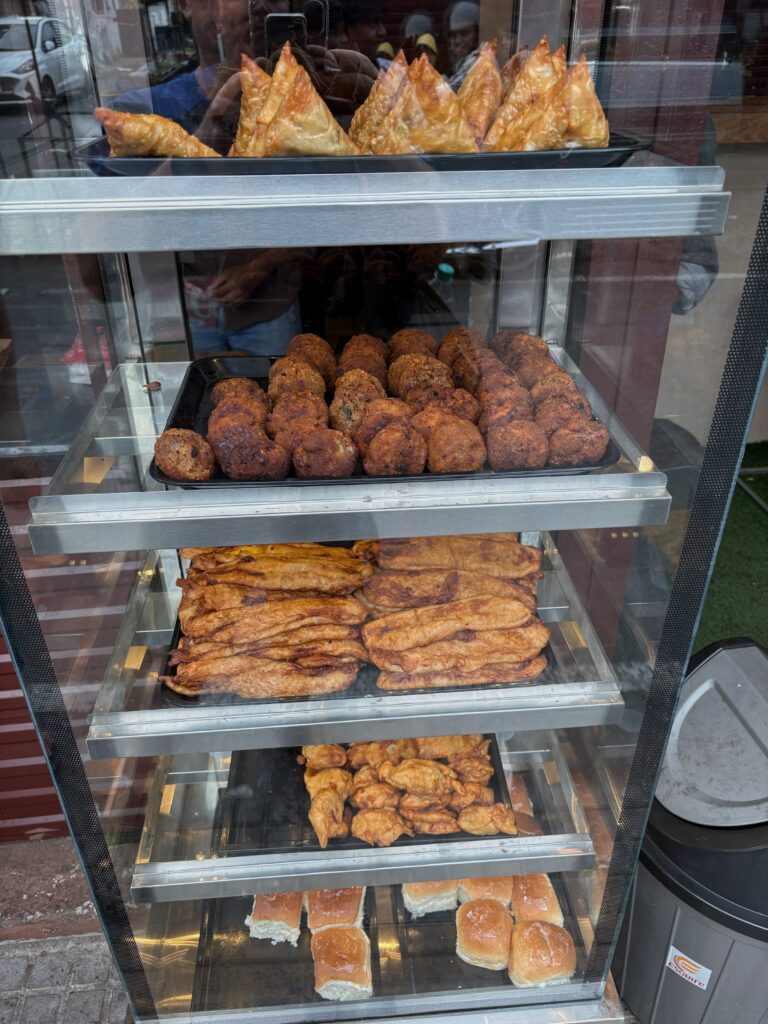
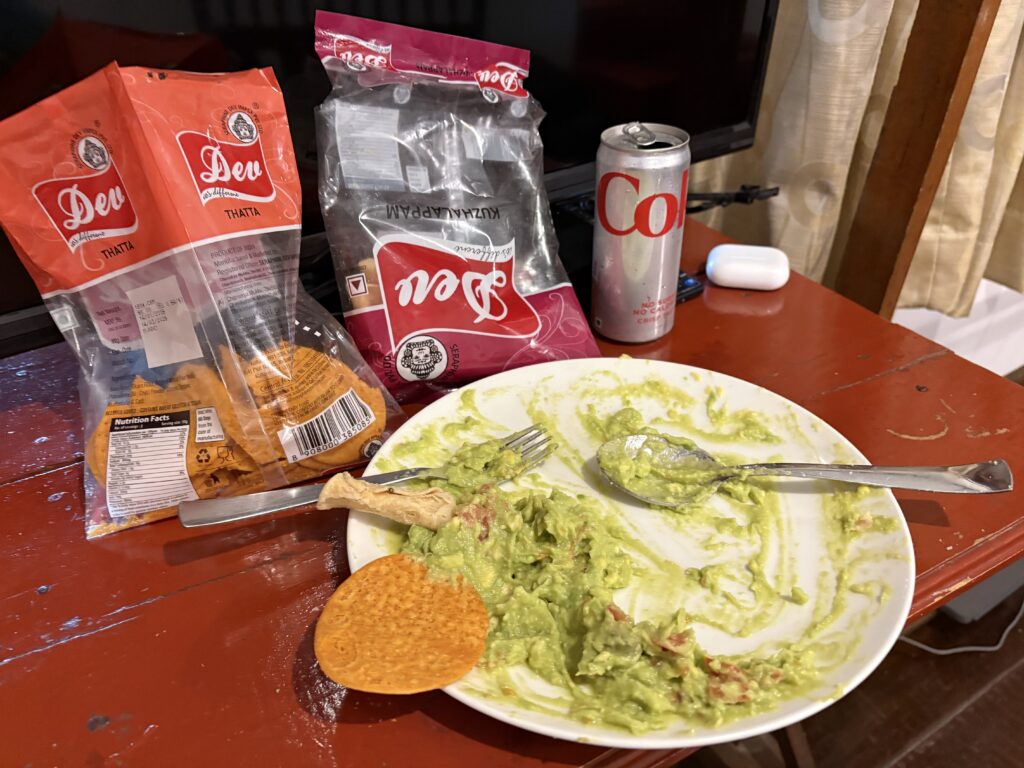
On our walk home, we secured all the ingredients we needed for our guacamole, including garlic, tomatoes, and limes. A few of the stands we stopped at lacked the ripeness we were seeking, but eventually, we found a good stall. Here, the three vendors passed the avocados back and forth as they squeezed and assessed them. Once we had narrowed it down to two large, ripe fruits and the “head assessor” had given his approval with a classic Indian head bobble, we were off again. With our hunger building, we also picked up fresh samosas, deep-fried jackfruit, and a recommended “Butter Bun.” Not locating any tortillas, we honed in on two types of Indian chips or crackers: Thatta, a flat, round, crispy disc roughly 2 inches in diameter and often described as a “fried savory cracker”; Kuzhallapam, a tubular, crispy, spiral-shaped snack with a slightly savoury-sweet taste. Both paired perfectly with our guacamole. Without further ado, we mixed up one of the largest and best batches of guacamole ever and thoroughly enjoyed it.
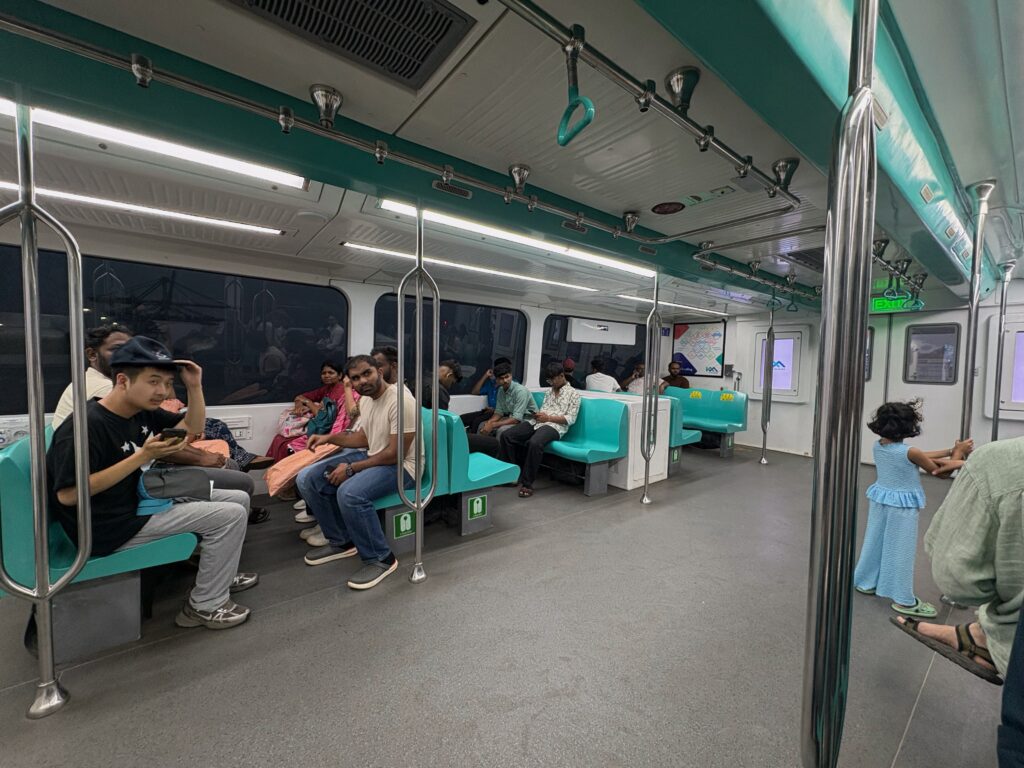
To finish our day in Kochi, we headed back to the waterfront to ride the new, quiet electric ferries that comprise the Kochi Water Metro. These fast, sleek vessels are used by locals and tourists alike. We were pleased to spot a species of dolphin plying the waters and enjoyed the views as the sun faded and the temperature dipped. In the evening, we went on a “wild goose chase” to find a government-sanctioned store licensed to sell beer. After several kilometres and some dead ends, we hired an auto-rickshaw driver to take us, finally quenching our parched throats.
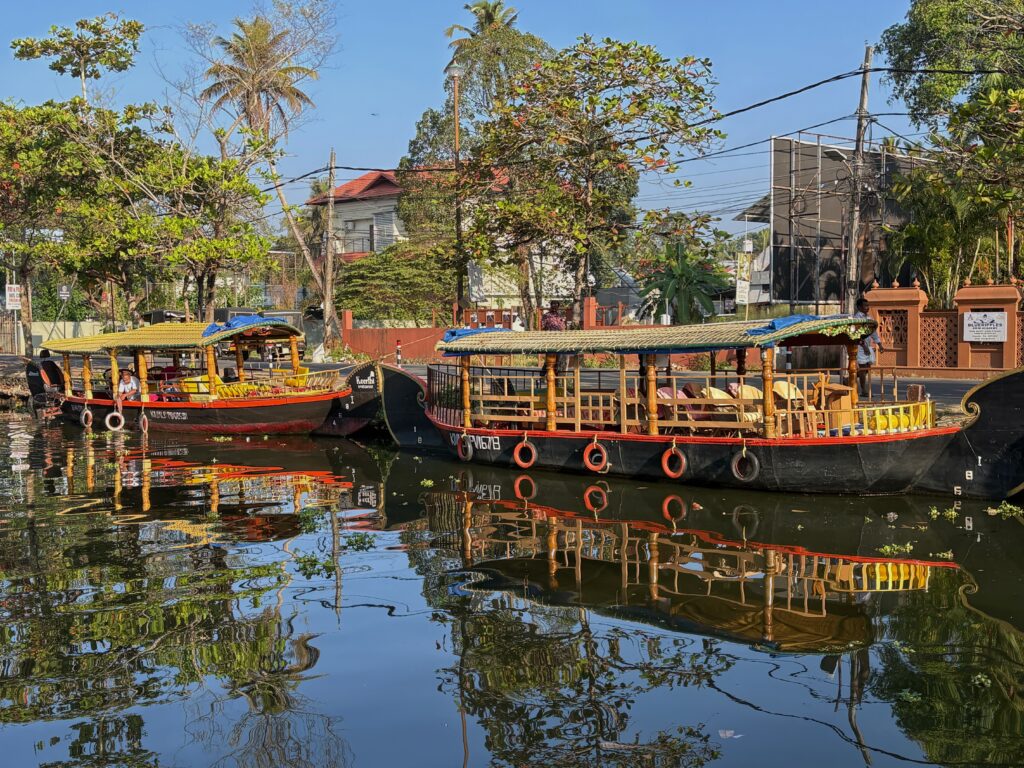
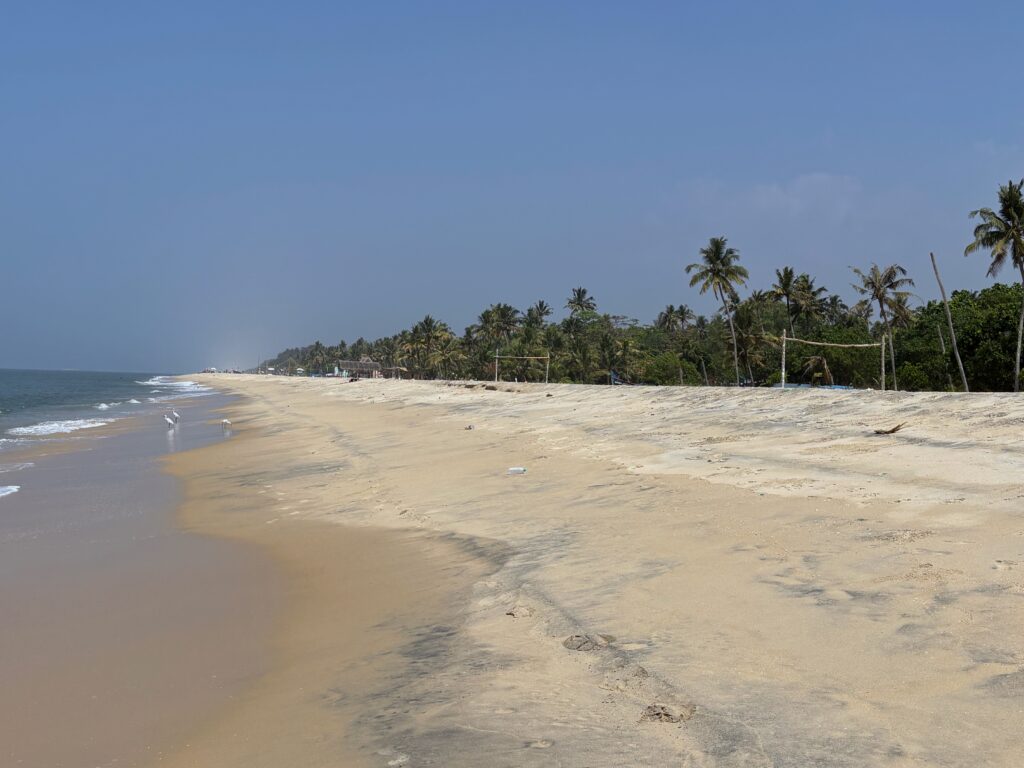
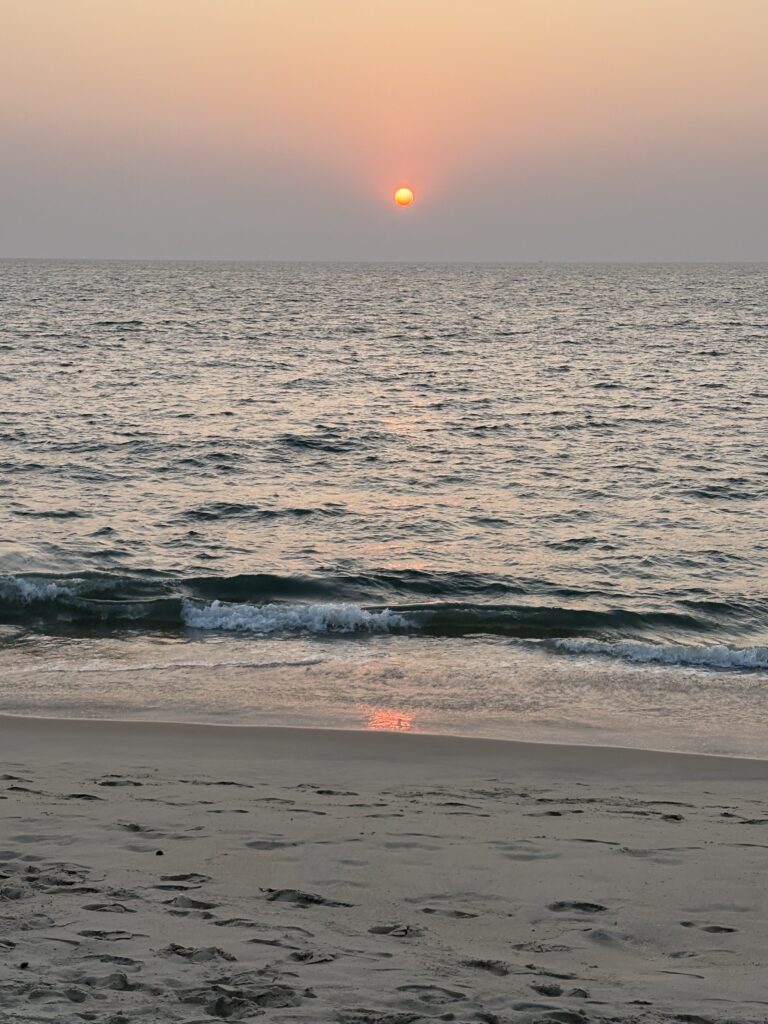
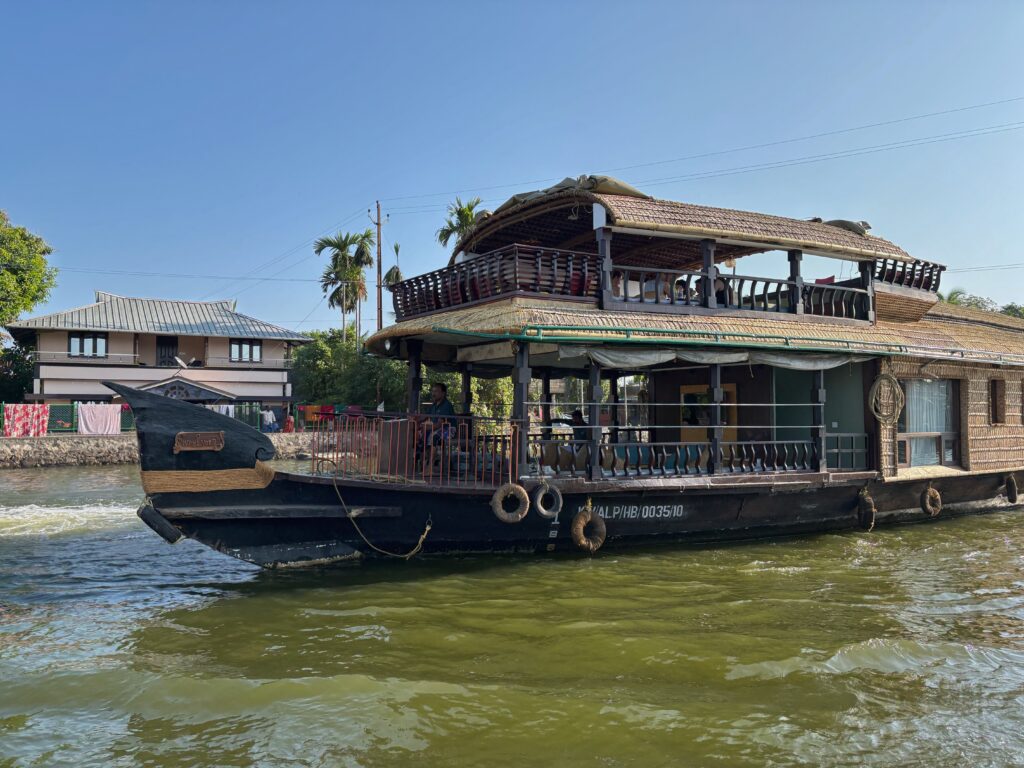
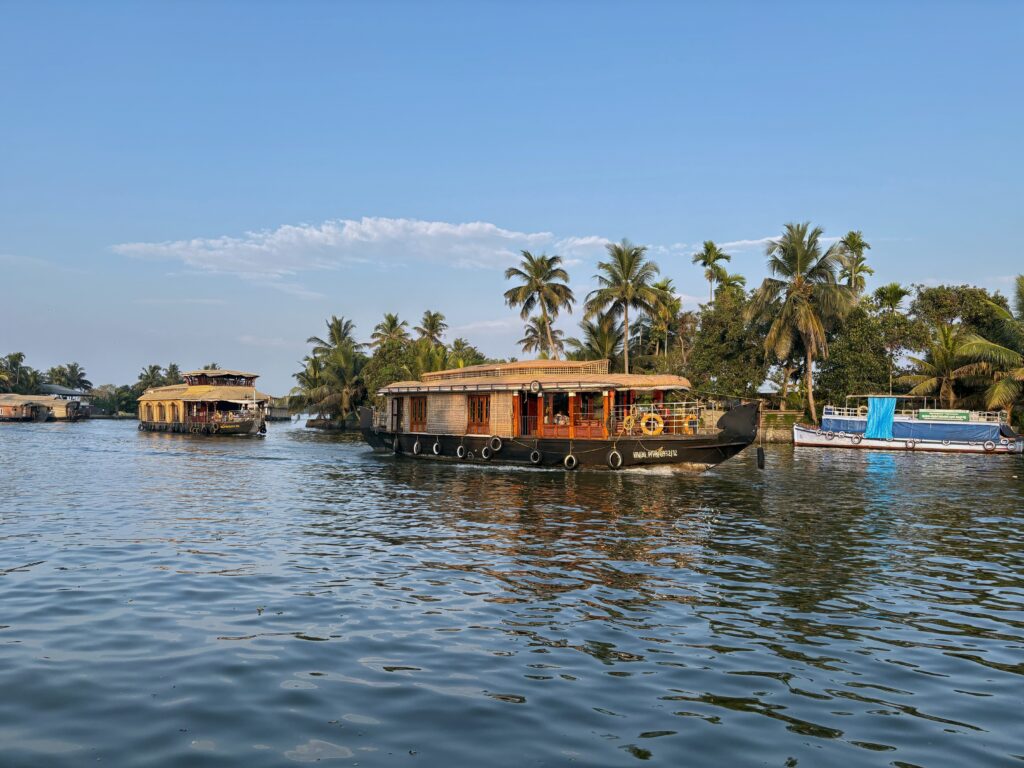
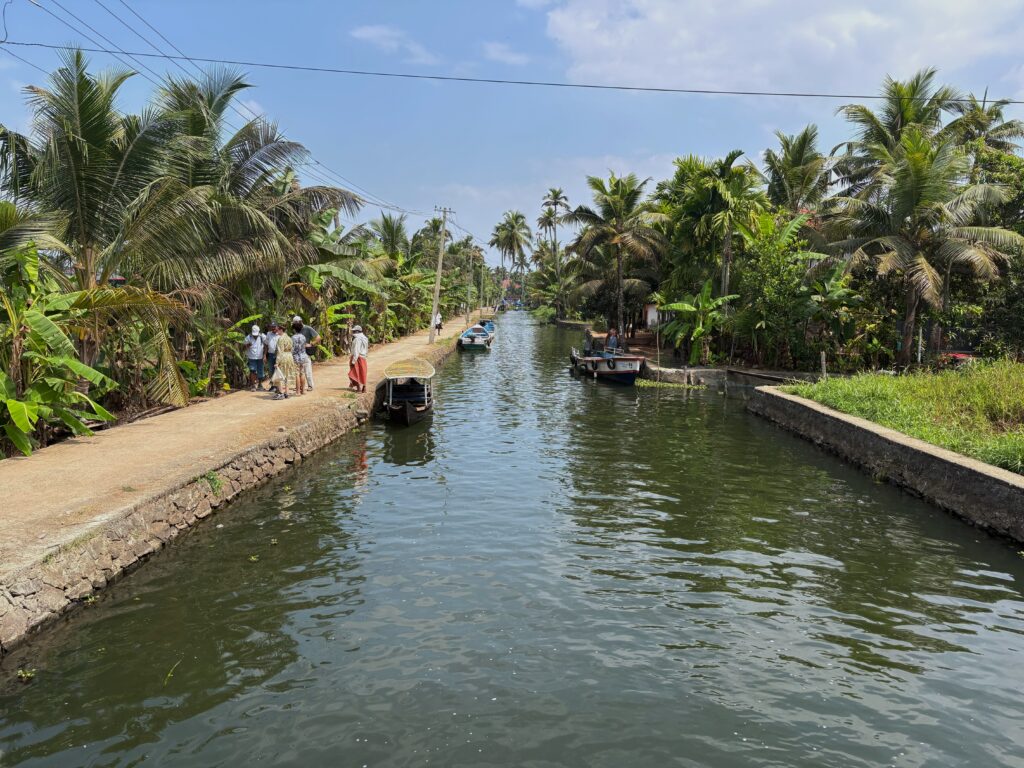
The following morning, we took an Uber south towards one of Kerala’s backwater Meccas, the town of Alleppey. Known as the “Venice of the East,” it boasts over 900 kilometres of interconnected canals, rivers, and lagoons. Today, Alleppey draws many tourists to explore these placid backwaters by houseboat, motorboat, canoe, and kayak. We stayed nearby at Marari Beach in a simple homestay just metres from the water, spending our first day swimming and enjoying seafood and coconut curries.
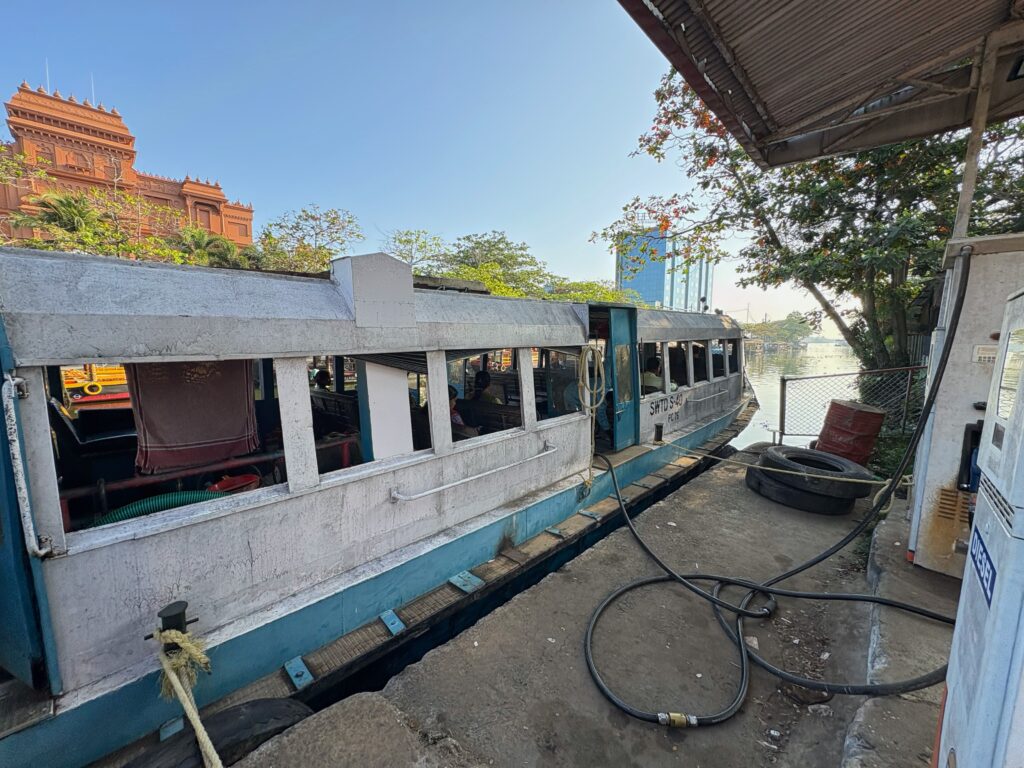
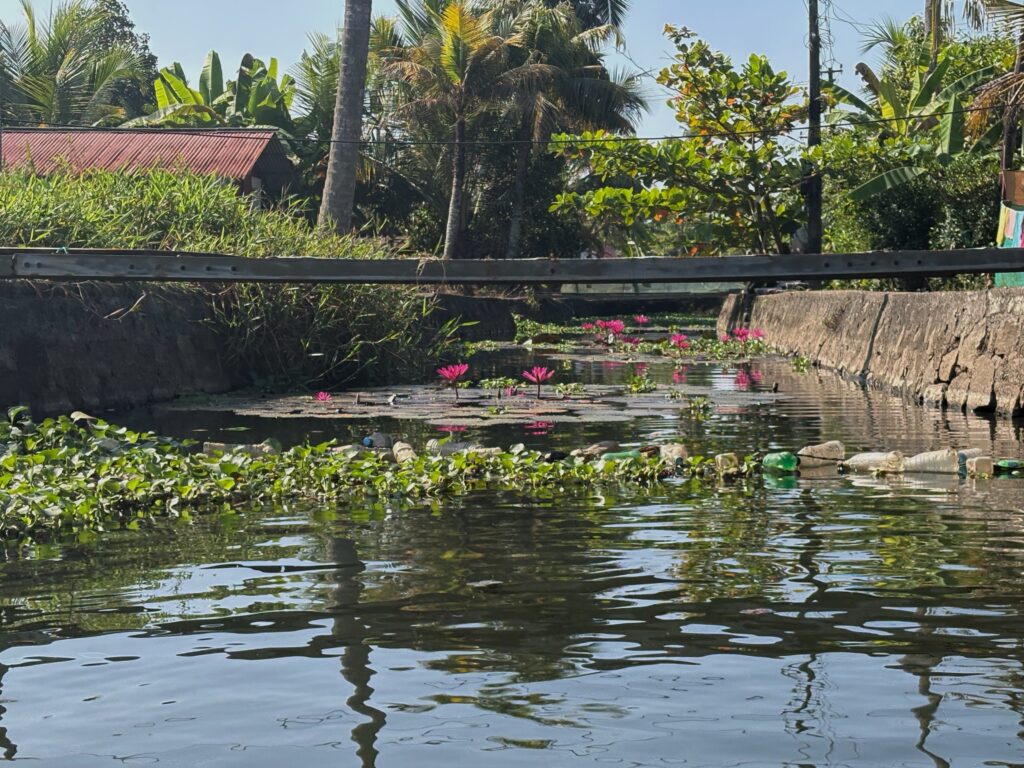
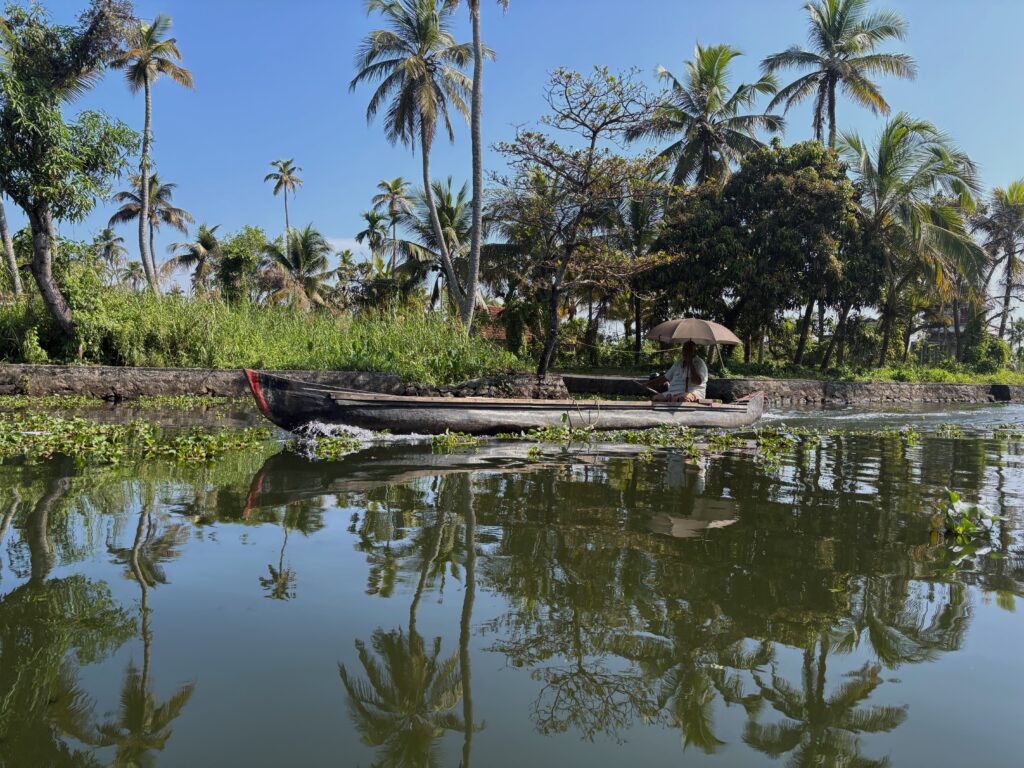
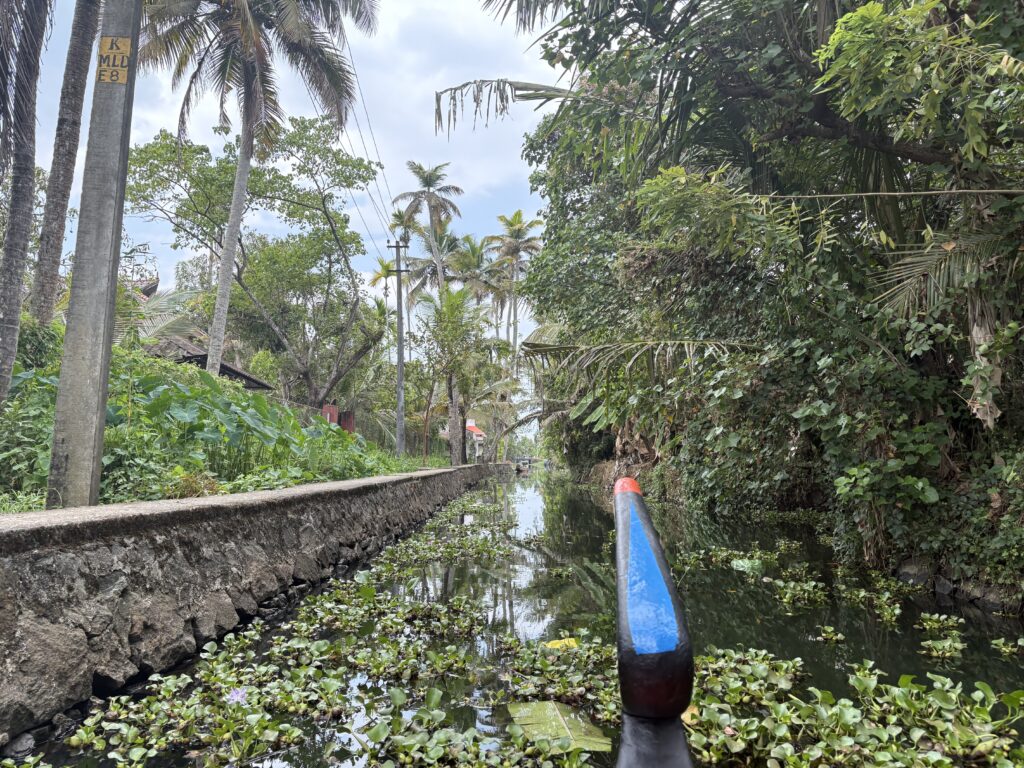
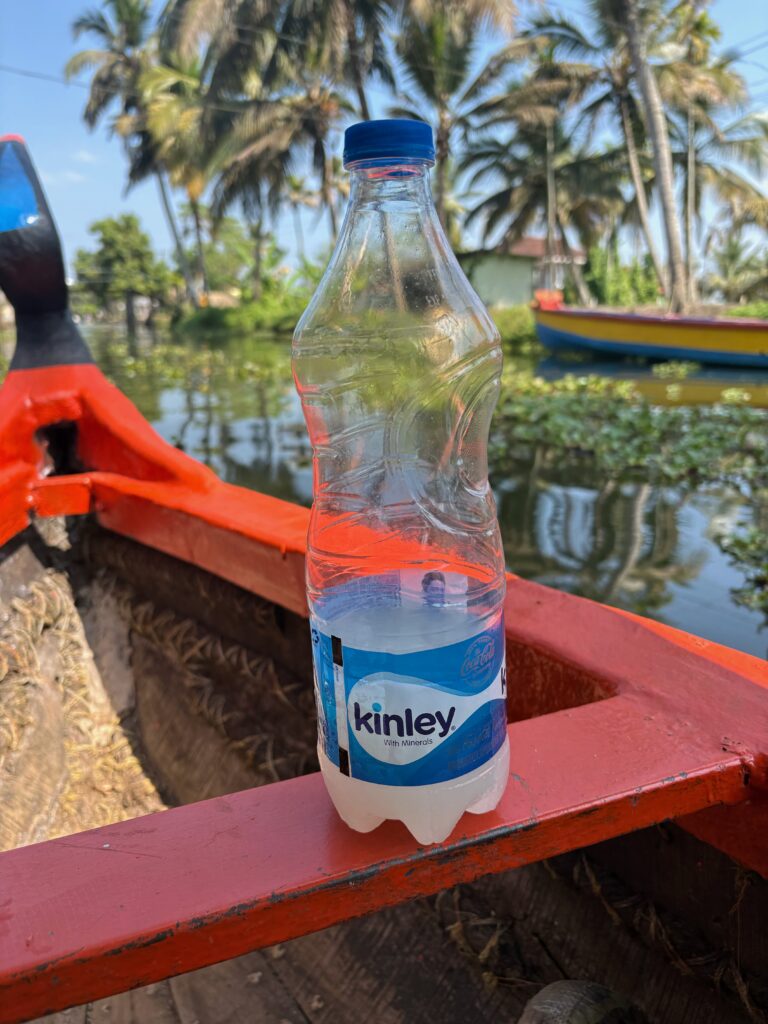
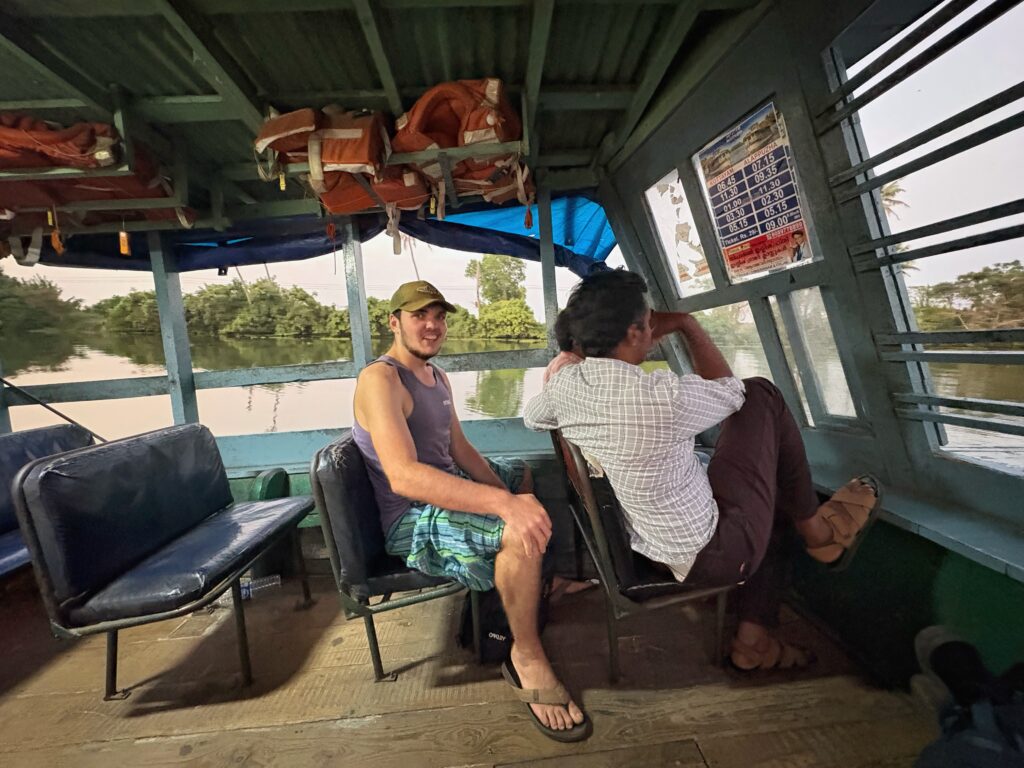
After a simple breakfast the next morning, we headed to Alleppey proper. We met our small group and boarded one of the diesel ferries that serve as the primary transport for locals. After forty minutes of chugging along with many brief stops, we arrived at our destination. We were met by a local who led us to a small home along the canal where we were treated to a simple Indian breakfast (our second of the day!) served on a banana leaf. Afterward, we divided into two small boats and paddled through a network of canals for about three hours. At one point, our guide stopped at a local “toddy” (coconut beer) shop and returned with a recycled water bottle full of the beverage. Mylo, a fellow traveller from Israel, and I shared the sweet, pleasant drink, which only enhanced the tranquility.
We finished this adventure via a circuitous route and a late lunch before boarding the return ferry. As Mylo and I were continuing to the city of Kottayam for an overnight train to Madurai, we caught the 5:15 pm ferry. While waiting, we found a pleasant cafe nearby and enjoyed a stimulating, creamy affogato—a scoop of vanilla ice cream drowned in a hot shot of fresh espresso.
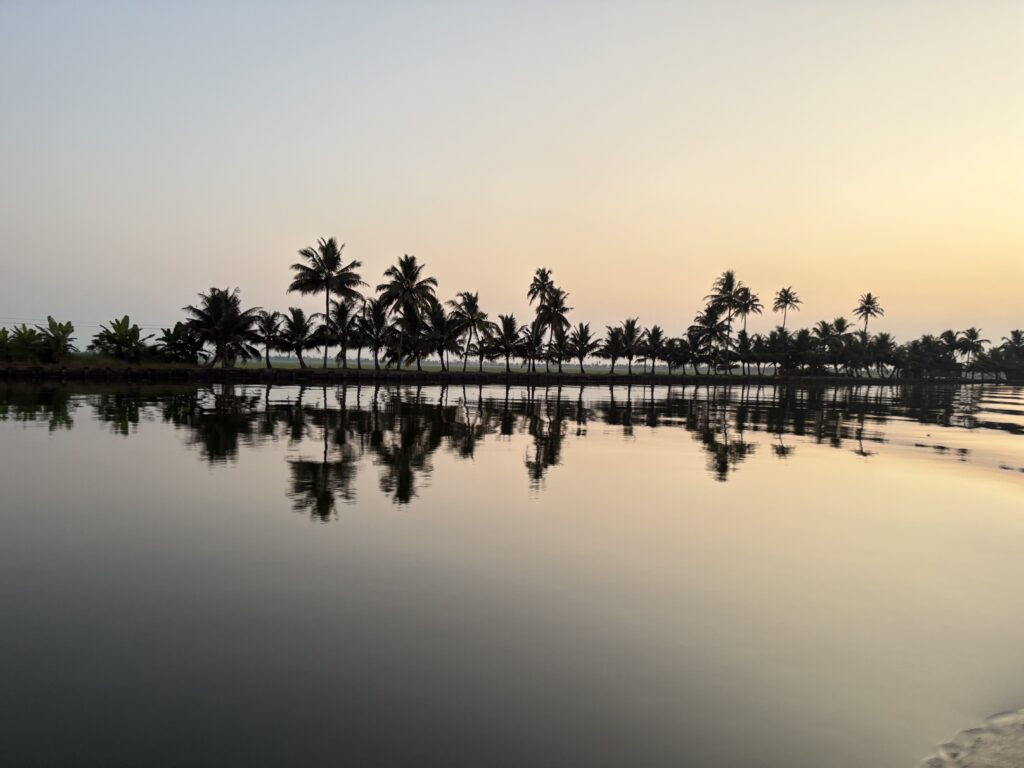
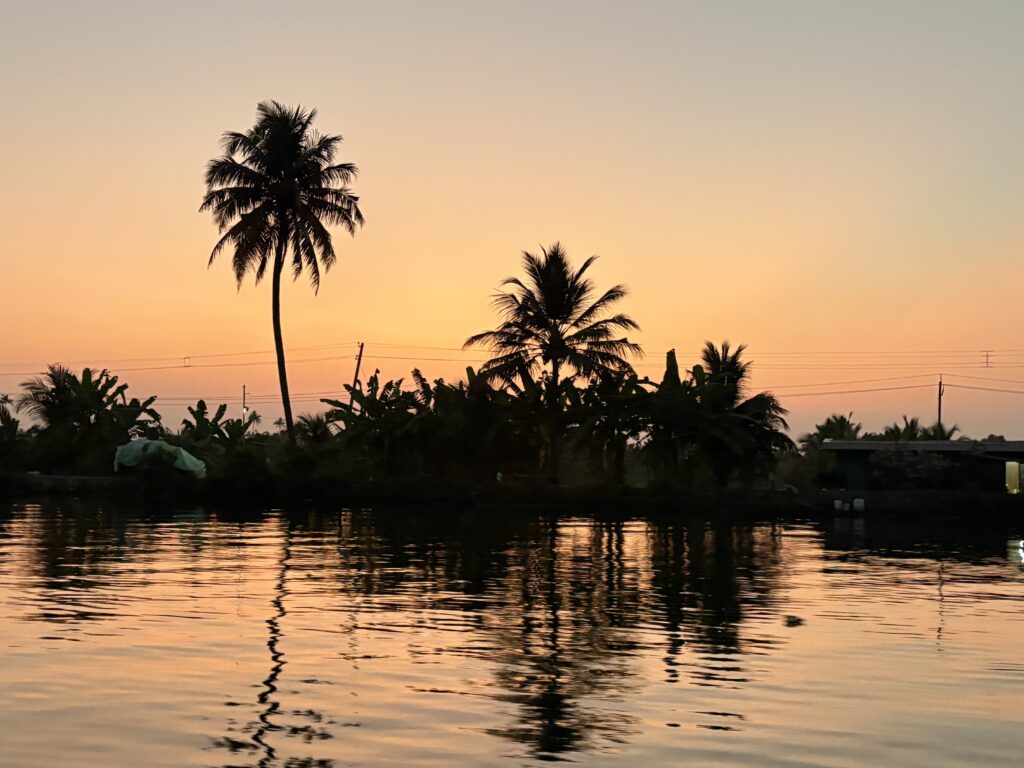
At 5:15 pm, we boarded our ferry for the ride to Kottayam. We positioned ourselves at the front, furthest from the engine; this particular vessel seemed much quieter than the one we had taken earlier, making the ride far more pleasant. In the golden light of the late afternoon, the sublime beauty of the backwaters seemed to multiply tenfold. I thought longingly of pulling over to the side of the canal to enjoy a night afloat in a quiet corner of the waterways. It would be amazing to spend a week aboard a houseboat doing just that, sharing this treasured corner of the world with a group of friends or family.
However, I felt a pang of alarm thinking of what climate change will mean for this region. As sea levels rise, this entire landscape risks being lost beneath the waves due to its extremely low elevation. A fellow passenger recounted the devastating floods of 2018, when the whole area was evacuated and all but a few of the higher or two-storey homes lay underwater. While the annual monsoons are a fact of life that locals have masterfully adapted to, the world is changing and the future remains uncertain.
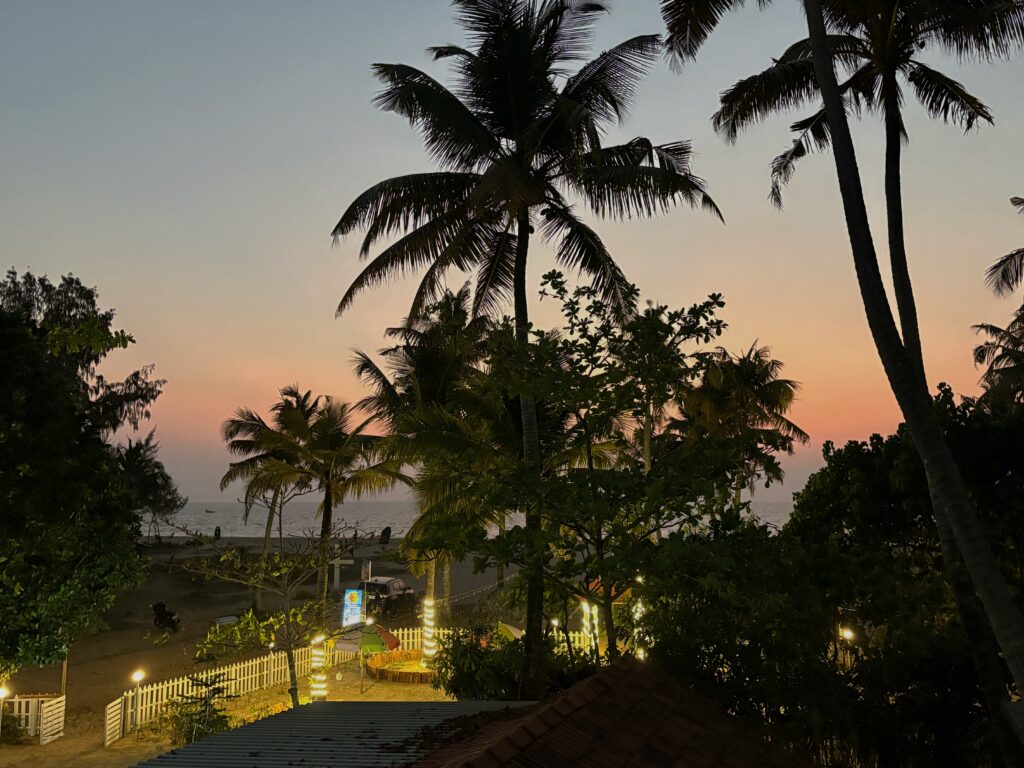
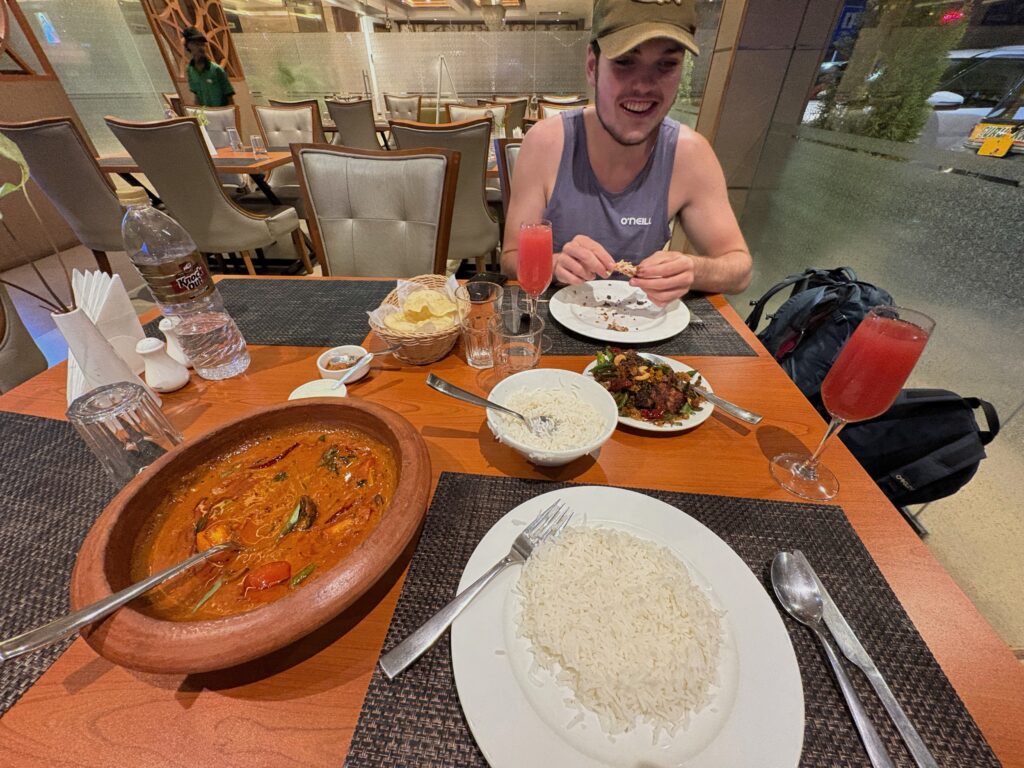
For the last hour of our voyage, we plied a narrow canal in the dark, guided only by the lights of houses lining the banks and the silhouettes of palm trees. As we went along, the captain would blare the horn to alert local villagers of our approach, signaling them to raise the small footbridges across the canal to enable our passage. We finally reached the end of the line around 7:30 pm and were directed to a wonderful restaurant and bar just metres from the dock. There, we enjoyed some beers and excellent chicken and fish dishes. With my spice tolerance significantly improved, I didn’t leave a single one of the large red and green chilies on my plate, instead relishing the lingering burn.
Having brilliantly filled the hours before our 11:22 pm train departure, we arrived at the station with sufficient time to find our platform and carriage. We were soon settling into our bunks for the night, ready for the next leg of the adventure.