From Sacred Lakes to Majestic Rocks: Exploring Kandy, Sigirya, and Polonnaruwa
We arrived in Sri Lanka’s capital city of Colombo and smoothly sailed through customs and immigration, collected our bags, and installed our new local SIM cards in record time. With the efficiency of seasoned travellers, we stepped out of the terminal in search of the rideshare pickup area and arranged a car to take us to the highland town and former capital of Sri Lanka, Kandy.
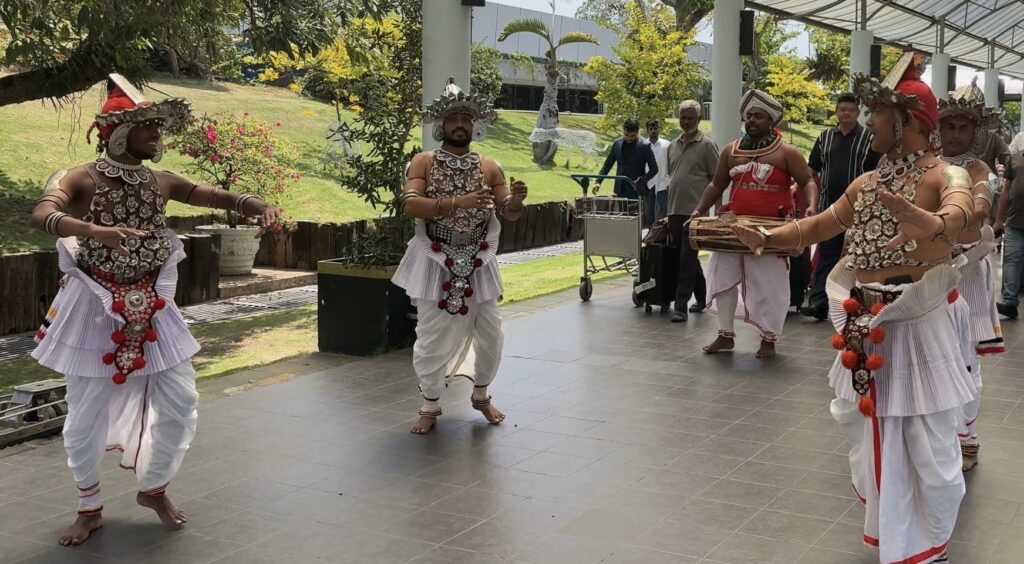
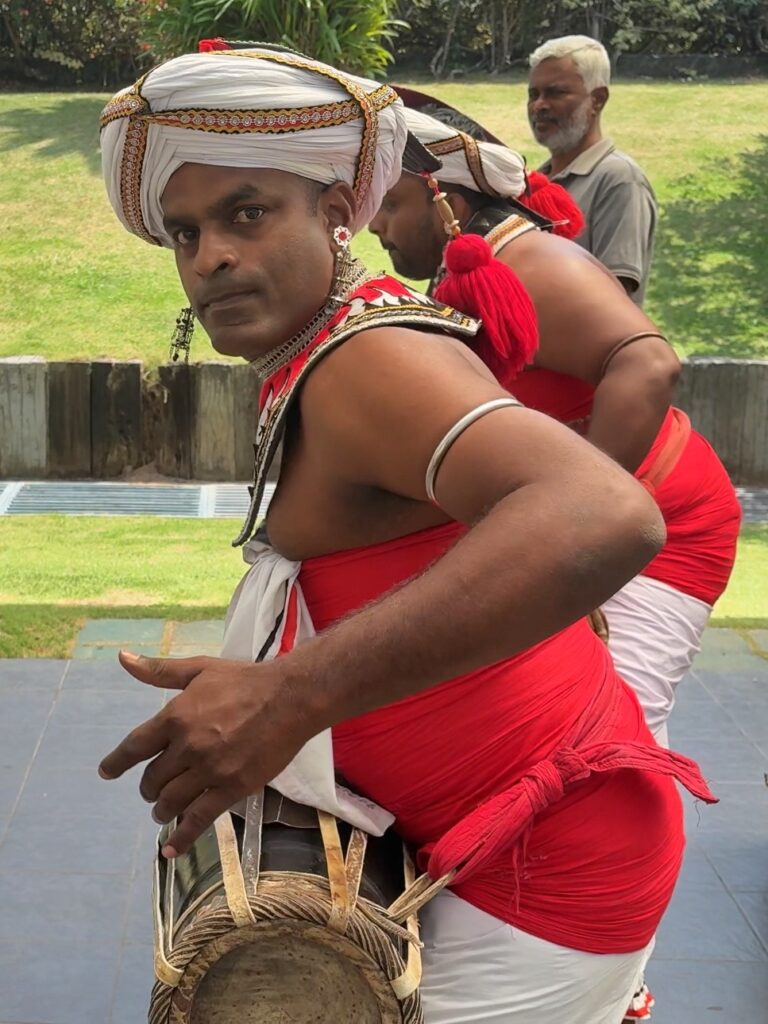
As we waited, the sounds of drumming and singing suddenly rose and swelled behind us. A group of traditional Kandyan dancers and drummers paraded past in full regalia. They often come to the airport to welcome VIPs — which we certainly are not — so we weren’t sure who they were officially there to greet. Nevertheless, we thoroughly enjoyed the spectacle: dancers performing athletic leaps and spins, drummers pounding their double-headed drums with tassels flying, and singers chanting tales of animals and mythological lore that seemed to echo from another era.
The three-hour drive to Kandy followed well-paved roads through an increasingly lush landscape of palms and dense tropical greenery. The terrain began as rolling hills before gradually rising into mountains reaching up to 2,500 metres as we climbed into Sri Lanka’s central highlands. The air itself seemed to cool and soften with elevation. From the outset, we noticed the calmer pace of driving, the reduced honking, and the overall cleanliness. As an islander myself — perhaps somewhat biased — I immediately felt a sense of comfort and affinity for this island nation, roughly twice the size of Vancouver Island, where I live.
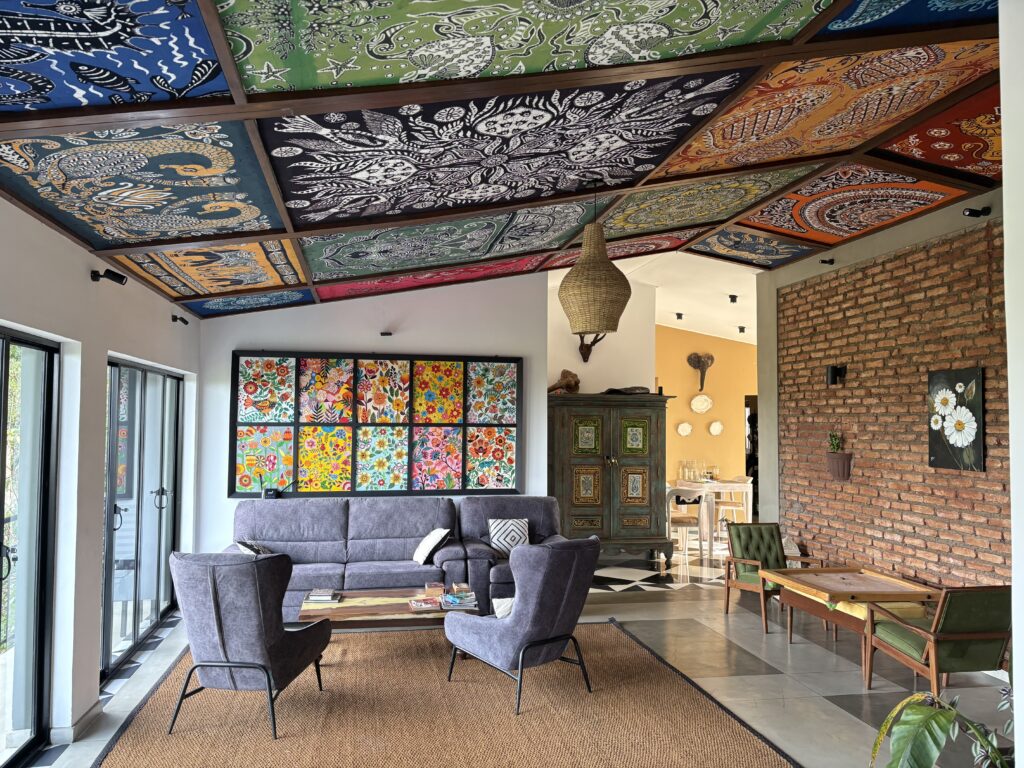
With a couple of hours remaining before sunset at around 6 p.m., we arrived at our accommodations perched on the steep, verdant hillsides overlooking Kandy. We were welcomed by Ravi, a pleasant and reserved host who seems to serve as a man of all trades for the owners — cooking, cleaning, repairing, constructing, and keeping the property running smoothly. He offered us coffee, which we gladly accepted, and we relaxed in the well-appointed two-storey home, gazing out over house-covered slopes and distant green peaks that folded into one another in layers of misty green.
From the kitchen drifted the sweet sounds of reggae music — an unexpected delight that brought a smile to my face and deepened my feeling of contentment on this first day in Sri Lanka. When I mentioned my own love of reggae, I soon found myself asking Ravi about the Sri Lankan reggae scene and the artists we were listening to, the rhythm binding us in easy conversation despite our different worlds.
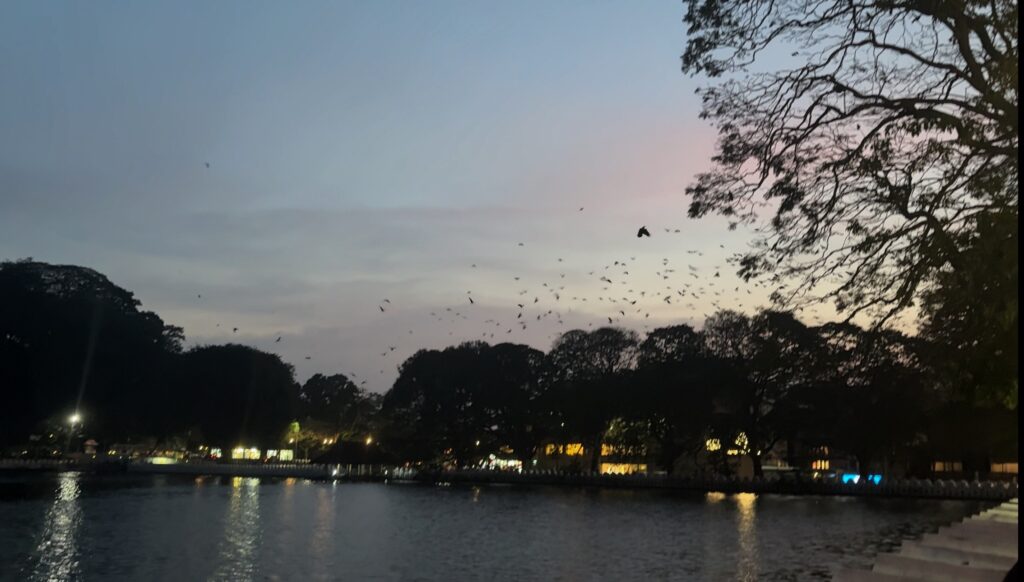
Eventually, we pulled ourselves away from this pleasant reverie to explore Kandy before daylight faded. A short downhill tuk-tuk ride delivered us to the heart of the city near the famed Temple of the Tooth and the tranquil Kandy Lake. As dusk settled, we strolled along the lakeside path while birds noisily sought their roosts and large fruit bats launched into the sky to begin their night’s feeding, their wings slicing silently through the dimming light.
Since we would be returning to Kandy in a few days — and hunger was setting in — we postponed visiting the temple and instead searched for a restaurant serving traditional Sri Lankan cuisine. Despite Sri Lanka’s population being approximately 70% Buddhist (with Hindus at 13%, Muslims at 10%, and Christians at 7%), we found ourselves at the Kandyan Muslim Hotel — which, despite its name, is not actually a hotel — drawn by its reputation for excellent food at reasonable prices.
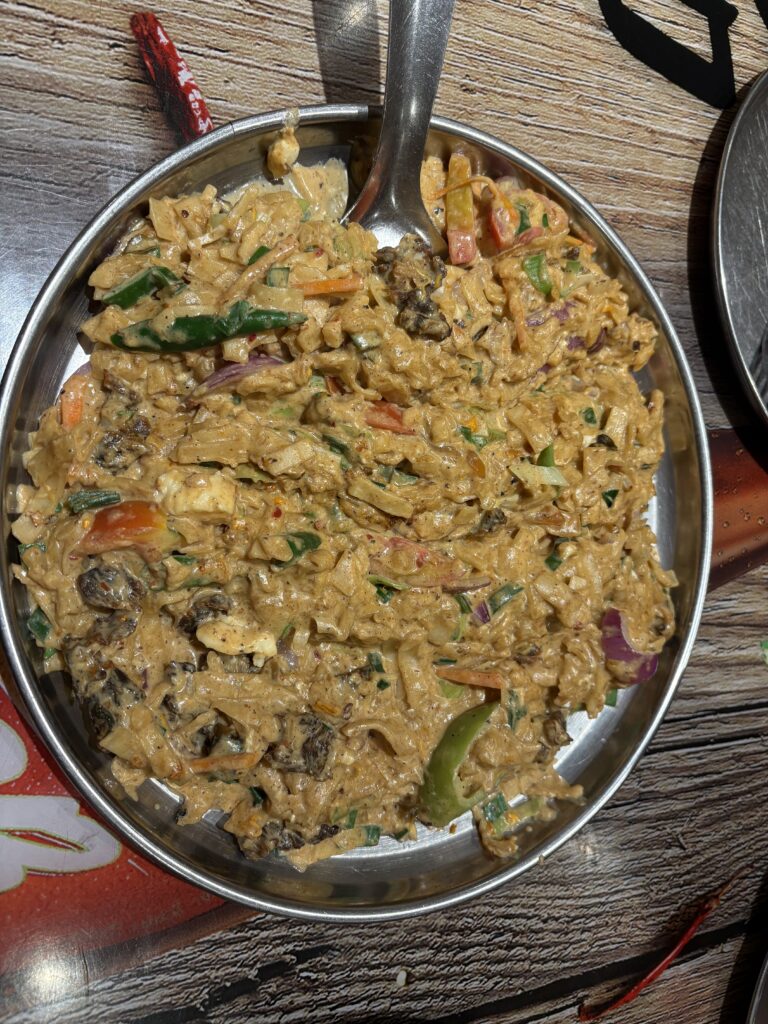
We ordered kottu, widely regarded as Sri Lanka’s ultimate comfort food. Originating as street fare, this vibrant stir-fried dish combines shredded flatbread with vegetables and a choice of meat, all rhythmically chopped together on a hot griddle in a percussive culinary performance. We opted for chicken and cheese, ordered the large portion, and paired it with a mango lassi — a yoghurt-based drink. Despite our considerable hunger, it completely filled my nephew Mylo and me.
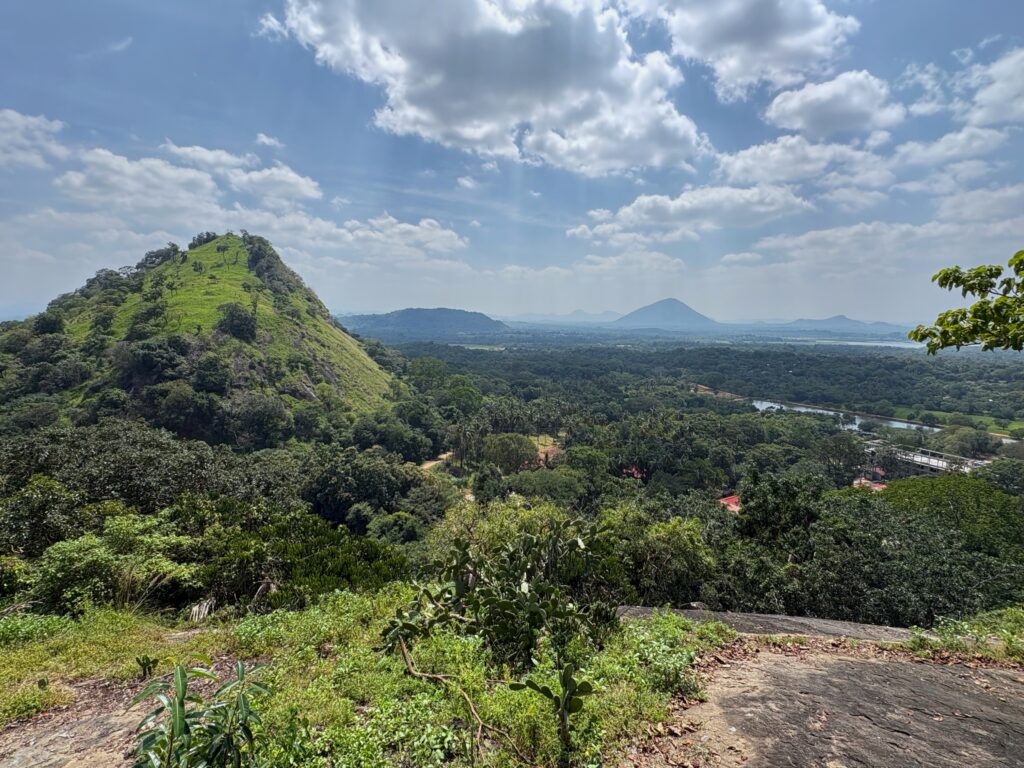
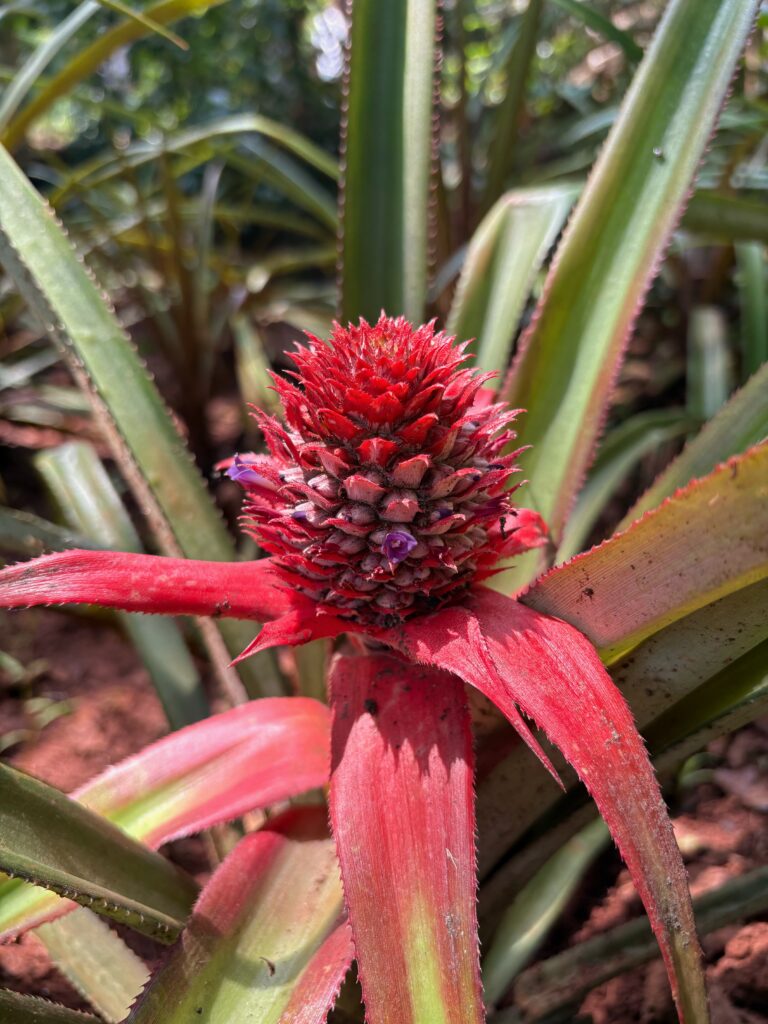
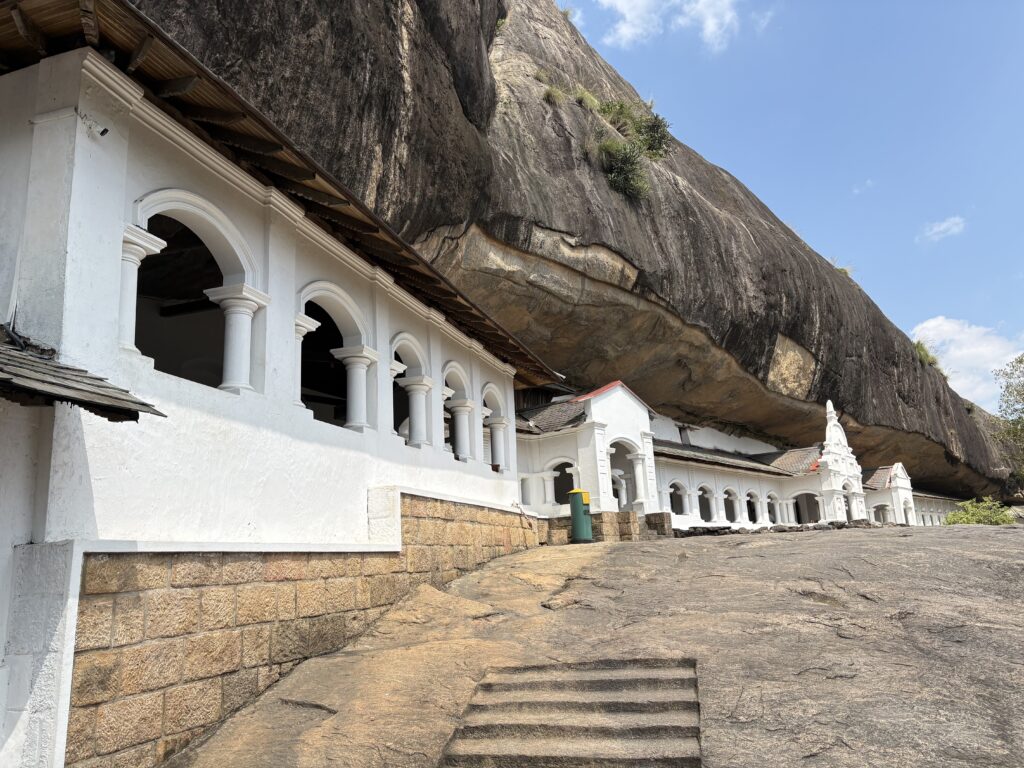
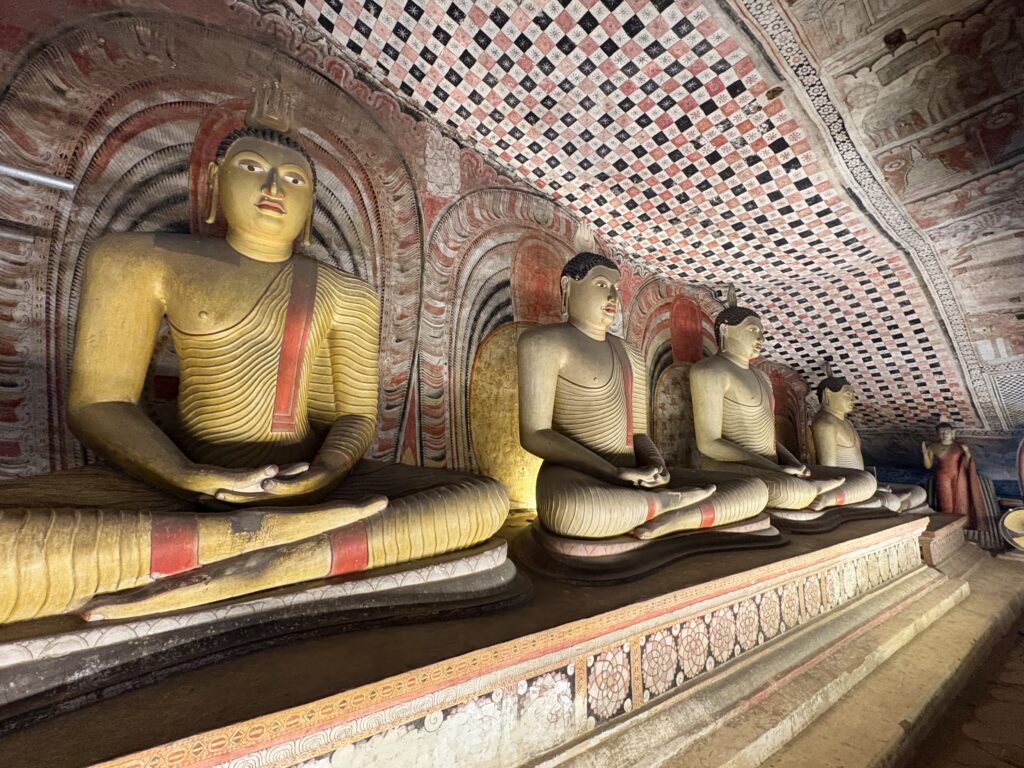
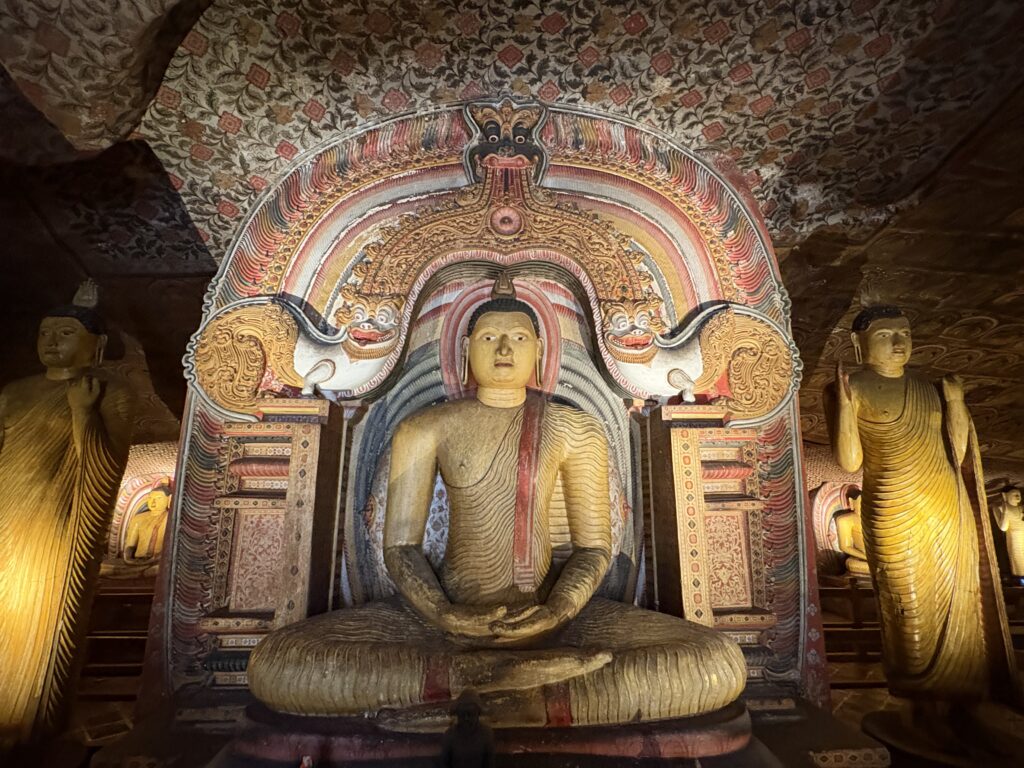
The following morning, we departed Kandy for Sigiriya, about two and a half hours away and at a lower elevation, where the climate is warmer and more humid. En route, we stopped at a small plantation to learn how various spices are grown and the Dambulla Cave Temple, also known as the Golden Temple of Dambulla. A UNESCO World Heritage Site, it is the largest and best-preserved cave temple complex in Sri Lanka.
Inhabited since the 3rd century BCE, the caves were converted into a temple in the 1st century BCE by King Valagamba, who had taken refuge there during his exile. Though more than 80 caves exist in the area, we visited the five principal shrines carved beneath a massive overhanging rock. Their interiors are adorned with vivid murals and filled with Buddhist statues, including a 14-metre reclining Buddha carved directly from the rock, its serene expression untouched by the passage of centuries.
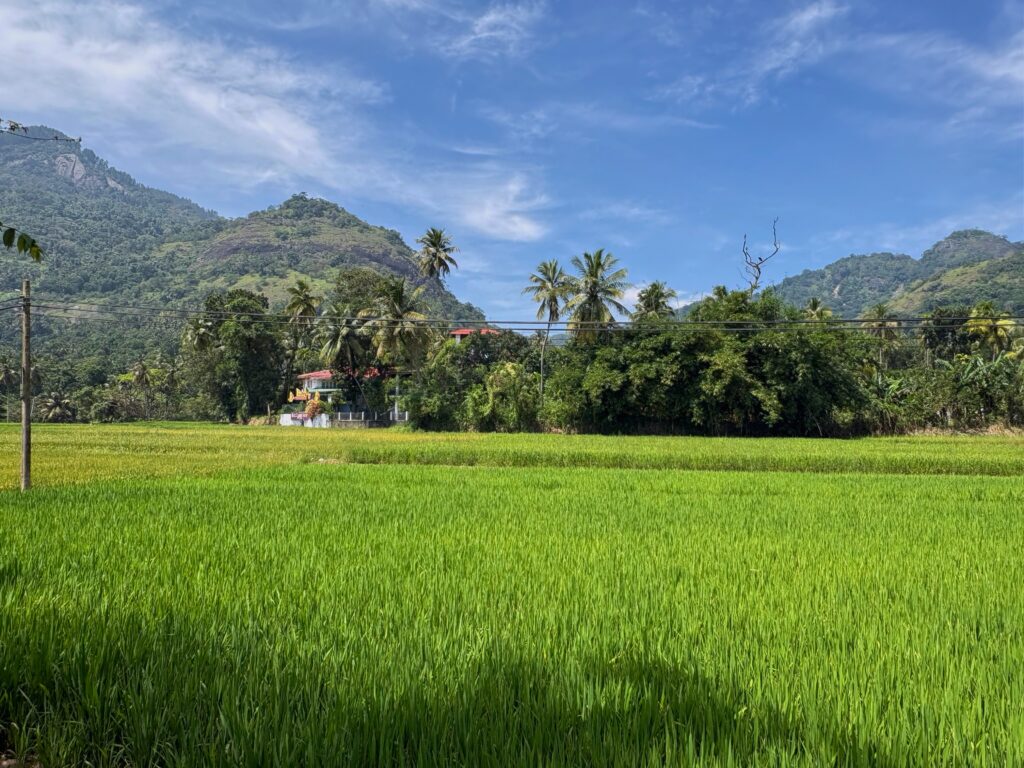
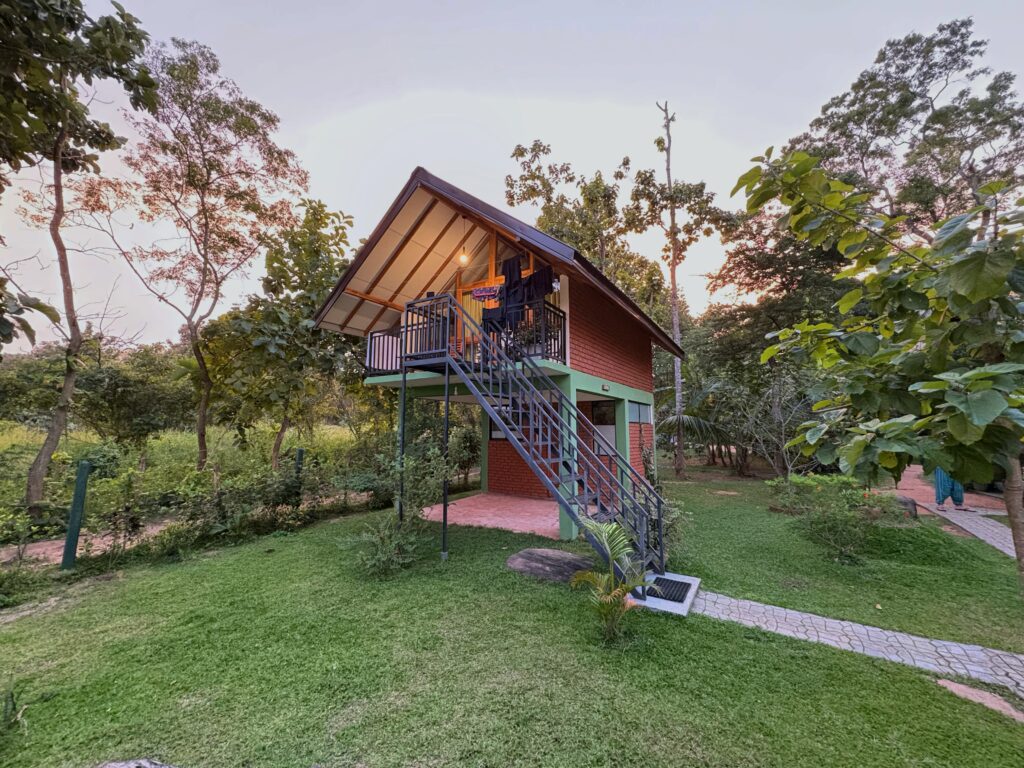
Roughly 30 minutes later, we arrived in Sigiriya and checked into our two-storey cabana on a rural property surrounded by small-scale agriculture and jungle. We were warned not to walk outside after dark due to elephants that roam through the area at night — A sobering reminder of where we were — guests in a landscape that still retains echoes of the wild.
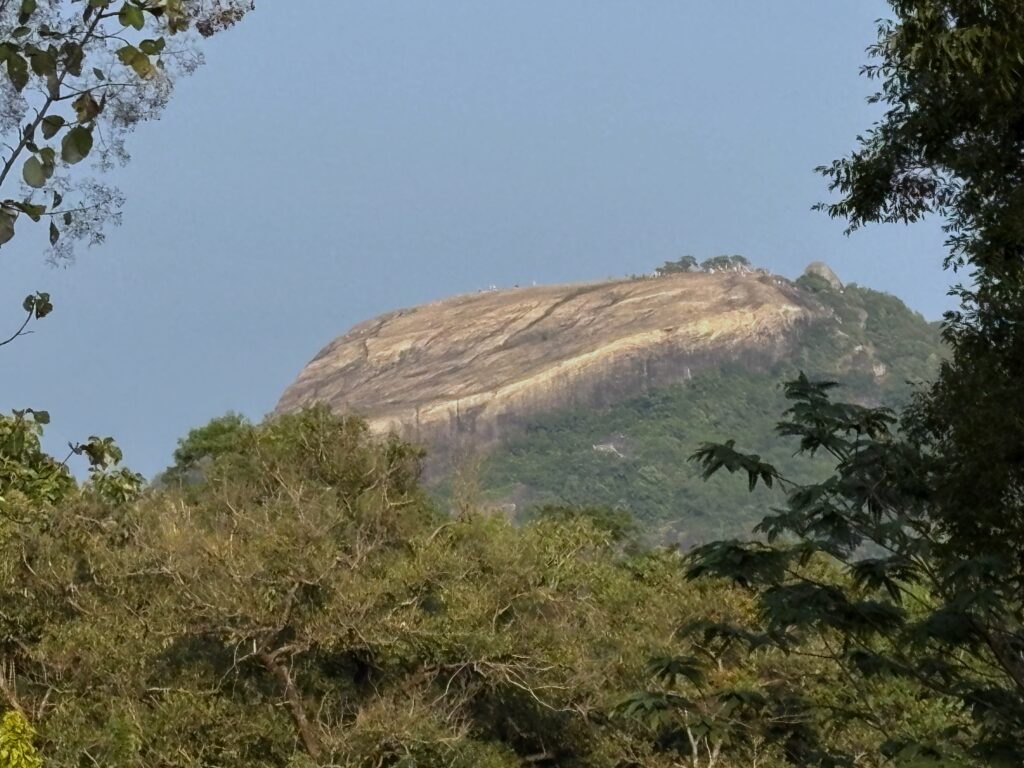
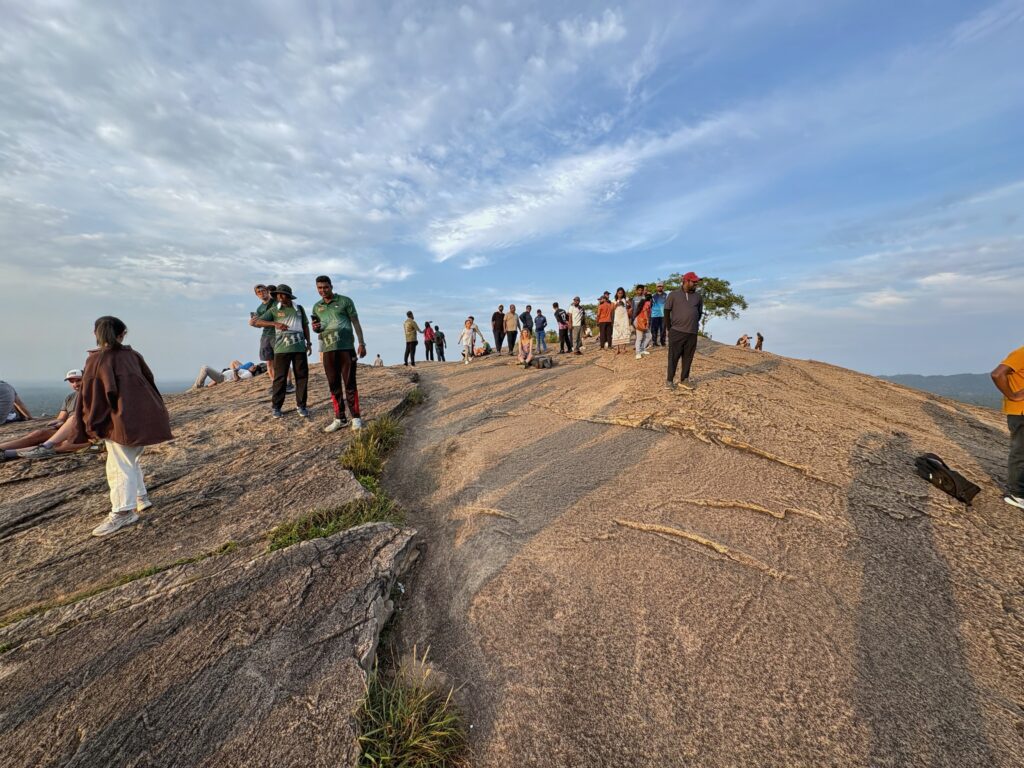
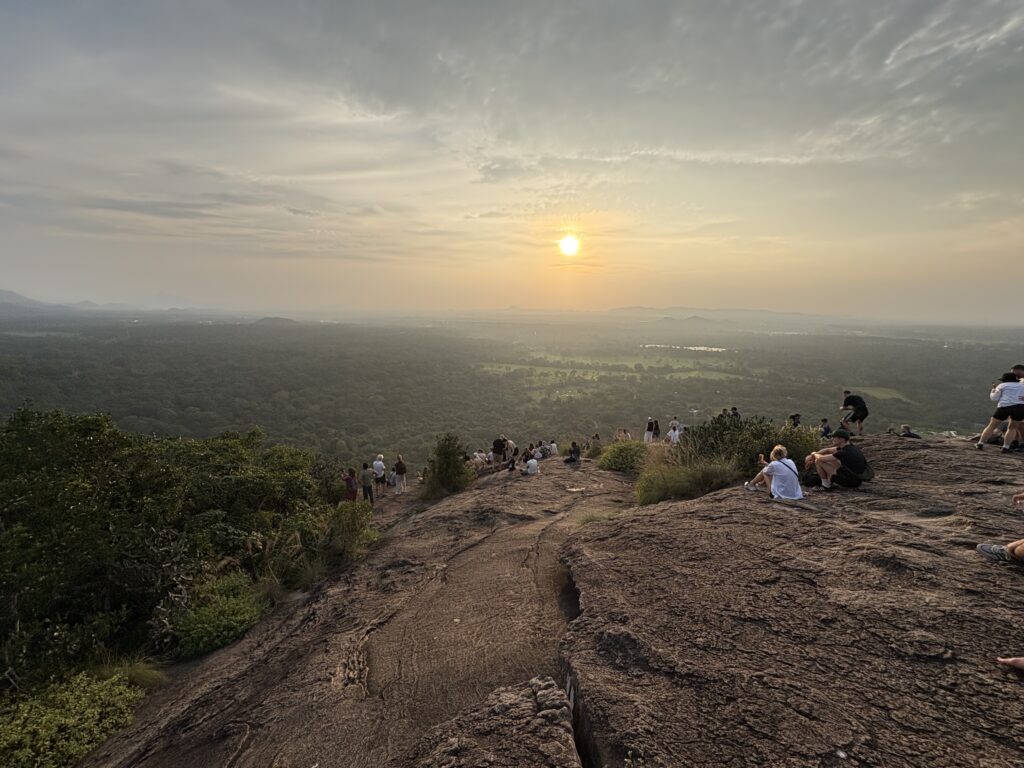
With time to spare, we set out for a sunset hike up nearby Pidurangala Rock, which has grown in popularity as an alternative viewpoint to the more famous Sigiriya Lion Rock. Feeling like seasoned step-masters after our adventures in India, we climbed the 200 metres to the summit quickly — only to encounter a human traffic jam near the top, where hikers must scramble over boulders to reach the peak. With people ascending and descending simultaneously and no system to manage the flow, progress slowed to a frustrating crawl, a reminder that even once-hidden beauty now draws eager crowds.
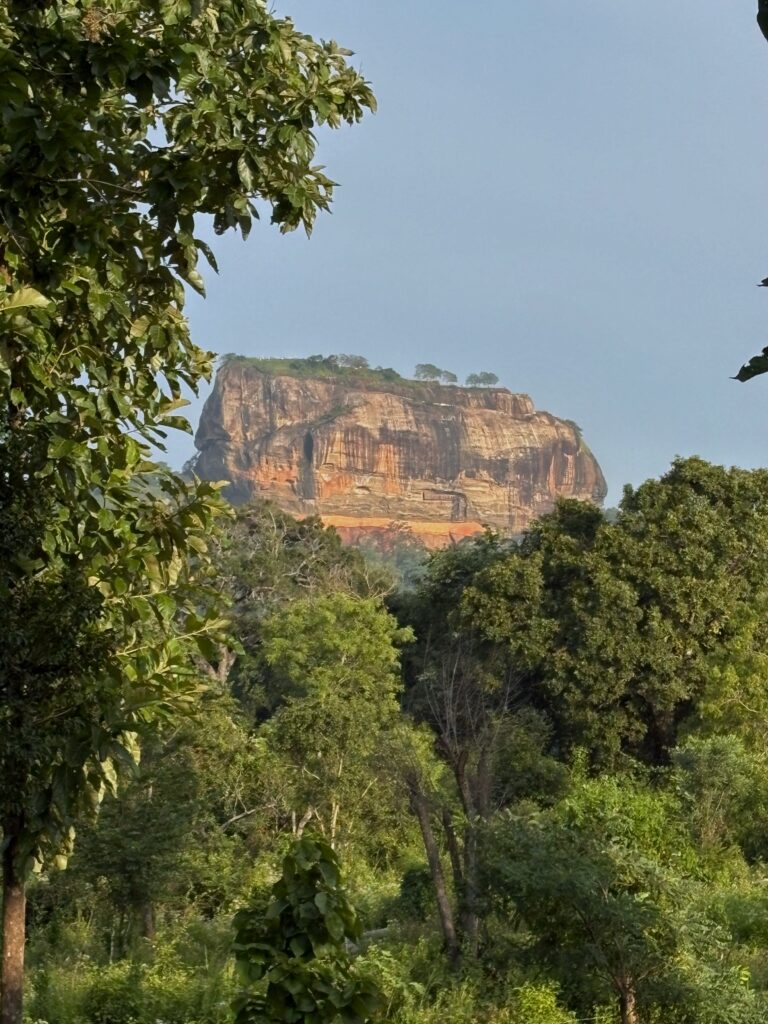
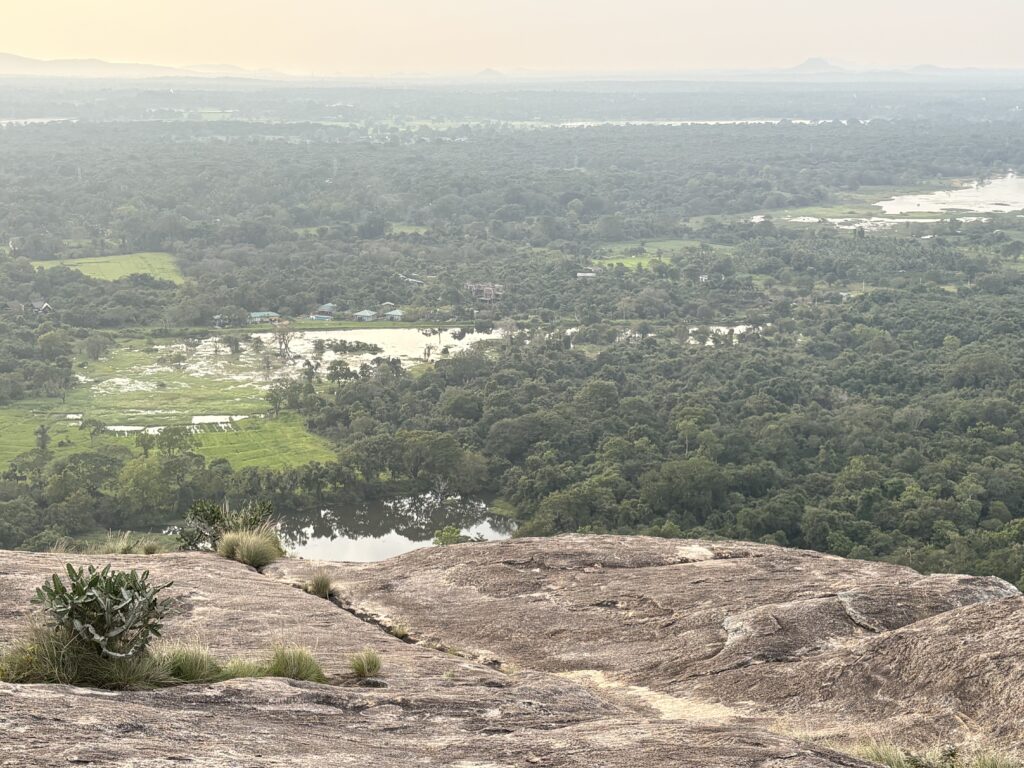
When we finally emerged onto the sloping, barren summit, the reward was worth the wait: sweeping 360-degree views of jungle, lakes, scattered homes across the plains below, and the magnificent Sigiriya Lion Rock rising dramatically in the distance, its monolithic form commanding the horizon like a sentinel from antiquity. The descent through the bottleneck proved even more exasperating, as descending crowds collided with latecomers still climbing upward.
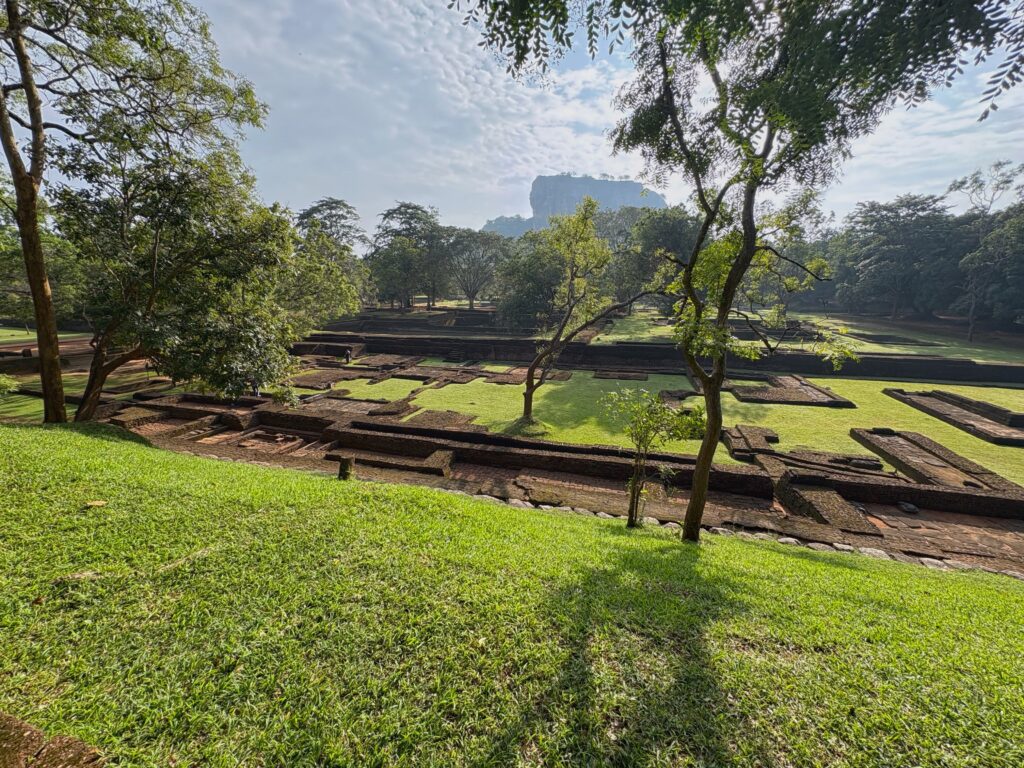
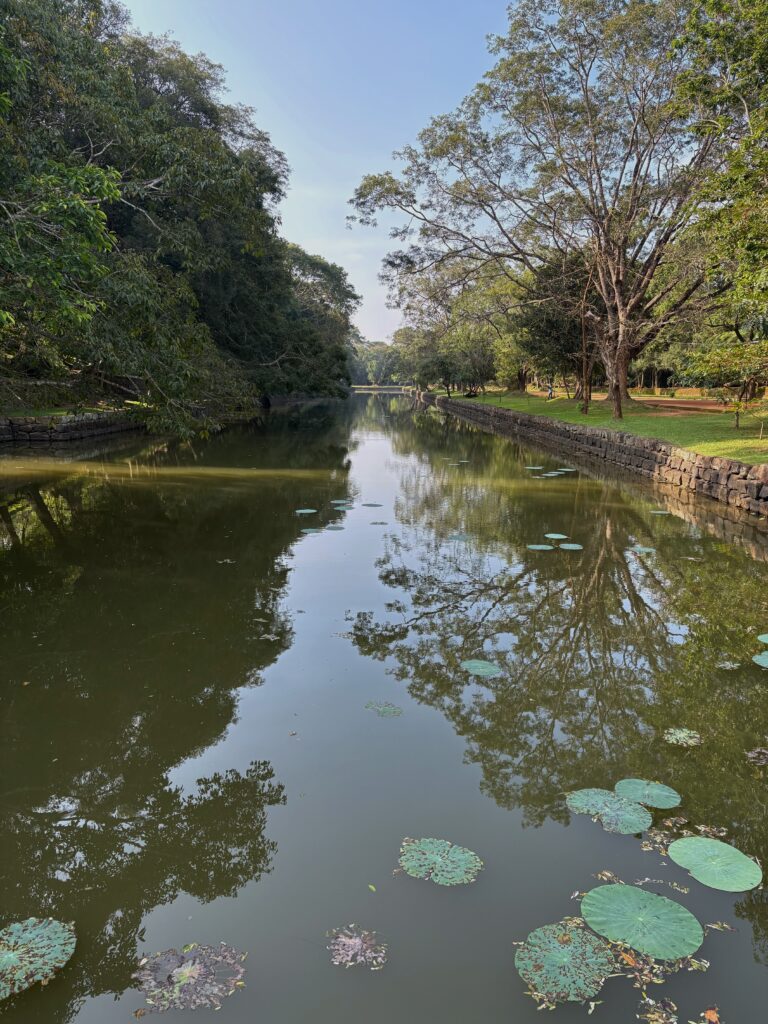
We rose early the next morning to walk the kilometre and a half from our cabana to the Sigiriya Lion Rock entrance. The cool morning air made the approach through rural countryside especially pleasant. Passing through the archaeological park’s jungle pathways, we soon reached manicured gardens — among the oldest landscaped gardens in the world — and crossed the two moats protecting the base of the rock.
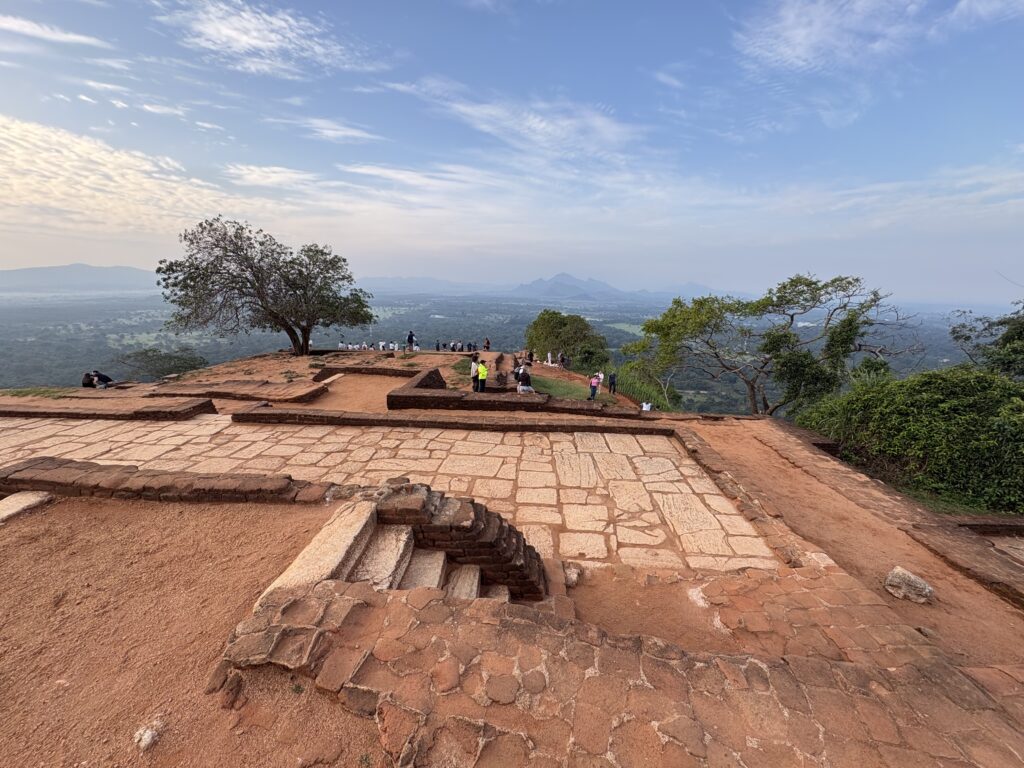
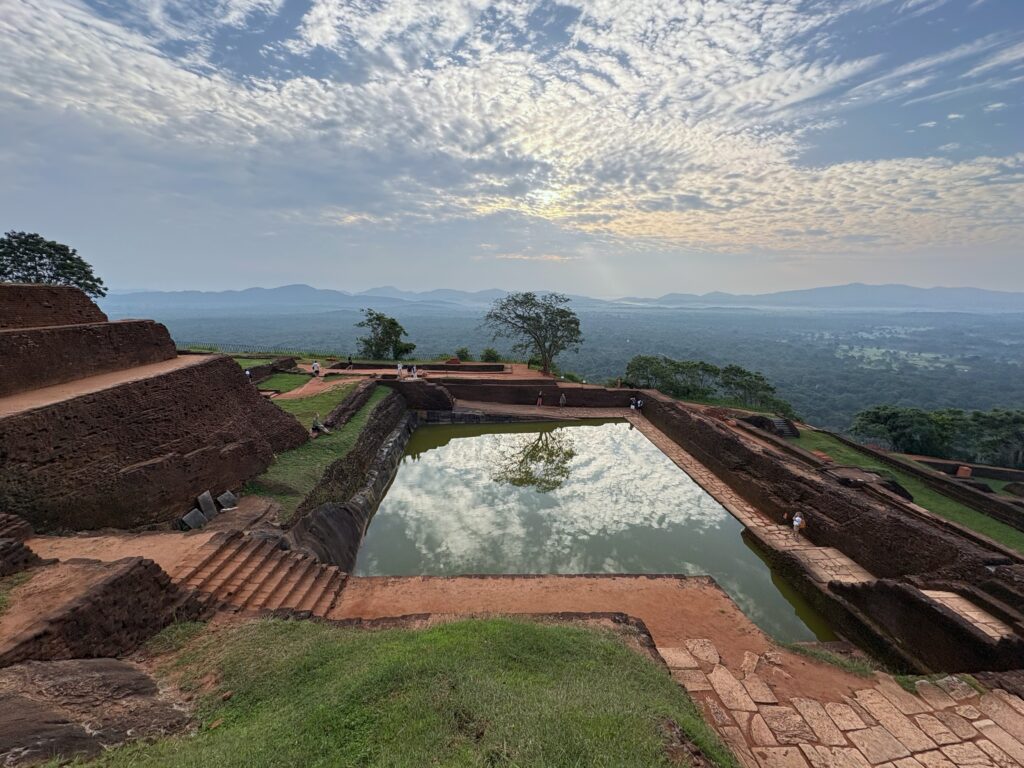
This UNESCO site preserves the ruins of a 5th-century CE palace and fortress built atop a 200-metre granite column by King Kashyapa after he seized the throne. Renowned for its sophisticated urban planning, hydraulic engineering, and frescoes, the site is as historically significant as it is visually striking, a fusion of ambition, artistry, and political drama carved into stone.
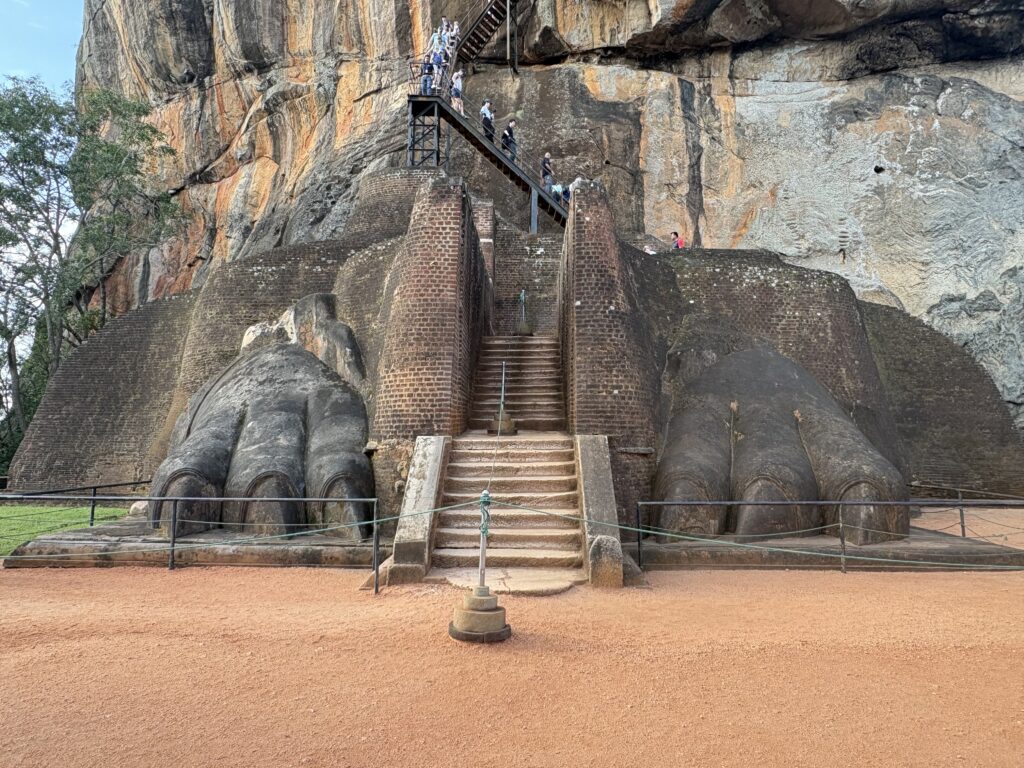
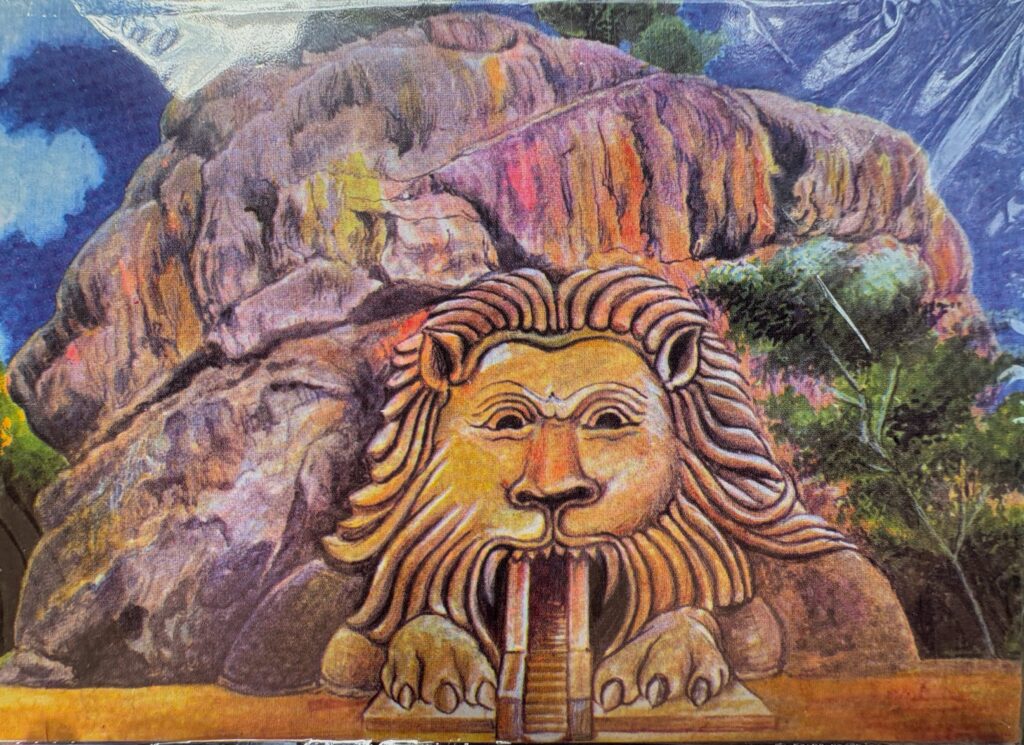
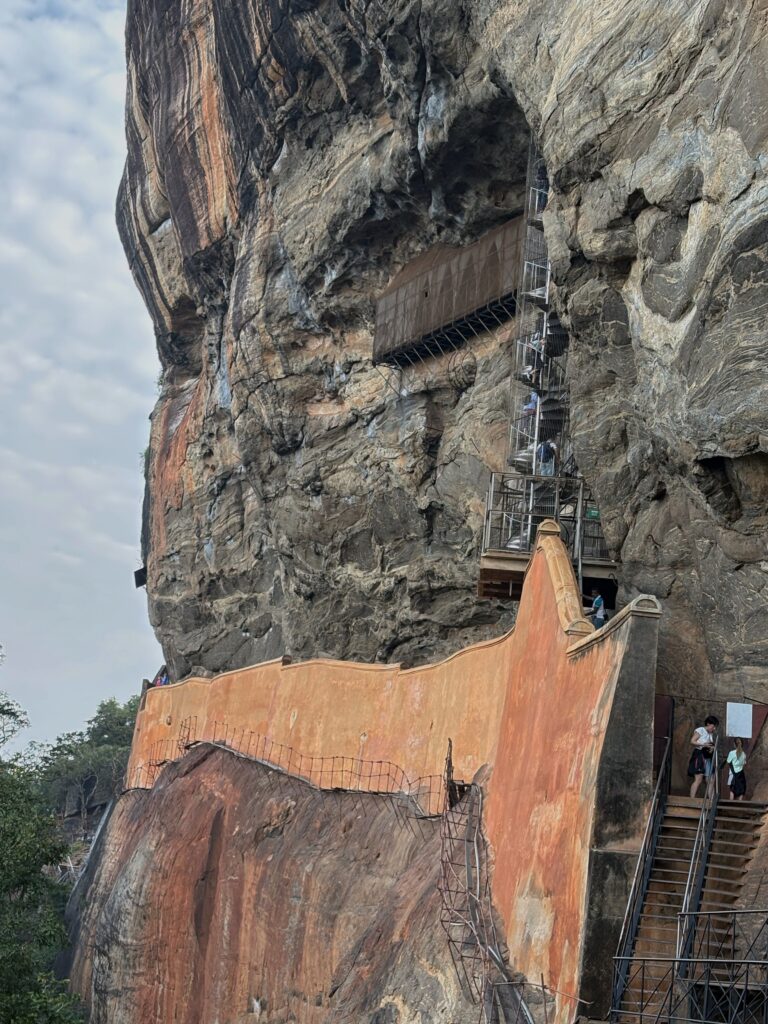
The climb — 1,200 steps in total — includes sections bolted directly to sheer rock faces. Though initially intimidated during my research, I resolved to focus only on the stairs, rails, and cliff face ahead, resisting the urge to look down. The early stone staircases posed no difficulty, and soon I reached the Lion Paws — the enormous stone remnants of a once-colossal sculpted lion through whose mouth visitors would enter.
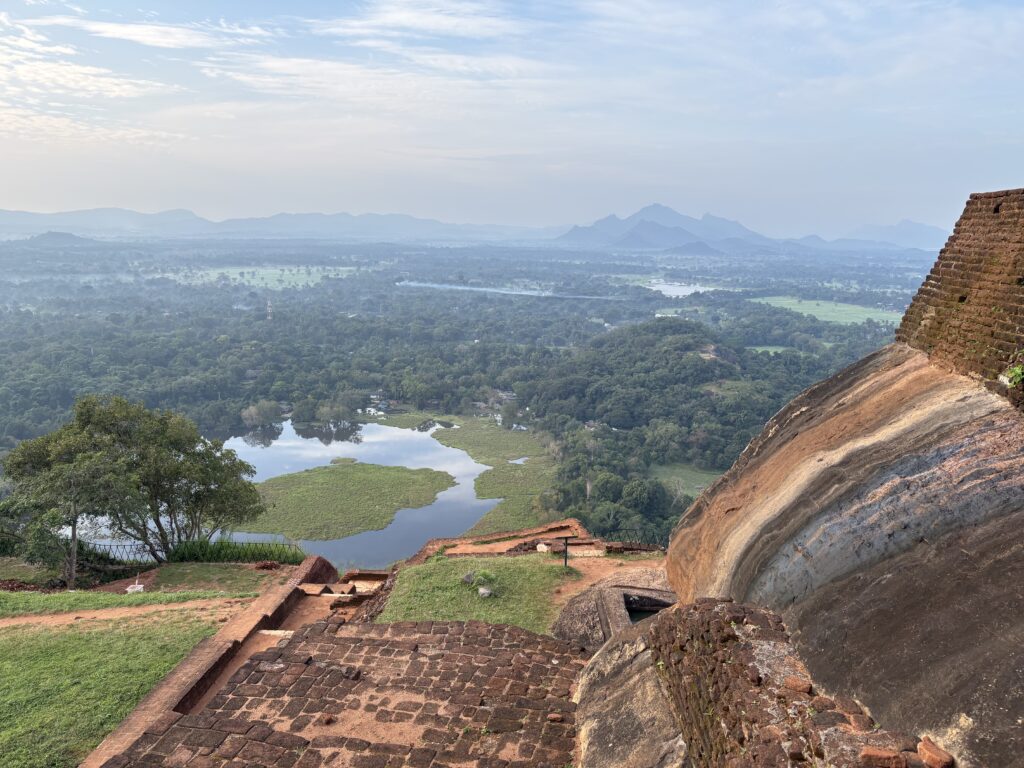
Determination carried me to the summit, where I explored the remains of this ancient hilltop refuge, imagining the king surveying his domain far below. The descent, however, proved more daunting; it is difficult to ignore the vertigo-inducing drop visible through the steel staircases. The route downward follows the Mirror Wall — a highly polished stone masonry wall etched with graffiti dating back to the 8th century CE — and passes the Sigiriya Frescoes, vibrant 1,500-year-old paintings of celestial maidens known as apsaras, their delicate forms and beauty still luminous against the rock face.
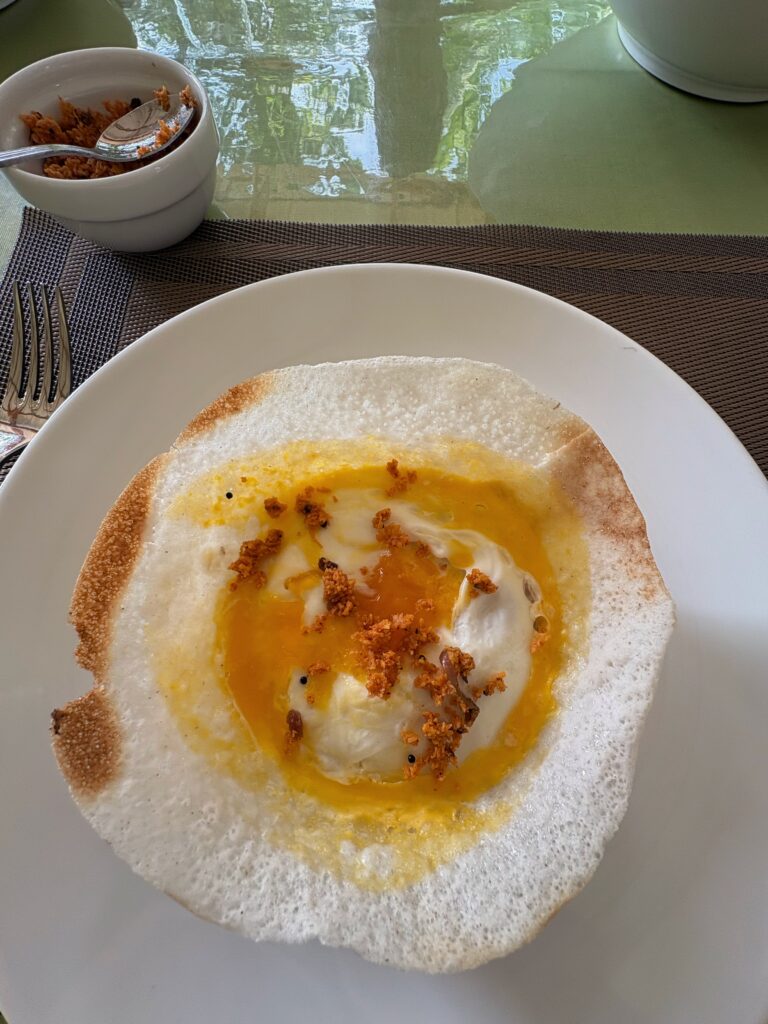
By 9:30 a.m., we were back at our cabana enjoying breakfast, including egg hoppers — bowl-shaped savoury pancakes made from fermented rice flour and coconut milk batter with an egg cooked into the centre, crisp at the edges and soft in the middle.
Soon after, we set off again for another UNESCO site: Polonnaruwa.
Located about an hour and fifteen minutes east of Sigiriya, Polonnaruwa served as Sri Lanka’s second ancient capital between the 11th and 13th centuries CE. The sprawling ruins occupy a relatively flat landscape and were once celebrated as a “garden city,” sustained by an advanced irrigation network. Along the way, we were fortunate to spot an elephant feeding by the roadside, a quiet, humbling encounter that momentarily stilled us all.
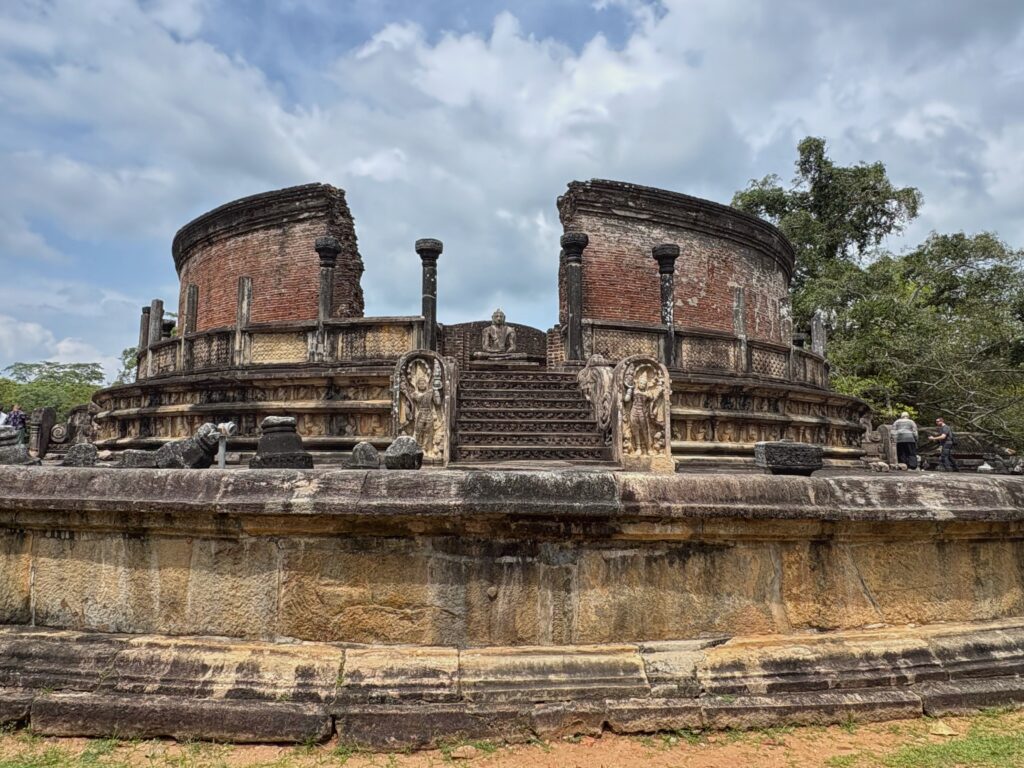
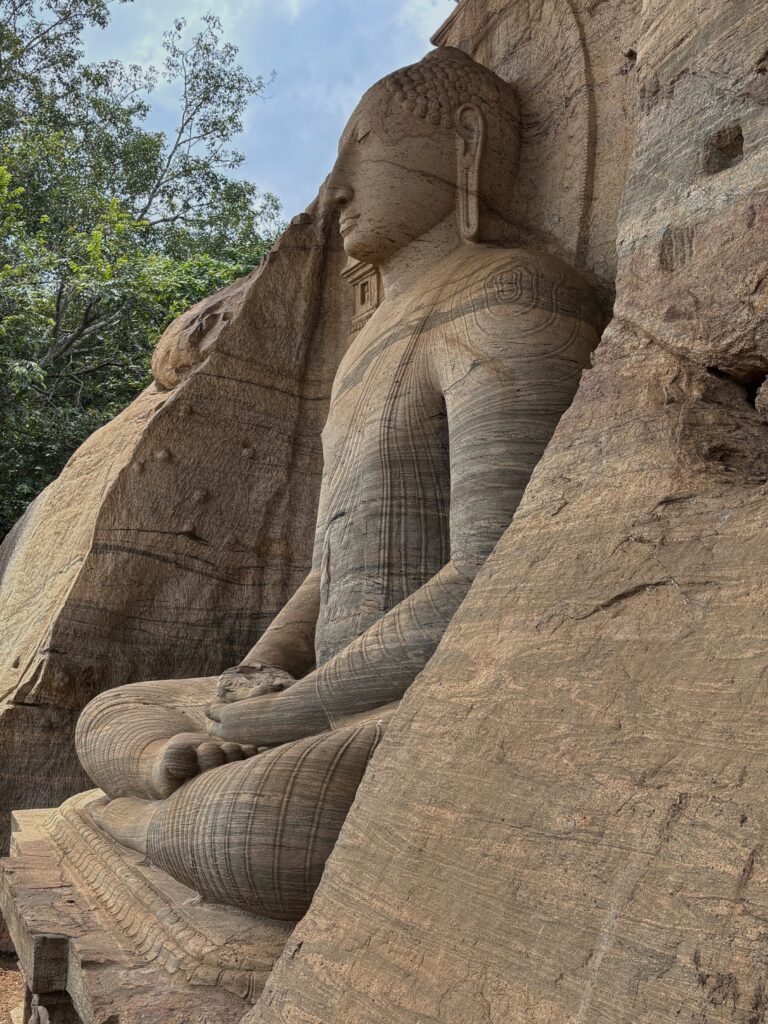
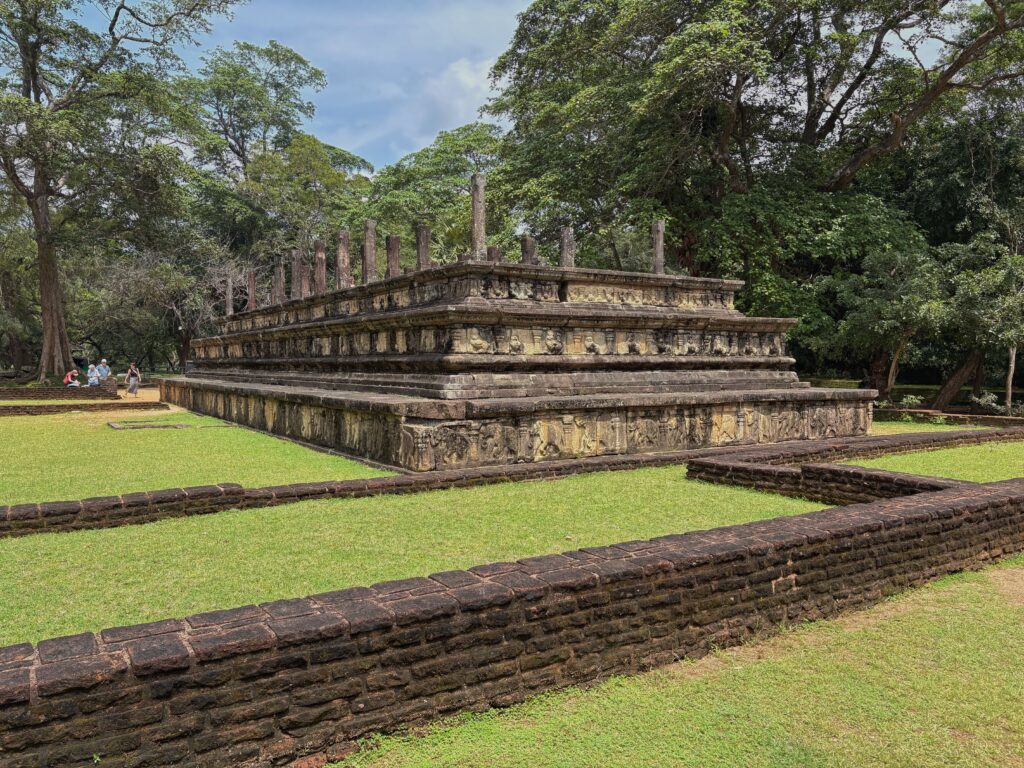
Having a car allowed us to explore key sites, including Gal Vihara, with its four monumental Buddha statues; the Sacred Quadrangle of Dalada Maluwa; and the Royal Palace of Parakramabahu, once a seven-storey structure said to contain 1,000 rooms. Though much of the wooden superstructure has long since vanished, the remaining stone foundations still convey the wealth and power of ancient Sri Lanka, whispering of a civilisation that once rivalled the great kingdoms of Asia.
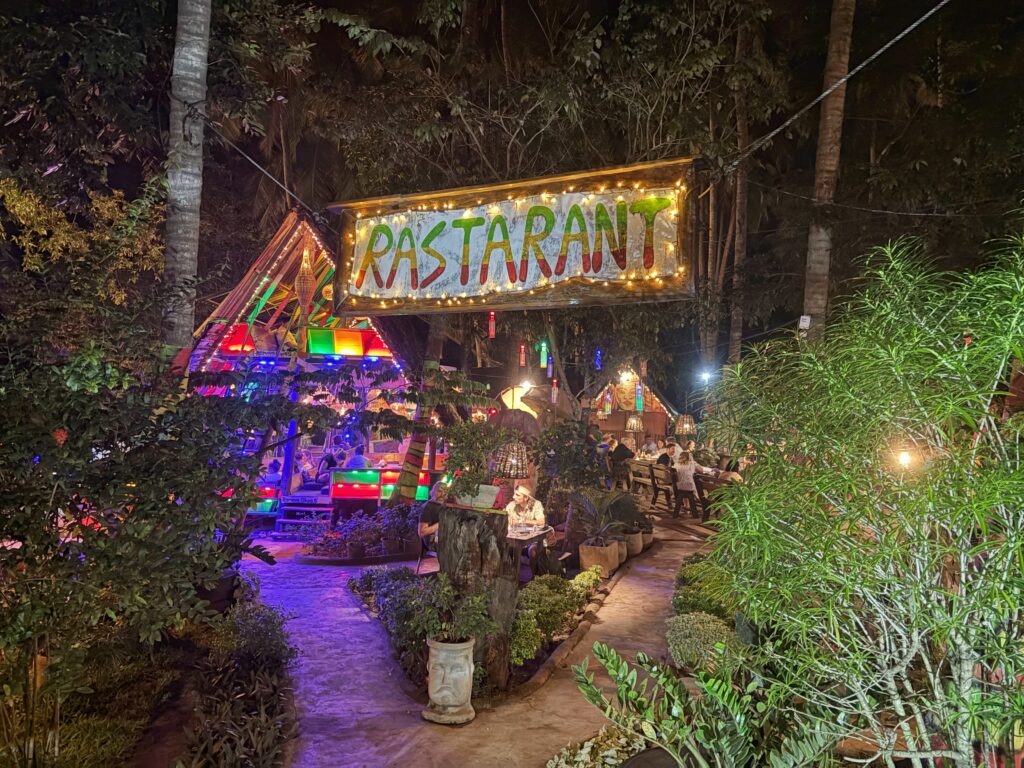
We returned to Sigiriya in the evening and enjoyed dinner and music at the lively “Rastarant.” The following morning, we would make our way south toward Kandy and the next highlights of Sri Lanka’s highlands, already sensing that this island had begun to work its quiet spell on us.