Rain, Relics, and Railways: A Highland Adventure from Kandy to Ella
We left Sigiriya early to maximize our day in Kandy. We’d be staying again with our host and friend, Ravi, at No. 63 Amy’s. We knew we were home the moment we heard the familiar sound of Sri Lankan reggae playing as we entered. After a warm welcome we were happy to be assigned our same room as before and settle in. We joined Ravi for coffee while I added to my playlist of new songs, a tradition I had started on previous trips as a free souvenir—music that always brings back memories of the places and people I encountered.
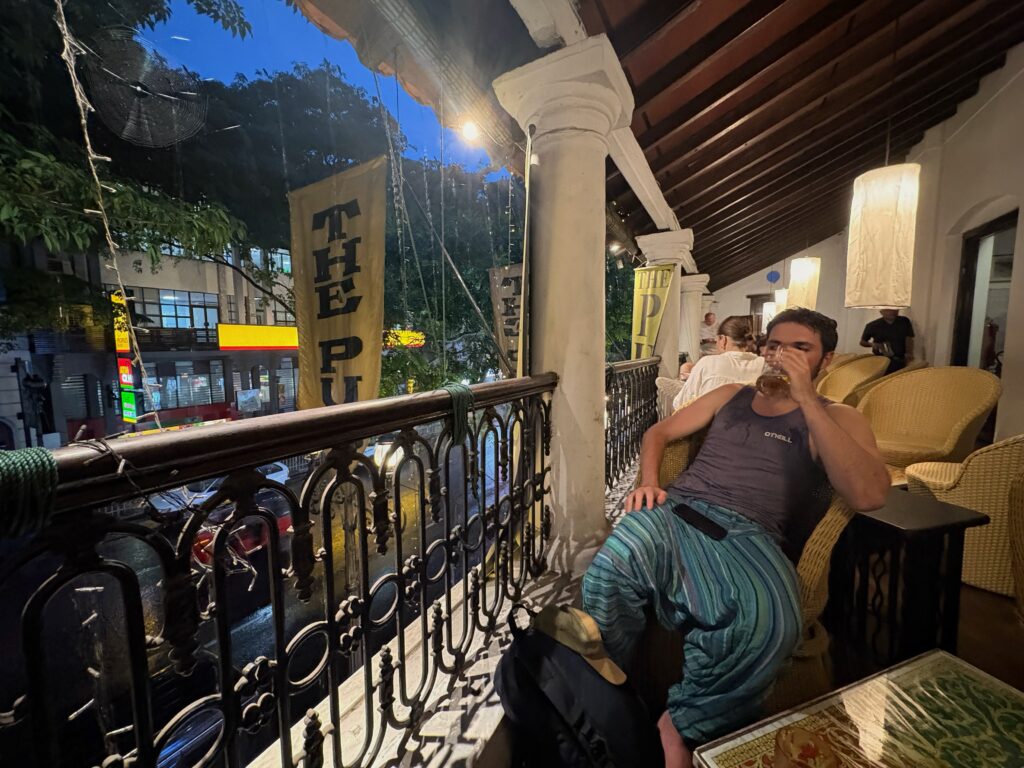
We decided to walk down the narrow, winding roads to Kandy’s city center, just a few hundred meters below, and much to the chagrin of the tuk-tuk drivers who passed us enquiring if we needed a ride. Our first stop was the market, where we had scoped out various items on our previous visit. We were determined to bargain hard, making sure we didn’t pay the inflated tourist prices some vendors try to charge. After shuttling amongst numerous stalls and a maze of alleyways, we finally scored the items we wanted at a fair price, a victory in itself. The downpour that followed caught us a bit by surprise, the kind of tropical rain that soaks you to the bone in minutes, but at least the temperature was still warm. We had planned to visit the Temple of the Tooth, but the storm diverted us into a pub aptly named The Pub, where we waited for the rain to subside. Hours later, several beers down and the rain still pouring, we accepted our fate and decided to endure the storm.
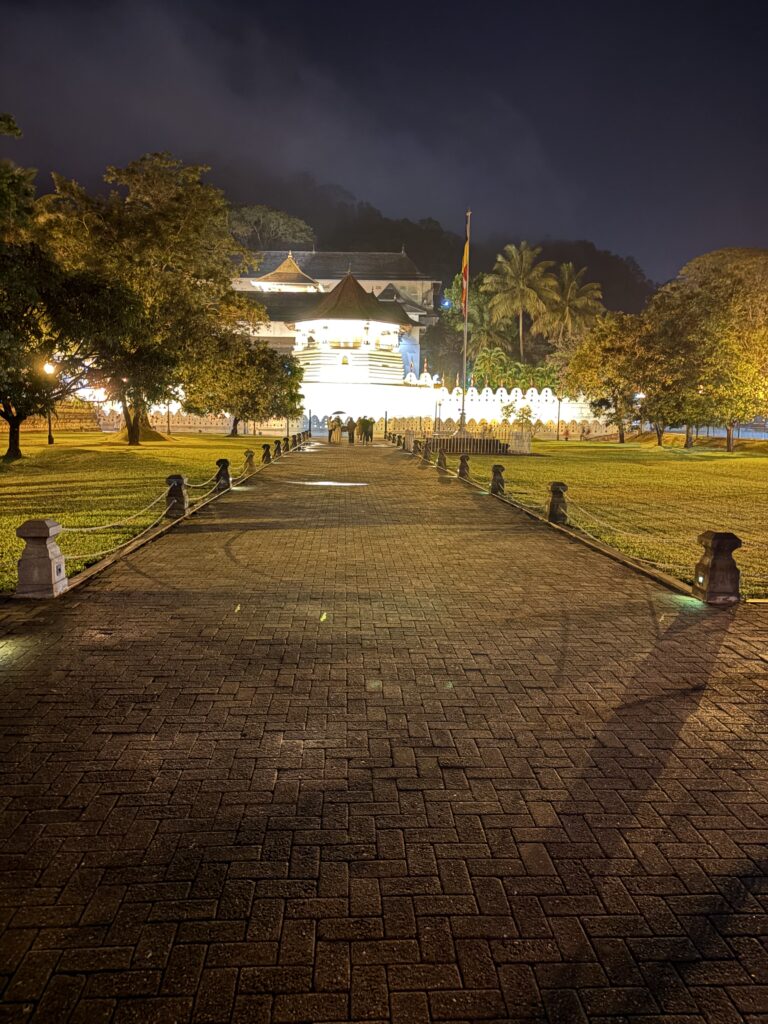
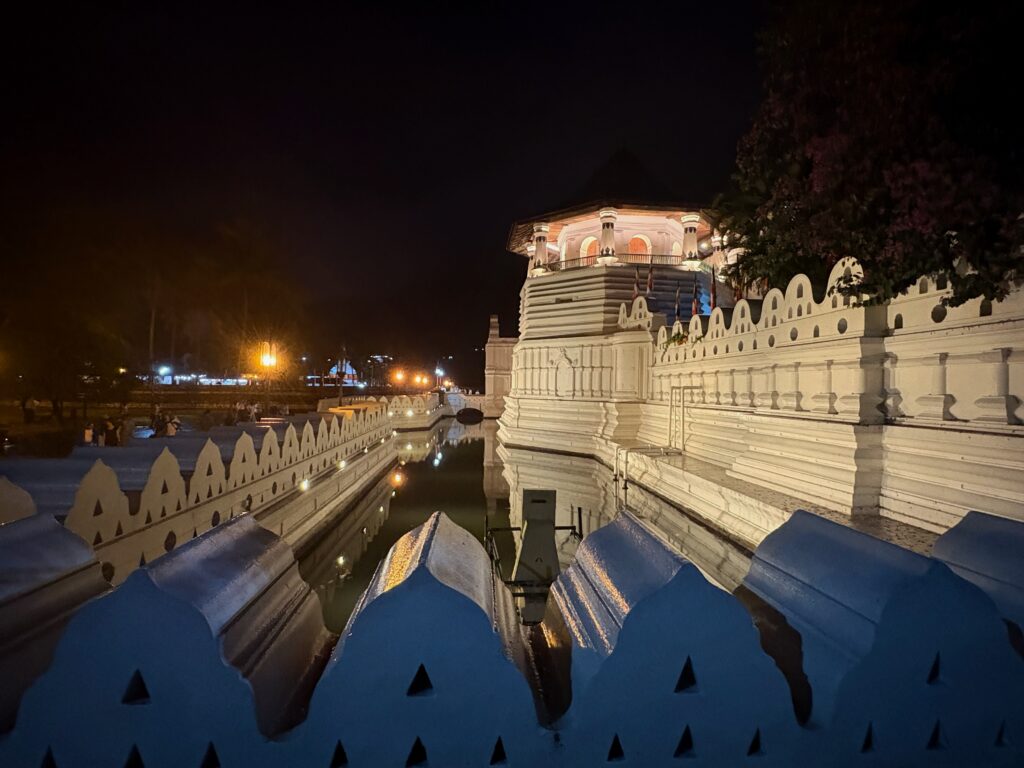
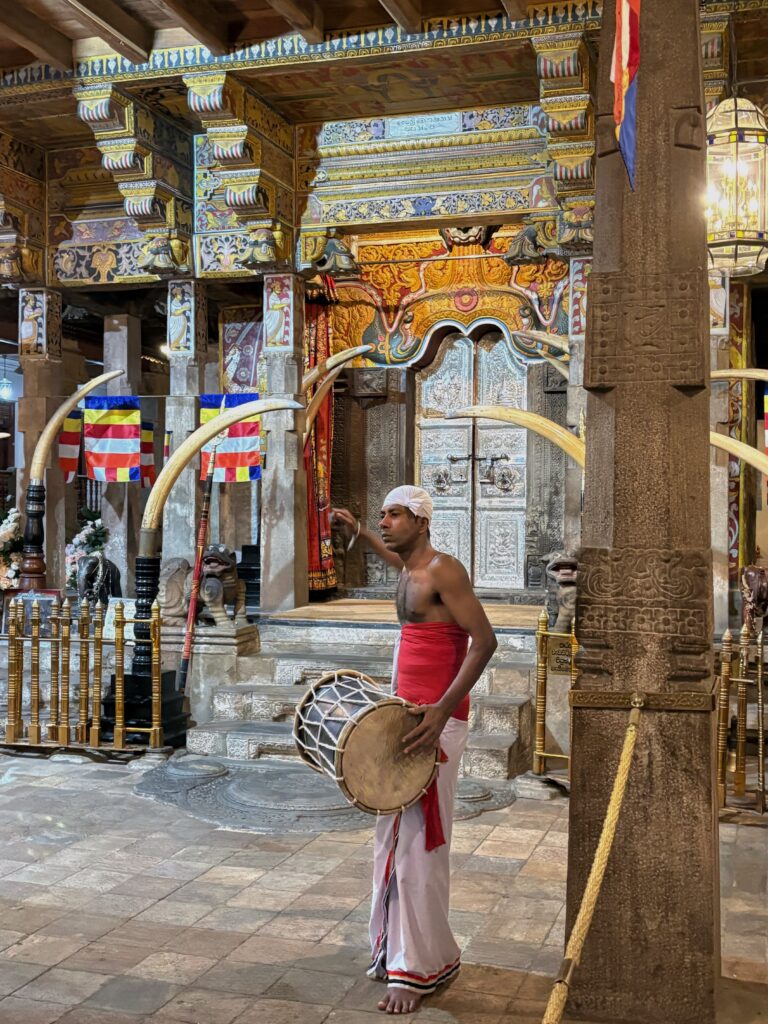
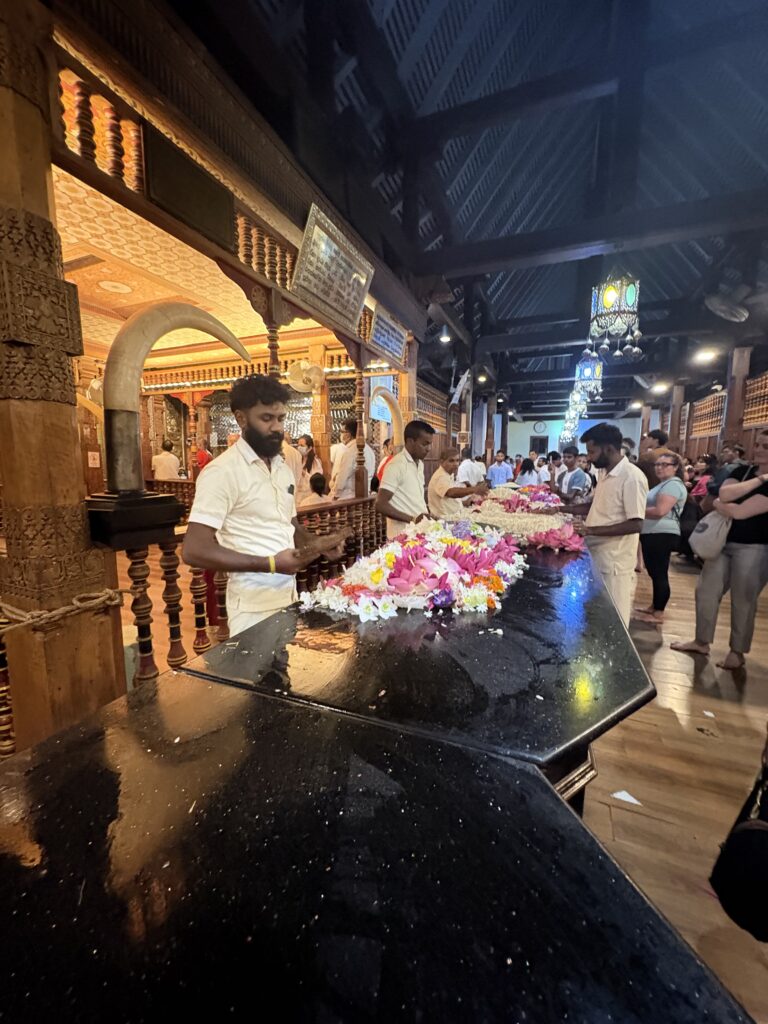
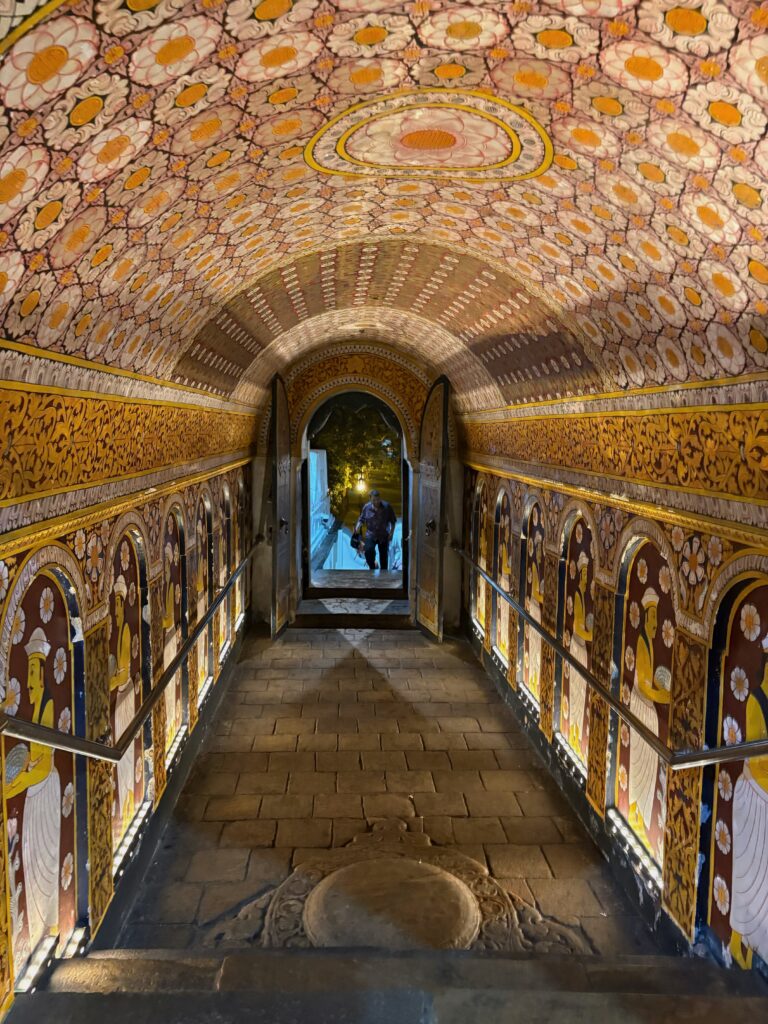
The rain finally began to abate as we made our way to the Temple of the Sacred Tooth Relic. As we walked, the mist from the rain became refreshing rather than oppressive. The temple, located in the former royal palace complex of the Kingdom of Kandy, is one of the holiest sites in Buddhism. It houses the Buddha’s left canine tooth relic, and an ancient legend says that whoever possesses the relic has the divine right to rule Sri Lanka. The temple itself, a World Heritage Site, has been carefully preserved through the centuries. We arrived during one of the three daily rituals periods when offerings are made to the relic, as if it were the Buddha himself. The ceremony was elaborate, with drumming, incense, and offerings of medicinal drinks like honey and ginger juice, all presented in beautiful gold and silver vessels. During the ritual, the inner chamber housing the golden casket of the relic is opened to the public, though the actual tooth remains hidden inside seven nested golden caskets, with devotees only allowed to see the outermost one.
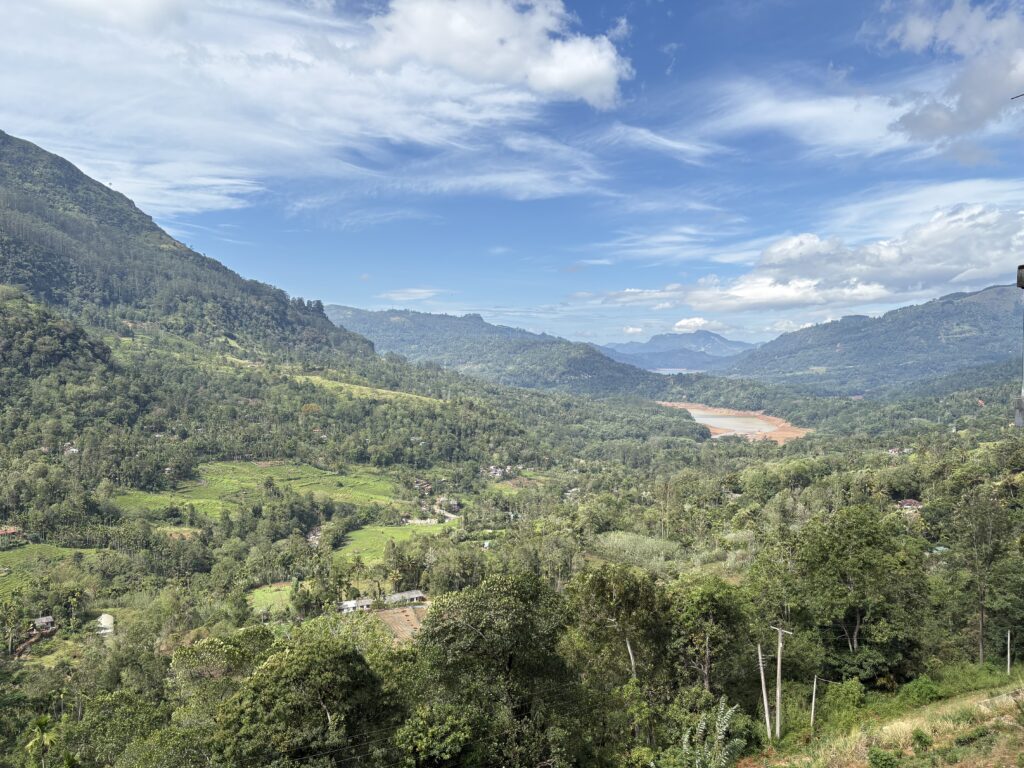
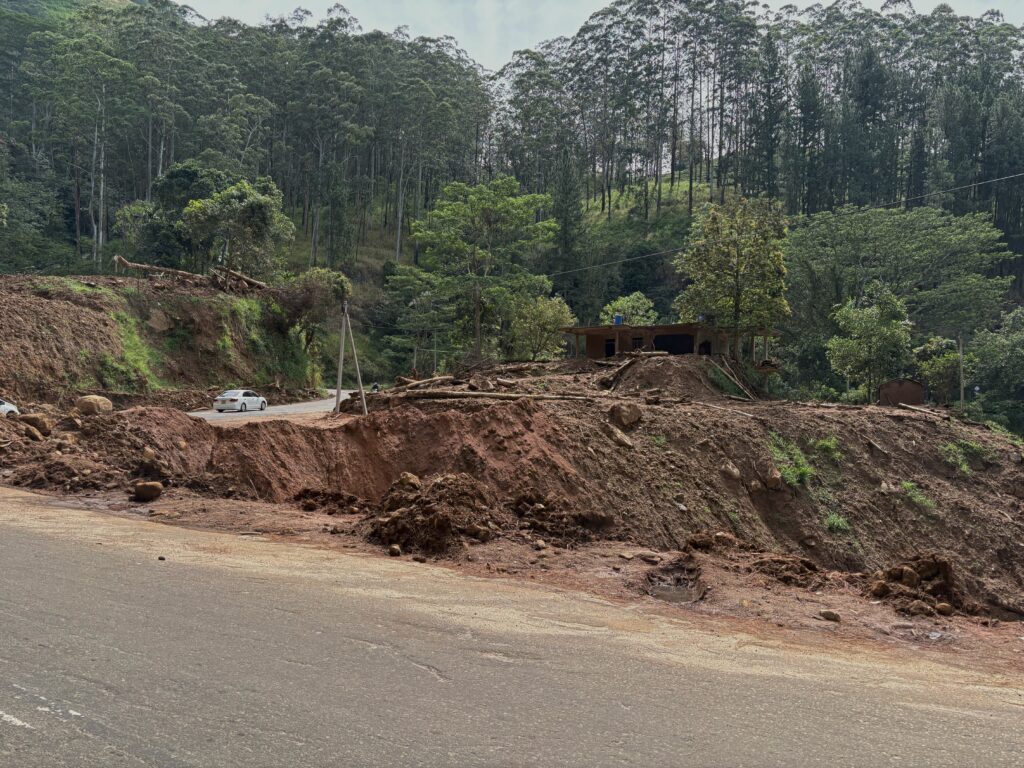
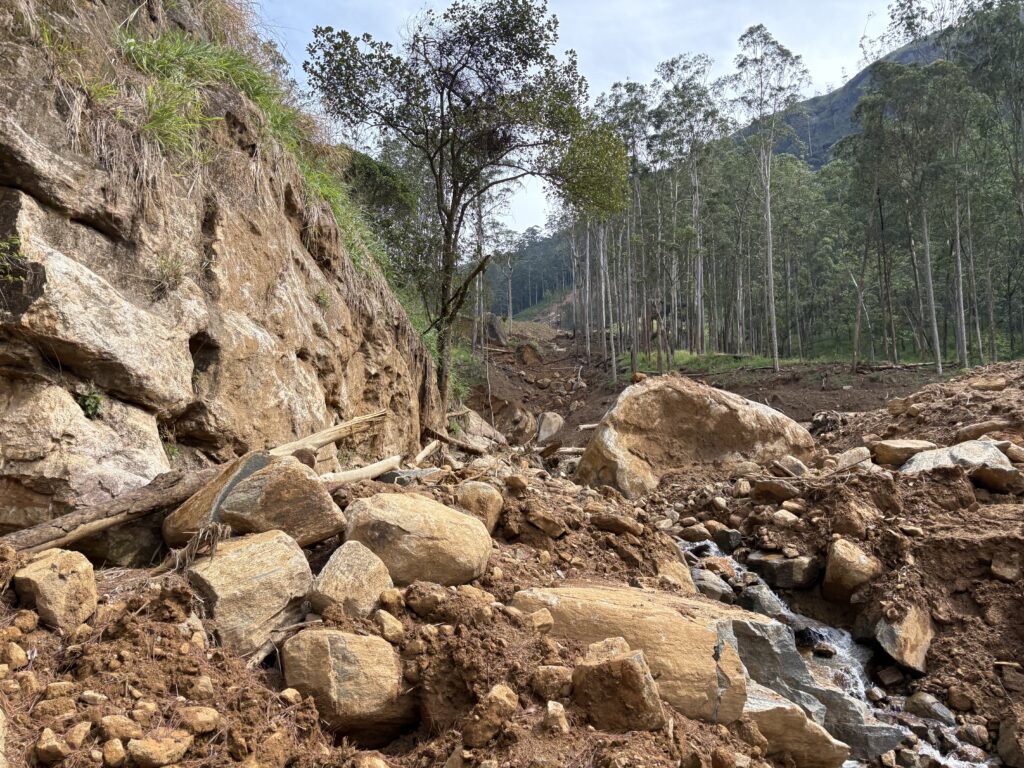
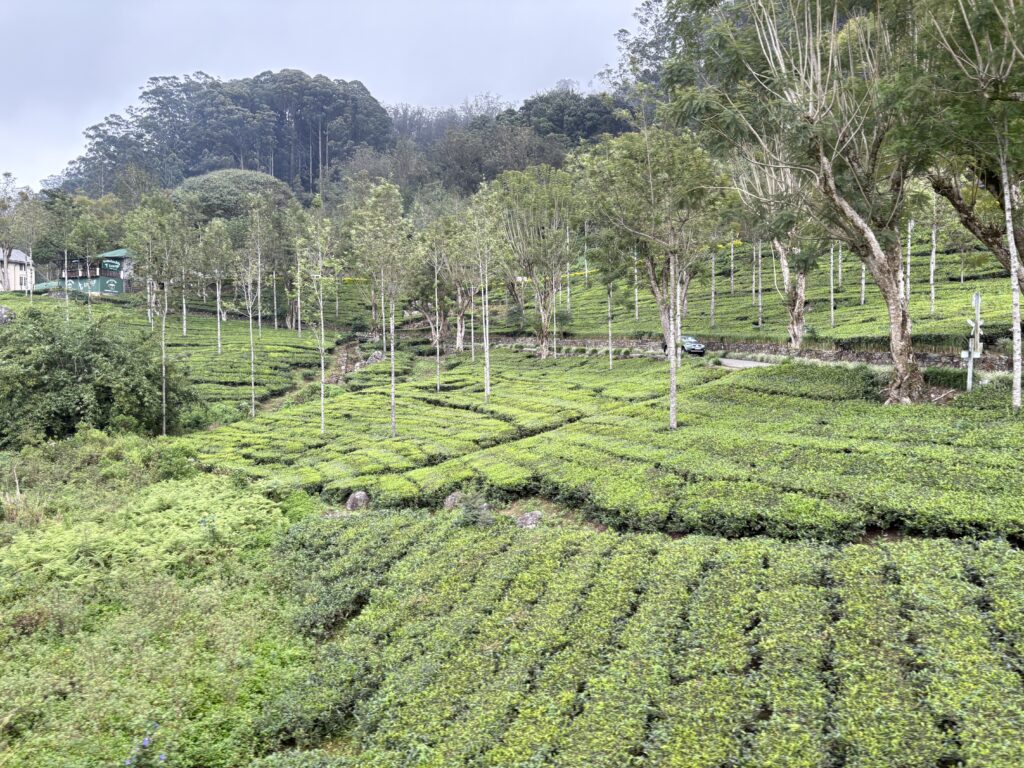
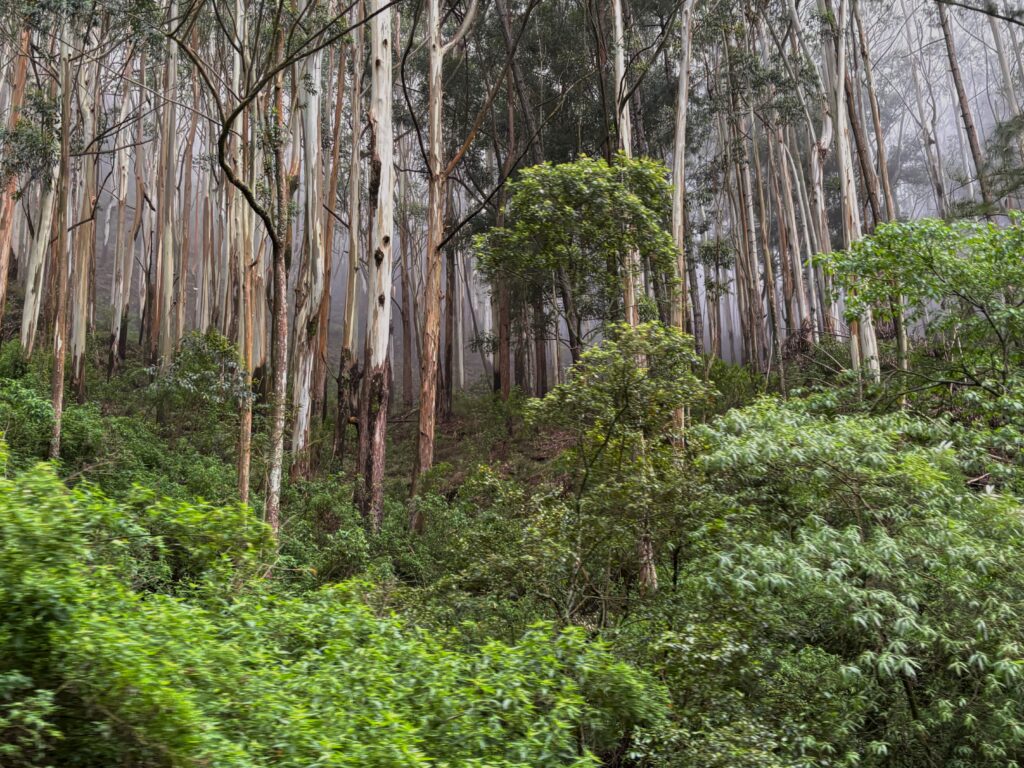
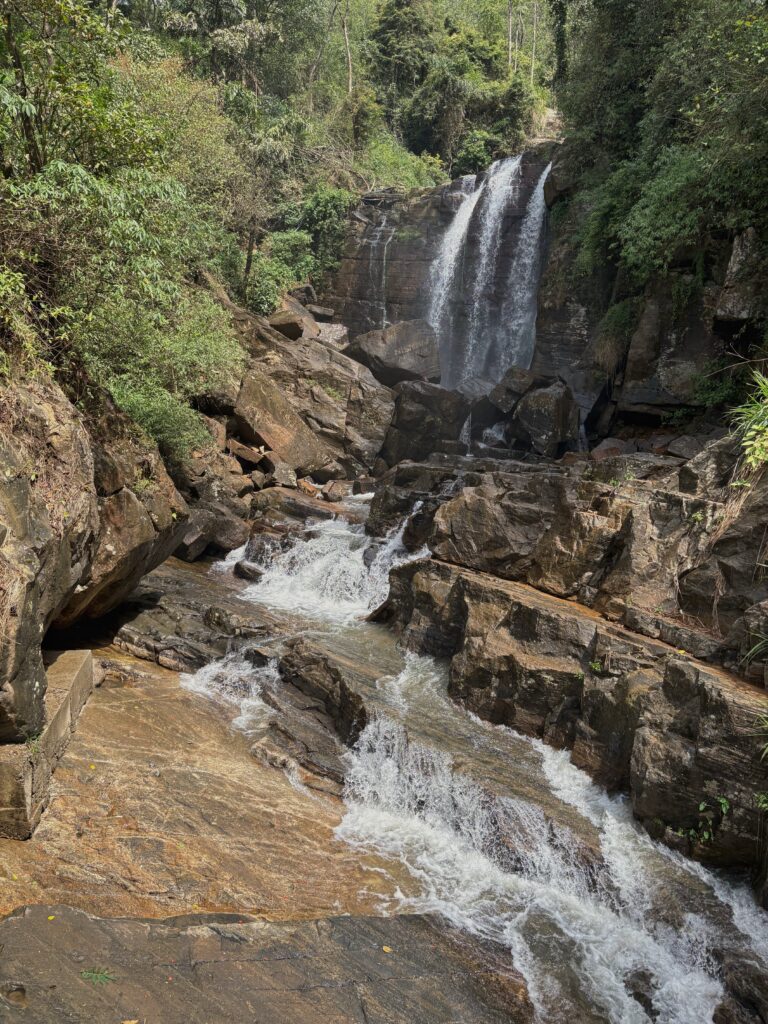
The next morning, we took our leave of Kandy, heading to the highland town of Ella, but not before we did some exploring along the way. Our car swayed back and forth as we wound higher into the mountains, passing numerous waterfalls, tea plantations, wispy pine forests, and various agricultural crops. In November of 2025, the island was hit by Cyclone Ditwah, which became the deadliest natural disaster in the country since the 2004 tsunami. It unleashed catastrophic rainfall, widespread flooding, and landslides across all 25 of the country’s districts. Over 600 deaths have been confirmed, with 183 people remaining unaccounted for. The scars were evident all over the landscape as exemplified by the numerous slide paths and ongoing work to clear debris, make repairs, and stabilize the banks of the roadway. The world’s most scenic railway journey is reputed to be the route between Kandy and Ella, which is often sold out months in advance. However, due to the landslides, the section between Kandy and Ambewella remains closed indefinitely, perhaps for years, with entire sections of track wiped away or left hanging in midair.
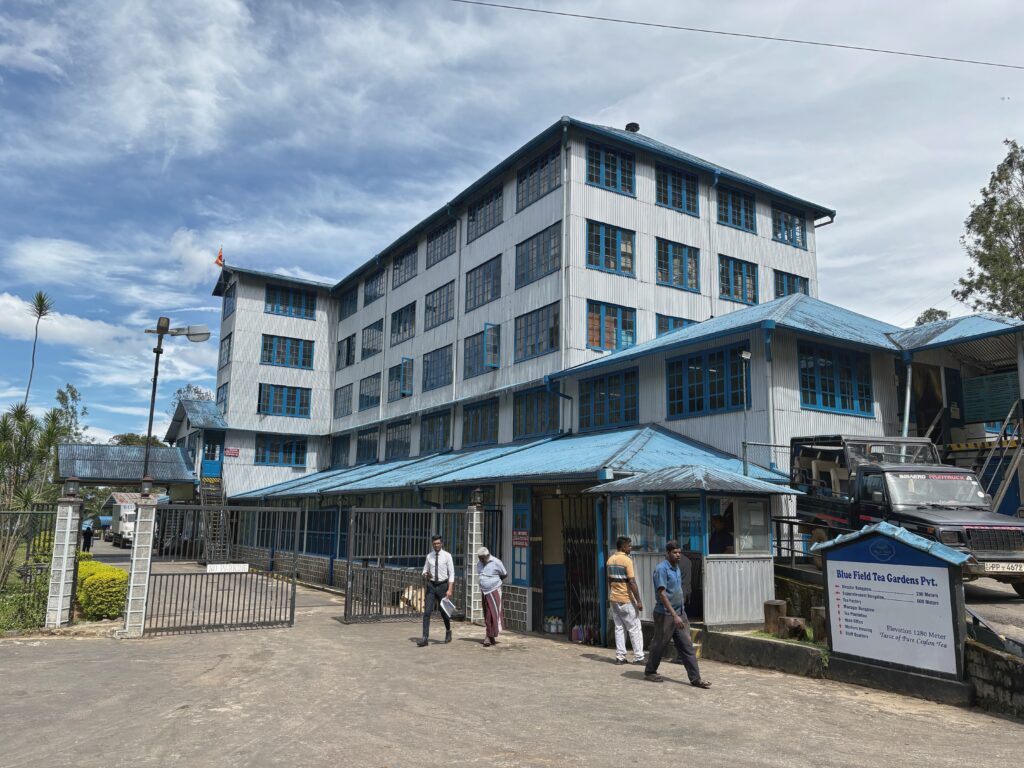
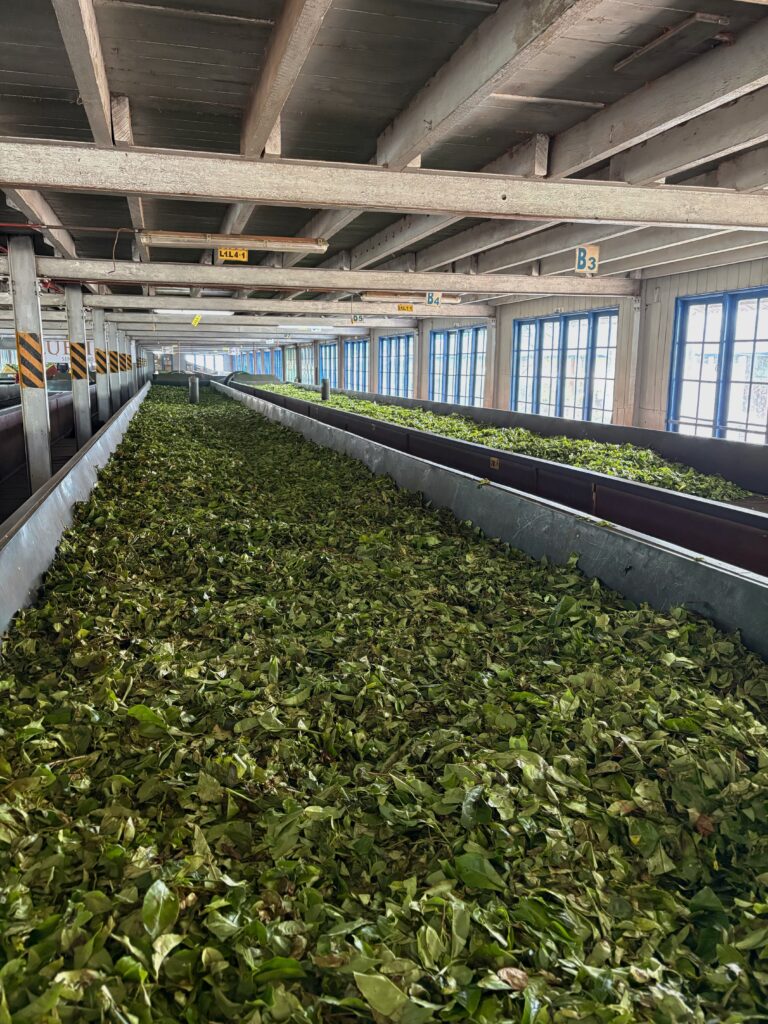
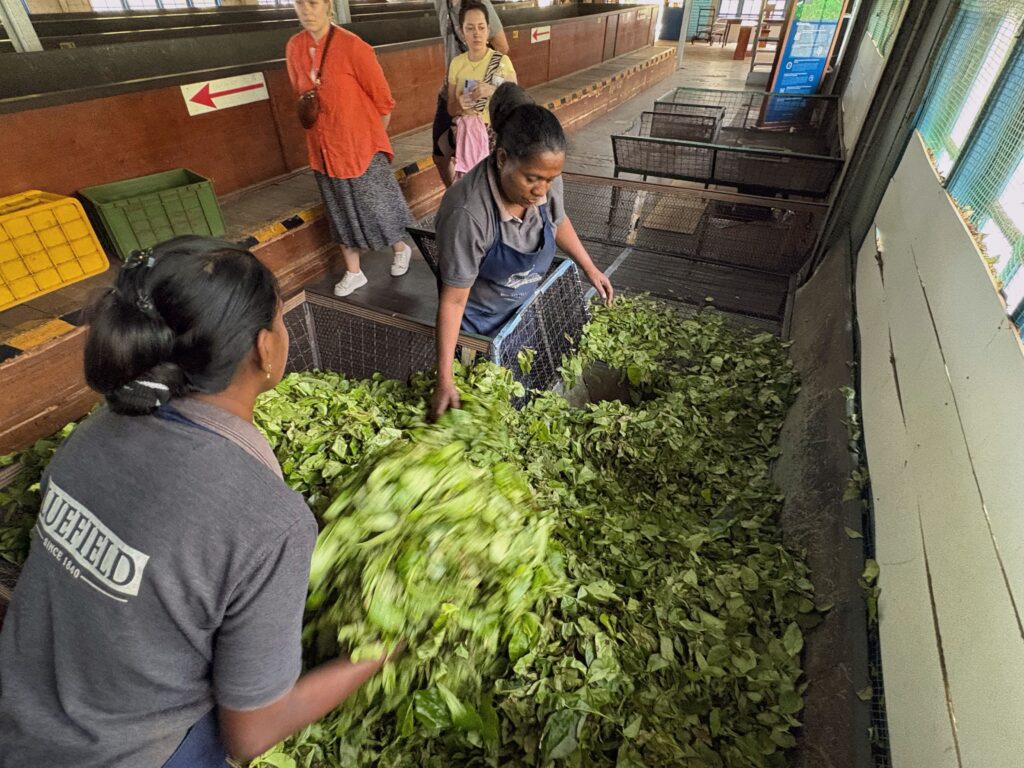
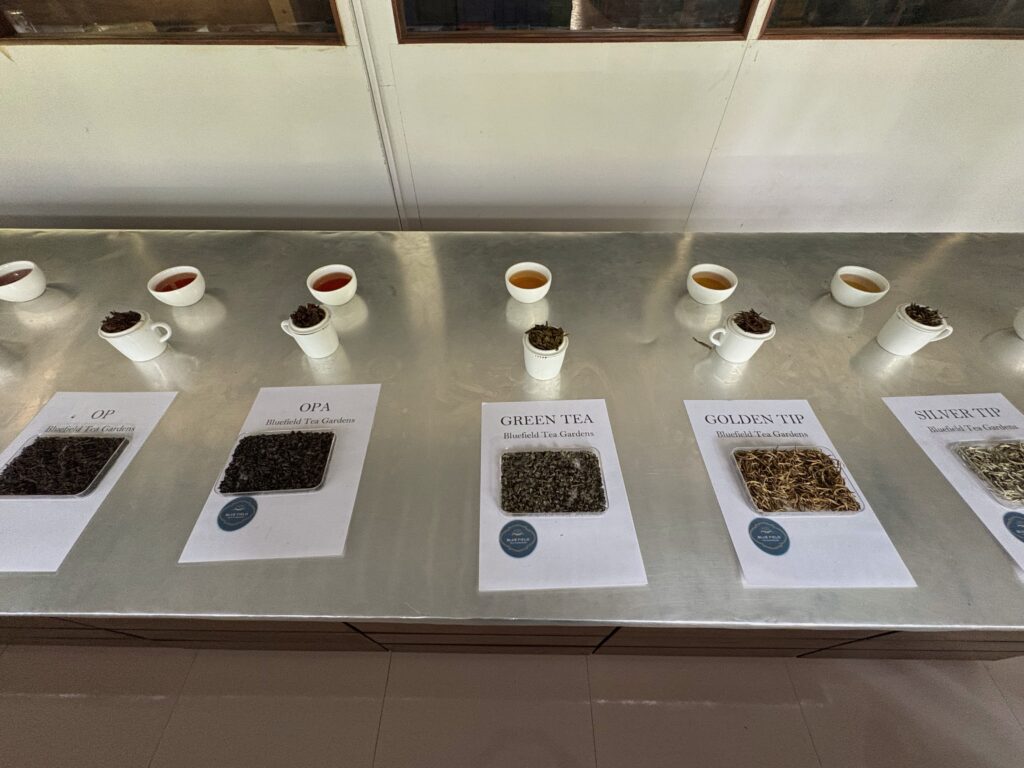
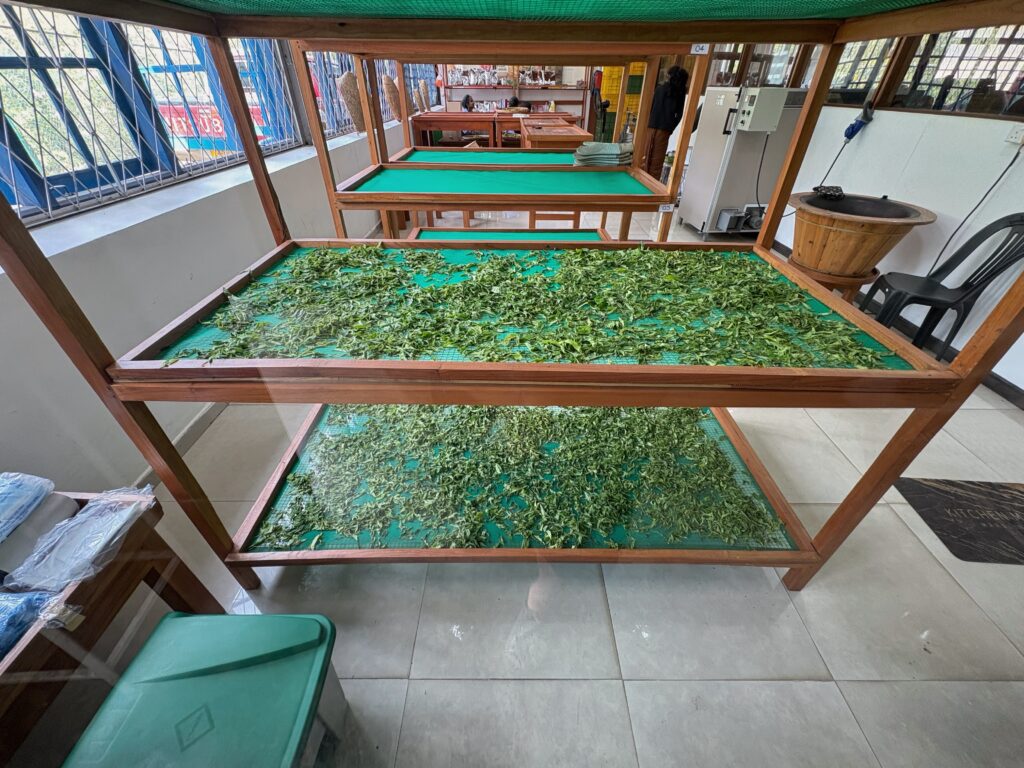
After about an hour into our journey, we made a stop at one of the many tea plantations that made Sri Lanka, formerly Ceylon, famous for its Ceylon tea. We stopped at the Bluefields Tea factory and estate, which traces its roots back to the early 1800s when it was established by Maurice Worms, a pioneer of tea cultivation in Ceylon. The name was chosen to describe the visual harmony where the lush green tea leaves meet the clear blue skies at sunrise. During the tour, we learned about the differences between black, green, and white tea, as well as the various harvesting and curing processes that result in their distinct labels—rather than them being different species of the tea plant. After learning all about withering, rolling, fermenting, drying, and grading, we were off to the tasting room to try some free samples and were invited, of course, to peruse the gift shop. I always wondered why you don’t see white tea back home very often. I’d always wondered why white tea isn’t more commonly found back home. Now I understand that it’s primarily due to the higher cost of production, which stems from the meticulous care and natural curing process involved, as well as the selection of only the young green tips of the tea plant. With some tea in hand, we hopped back into the car and headed off to our next stop.
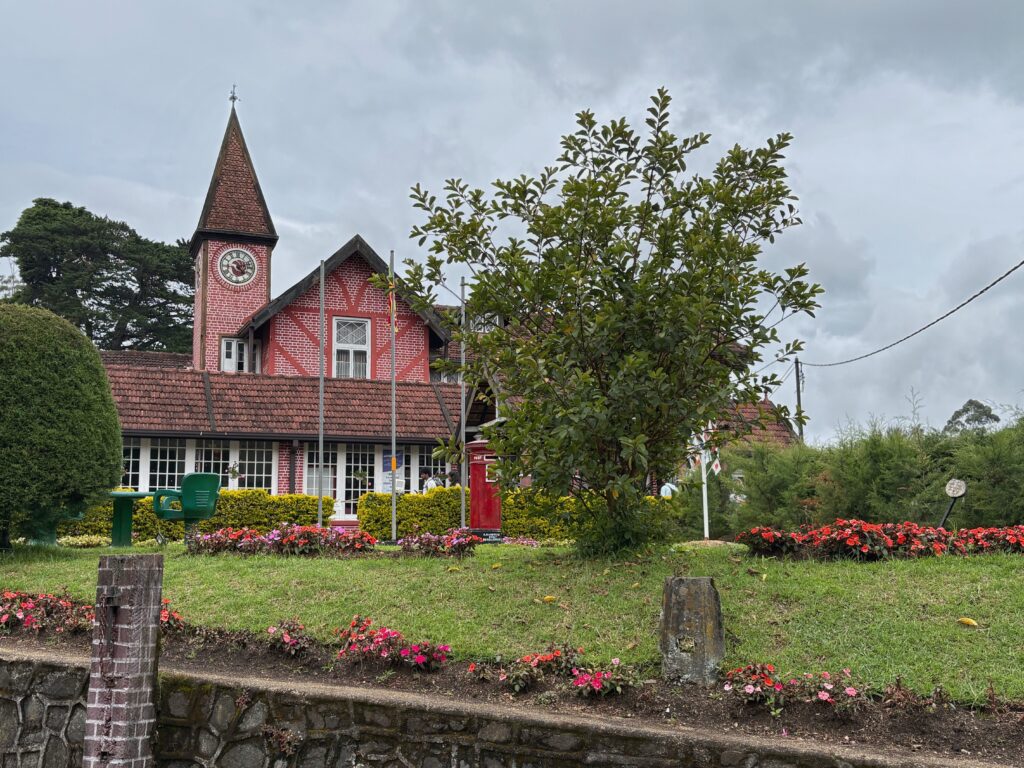
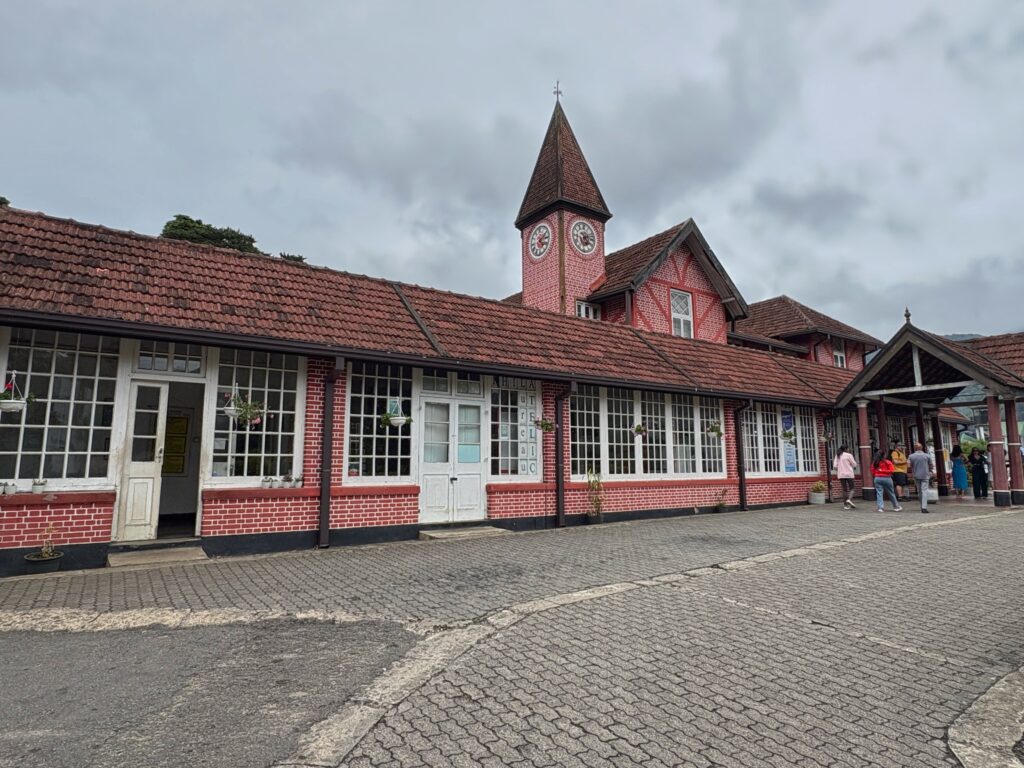
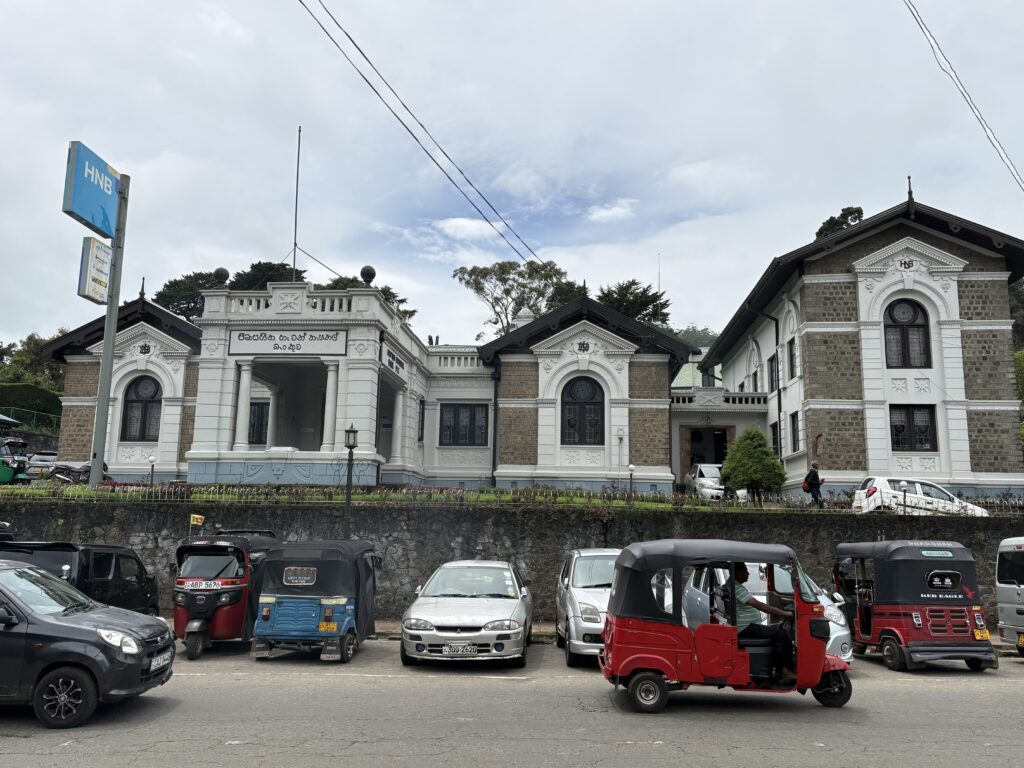
Unfortunately, Mylo had gradually been feeling more and more unwell as the day progressed, with what we guessed was a likely case of “Ceylon Belly” from something he had eaten. By the time we arrived at the mountain town of Nuwara Eliya, which is situated at 1,868 metres, Mylo was feeling significantly worse. The town, famous for its cool, temperate climate and colonial-era architecture, is also referred to as “Little England”. It is the heart of the Sri Lankan tea industry and to escape the sweltering heat of the tropical lowlands, British officials and tea planters established it as a colonial hill station where they could retreat to cool off during the hottest periods of the year. The town is filled with preserved buildings from this era, with their characteristic Tudor, Victorian, and Edwardian designs, all complemented by English-style gardens, rose bushes, and well-tended hedgerows. Today, this has made it a favourite spot for tourists to stop and spend time trekking in the highlands or just relaxing.
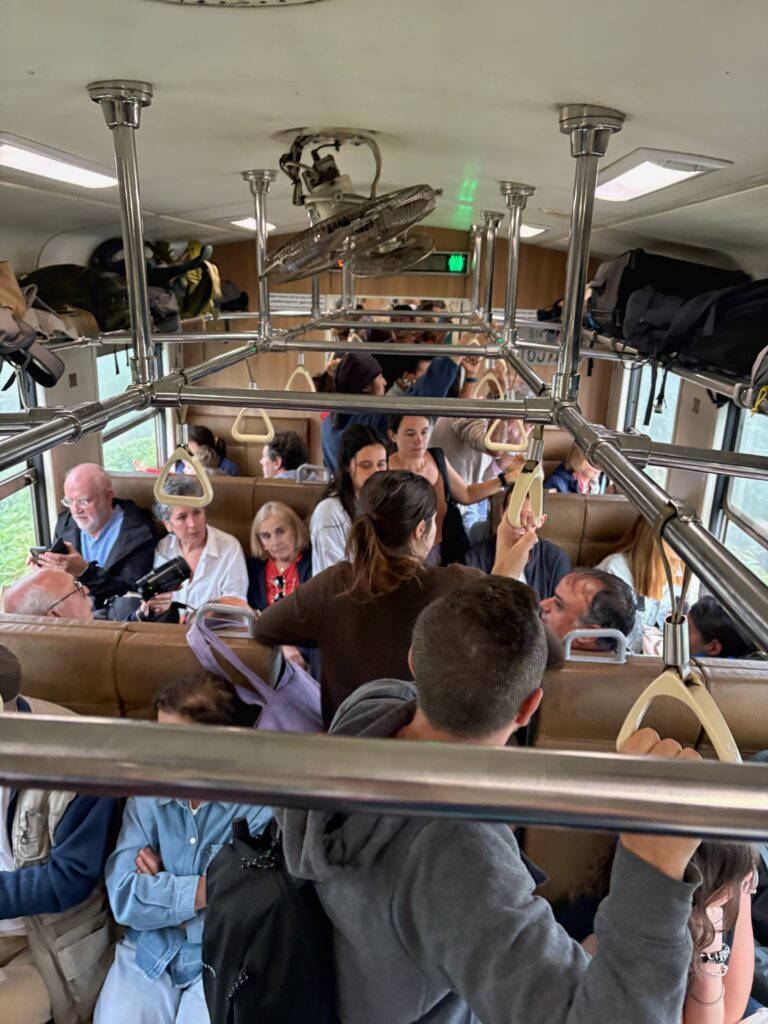
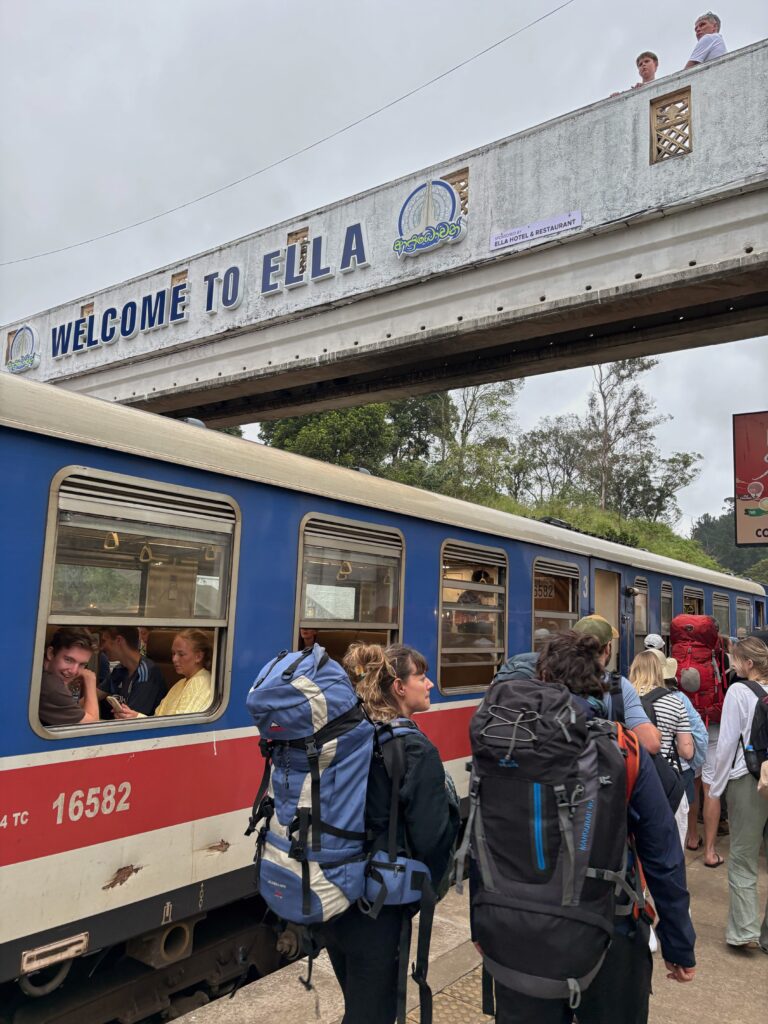
Our stop at Nuwara Eliya was brief, since we needed to continue on to the Ambewella train station, where the train would take us on to Ella along the remaining undamaged section of the scenic highland railway. Without the long-sold-out reserved tickets in first or second class, we were risking going without a seat in the unreserved lower class railcars. By this time, Mylo’s condition had further deteriorated, but there was no option but for him to soldier on as best he could until we reached our accommodations in Ella. After I had purchased our tickets, I raced ahead down the platform to find us seats while Mylo struggled to keep moving while vomiting along the way. I just managed to secure the last two seats available, and as Mylo clambered aboard, I sacrificed my seat to him so he could assume a less-than-ideal fetal position across them.
We managed to survive the 2-hour ride to Ella with Mylo receiving some Gravol from a fellow Canadian passenger, and starting his antibiotics (brought along for just such a contingency) after a text consult with her nurse brother. I at least had the opportunity to enjoy the scenery, even though it was a bit of a foggy, cloudy, rainy trip. Fortunately, by the time we reached the station in Ella, the rain had stopped, and we were able to quickly grab a tuk-tuk to our accommodations. Mylo fell into the bed upon our arrival and was soon brought some tea, a banana, and a special lime juice concoction reputed to help with this type of stomach issue by our gracious host Chandy
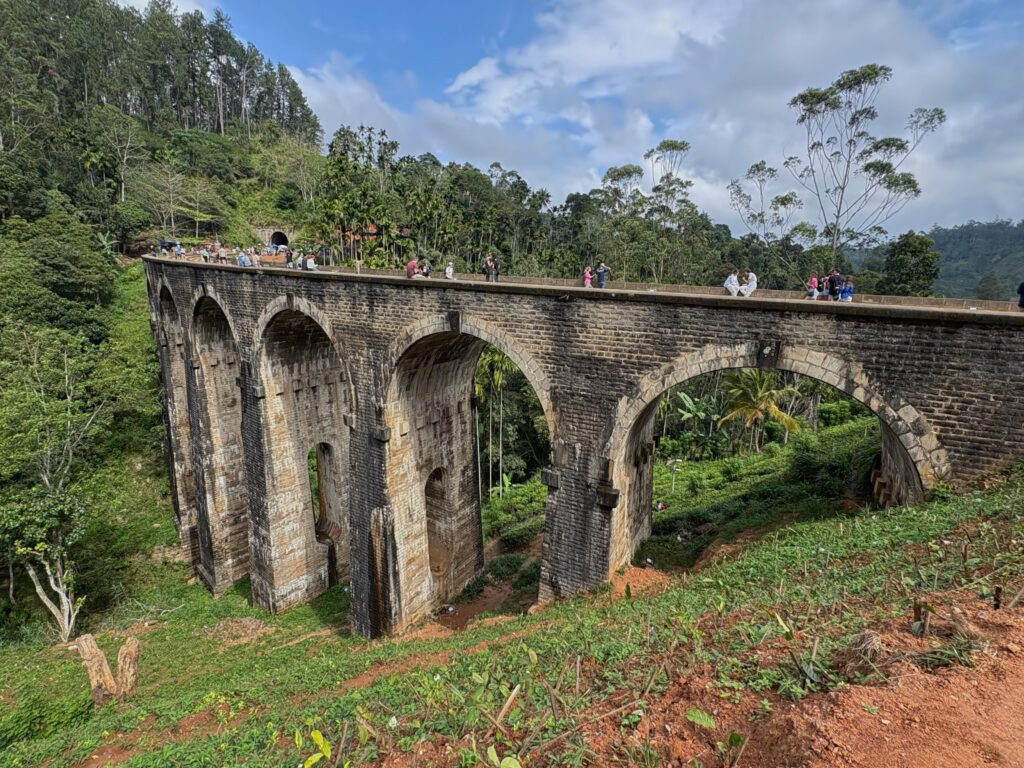
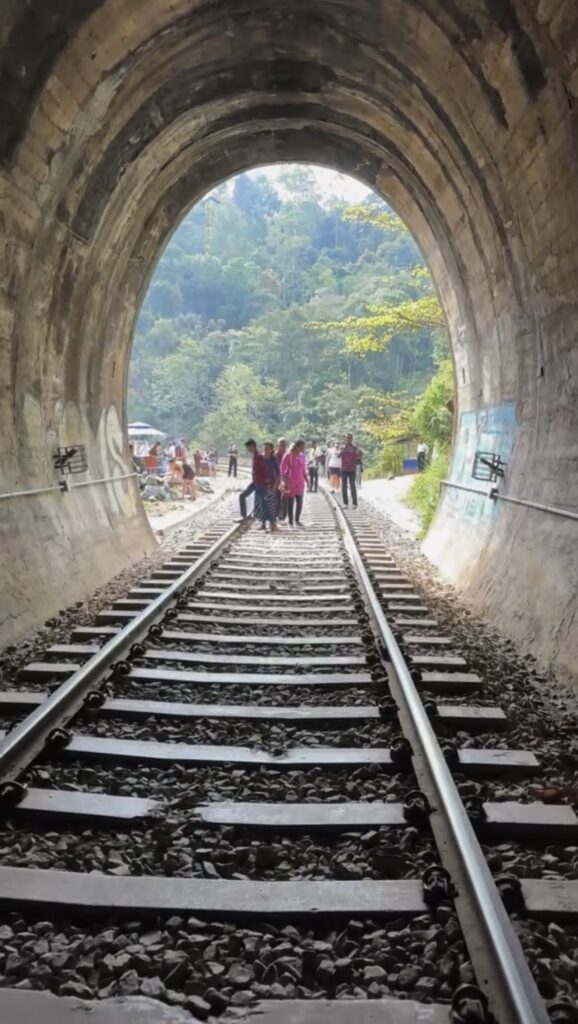
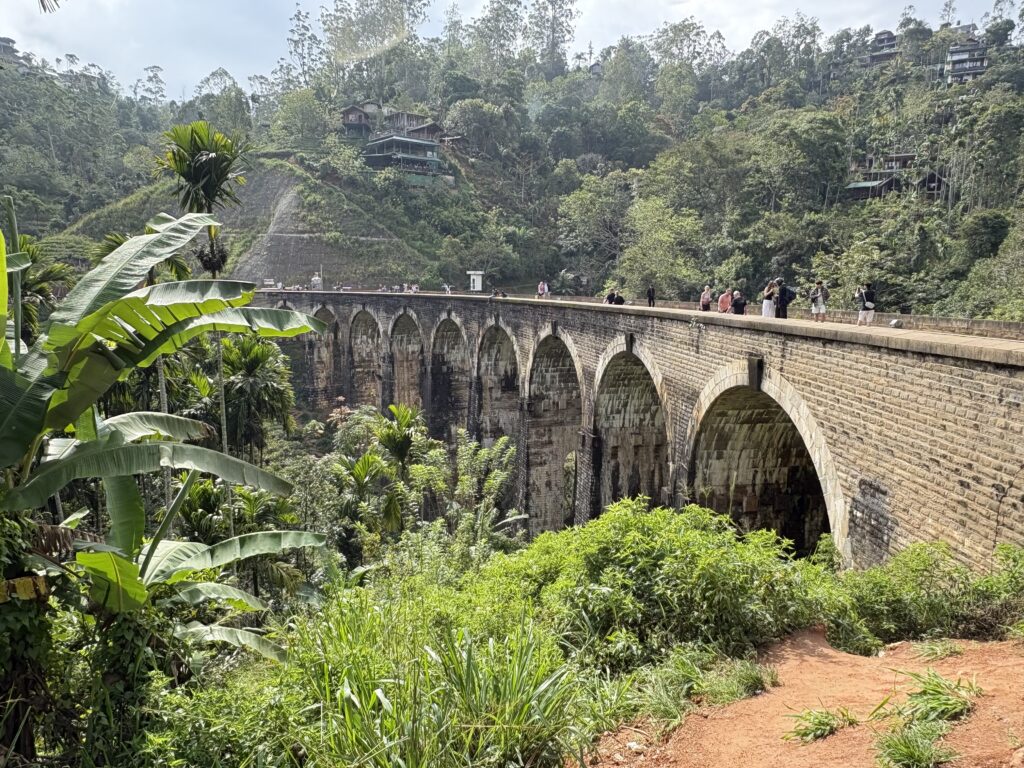
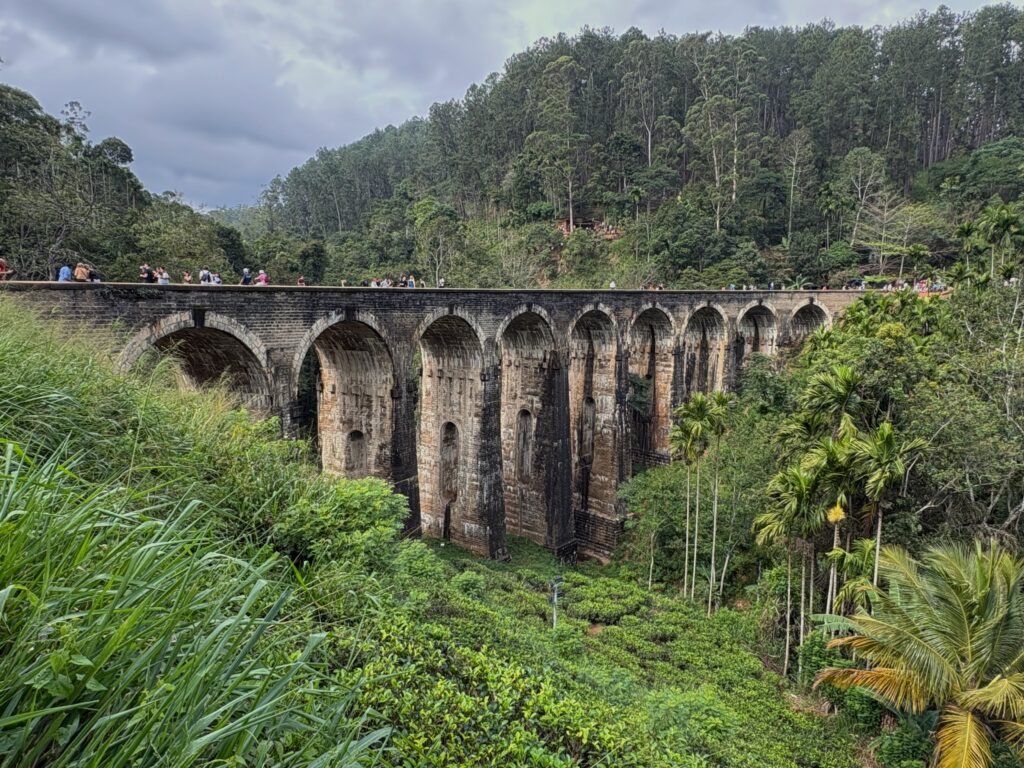
The next morning, Mylo was feeling much better, though I am not sure if it was the lime juice, the antibiotics, or simply a short-term issue that had resolved itself. We made a brief climb up a long concrete staircase to reach the railway grade and then began a 35-minute hike to the famous Nine Arches Bridge. It is one of the most photographed landmarks in Sri Lanka, celebrated for its architectural beauty and the lush, jungle-clad valley it spans. The bridge was completed in 1921 and is built entirely of stone, brick, and cement without a single piece of steel reinforcement. As the story goes, the steel ordered for the bridge was rerouted to the war effort as World War I had just broken out. The British, therefore, decided the line could not be completed; however, a local builder, P.K. Appuhami, reportedly stepped in to complete the impossible task using traditional materials. We enjoyed the peaceful and scenic hike that ended with a short rail tunnel before we emerged to see throngs of eager tourists there to take their Instagram shots and witness the 10 a.m. train pass over the bridge.
We returned to our accommodations in time to meet our hired car for an 11 a.m. pickup. We would then descend from the highlands to the southern coast of Sri Lanka and our next destination, the town of Tissamaharama, and the nearby Yala National Park.