Through Forest and Friendship: A Chhattisgarh Jungle Trek
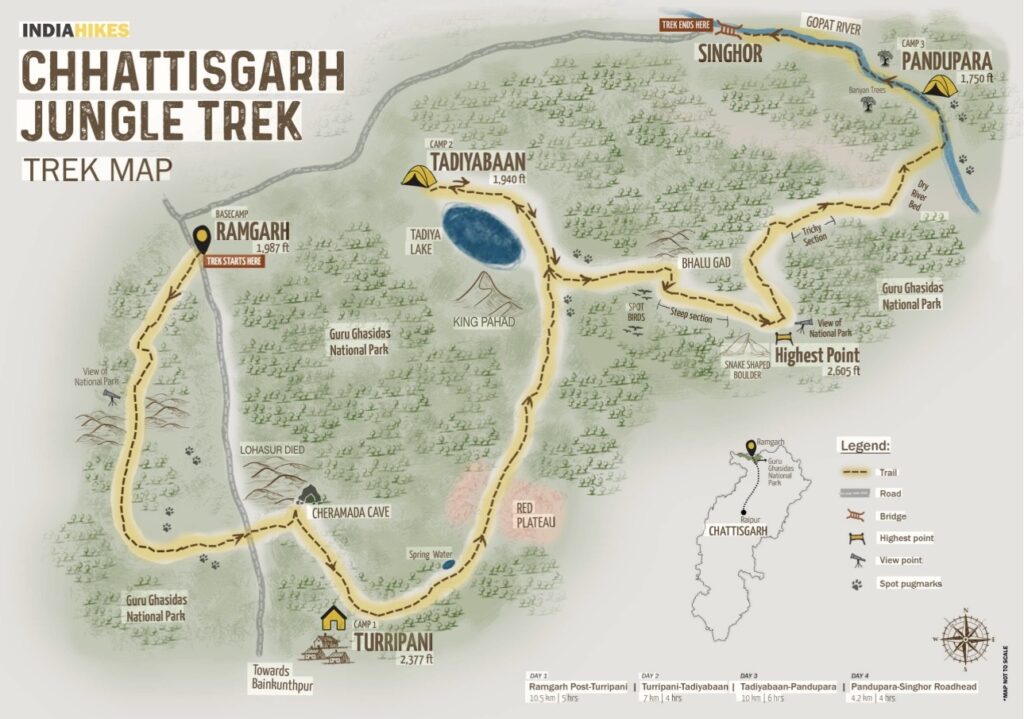
We arrived in Raipur in the early evening and made our final preparations for our early morning rendezvous with our trek organizers, Indiahikes, and our fellow trekkers. The first day would be spent largely in transit, as we needed to travel 365 kilometres north to the small village of Turripani, where our 23-kilometre jungle trek through Guru Ghasidas National Park would begin.
Bleary-eyed but excited, we found our way to the Raipur railway station meeting spot, where we cast about in the early morning darkness for our 21 fellow trekkers and the cars and drivers that would take us north. With luggage stowed, we crammed into the vehicles and were off on the anticipated eight-hour journey. Along the way we got to know our fellow trekkers as we chatted in the vehicles or convened together during designated meal stops. Mylo and I shared the ride in a rugged little Bolero SUV with trek companions Rupa and Atmesh, who had come from Chennai and Bangalore. I apologized for peppering them with seemingly limitless questions about religion, marriage, and other aspects of life in India. Thankfully, they expressed that they were very honoured to share their knowledge and somewhat amazed by my own depth of understanding. Fortunately for them, I eventually dozed off and left them in peace.
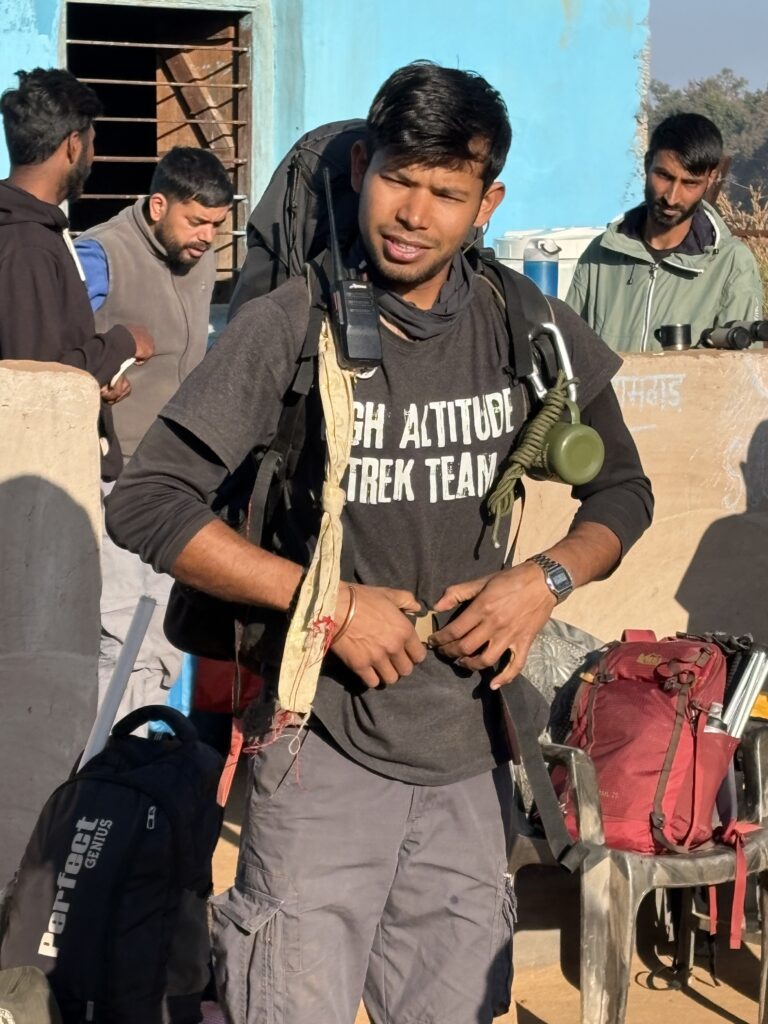
We arrived in the village of Turripani at around 5 pm, where we were warmly greeted by the Indiahikes team and our trek leader, Nalin. After a welcoming drink and an opportunity to freshen up, the males and females were shown to their respective rooms in the two-storey mudhouse where we would spend the night before donning our packs and heading out the following morning. Mylo had been a little apprehensive about the idea of sleeping in a mudhut, but quickly realized there was nothing to fear and that it was, in fact, a cosy and practical accommodation. Nalin then provided our trekking team with a briefing on our final preparations and an overview of the next few days.
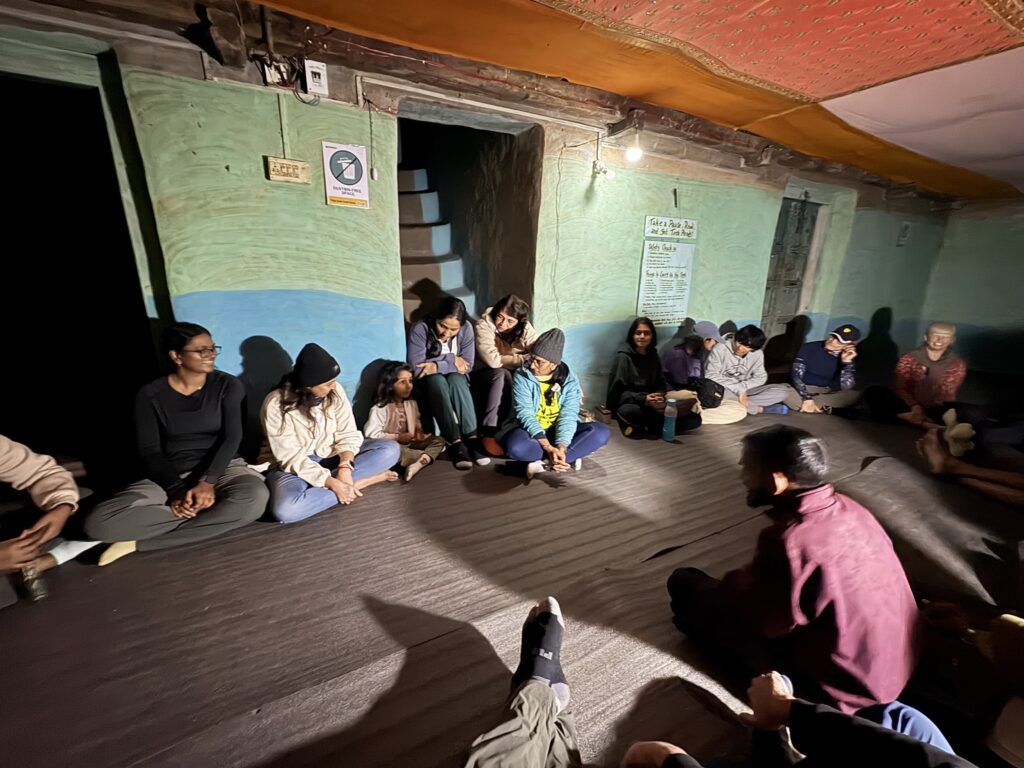
Once final preparations were complete and everyone was settled, we went on a sunset walk around the small village of roughly 150 inhabitants. We gazed out at the forests and hills we would be trekking through over the next three days and enjoyed the peace and tranquillity of the village, with its baby goats, dogs, and curious locals. After a dinner of simple, hearty Indian food, our team of 23 trekkers, along with our lead guide and two assistants, gathered cross-legged in a circle in the main room of the house. We went around the circle, each of us taking a turn to introduce ourselves and share our backgrounds and interests. Our team was largely comprised of Indians from various parts of the country, along with a couple from the UK, a lady from Japan, and three people originally from India who currently reside in the USA. Our party ranged in age from six to seventy-eight, with the bulk of us in the over-40 category. Soon after, it was into our sleeping bags and off to sleep for a good start the next morning.
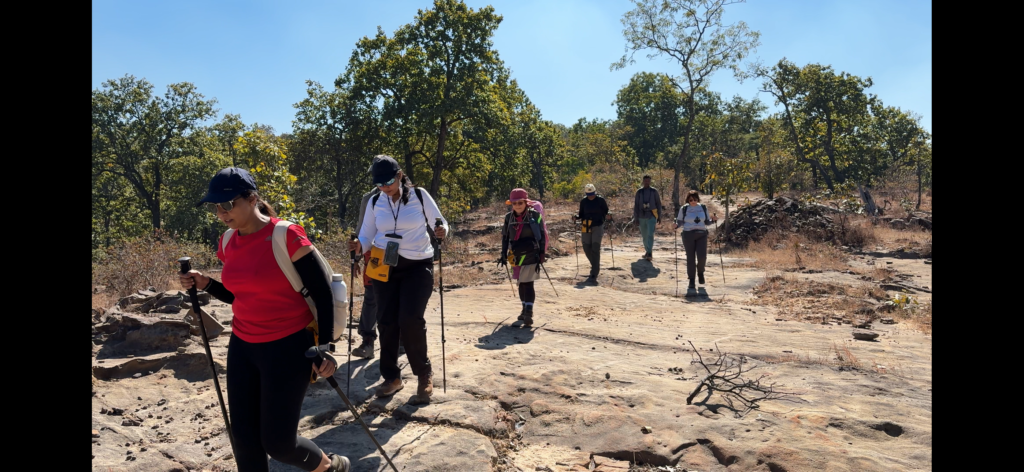
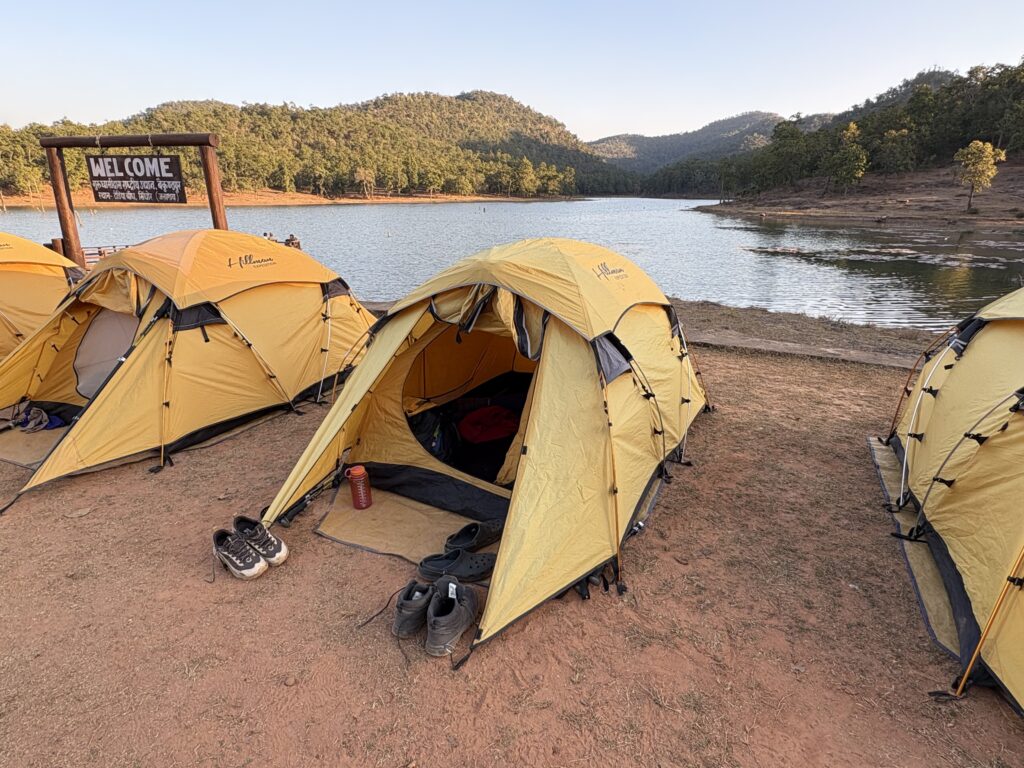
After another hearty meal in the morning, we shouldered our packs, took up our trekking poles, and—with no time for last-minute doubts about the challenge ahead—hit the trail. Today’s hike would take us through rolling terrain of mixed forest, strewn with rocky outcrops, for eight kilometres before reaching our first campsite at Tadiyabaan Lake. After descending for about 800 metres, we reached a natural spring emerging from the hillside, where we filled our water bottles and drank deeply. This spring is the only source of water for the villagers of Turripani and is therefore also a site of sacred significance. A couple of ladies from the village were already there collecting their own water, which they would have to carry back up the hill to the village.
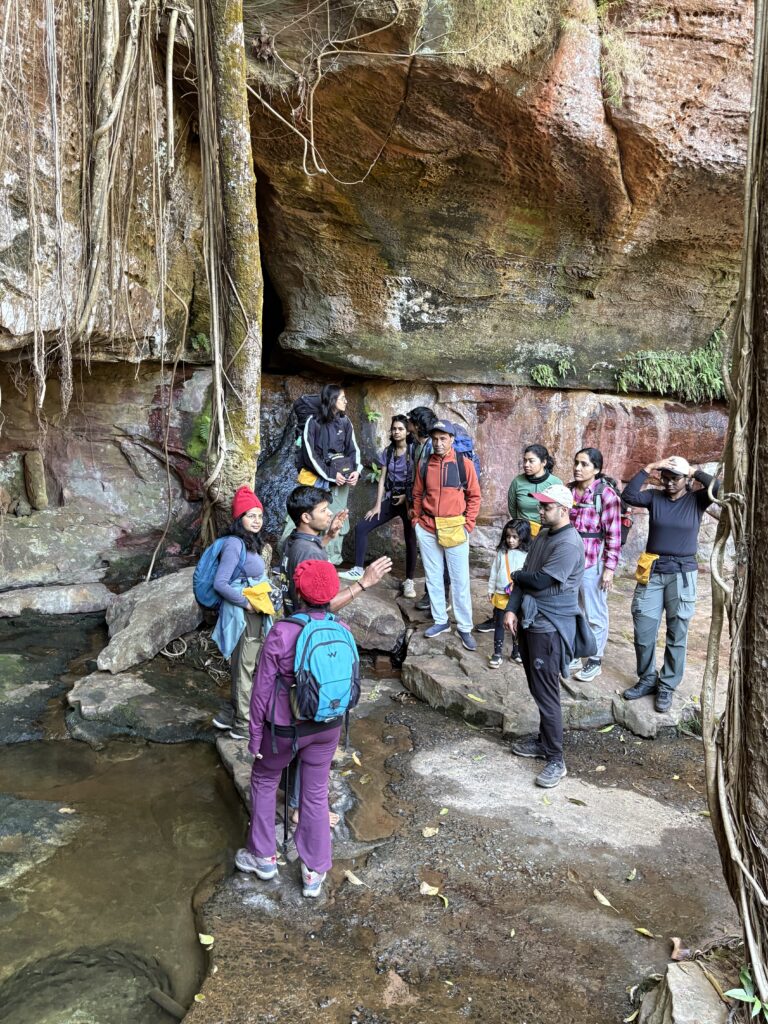
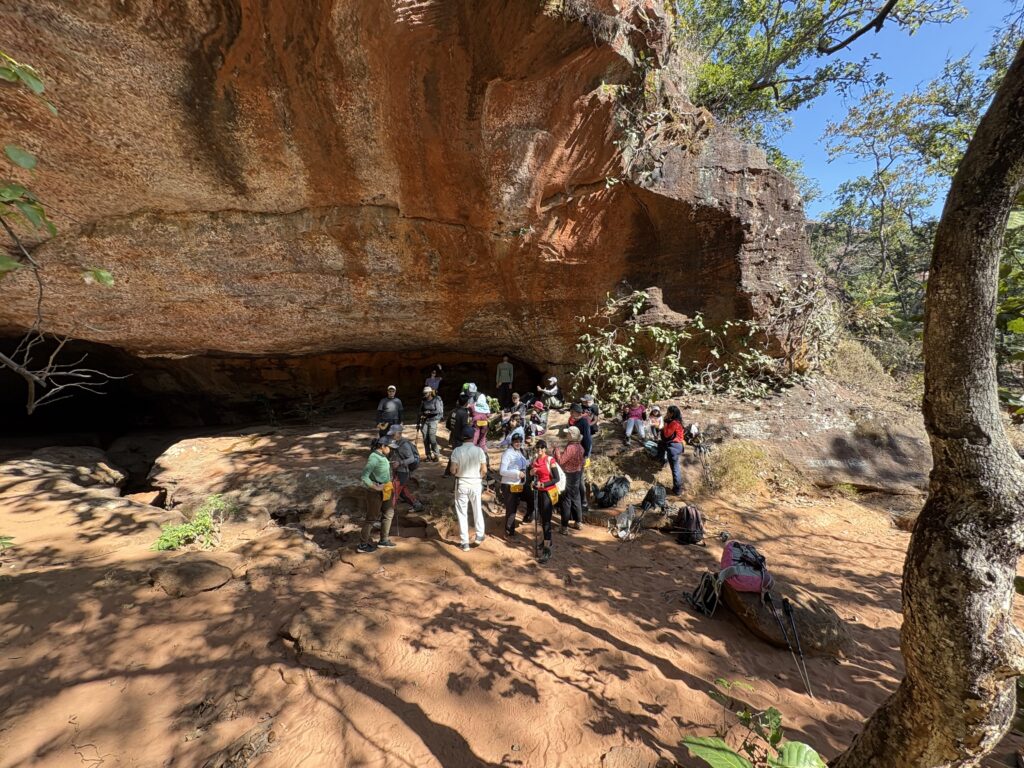
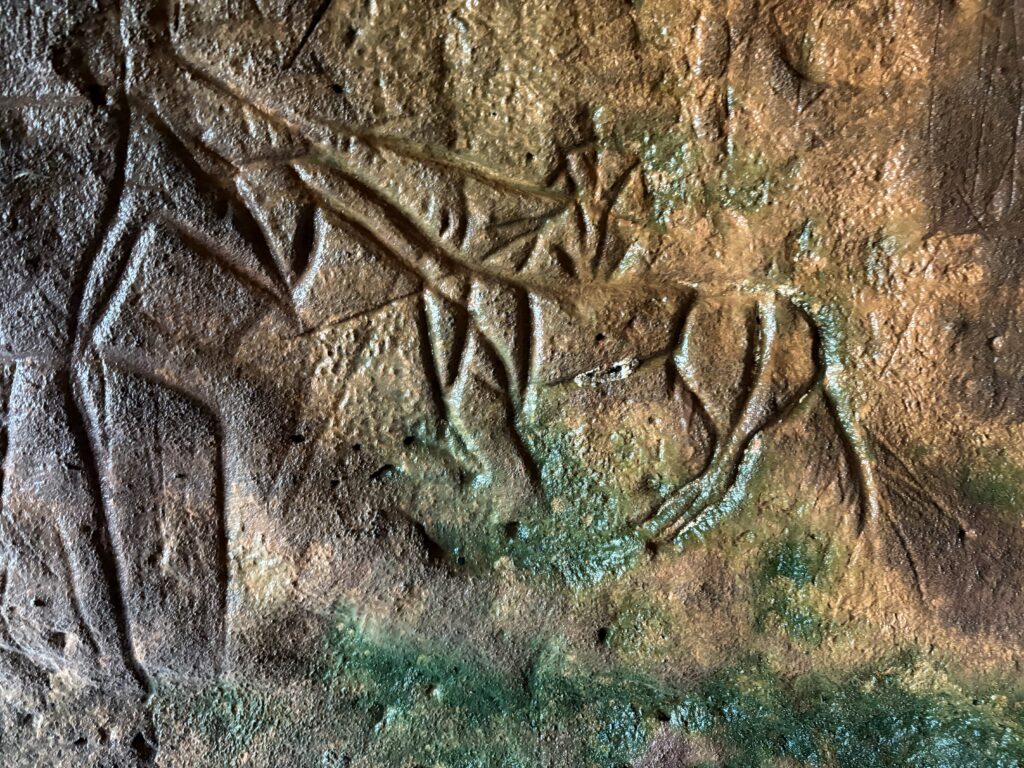
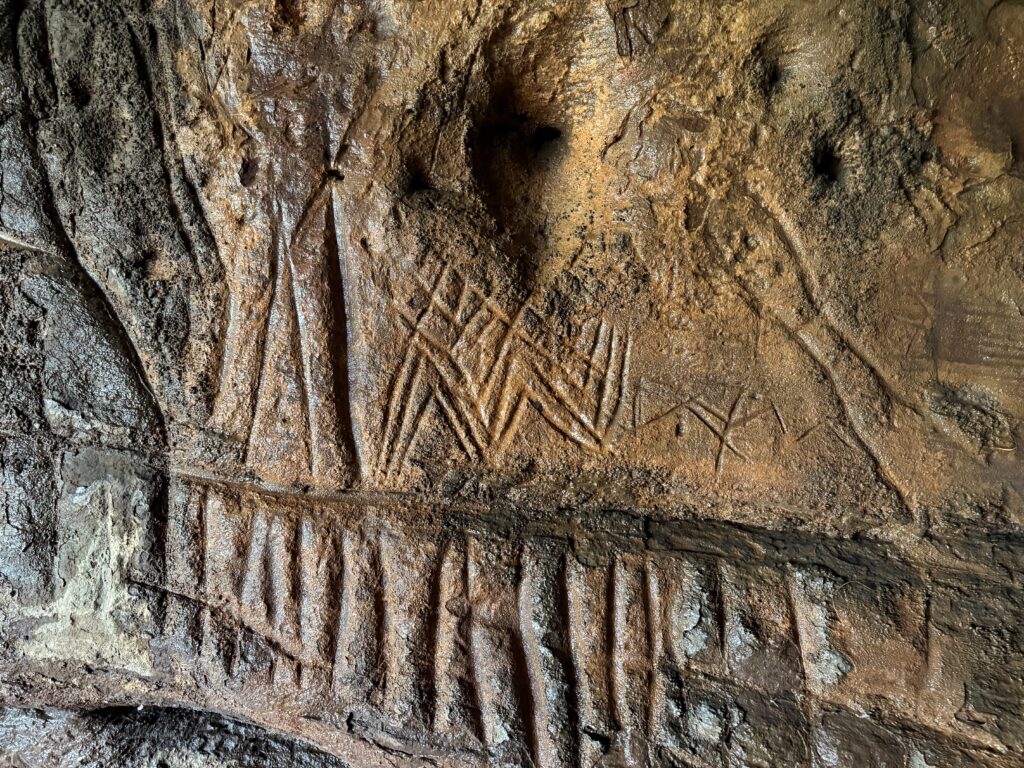
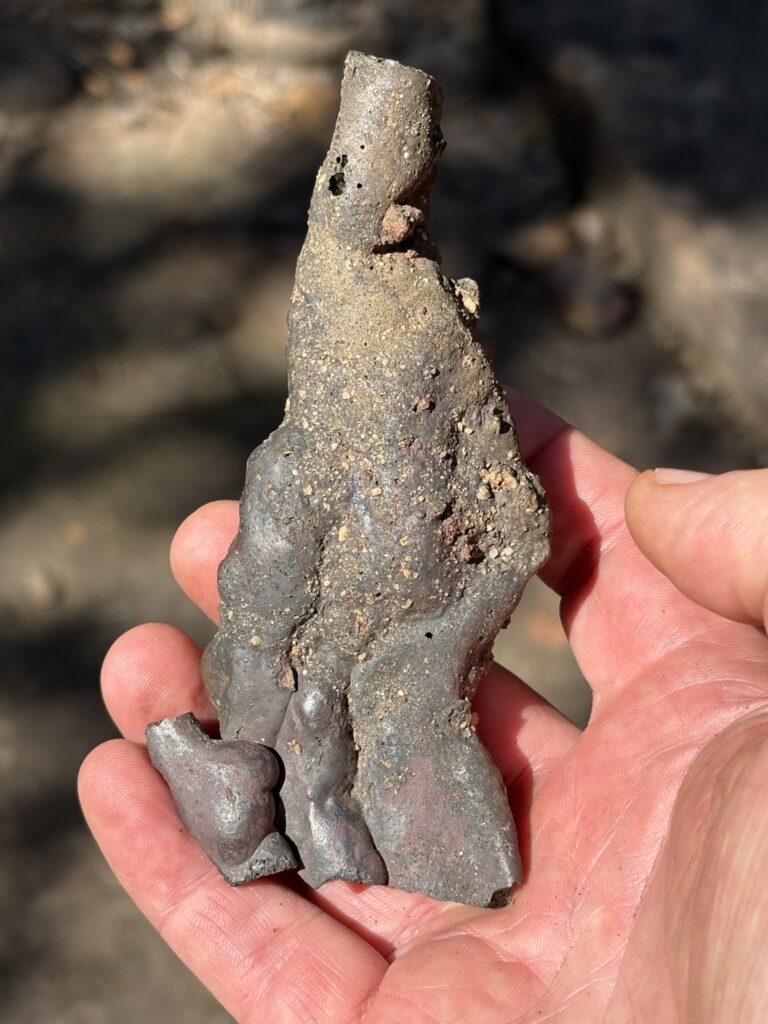
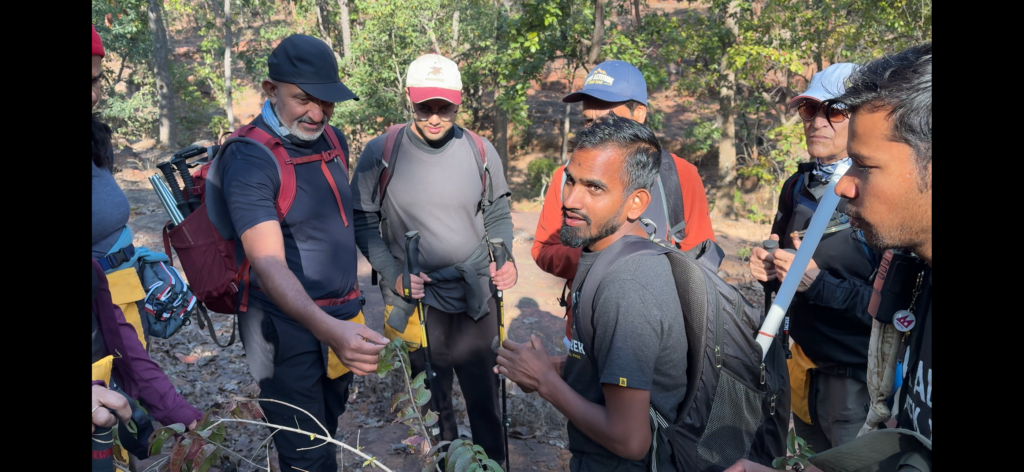
As we trekked through forest dominated by sal trees, we slowly began to get to know the various members of our team as we chatted and assisted one another whenever required. The highlight of the day was reaching a large cave of stunning reddish rock, through which a small stream flowed and exited about 150 feet away on the other side. While the cave itself was impressive, it was the estimated 10,000-year-old prehistoric art that truly stole the show. The artwork depicts humans, animals, and geometric forms that have not yet been investigated by the Archaeological Survey of India. After rehydrating and having some snacks, we continued the trek. Along the way, our guides shared information about local plants and wildlife, including tree markings and hair from a sloth bear, as well as tasting some samples of a local medicinal plant used to treat malaria, fevers, and other ailments. Another major highlight was a stop at a site where indigenous and early Iron Age peoples, beginning around 1500 BCE, collected iron ore to craft various artifacts and tools. As the kilometres unfolded, we eventually descended alongside a small stream to reach the verdant grass at the southern end of Tadiyabaan Lake. After a further 20 minutes of hiking along the lakeshore, we arrived dusty and tired at our campsite.
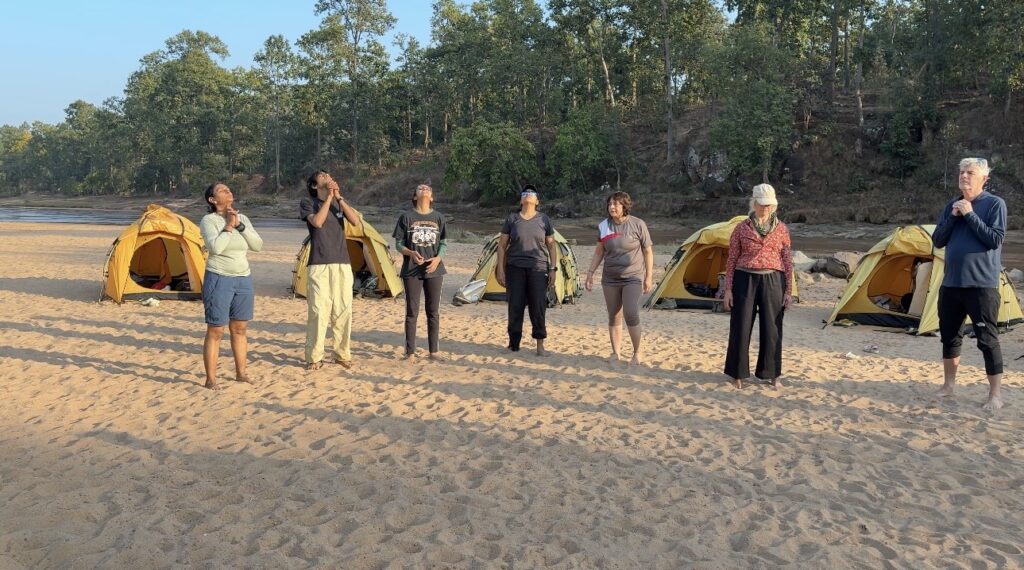
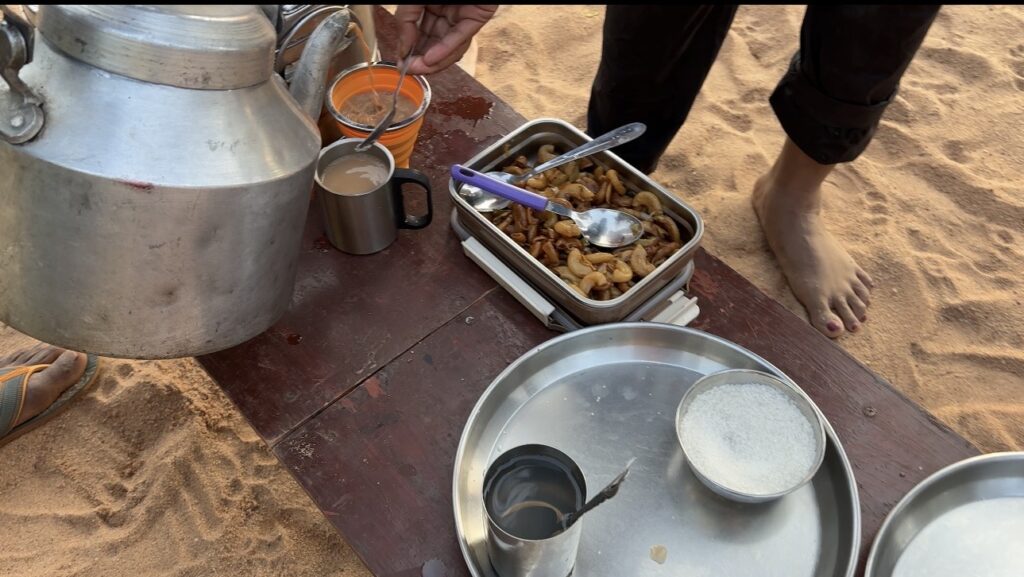
Indiahikes, represented by our lead guide Nalin, did an outstanding job of organizing and executing the trek. With a summer-camp-like atmosphere, we quickly developed a strong sense of team that, over the course of the remaining days, evolved into wonderful new relationships. Each trekking day began with the formation of a circle and some light stretching, which was repeated at the close of each day’s hike. In the evenings, we gathered in communal areas of the camp to play both Indian games (which required us to learn some Hindi) and the more widely known game of Mafia. Making a mistake in one of these games required the offender to sing a song to stay in the game or be eliminated. Several of the ladies on the trek were wonderful singers who treated us to songs from the famed Carnatic tradition as well as Bollywood hits, often prompting enthusiastic group sing-alongs. Mylo and I went beyond our usual comfort zones and each delivered a song when required. After late-evening dinners and tea, a number of trekkers assembled under the dark sky for stargazing before heading off to bed.
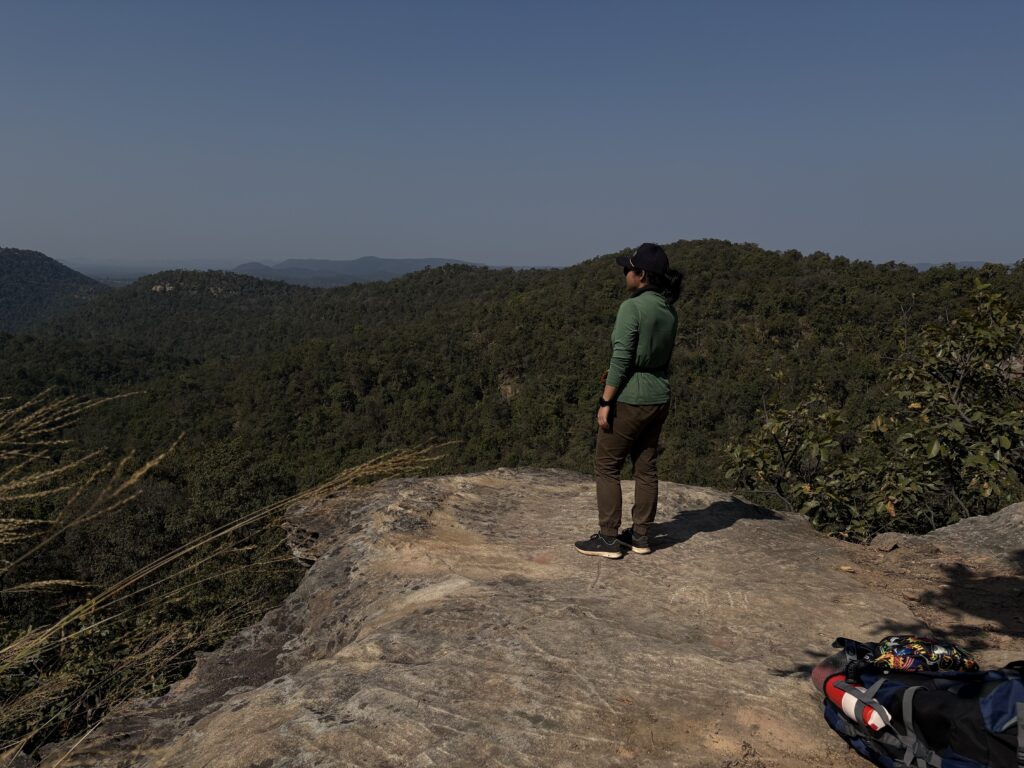
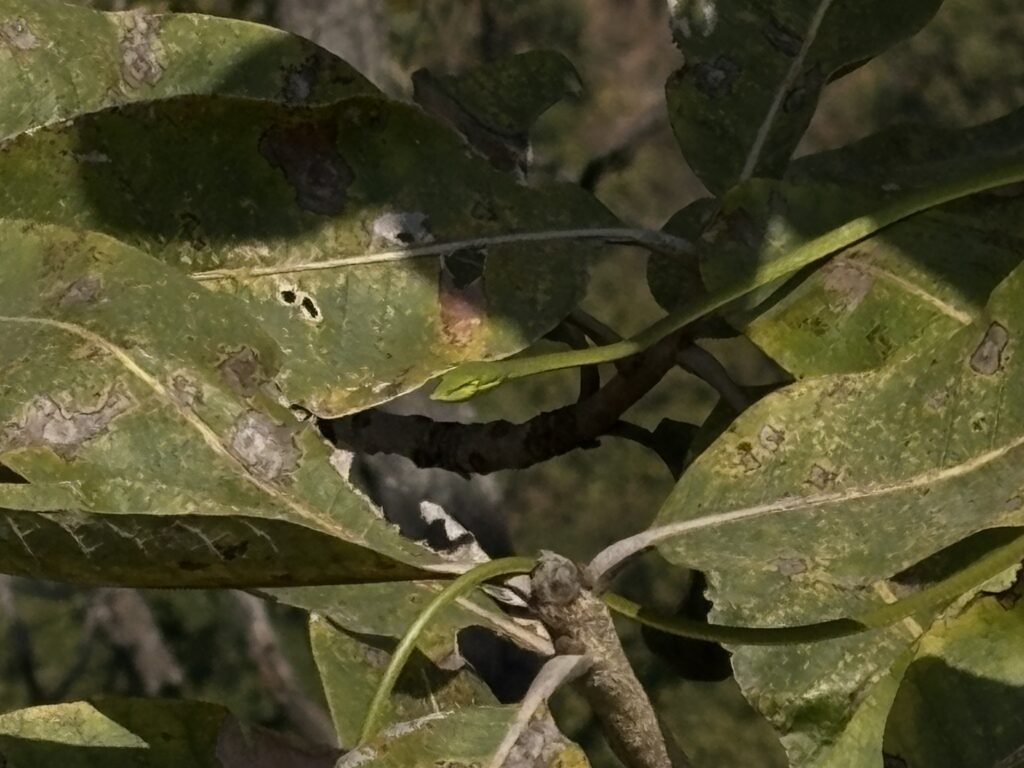
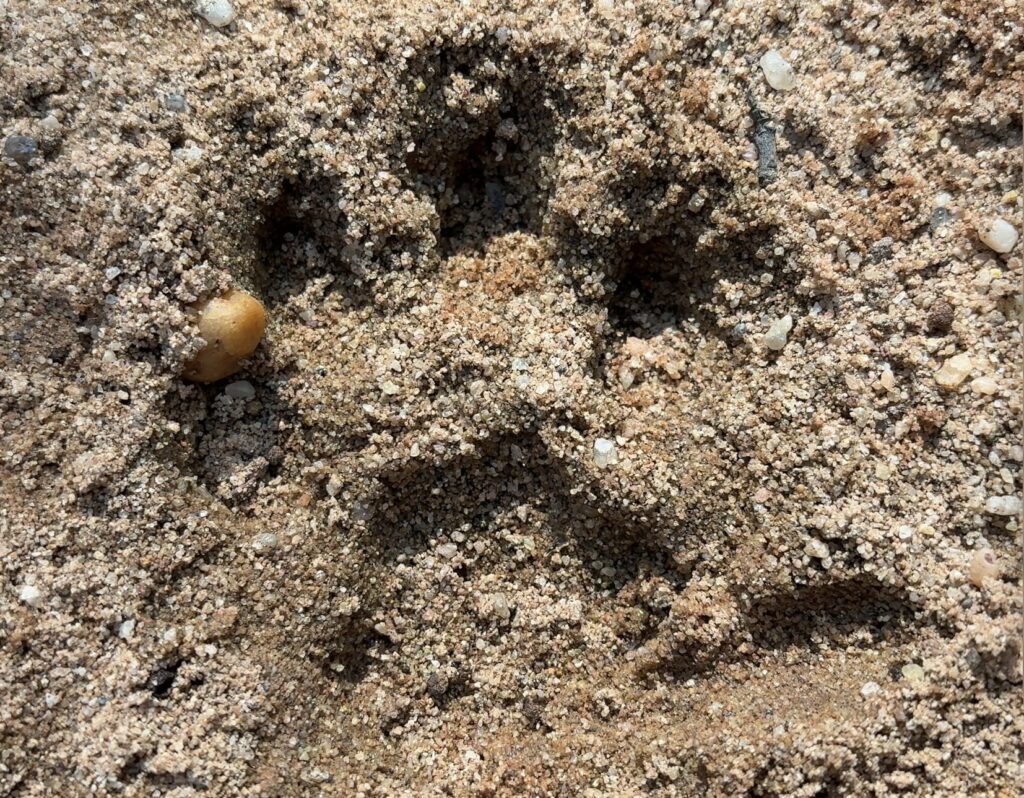
We were up at 6 am for day two of our trek, with 12 kilometres ahead of us before reaching our next camp along the sandy banks and crystal-clear waters of the Gopat River. After tea, breakfast, and our morning warm-up, we followed the opposite side of the lake back to the point we had reached the previous day. From there, we began a steady climb alongside a small stream to reach the high point of the trek. Along the way, we found leopard tracks and spotted a shy, retiring langur monkey. The final scramble led us past “Simba’s Rock,” named after the Lion King, to an awe-inspiring lookout over the surrounding forests and rocky-topped hills. We stopped here for photos and a short break. Just as we were about to depart, a cry of “snake!” rang out, and we quickly gathered around a small tree, trying to locate the reptile camouflaged in the foliage. Eventually, our eyes settled on a tiny green snake about three feet long and pencil-thin. The local guides identified it as a venomous bamboo viper (though further analysis indicates it may be an Indian vine snake – slightly less venomous!) and repeatedly warned us eager photographers to stay back due to its ability to strike forward if threatened.
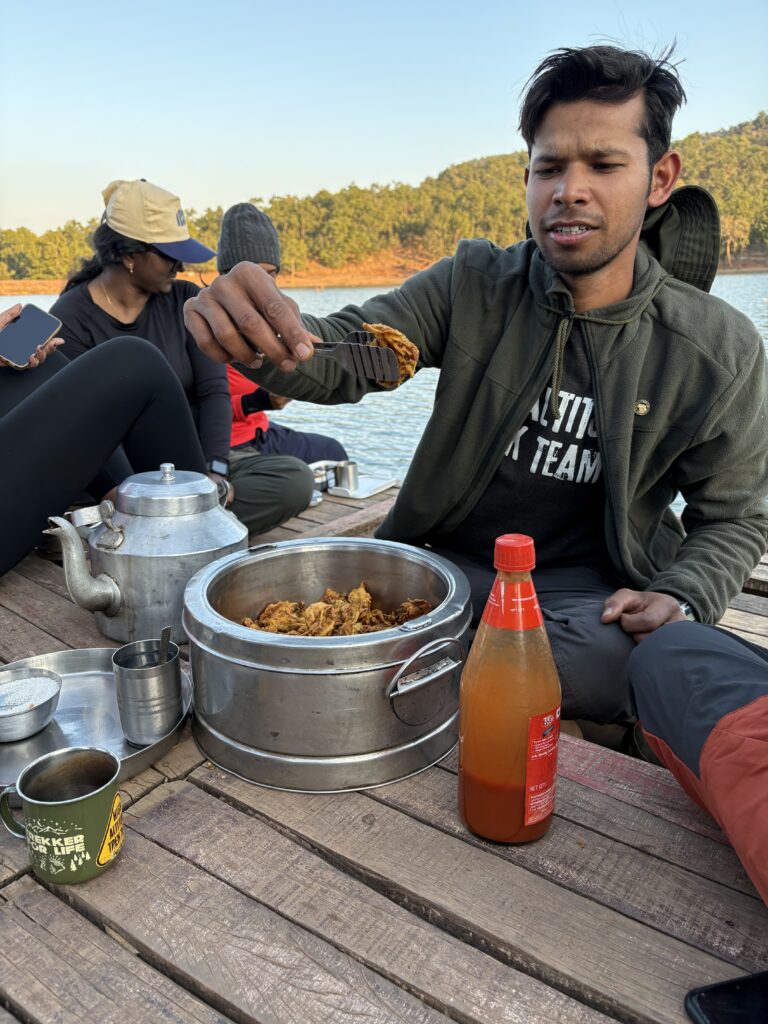
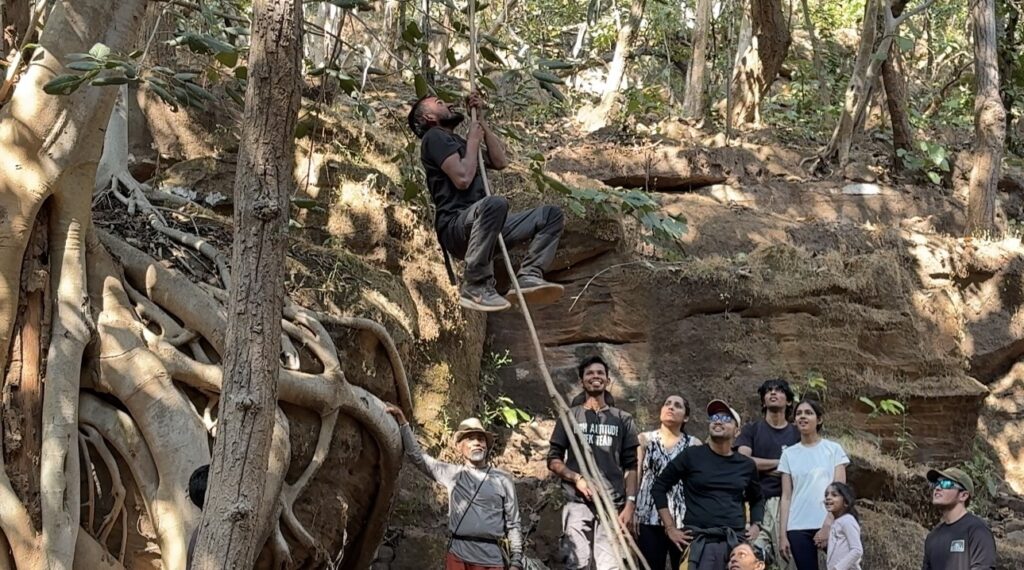
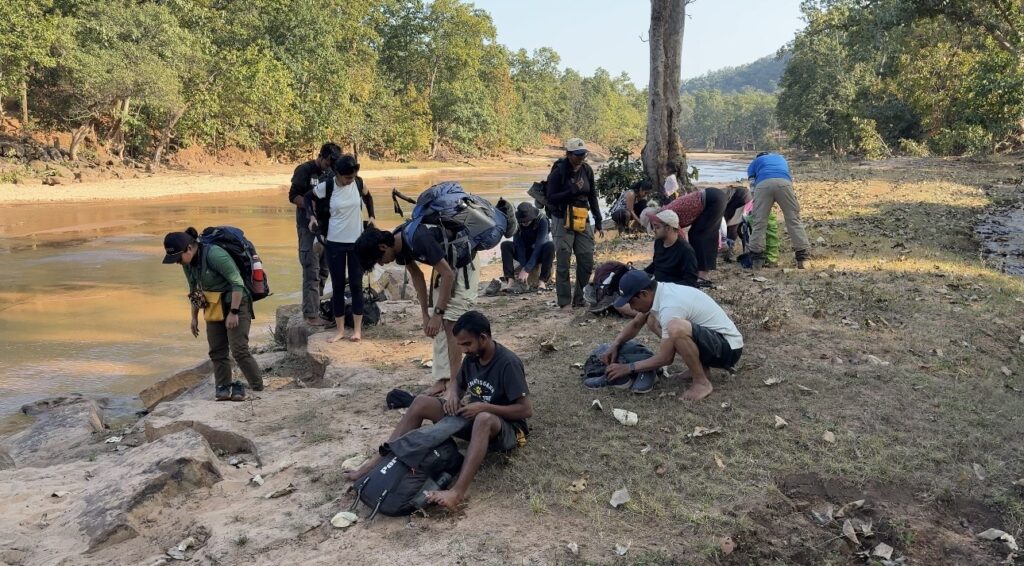
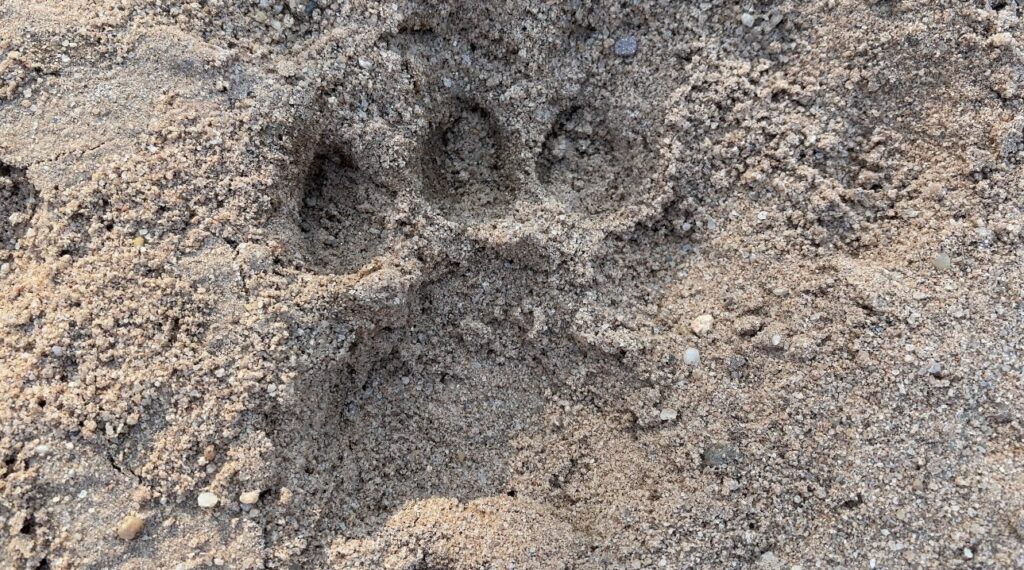
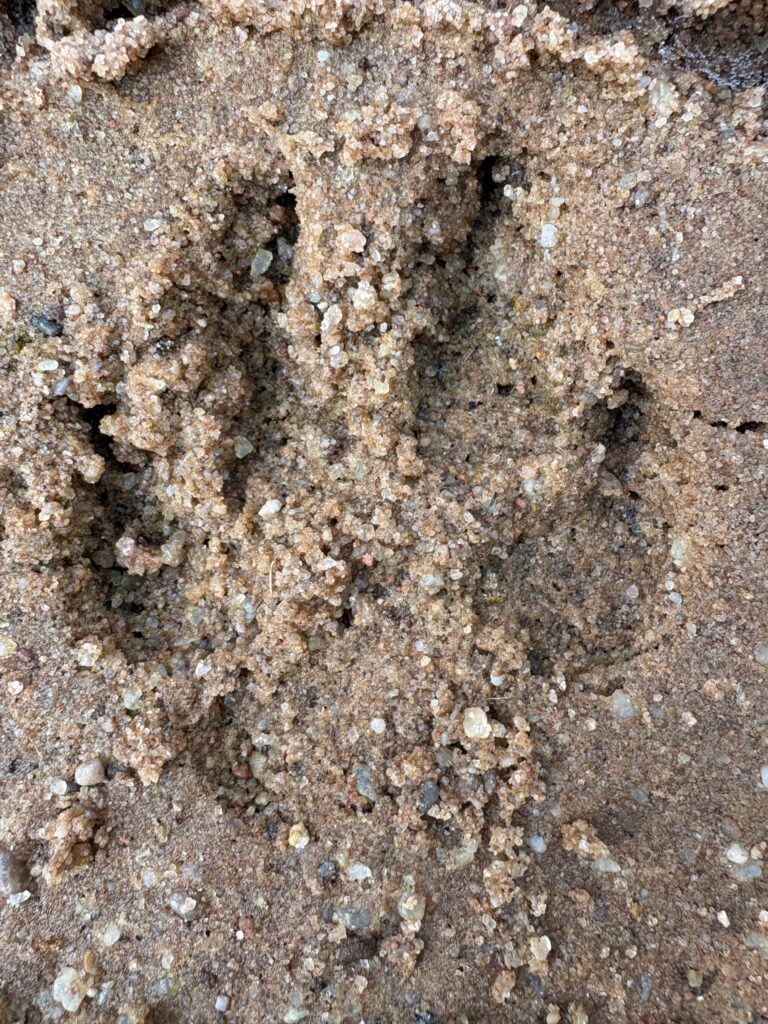
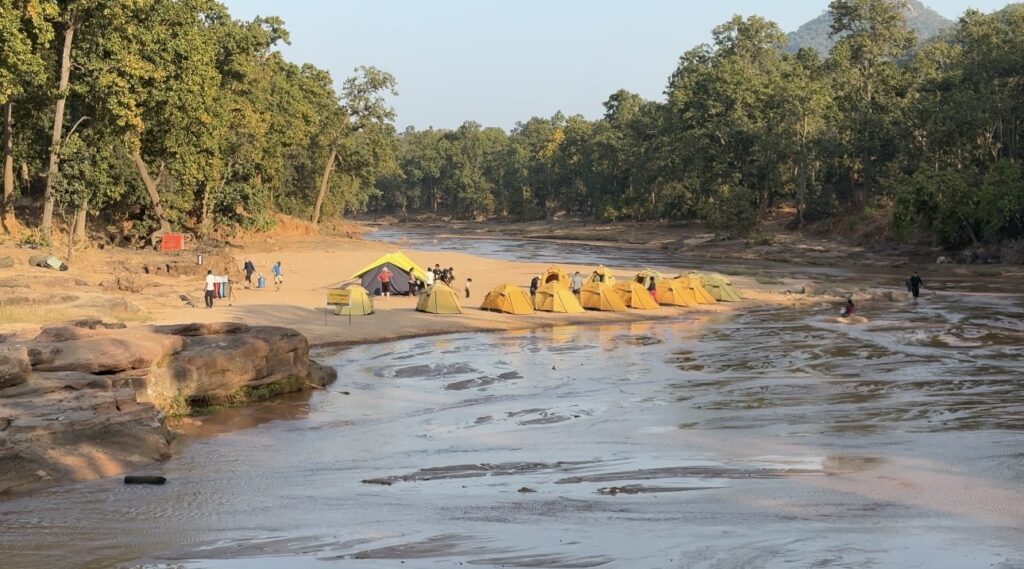
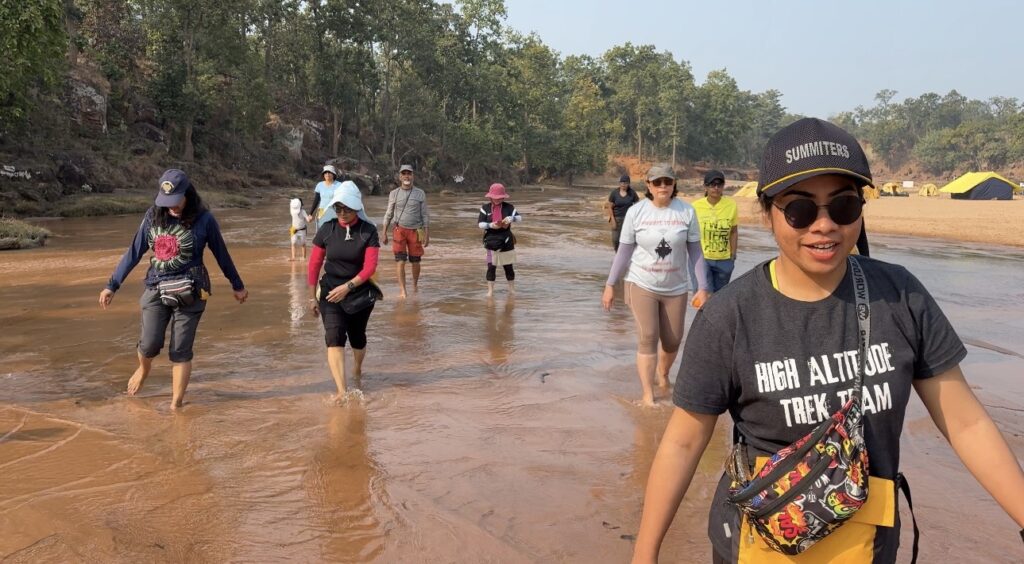
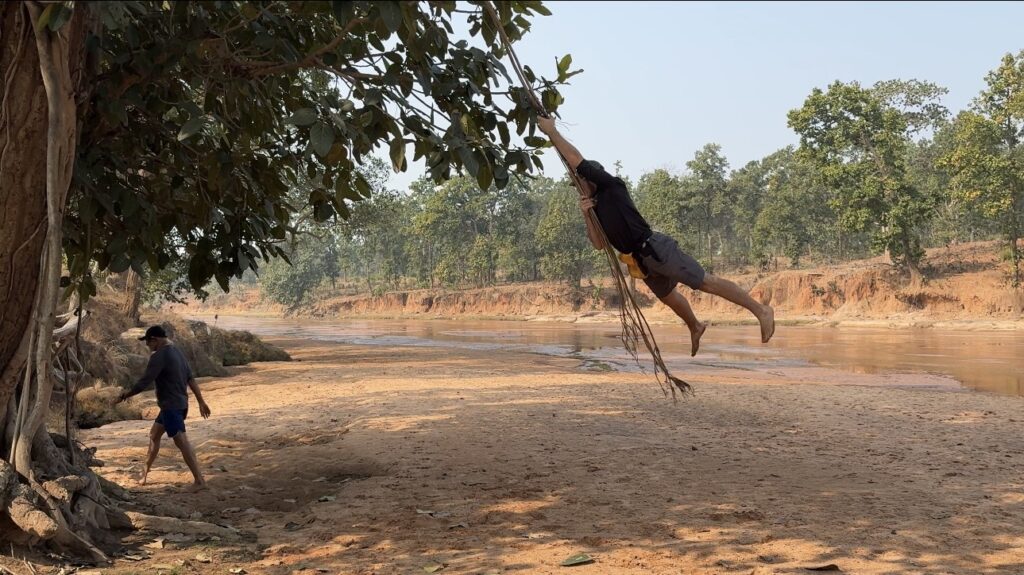
We soon began the meandering descent toward the Gopat River along another small stream. We stopped for a tasty lunch from our tiffin boxes at a pretty spot beside the creek, surrounded by enticing rock formations and large, irregular boulders. A nearby banyan tree, with its vine-like tendrils, soon brought out the inner Tarzan in many of our fellow trekkers—and of course Mylo could not resist. After everyone, young and old, who wished to do so had taken their turn swinging out over the rocky creek bed, we continued the trek. We eventually reached flat ground and, a couple of hundred metres later, emerged on the bank of the Gopat. With a burst of newfound energy, we doffed our shoes and socks and hiked the remaining 500 metres to camp barefoot through the cool, sandy, ankle-deep waters of the river. On a sandbar in the middle of the river, our guides found a tiger print—a vivid reminder that a small but growing population of tigers shared the forest here with us, setting my imagination alight.
Our campsite was idyllically laid out on a riverside sandbar. Everyone claimed their two-person tent, dropped their packs, and quickly returned to the water to cool tired feet and enjoy the rocky perches scattered in and along the riverbanks. After another excellent Indian dinner, we gathered in the communal tent for another game of Mafia that led to no end of accusations, denials, laughter, and fun. Folks then settled into their tents for a night’s rest or assembled under the stars in their sleeping bags for yet another session of stargazing.
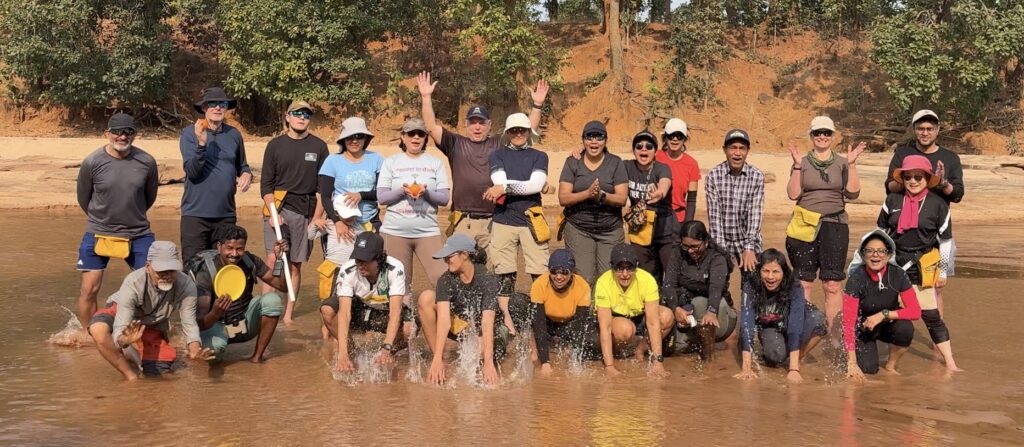
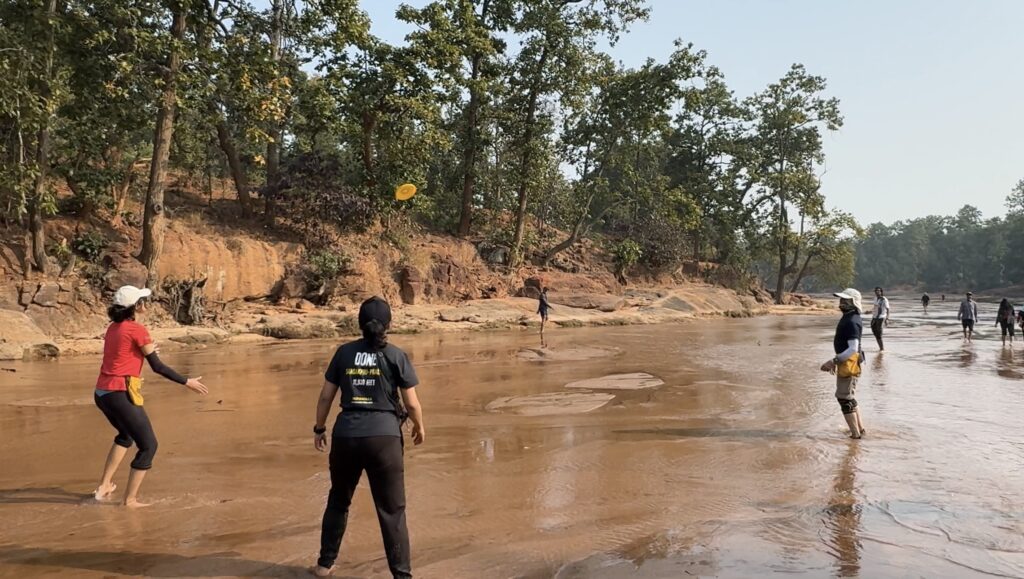
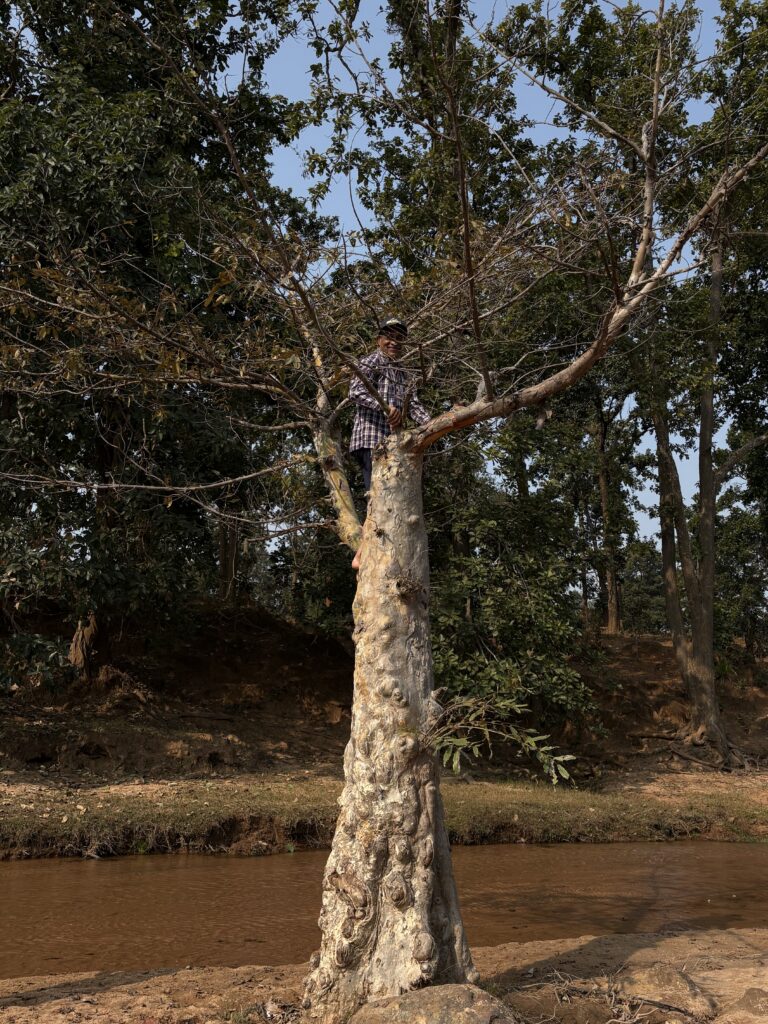
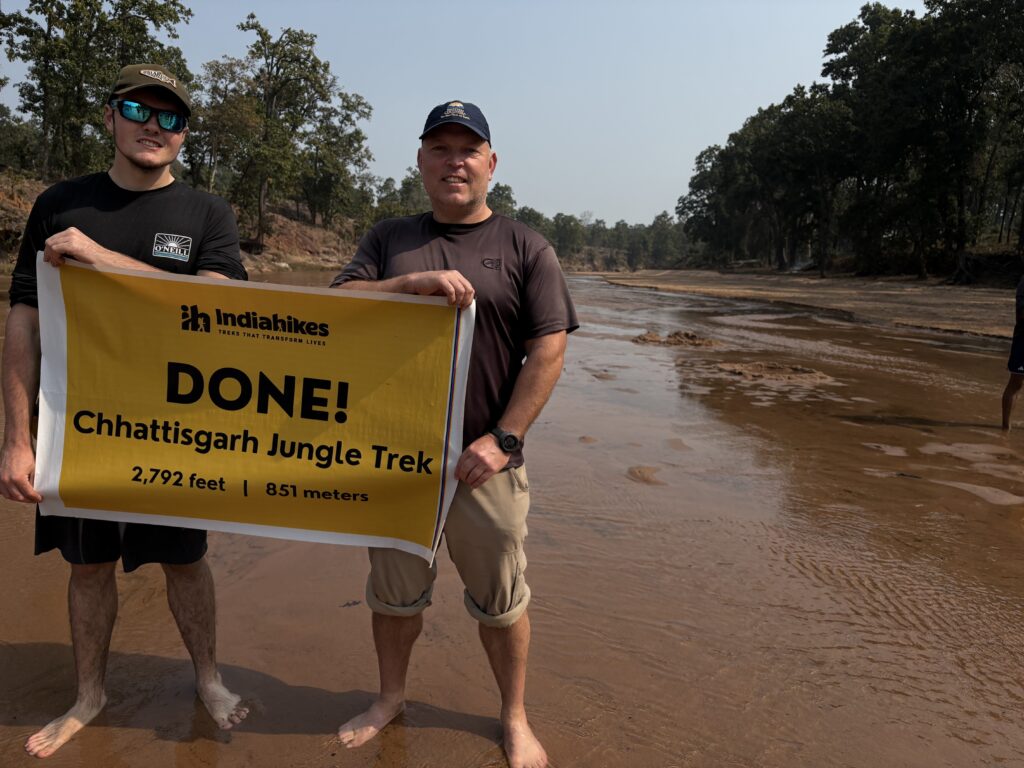
On the final day of our trek, with only five kilometres left to go, we were allowed to sleep in until 7 am instead of our usual 6. After breakfast and tea, and once our gear was assembled, we were delighted by a surprise announcement: today we would leave our packs behind (to be reunited with them later) and continue our ankle-deep march down the Gopat River unburdened. With our previous weariness forgotten, we spent a joyful morning frolicking in the water, playing frisbee as we went, and soon enough tossing one another into the shallow, clear river for a refreshing soak. Along the way, we found a tree growing in the river that immediately sparked a competition to see who could climb the highest. After yet another Tarzan tree was discovered, another friendly contest broke out to swing the farthest or climb the highest. Feeling a little under the weather, I took the opportunity to rest in the shade and do some healing meditation. An hour or so later, we reached our meeting point with the vehicles that would take us back to Turripani village for lunch, to collect our bags and excess luggage, and to begin the long drive back to Raipur, where we would make our final parting of ways.
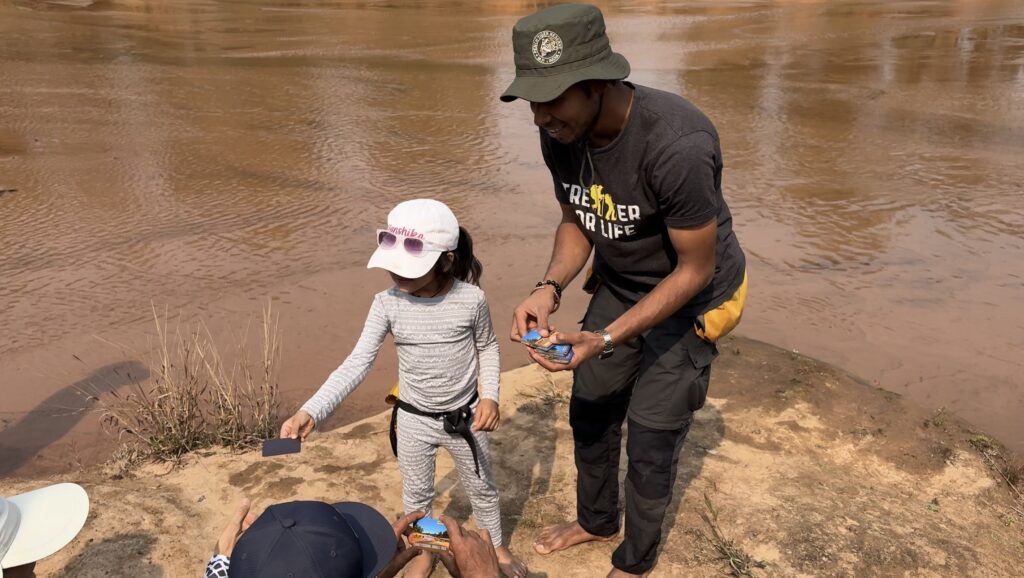
The end of the trek was bittersweet, as we had to say goodbye to all our new friends. Each and every member of our team had been a pleasure to trek with and left me with indelible memories. I struggle to imagine how one could again bring together a group of 23 unique individuals to bond, support one another, and get along so well while enduring the physical, mental, and environmental challenges such a trek entails—especially given that some had never trekked or camped before. As each trekker reached the end point, raucous cheers rang out in celebration of our shared accomplishment. We were each presented with a commemorative fridge magnet by our trek leader Nalin and his honorary co-trek leader, the adorable and precocious six-year-old Vanshika, who formed a special bond with Mylo as the next-youngest member of the team. With team photos taken and contact information exchanged, we embraced, shook hands, and made plans for possible future meet-ups in India or abroad.
And so, with heavy hearts, this part of our wayward adventure in India came to a close as we set off to explore the remnants of several great empires to the south, in the towns of Badami and Hampi in the state of Karnataka.