Too Much Mumbai (and Just Enough)
India first opened itself to me in 2025—through its astonishing history and the warmth of its people—and it wasn’t long before the pull to return became irresistible. This time, I came back to continue the journey southward, to places I couldn’t possibly squeeze into my first visit. I also brought company: my 18-year-old nephew, Mylo. Years earlier, during one of our annual “G&G’s Summer Camp for Wayward Boys,” he had peppered me with questions about my travels and wondered aloud whether “Wayward” might one day go international. A few short years later, there he was—along for the ride in a country that, for all its beauty and generosity, can still be deeply jarring to Western sensibilities.
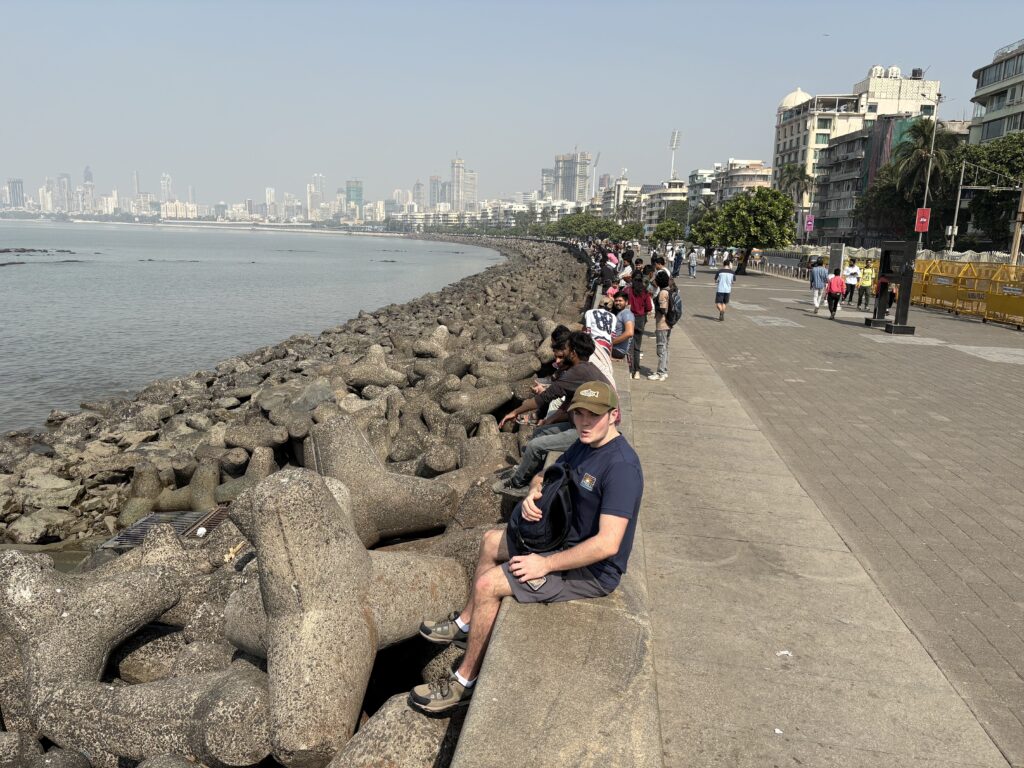
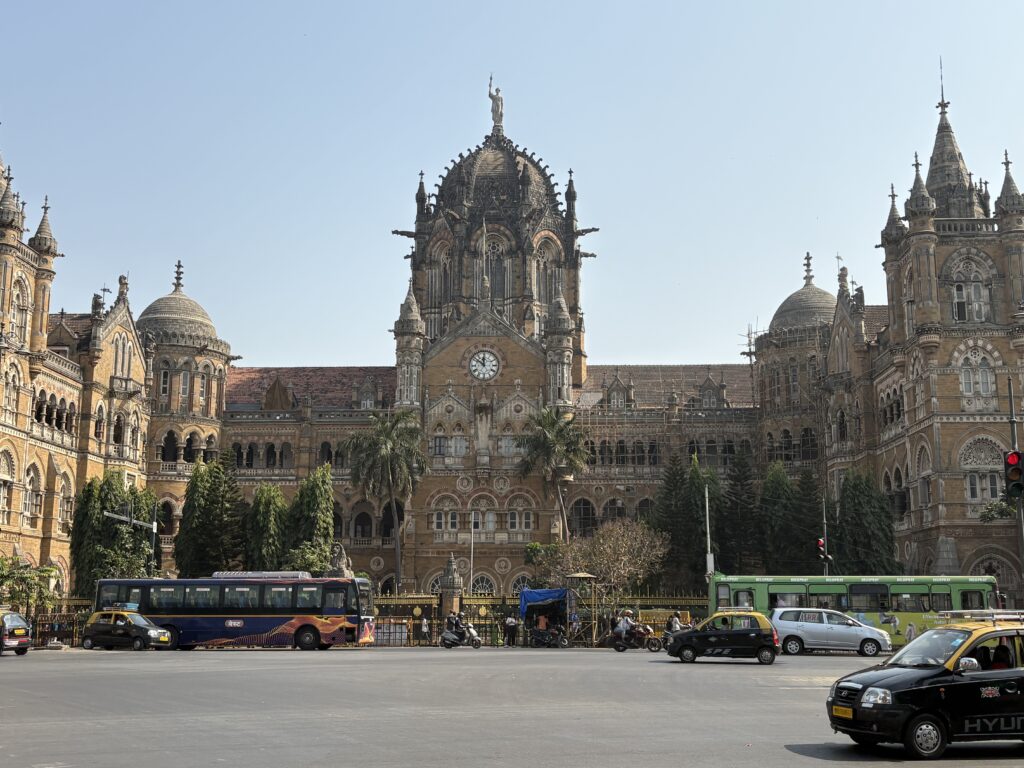
As with many international adventures, ours began in a vast urban gateway—exactly the kind of place I usually tolerate only briefly before escaping to somewhere quieter. Mumbai does little to discourage that instinct. Pollution, traffic, crowds, and a kind of masterfully organized chaos all compete for dominance here, and the city ranks among the heavyweights in every category. Still, megacities possess a magnetic energy and cultural depth, and for a short time, Mumbai proved both overwhelming and exhilarating.
Our first challenge was simply finding each other. We arrived on different flights at different times, and I spent my initial hours mildly panicked after receiving daily messages warning that our hotel reservation would be cancelled unless I paid upfront. When I finally reached a human at Booking.com, I was assured these were scam attempts and that our booking was secure. Thankfully, it was—and I found Mylo already collapsed on the bed when I arrived.
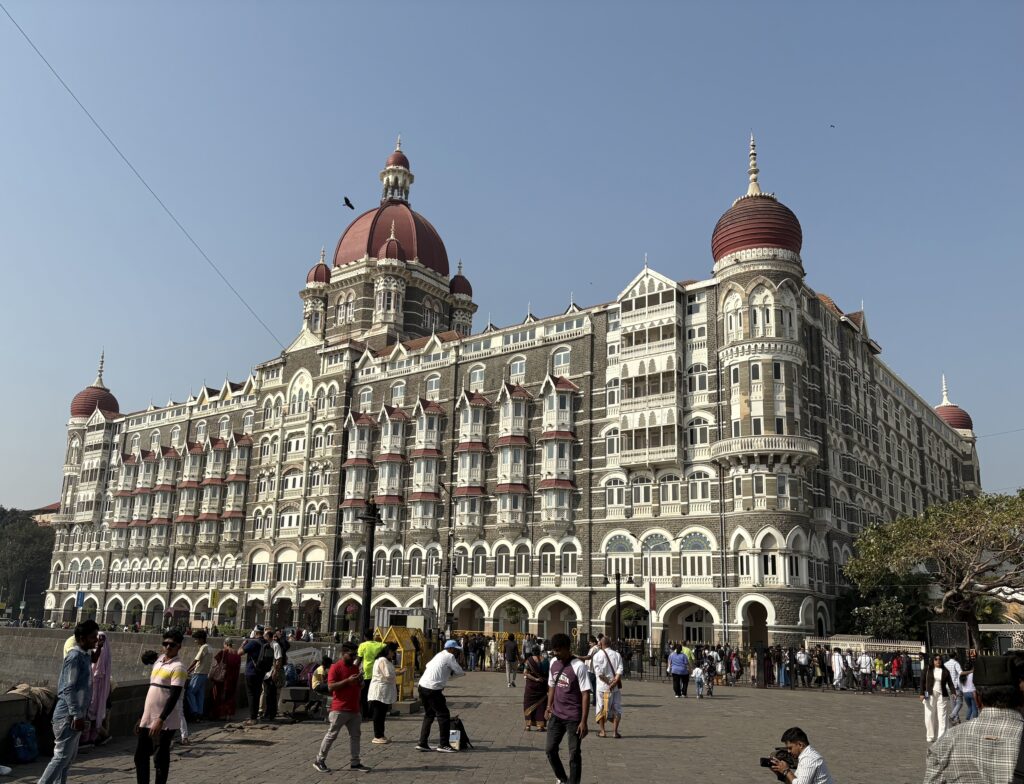
Jet lag became our next adversary. After two days of flights and a time difference that left me feeling as though I’d slipped into the Upside Down, we forced ourselves out into the city. Mumbai greeted us with relentless horns, dense crowds, a swirl of sweet and foul scents, and heat that felt especially punishing after a Canadian winter. Ninety minutes of gridlocked traffic later, we arrived at the Gateway of India, standing proudly on the edge of the Arabian Sea in the city’s historic Fort Precinct.
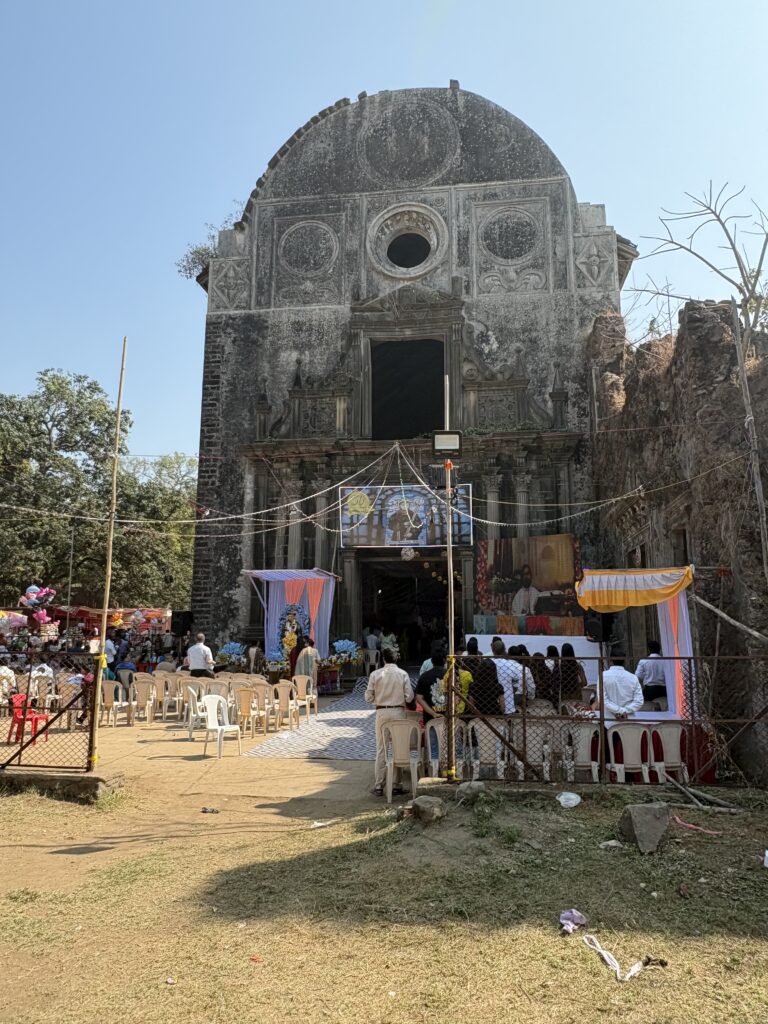
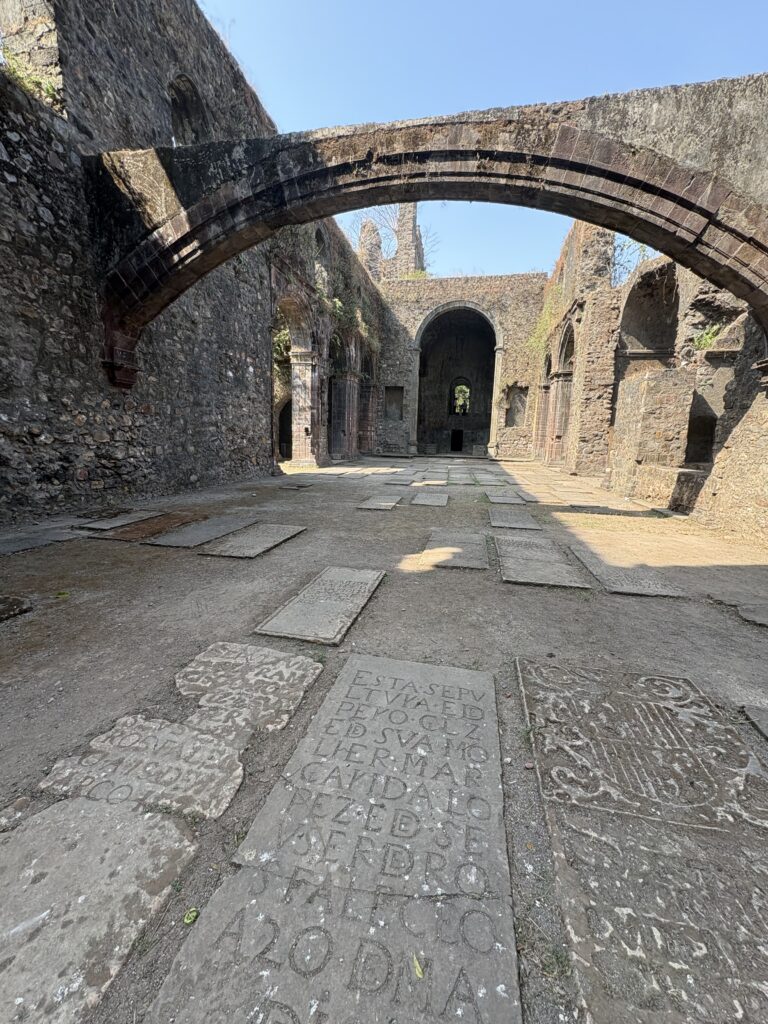
With two days left, we decided to venture off the well-worn path—if such a thing exists in India—and headed north to the ruins of the 17th-century Fort of St. Sebastian of Vasai, once a key Portuguese naval stronghold. The 48-kilometre Uber ride took nearly two hours and cost just ten Canadian dollars. When we arrived, we found not quiet ruins but a festive crowd dressed in Sunday finery.
Vines and jungle growth enveloped crumbling stone walls and roofless structures, drawing us down winding paths. There were no ticket booths, maps, or signs—only people. Vendors lined the way, children darted past clutching toys, and a young girl walked a tightrope like something out of a long-forgotten travelling circus. Around a bend stood a grand but decaying church, glowing with multicoloured LED lights. Our surprise deepened when the sounds of a Catholic mass—spoken in Marathi—crackled through loudspeakers. Worshippers filled the pews, breathing new life into ancient stone. We spent hours exploring the site, including two more ruined churches and a towering wall overlooking the Arabian Sea.
With daylight fading and no cell service, we abandoned plans for an Uber and squeezed into an auto rickshaw with a pair of locals bound for the train station. One explained that this was the feast day of San Gonsalo Garcia, India’s first saint, and spoke of the enduring Catholic communities along India’s western coast—a legacy of Portuguese rule. They helped us buy second-class train tickets and guided us to the platform.
When the train arrived and the doors slid open, it took only seconds to reconsider. The car was packed beyond comprehension, bodies compressed into every possible inch. For two foreigners carrying passports and valuables, it felt like an invitation to disaster. We waved goodbye as the doors shut and felt no regret abandoning our twenty-cent tickets.
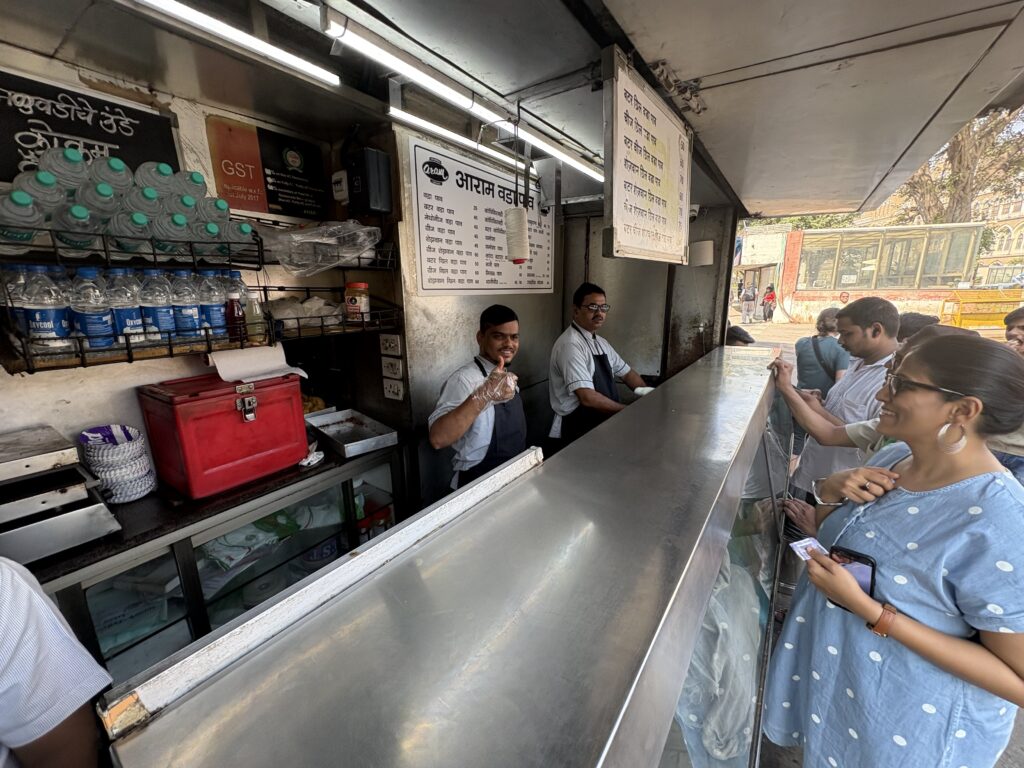
Our final day in Mumbai was meant to be spent on Elephanta Island, home to the famed rock-cut caves dating from the 5th to 8th centuries. Instead, we learned—too late—that the site is closed on Mondays. Plans adjusted, we spent the day visiting religious sites, eating street food, and lingering in a favourite café. After stashing our packs in the railway station cloakroom, we crossed the street for vada pav—Mumbai’s beloved “Indian burger,” vegetarian in form but iconic in stature.
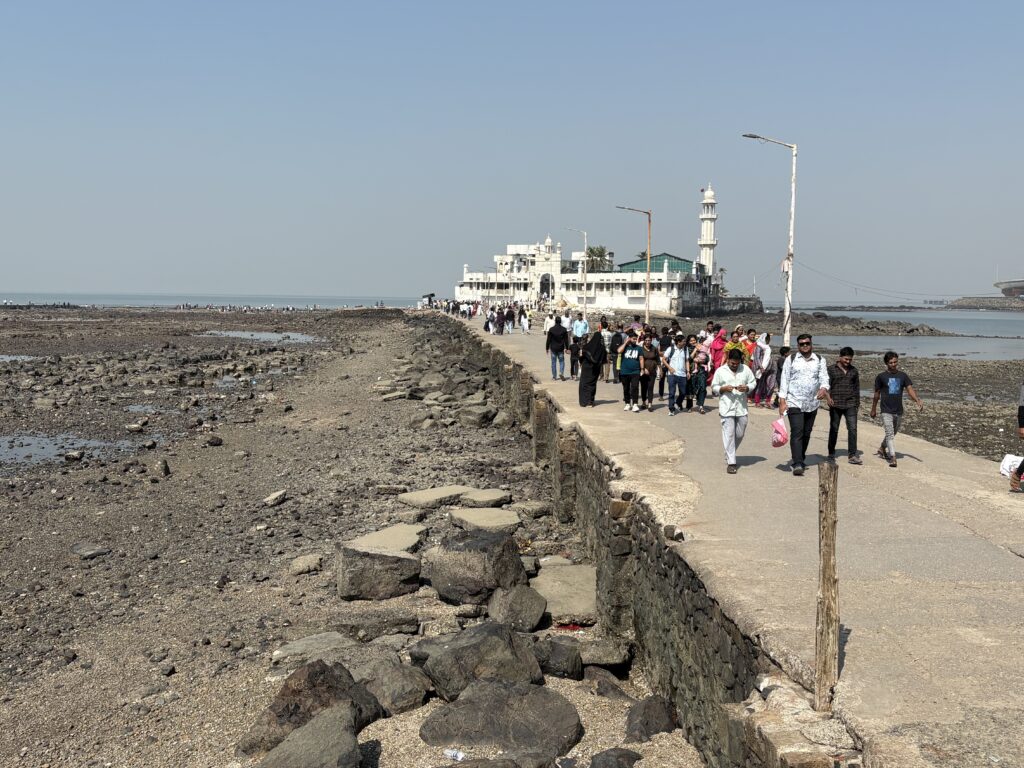
We visited the Haji Ali Dargah, a striking white mosque and tomb accessible only at low tide, and then the Shree Siddhivinayak Temple, dedicated to Lord Ganesha—one of my personal favourites among Hindu deities. The Hindu temple demanded patience: long queues, intense heat, and the press of bodies for a fleeting glimpse of the idol. India’s religious mosaic never ceases to fascinate me—daily coexistence layered over a history of periodic tension.
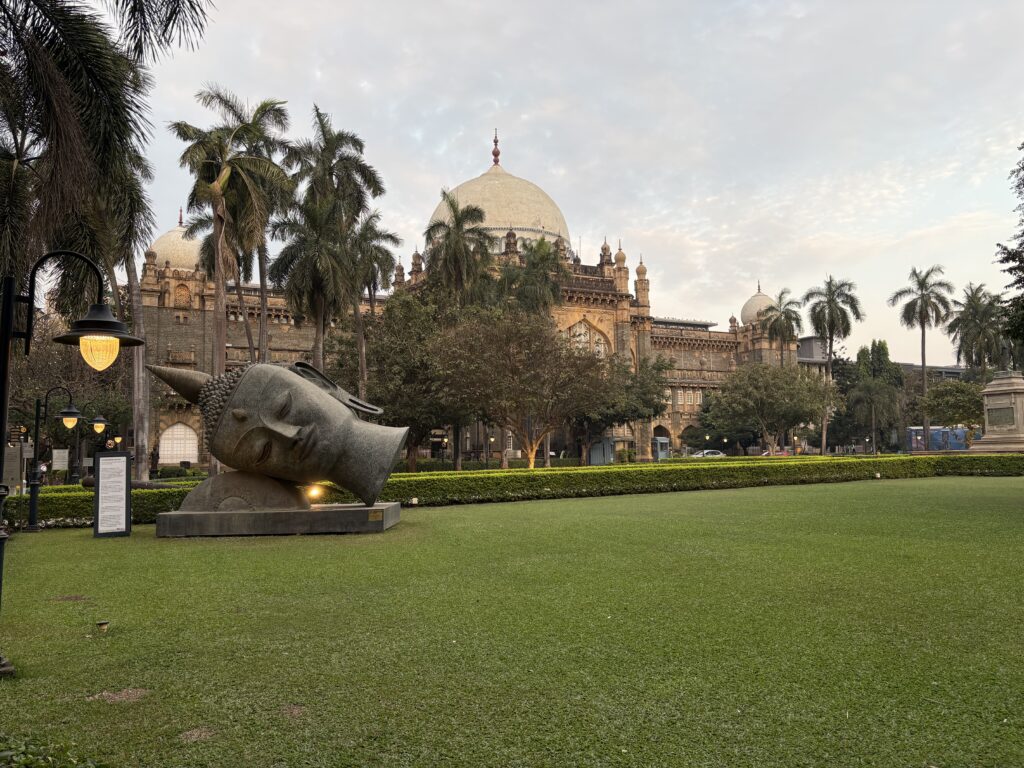
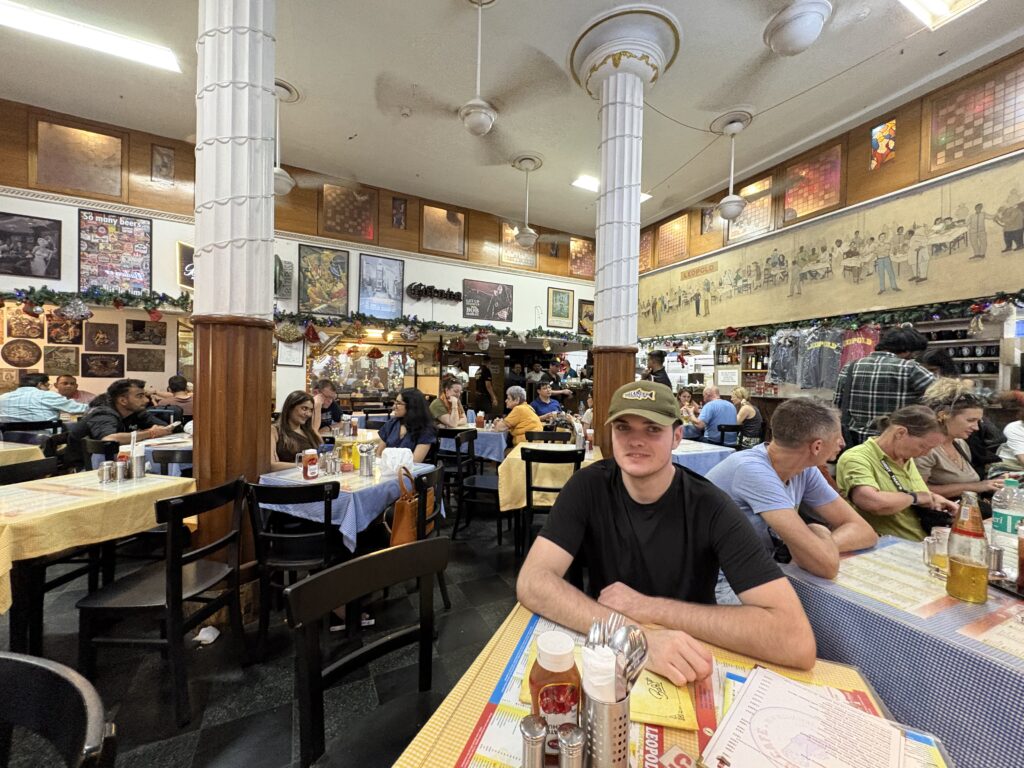
With time to spare before our overnight train, we pushed on to the Chhatrapati Shivaji Maharaj Vastu Sangrahalaya, formerly the Prince of Wales Museum. Its vast collection overwhelmed us in our exhausted state. Dinner followed at the historic Leopold Café, opened in 1871 and immortalized in Shantaram. Bullet holes from the 2008 terror attacks remain etched in its windows. Sitting beside them, I briefly traced imagined trajectories and felt a chill pass through me.
Fed, rehydrated, and spent, we boarded our overnight train just before 21:30. Fresh sheets, blankets, and pillows awaited us. With a 04:15 arrival in Aurangabad ahead, we dimmed the lights and surrendered to the clickety-clack and gentle sway of the rails—the perfect lullaby to close our Mumbai chapter.