Tamil Nadu: Towers of Faith and Tables of Friendship
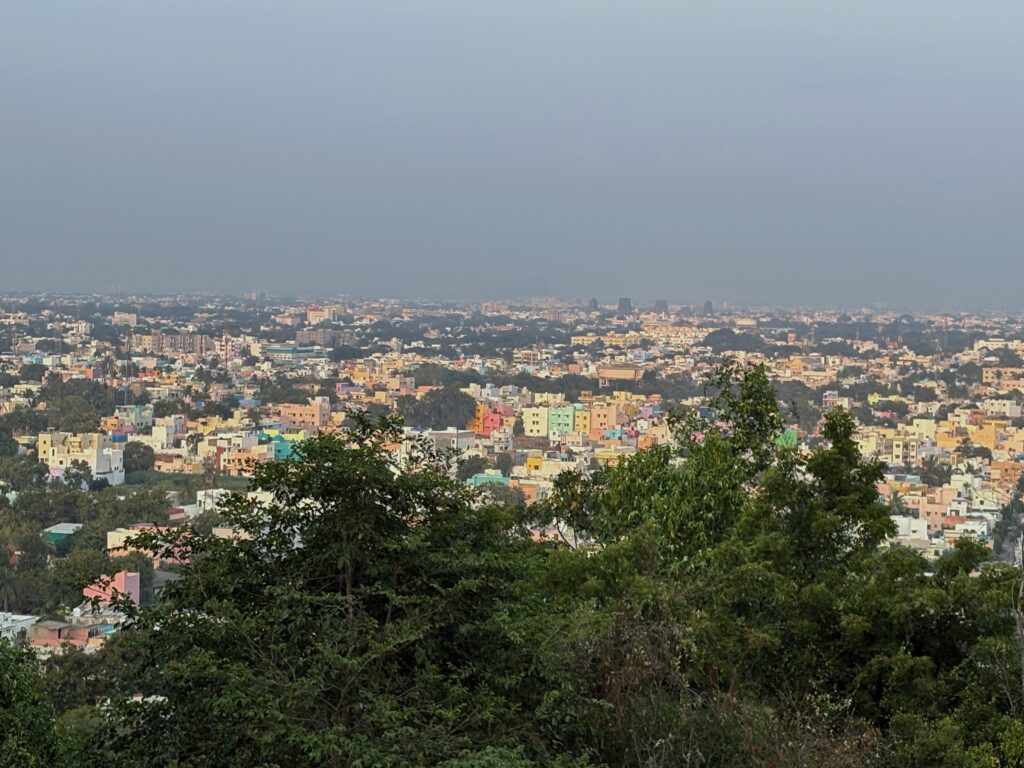
Our train pulled into the city of Madurai just before 10 a.m. for our stop here for the day before continuing on by train to Thanjavur in the evening. Our mission here was to visit the famous Meenakshi Amman Temple, the Thirumalai Nayakkar Palace, and try some of the city’s culinary delights. Madurai, one of the world’s oldest continuously inhabited cities, is often hailed as the “Athens of the East” and the “Cultural Capital of Tamil Nadu.” So, without further ado, we dropped our large backpacks off at the train station’s cloakroom and set off on foot for the nearby temple.
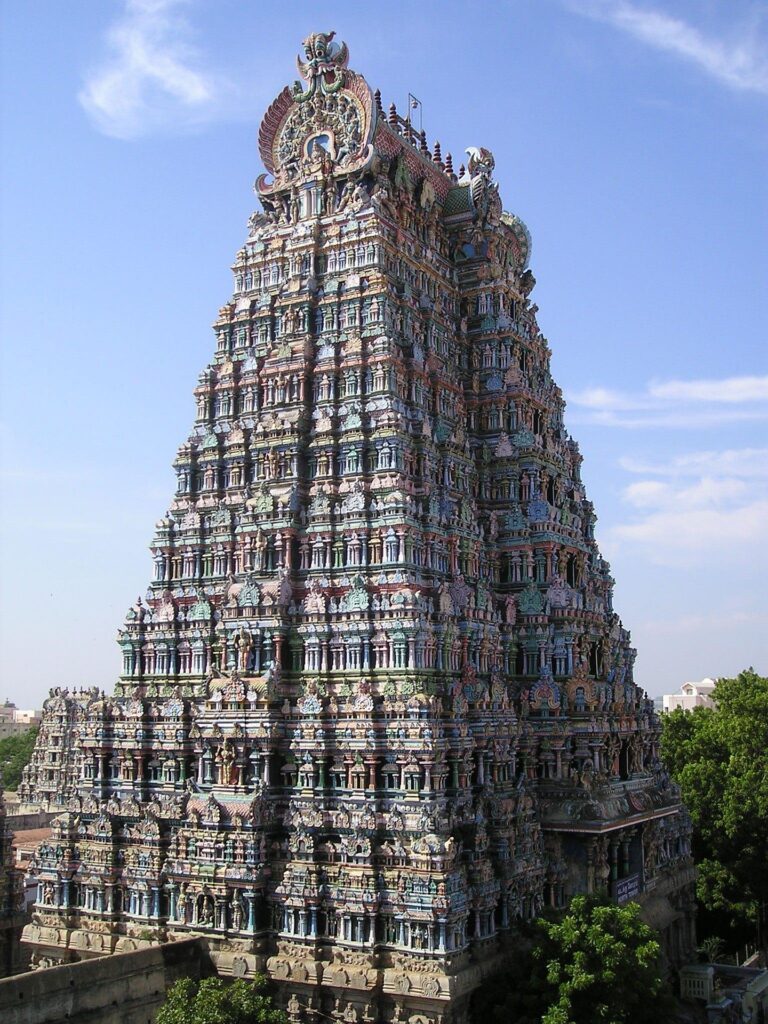
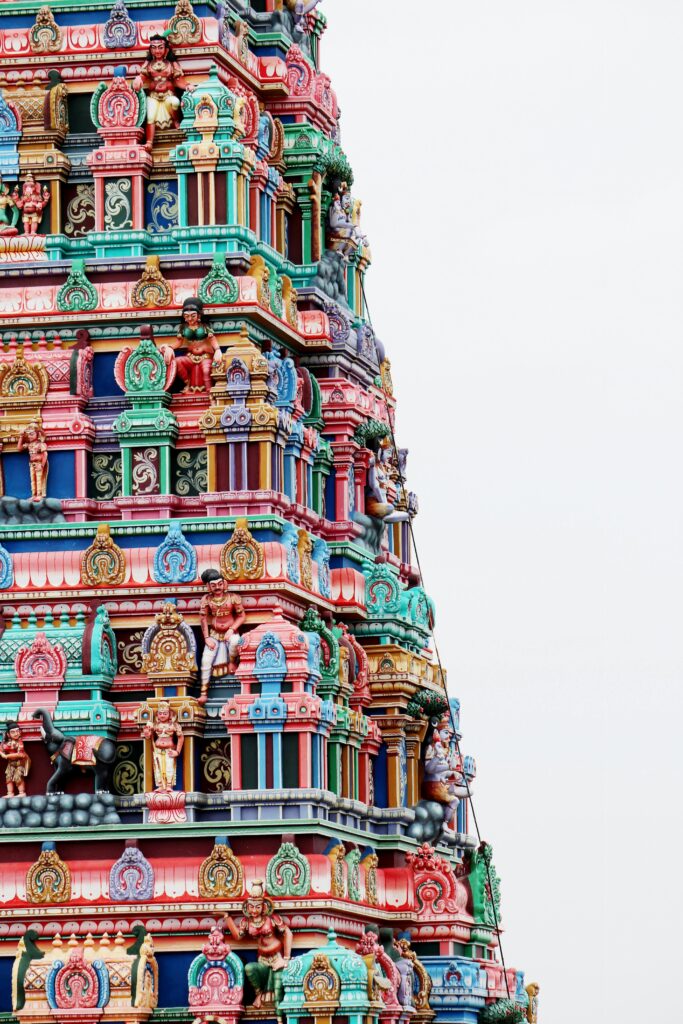
We bobbed and weaved our way through narrow roads and alleys until we eventually emerged in front of the western entrance to the temple. The temple is a world-renowned masterpiece of Dravidian architecture and is dedicated to Meenakshi (a form of the deity Parvati) and her consort Lord Shiva. The large 15-acre complex features 14 towering gopurams (gateway towers), with the tallest southern tower standing at a height of 52 meters. It contains over 33,000 sculptures, including the hand-painted stucco figures on the gopurams that depict gods, goddesses, demons, and animals from Hindu mythology. The multitude of these vibrant and colorful figures, rising in multiple stories to the spired tops of the gopurams (the four largest of which face the cardinal directions), are what attracted my attention and brought me halfway around the world to see them in all their glory. Unfortunately, and much to my dismay, the sight that was revealed to us was the gopurams ensconced in bamboo scaffolding and obscured by fine green netting.
As in life—and so in travel—we must be ready for the unexpected and some inevitable disappointments from time to time. Our challenge is to face these setbacks with a positive attitude and seek to find the silver linings, and perhaps later realize how these occasions helped us grow or led us to a new path we were meant to follow. So, I ditched my shoes and slipped on my lungi, a traditional cotton wrap worn by men, to cover my bare legs, which was required to enter the sacred site. The inside of the temple felt heavy with the weight of spirituality and reverence. We visited the various halls and areas filled with sacred images and architecture that we were permitted to enter as non-Hindus. I was happy to at least capture some of the grandeur I had come to see, as we explored and were able to view a number of the smaller gopurams that were not currently covered and undergoing restoration.
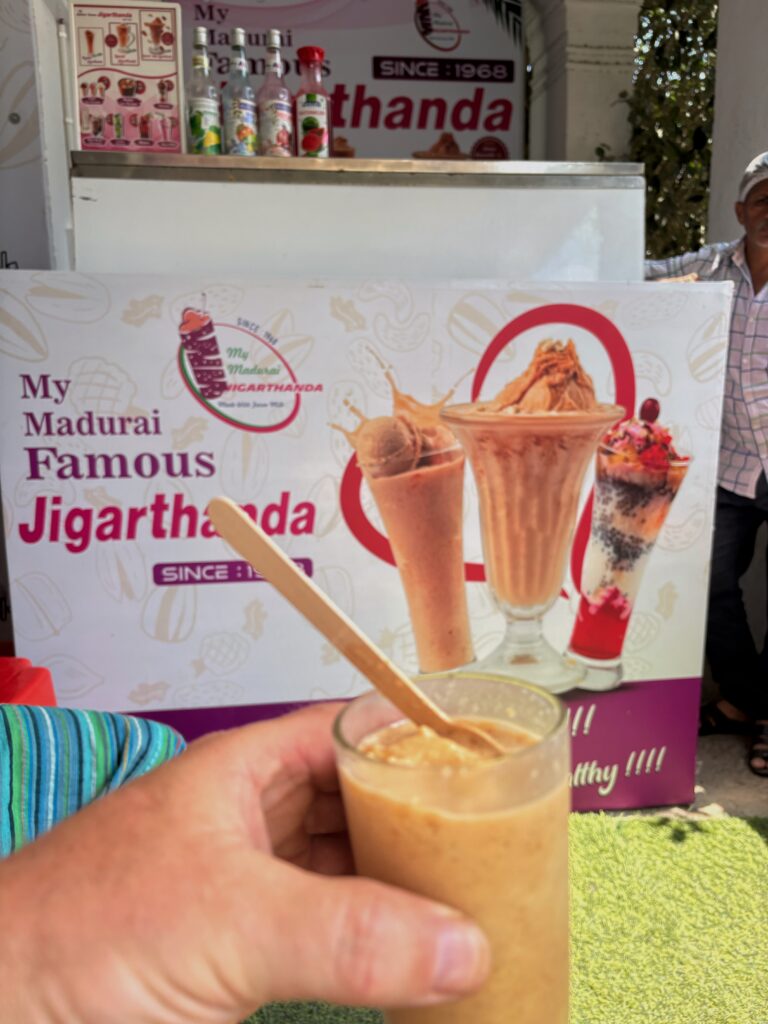
Tired from our less-than-ideal sleep on the overnight train, feeling the rumbles of our empty stomachs, and starting to notice the heat, I spotted a sign for one of Madurai’s specialties, the famous Jigarthanda. This legendary, thick dessert drink is known for its natural cooling properties and creamy texture. The key ingredients are almond gum, a natural edible resin that gives the drink its signature chewy, jelly-like texture; nannari syrup, a fragrant syrup made from sarsaparilla roots, valued for its medicinal and body-cooling benefits; reduced milk, full-fat milk slow-boiled until it thickens and turns a light brownish-pink; and special ice cream, which is much richer than standard vanilla. We happened to have stumbled across the most iconic place to experience this drink, “Madurai Famous Jigarthandi,” which began the craze back in 1977, selling them from a simple pushcart. What problem or disappointment can’t an ice cream solve? This tasty beverage definitely put a smile on my face!
Realizing that we still hadn’t fully satisfied our empty stomachs, we looked up some lunch options and soon found our way to one of Madurai’s famous mess culture establishments, the Kumar Mess. Mess culture is a pillar of Madurai’s identity, offering authentic, homestyle cooking that caters to the city’s 24/7 bustling lifestyle. We enjoyed our meal of chicken and mutton curry served on traditional banana leaves with all the usual accompaniments.
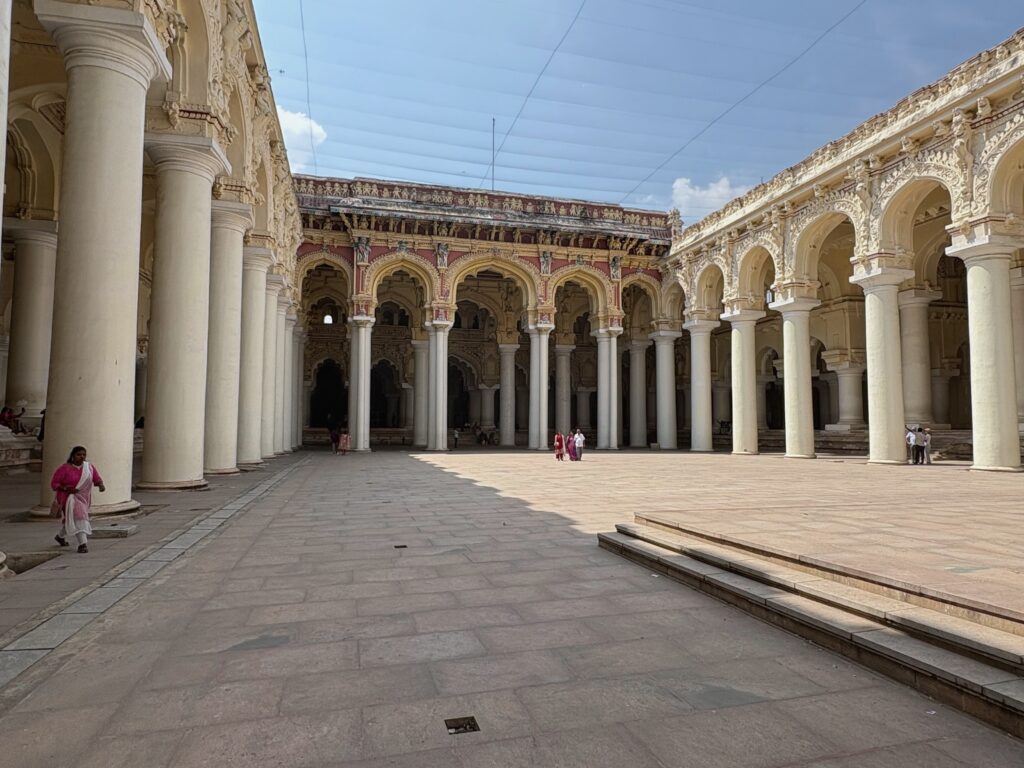
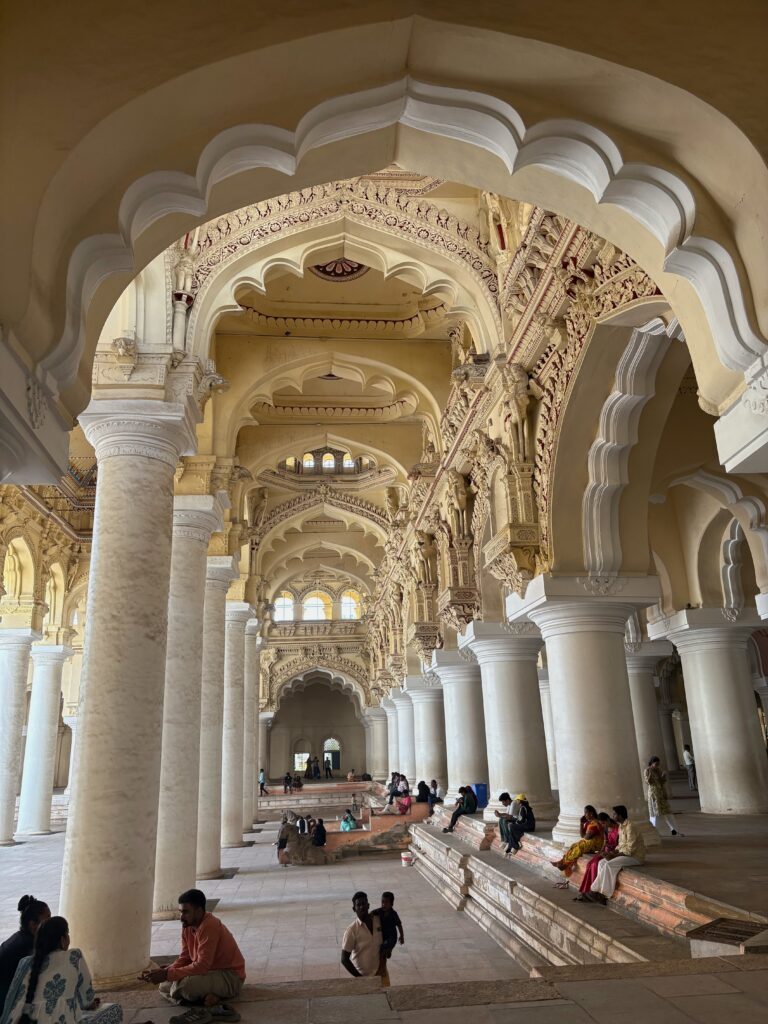
We next visited the palace, which was beautiful but small in terms of what remains of it today. We eventually returned to the train station to retrieve our bags and put our somewhat disappointing experience in Madurai behind us. We eventually arrived around 11:20 p.m. at the temple city of Thanjavur and made our way to our accommodations to hit the sheets so would be ready for our next day’s explorations.
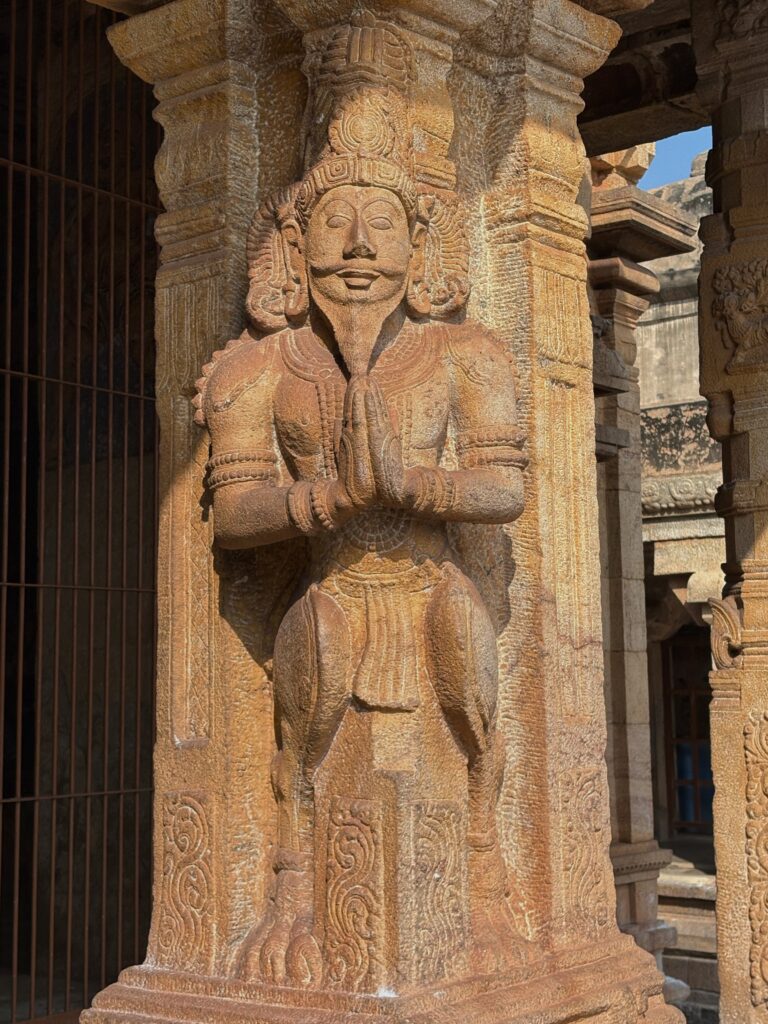
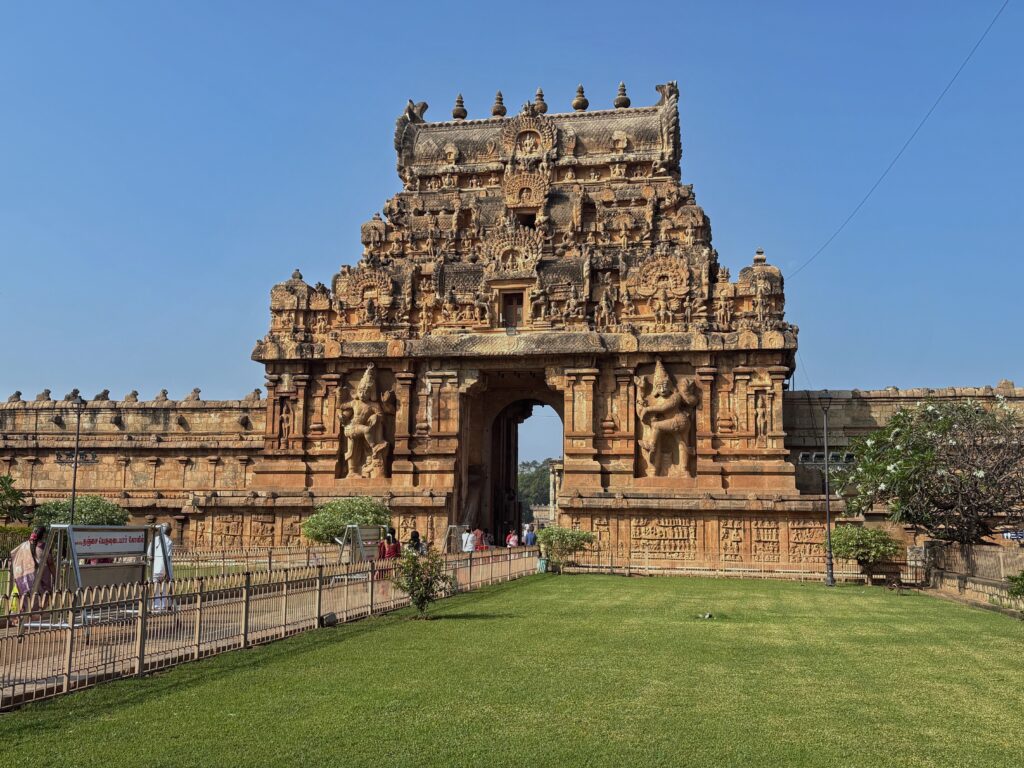
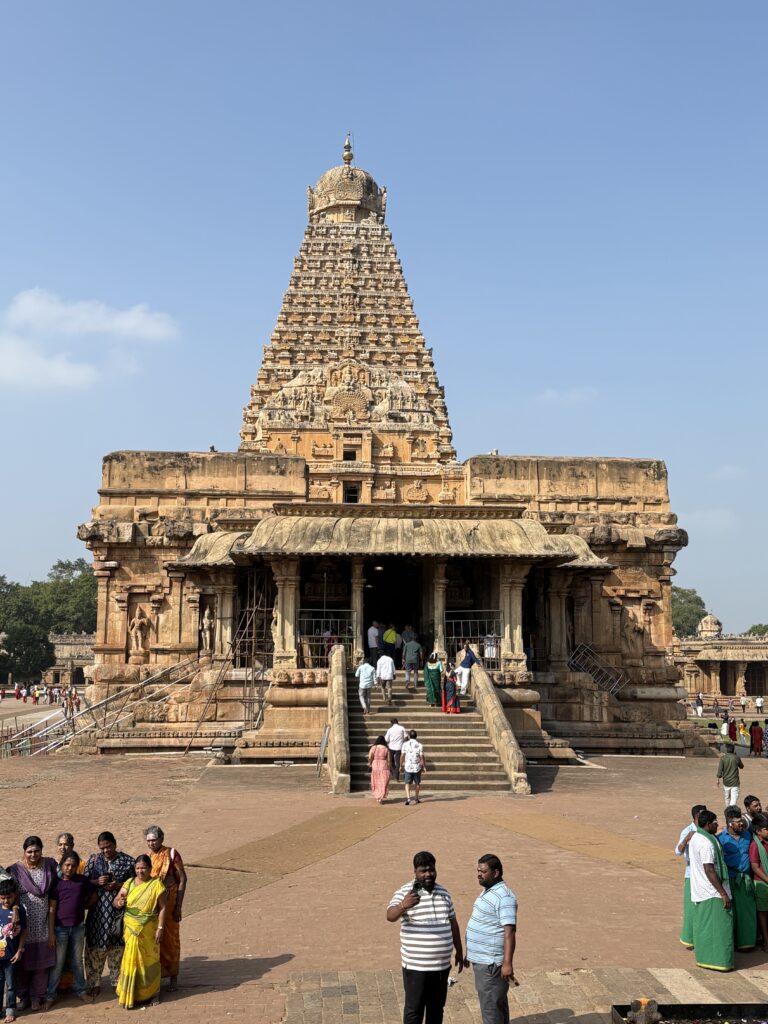
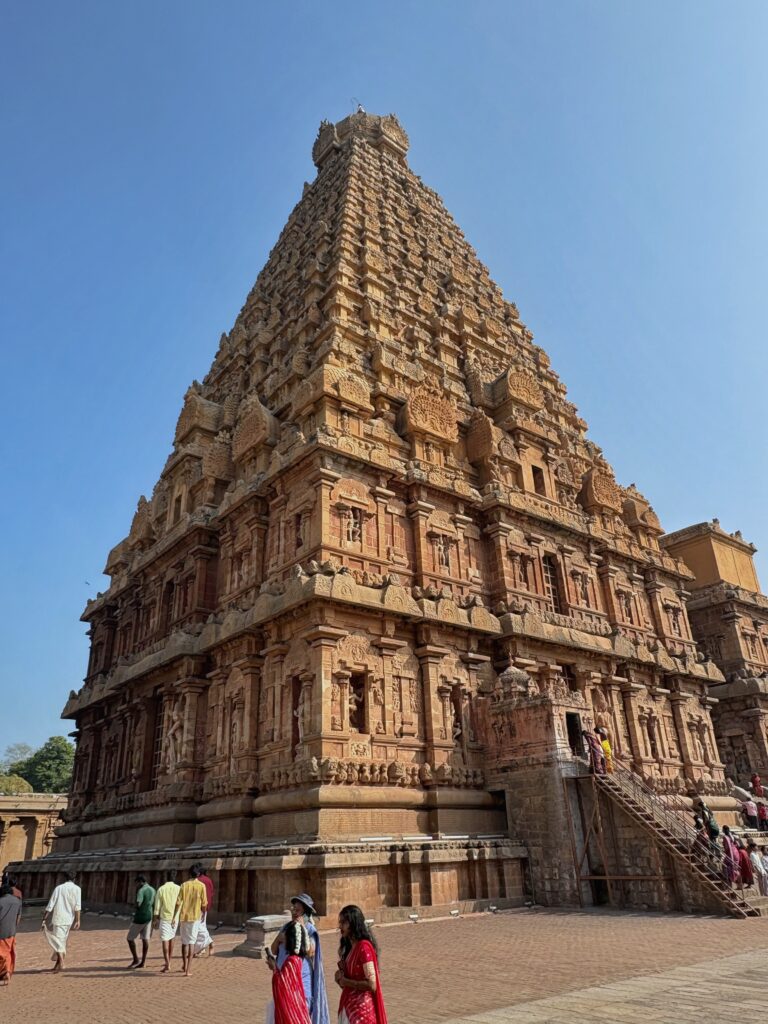
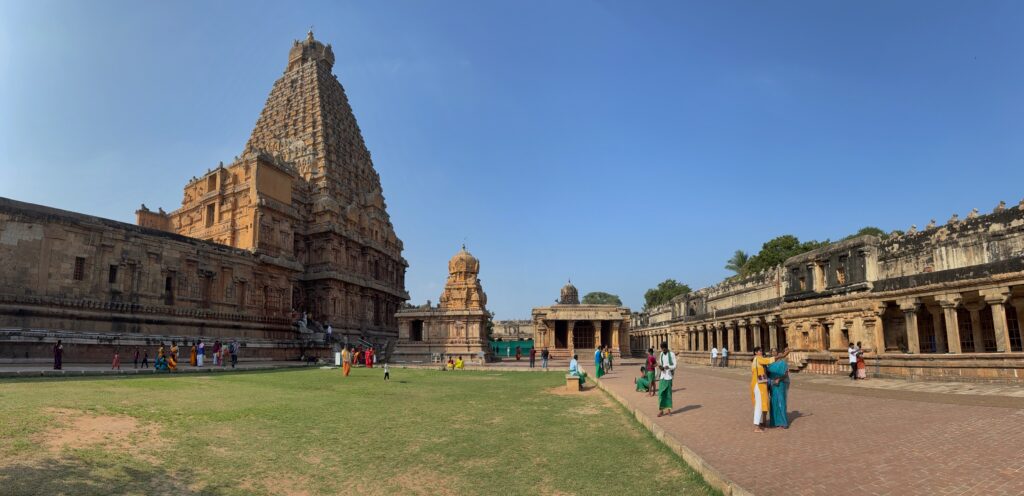
After a nice sleep, we arose to enjoy a traditional breakfast at our hotel and then headed off to view the sights of Thanjavur. We started at the Brihadeeswara Temple, a monumental Hindu temple dedicated to Lord Shiva. The temple stands as a pinnacle of Chola-era Dravidian architecture and is celebrated as the world’s first temple built entirely of granite. It was completed in 1010 CE by the Chola emperor Rajaraja Chola I. While the temple lacks the color and vibrancy of the Meenakshi Temple in Madurai, its size and detail mark it as the centerpiece of the “Great Living Chola Temples,” which includes a collection of additional nearby temples (also UNESCO World Heritage sites) in the Thanjavur district that unfortunately we didn’t have time to visit.
The Chola Empire stands out as one of the longest-ruling and most successful dynasties in world history, beginning in 300 BCE and lasting until their defeat by the Pandyas in 1279 CE. They transformed a regional kingdom into a global maritime superpower that spread Hinduism and Buddhism across Asia, moved 80-ton stones with astonishing precision to construct the monumental Thanjavur temple, established local democracy through meticulous land surveys and a fair tax system, and perfected the art of bronze casting using the “lost wax” method. The morning light cast a wonderful glow over the temple grounds as we walked among these remarkable structures, witnessing the tangible legacy of their skill and vision.
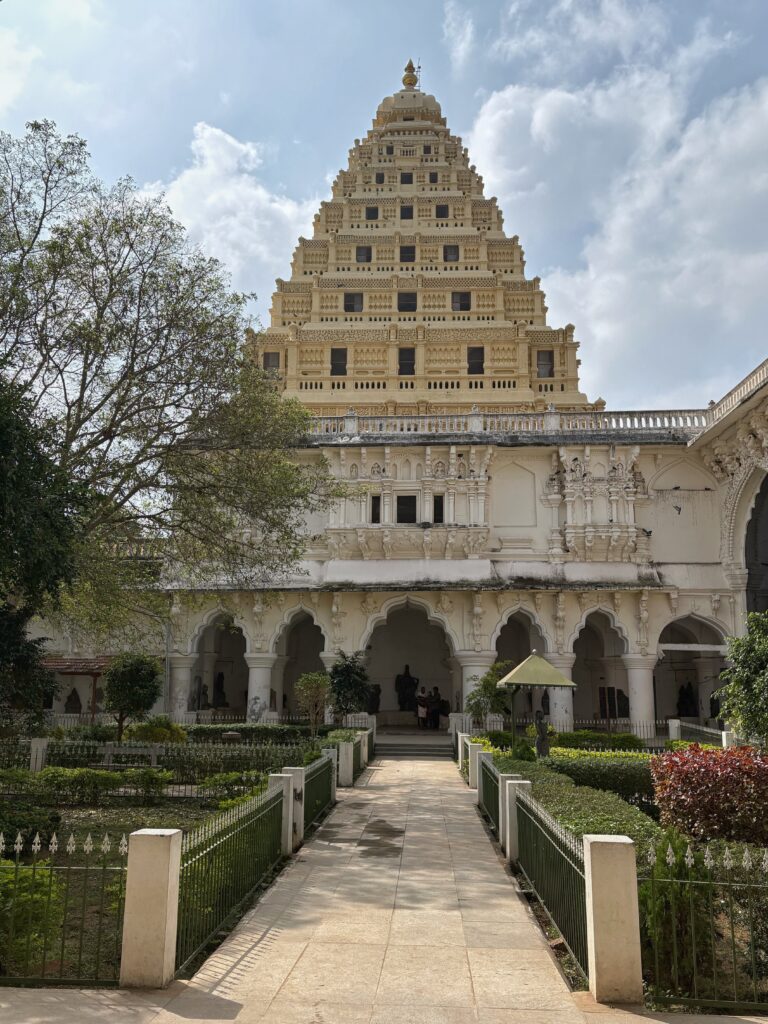
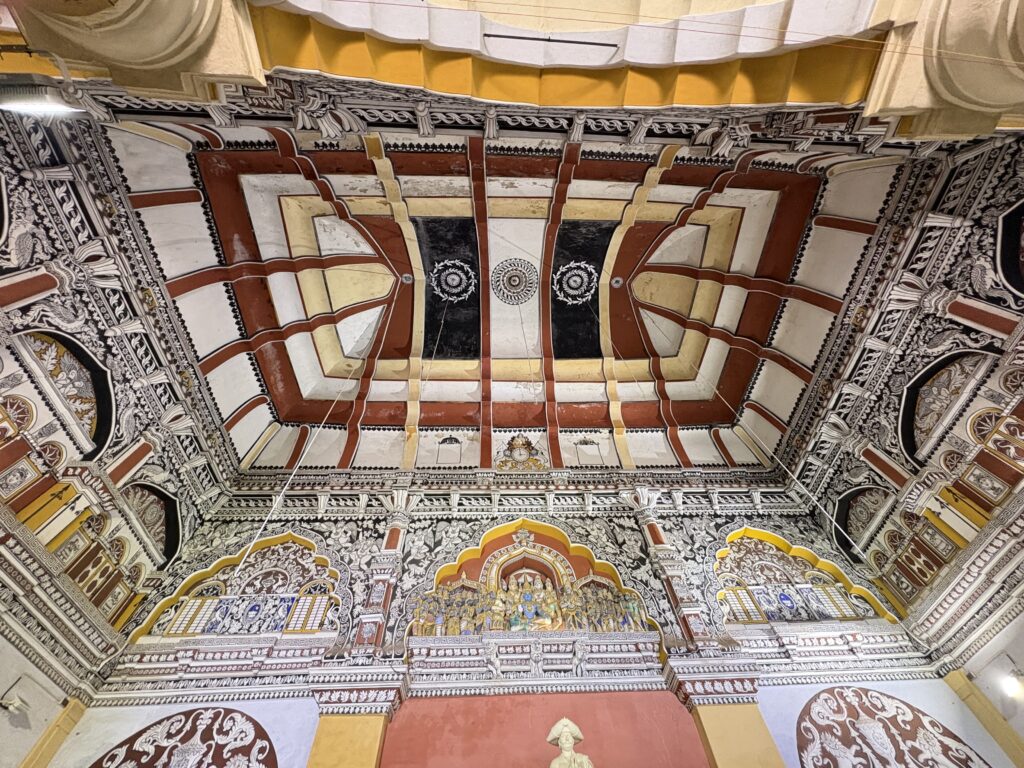
We next set off for the Thanjavur Maratha Palace, locally known as Aranmanai, a sprawling 16th-century fortress and royal residence. Originally constructed by the Nayak dynasty and later expanded by the Maratha rulers starting in 1674, the palace exudes both history and grandeur at every turn. The crowning highlight was the Saraswathi Mahal Library, one of the oldest libraries in Asia, housing over 60,000 rare palm-leaf manuscripts and medieval texts in multiple languages. The tiny, precise writing etched onto the long, slender leaves was astonishing to behold in person, and knowing that monks and scholars had painstakingly recreated these fragile texts over centuries to ensure their survival made the experience even more profound.
With time pressing before our 1 p.m. train to our final stop in India—the city of Chennai, formerly Madras—we grabbed a quick lunch and ducked into a nearby coffee and sweet shop. A comforting hit of caffeine and some rich ghee- and milk-based treats gave us the perfect boost before collecting our packs from the cloakroom and boarding the train, carrying with us the lingering wonder of Thanjavur’s remarkable history.
We were buzzing with excitement as we reached Chennai, eager to reunite with the friends we had met on our Chhattisgarh jungle trek. Our friend Nagi had arranged a meetup at the Madras Gymkhana Club for everyone who could attend and had advised us to dress appropriately in pants and a collared shirt. While Mylo was armed with the sleek, sleeved, collared shirt he had purchased for entry into the churches of old Goa, the best I could muster from my pack was a pair of beige trekking pants and a green, long-sleeved safari shirt from Value Village—hardly the attire one imagines for an evening at a prestigious British-style clubhouse.
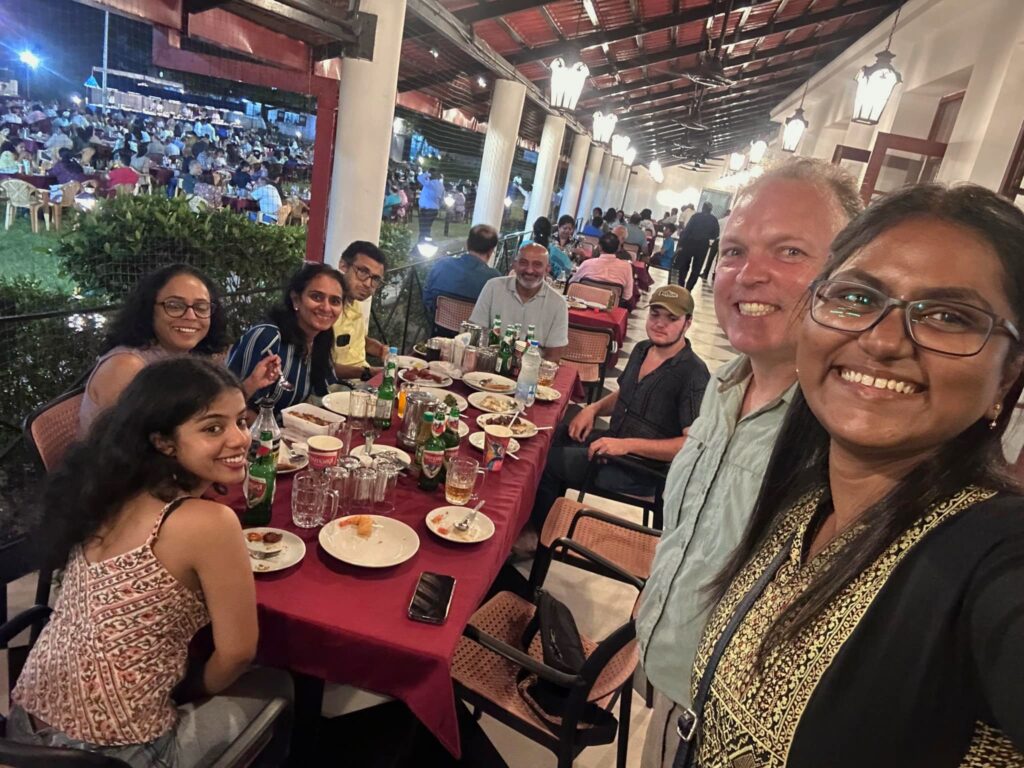
Despite our questionable “formal wear,” we were greeted with warmth and genuine hospitality. Nagi introduced us to his radiant wife, Hema, their charming niece Mahika, and welcomed us alongside our fellow trek mates, Yamini and her husband, and the ever-beaming Rupa, who had patiently endured my endless questions during our eight-hour trek drive. Any initial awkwardness quickly melted away as laughter, stories, and the glow of friendship filled the room.
The evening unfolded in a feast of flavors and camaraderie. Plates of carefully chosen Indian delicacies, selected by Mahika, our resident Chennai foodie, kept coming, accompanied by an array of exquisite baked treats that Yamini—an undeniably talented baker—had brought to share. With each bite and every shared laugh, the room buzzed with warmth and joy. Eventually, it was time to retreat to Nagi’s home, where we would spend two nights. There is nothing more special than forging friendships abroad and being honored with an invitation into someone’s home. After a quick tour of our room and introductions to the family pets—a cat and two dogs—it was off to bed in a space that already felt like a home away from home, filled with the quiet comfort of connection and generosity.
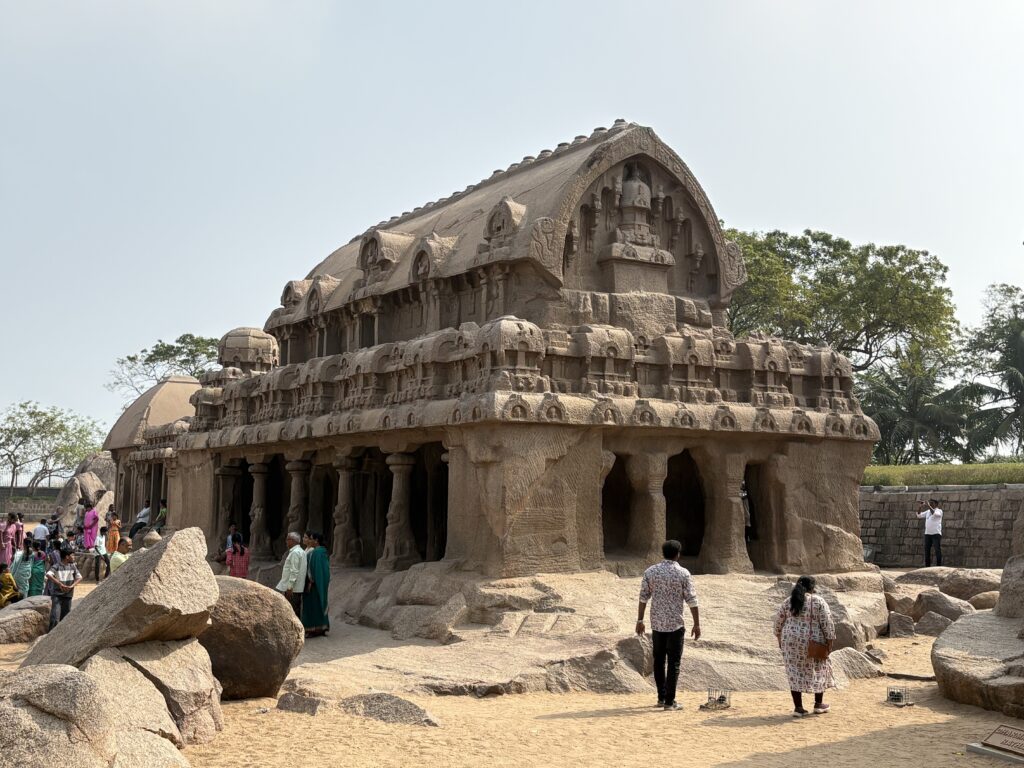
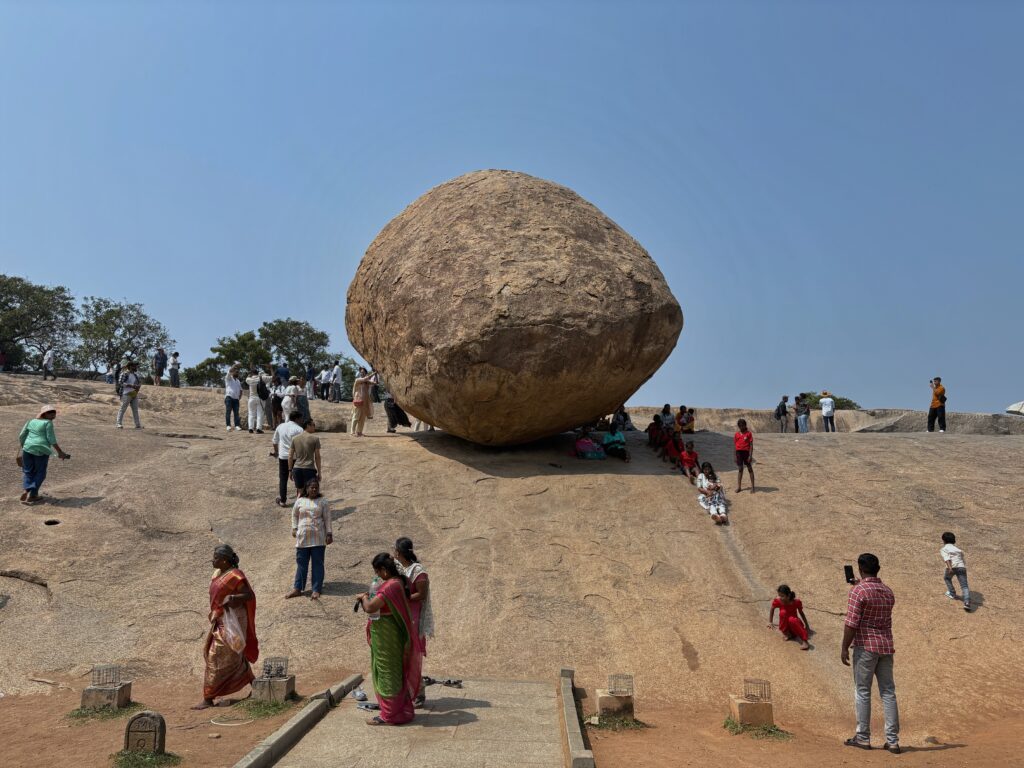
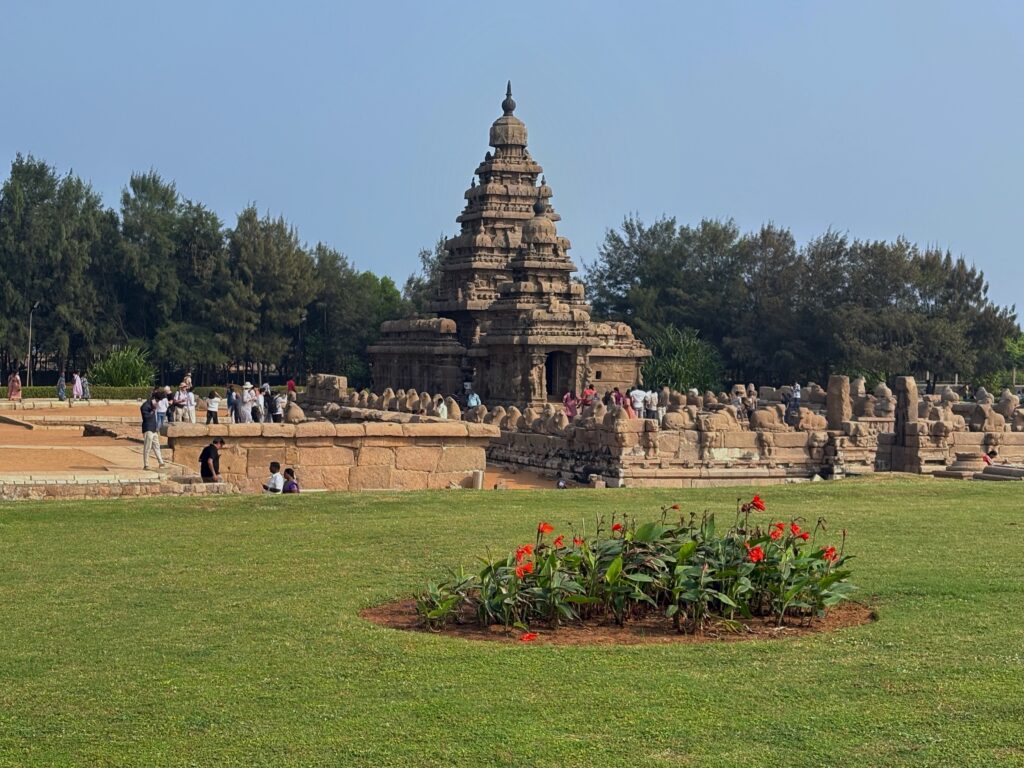
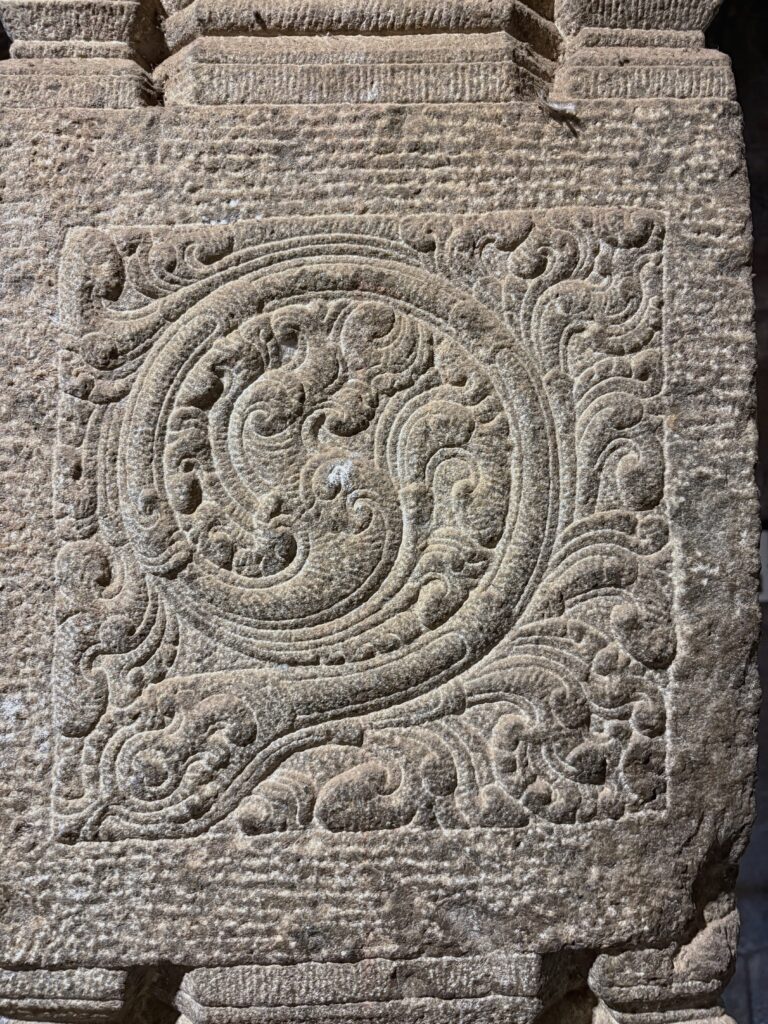
After a great breakfast, we embarked on our pre-ordered taxi to visit the historic coastal town of Mahabalipuram, roughly an hour’s drive from Chennai. The town is famous for its 7th and 8th-century rock-cut Hindu monuments constructed by the Pallava dynasty and recognized as a UNESCO World Heritage Site. The Pallavas ruled in south India from the 4th to 9th centuries CE and extended their cultural influence through Southeast Asia, including Sri Lanka, Cambodia, and Indonesia. Mahabalipuram’s significance lies in its status as the cradle of Dravidian architecture. Prior to the development of this site, Hindu temples were largely constructed of wood or clay, and the Pallavas pioneered this transition to stone.
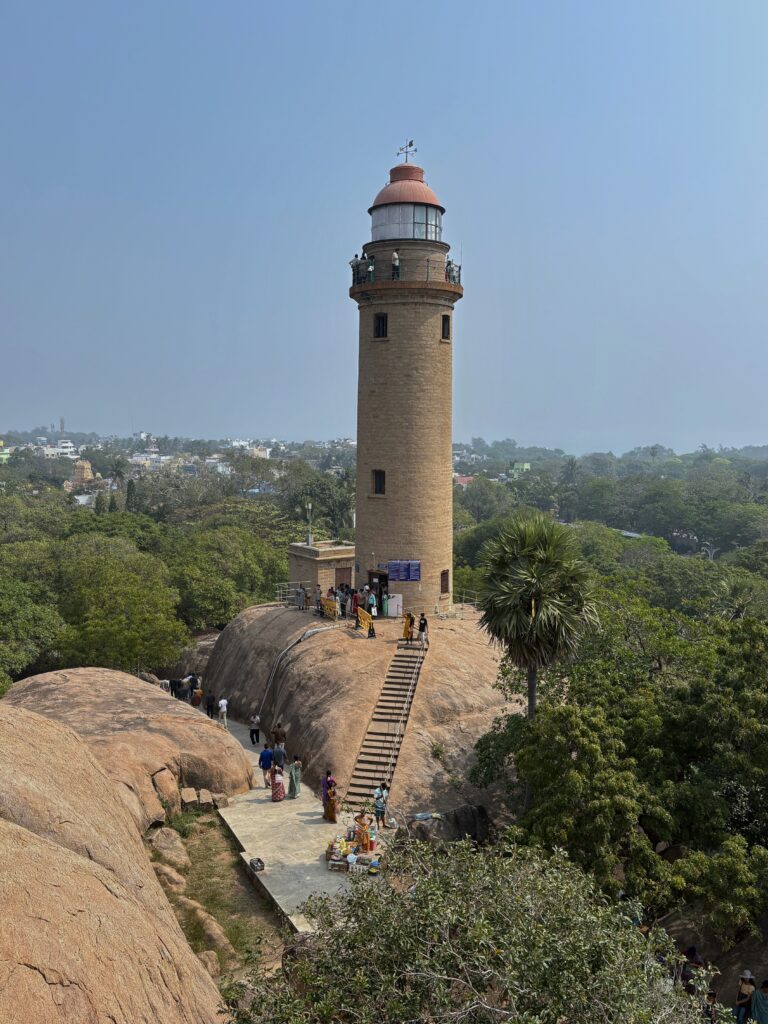
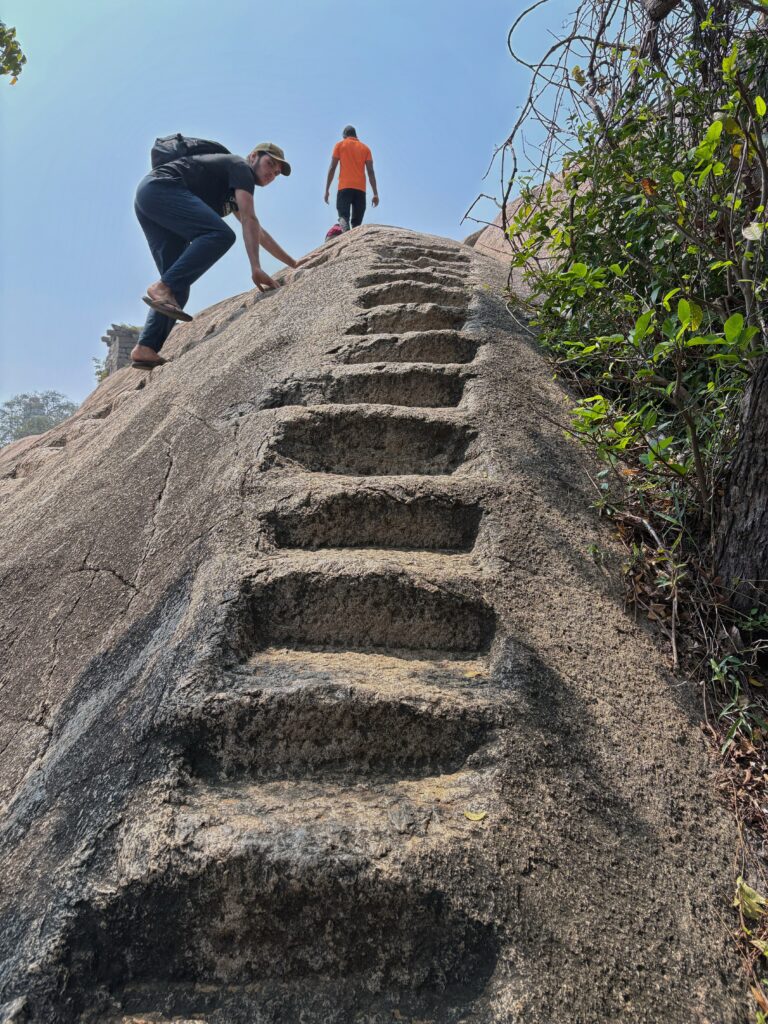
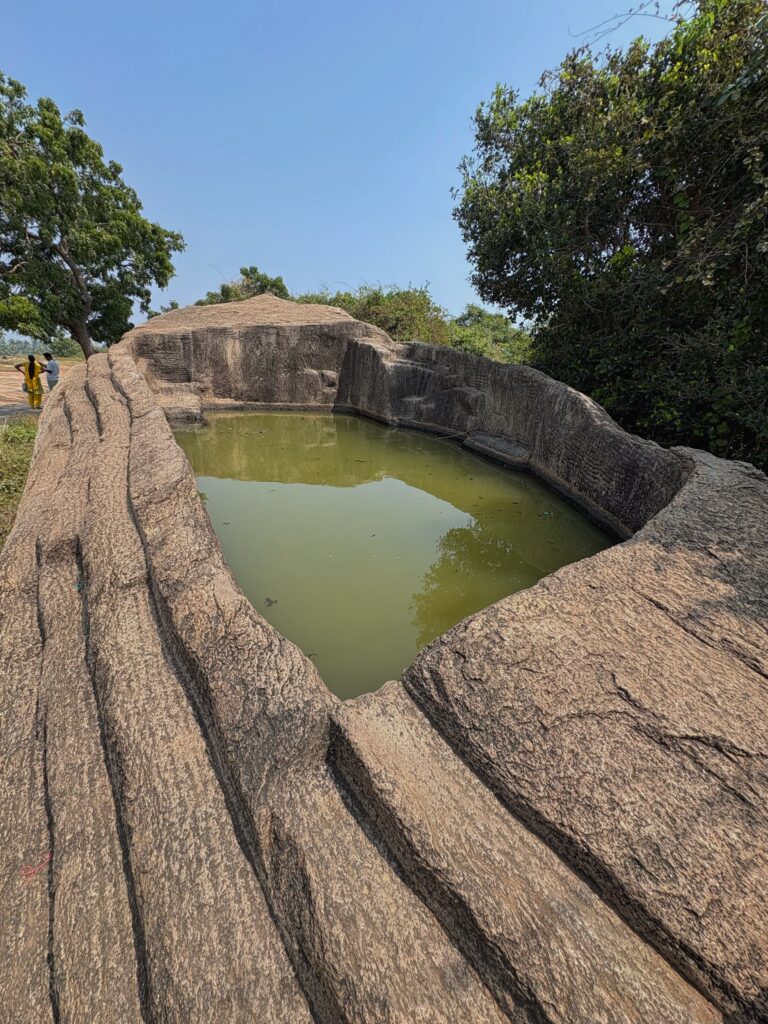
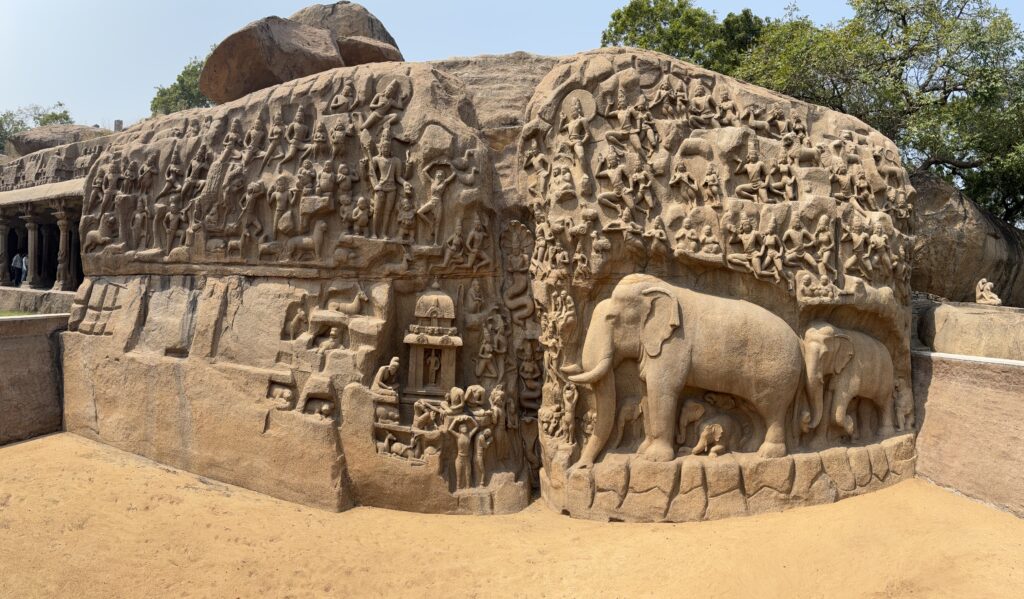
The site is spread over a broad area, so it was very helpful to have our car and driver shuttle us between the various sites. We visited various cave temples excavated into the rocky hillsides, wandered amongst the monolithic Rathas, which are entire temples carved out of single massive boulders from the top down, and various structural temples built using individual stone blocks. One of the highlights was climbing the vertigo-inducing spiral steel staircase of a modern lighthouse that provided us with magnificent views over the surrounding sites and the Bay of Bengal. The other standout site was the colossal open-air rock relief known as “Arjuna’s Penance” or the “Descent of the Ganges.” It is 96 feet long and 43 feet high, making it one of the largest and most intricate rock-cut reliefs in the world. It depicts the hero Arjuna from the Indian epic the Mahabharata and King Bhagiratha’s penance to bring the holy river Ganga down to earth to purify his ancestors’ souls.
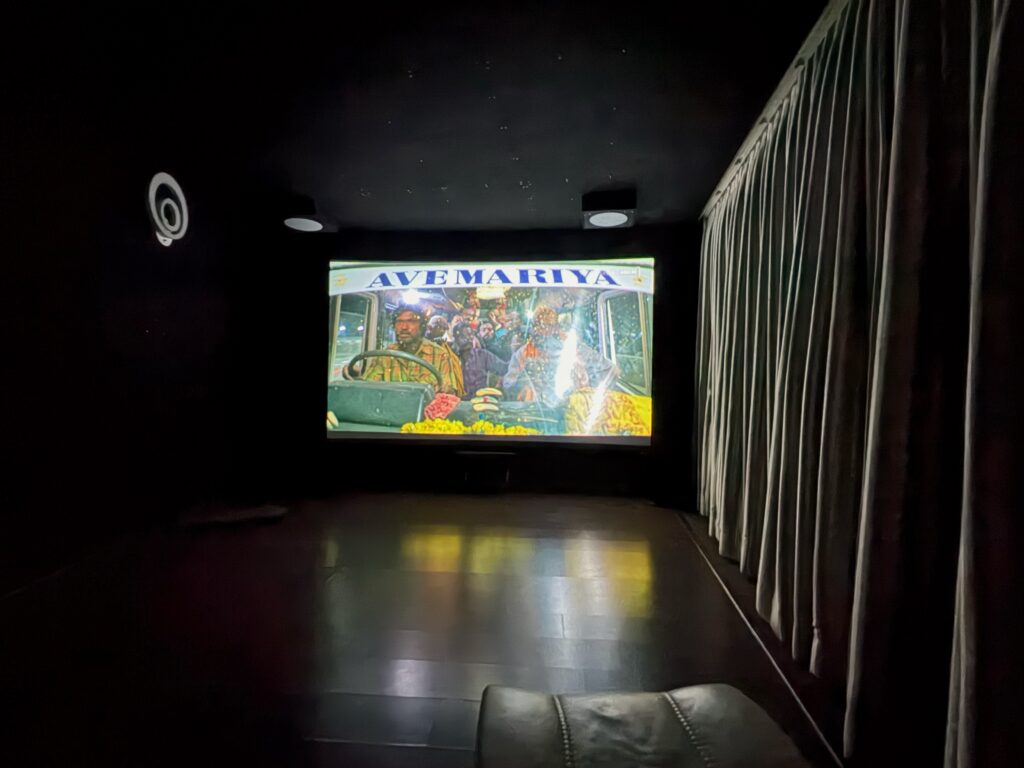
We returned to Nagi’s place in the early evening and decided to just chill out for the rest of the night. Nagi and our trek mates on the Chhattisgarh jungle trek had regaled us with the story of the Guna Caves and a harrowing real-life tale that was adapted into a 2024 blockbuster Malayalam film, “Manjummel Boys,” so we decided this was the perfect opportunity to watch it. Nagi led us down into his basement, where, much to our amazement, he had a full home theater with reclining leather seats and a sound system to match! I won’t spoil the story, but would certainly recommend the movie to anyone interested in this Indian thriller that provides both insights into the country and a refreshing break from the Hollywood mold. After the film, we discussed the film over more beers as we feasted on some delightful mutton and chicken dishes commendably selected for us by Mahika.
The following morning, it was up early to head to the airport and bid our final goodbye to Nagi and his family, who had so graciously hosted, fed, and looked after us during our time in Chennai. The day also marked our departure from India, prompting some nostalgic reflection on our many adventures and the time we spent here. India can be a challenging country to travel through, but its rewards—rich culture, stunning history, and vibrant communities—far outweighed the inevitable noise, congestion, and bustle. The people of India, with their varied languages and cultural traditions, were always warm and welcoming, often stepping forward to assist whenever we appeared unsure or in need. Though the simple routine of lining up for service proved frustrating, it demanded patience and a more assertive, proactive approach than we were used to, ultimately teaching us that if you couldn’t beat them, you had to join them and adapt to India’s fast-paced style with confidence. Most of all, I will cherish the friendships we made and the generosity and insights into India and its people that our new friends so freely shared with us.
We are now off to a new chapter in this wayward adventure as we travel south to the island nation of Sri Lanka to spend the next several weeks. For those who are interested, you can join us on our travels in my upcoming Sri Lanka 2026 blog series.