The Art of Susegad: Finding Contentment in the Heart of Goa
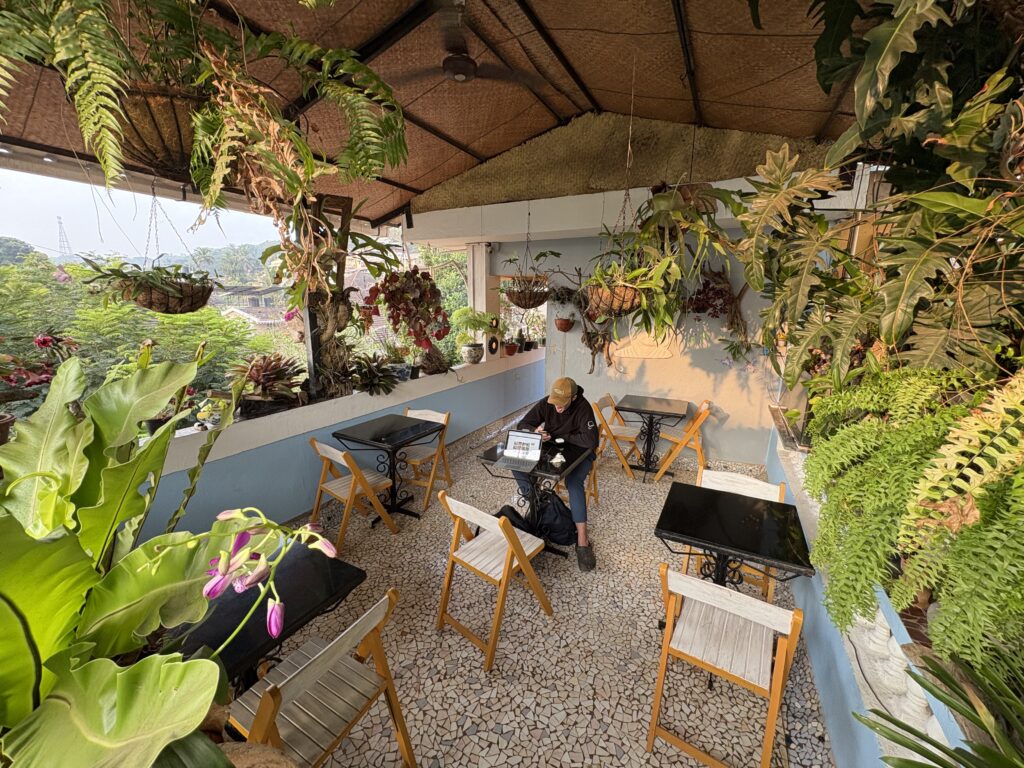
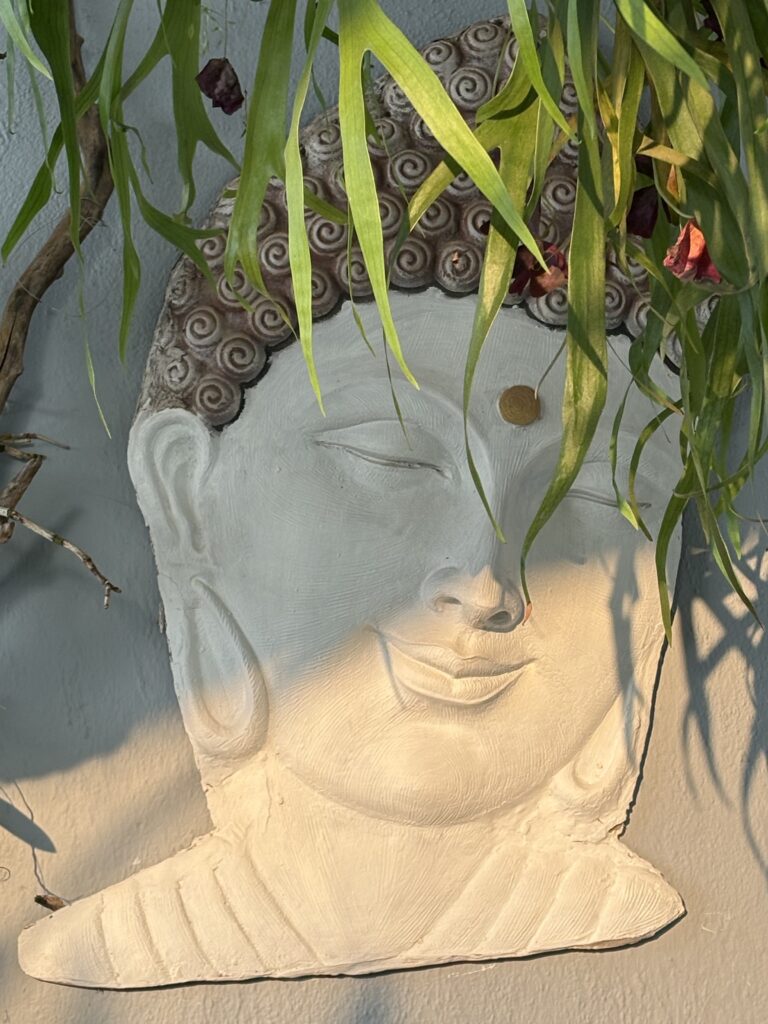
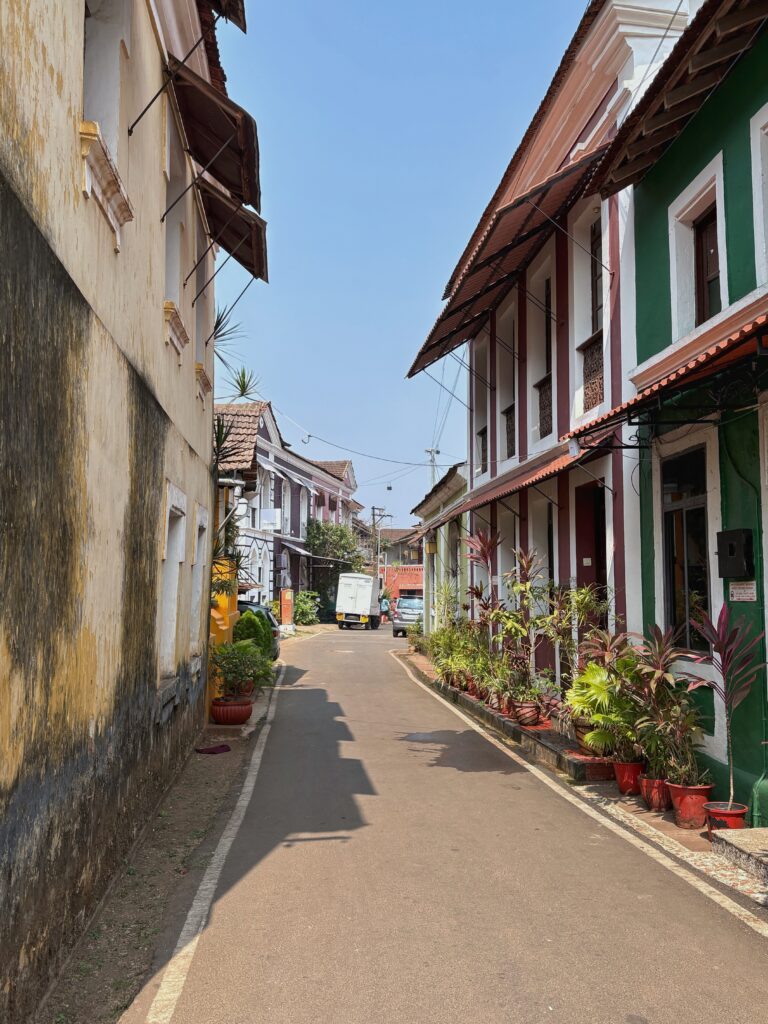
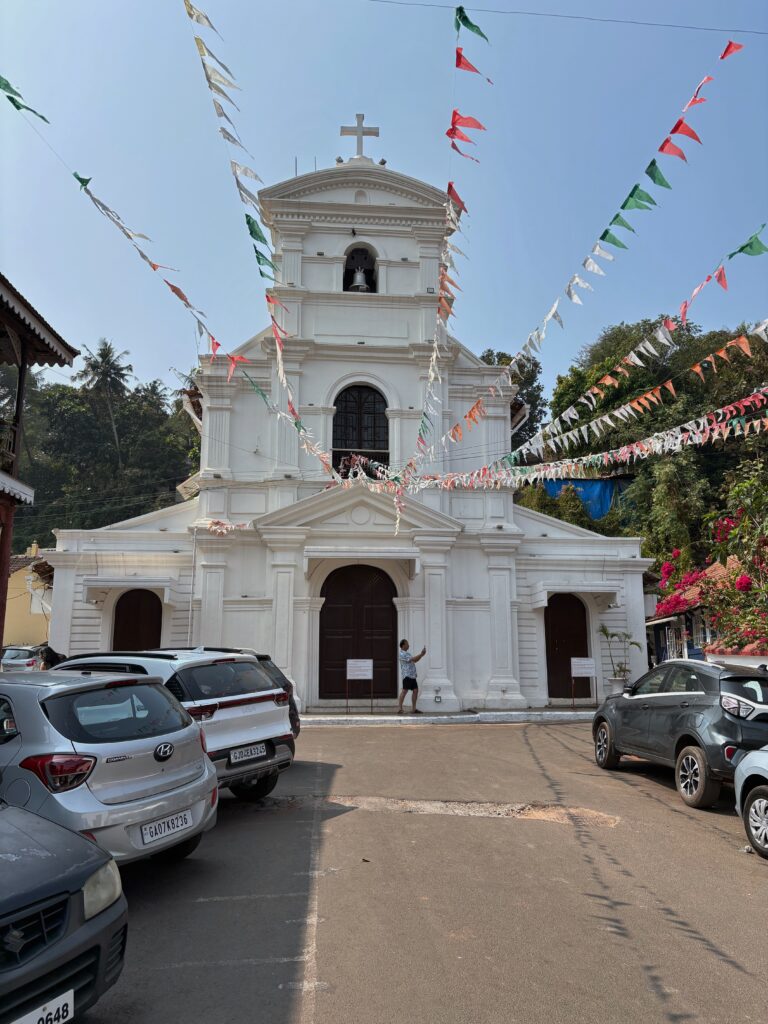
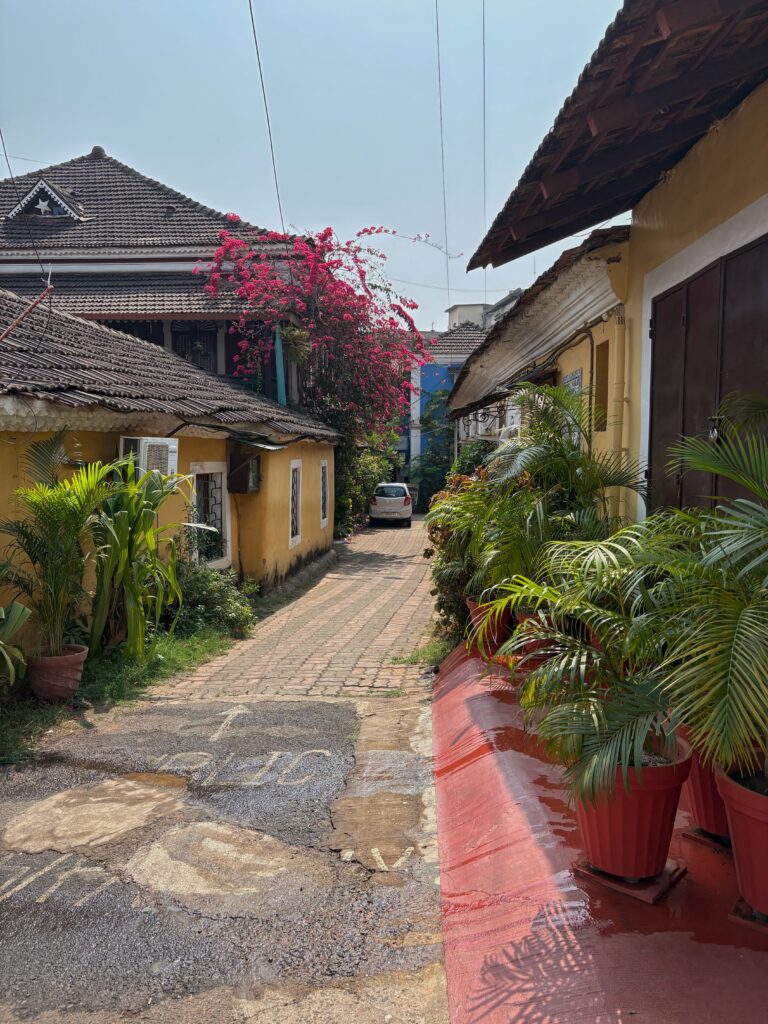
We arrived in Panaji, the capital city of Goa, around 7:30 am and were quickly whisked away in a taxi to our accommodations in the historic and colourful Portuguese quarter known as Fontainhas. Hearing us being disgorged from the taxi, our hostess Jeanette emerged in the dawn light to welcome us and lead us up to the sanctuary of her rooftop patio and garden until our room was available. The hotel was a 200-year-old architectural gem, brilliantly decorated and festooned with plants that gave it a very calming feel. The building and the neighbourhood more generally are an overly popular spot for Instagram photos—so much so that the area is posted with signs forbidding selfies in front of the buildings, with a security guard on duty during peak hours to dissuade the throngs attracted to its beauty.
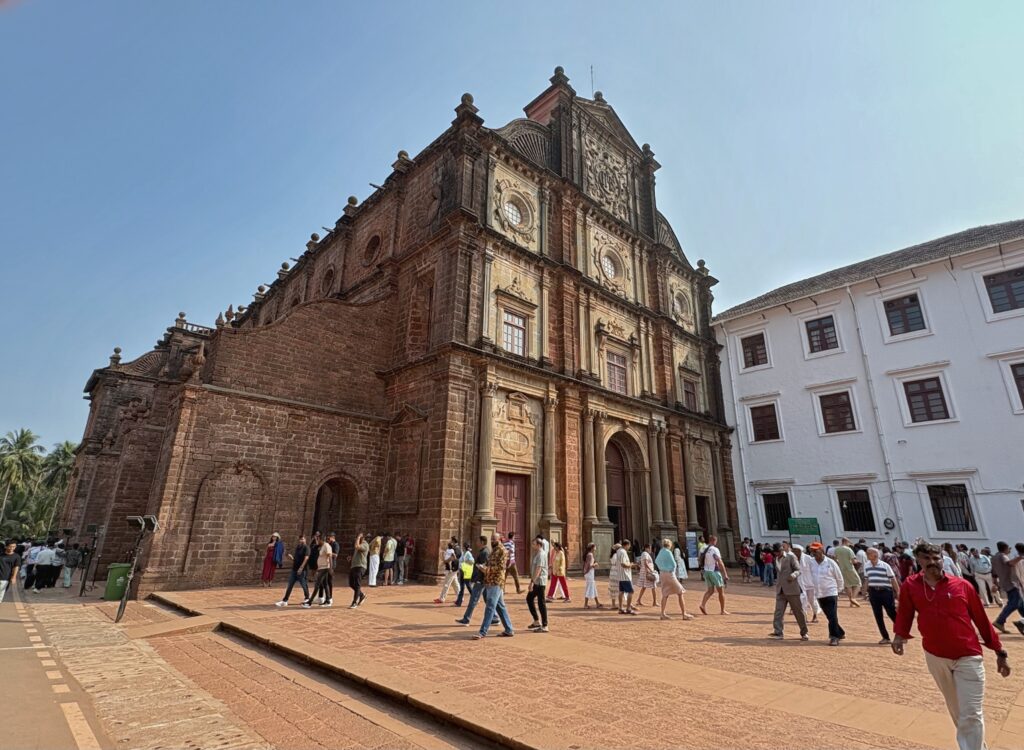
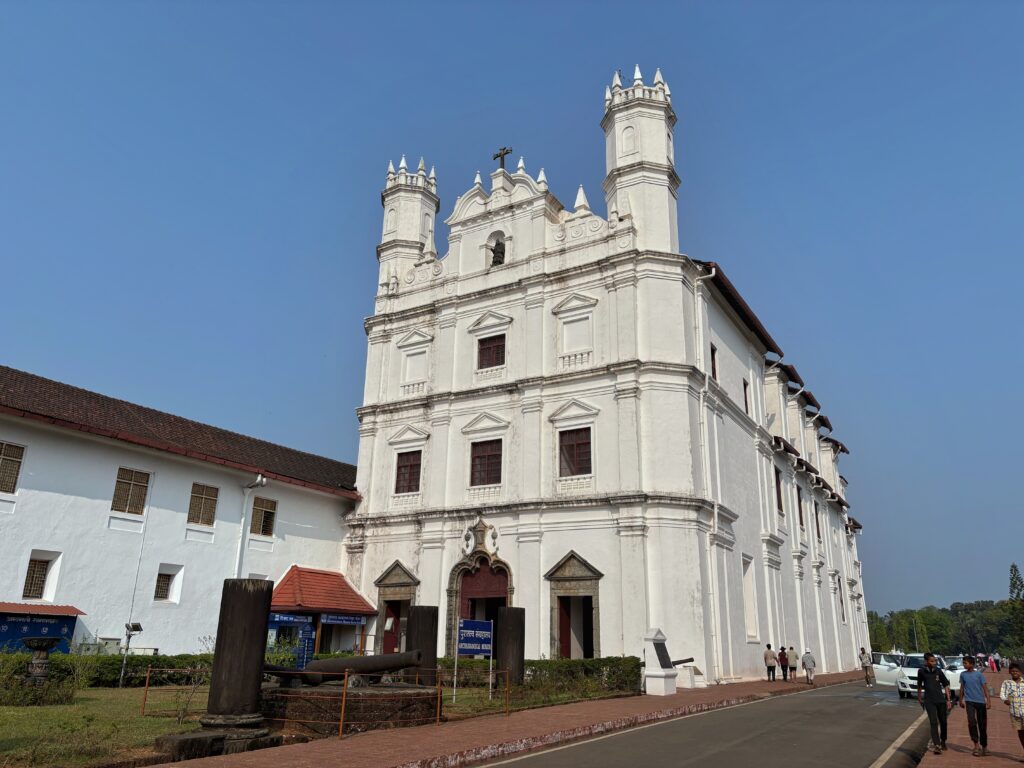
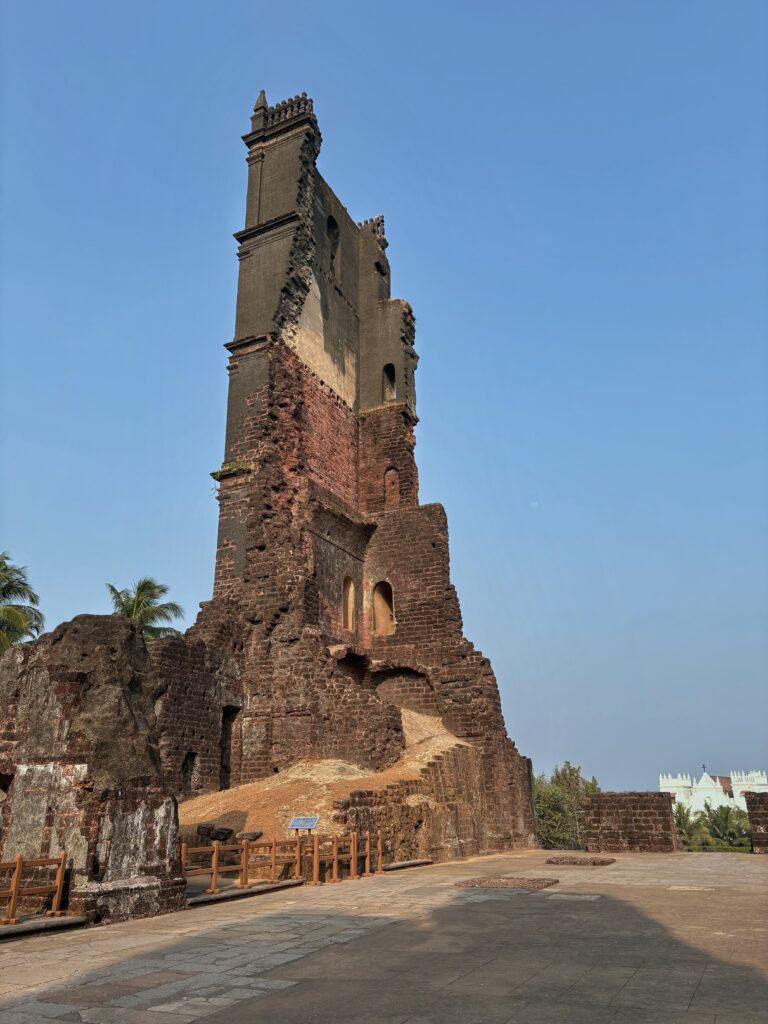
The patio was so peaceful and serene that we spent the entire morning there, enjoying pressed coffee and a delicious breakfast as I worked to catch up on the blog. In the afternoon, we stirred ourselves from our reverie and took an auto-rickshaw to visit Old Goa. It lies slightly inland on the banks of the Mandovi River and was selected by the Portuguese as their capital in India for its deep protected water, proximity to spice production in the Western Ghats, and its strategic coastal position allowing them to dominate the Indian Ocean trade routes.
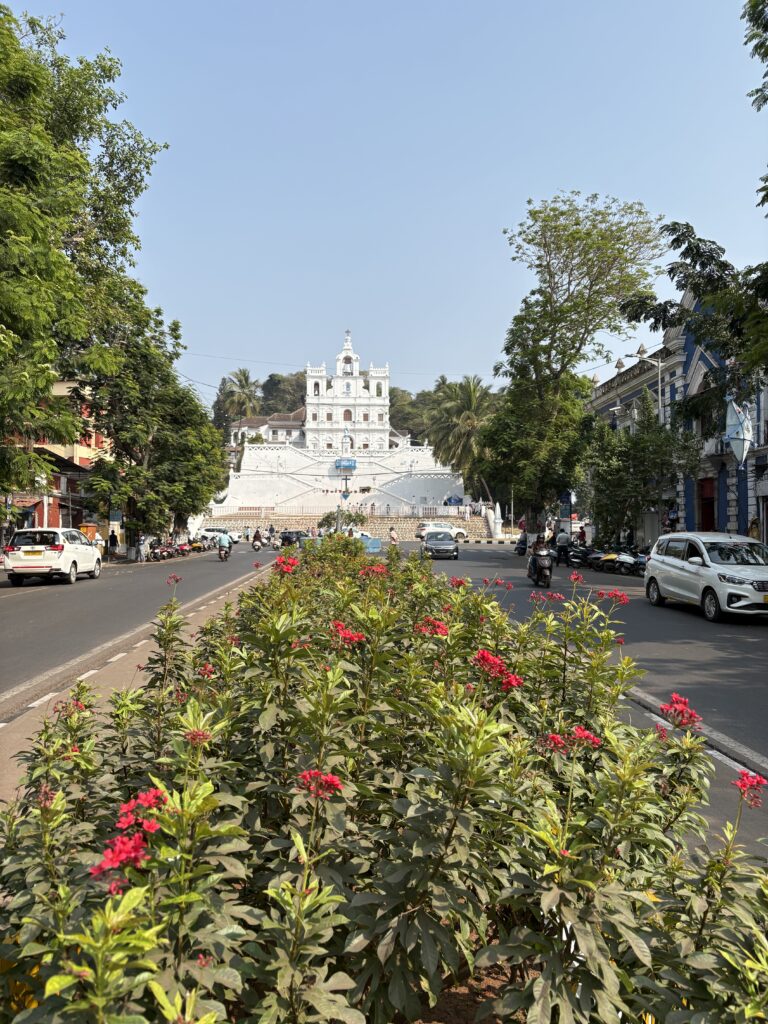
While today it is a UNESCO World Heritage Site, it was formerly known as the “Rome of the East” for its concentration of 16th and 17th-century Catholic churches, and it remains a spiritual hub today. The site, however, had a major flaw and was eventually abandoned due to its low-lying geography, which made it prone to poor sanitation. By the 18th century, repeated epidemics of plague, cholera, and malaria, combined with the silting of the river, led the Portuguese to move the capital to the more coastal and healthier Panaji.
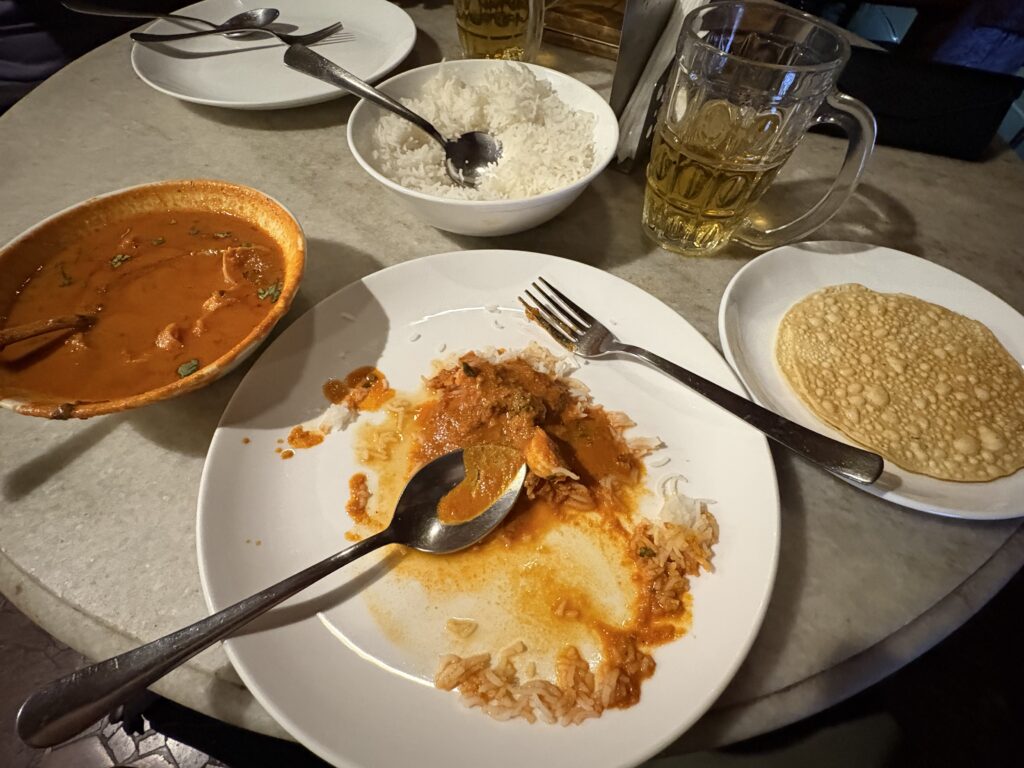
In the evening, we strolled the streets of Fontainhas and found ourselves a very nice restaurant to begin our exploration of Goan cuisine. The food is a vibrant blend of indigenous Konkan roots and 450 years of Portuguese influence, centred around staples like seafood, coconut, rice, and local toddy vinegar. I teetered between Pork Vindaloo—a fiery, aromatic curry made with pork marinated in vinegar and garlic—and Prawn Xacuti, a rich, complex curry with a deep brownish hue flavoured with over 15 roasted spices and grated coconut. Knowing I had three more nights in Goa to experience the menu, I went with the delightful Prawn Xacuti and quenched the strong but pleasant heat with a cold Kingfisher beer. Mylo, who had been dreaming of Goa for a couple of weeks after learning it is one of the few places in India where you can easily get beef, went with a classic steak frites and didn’t regret it one bit.
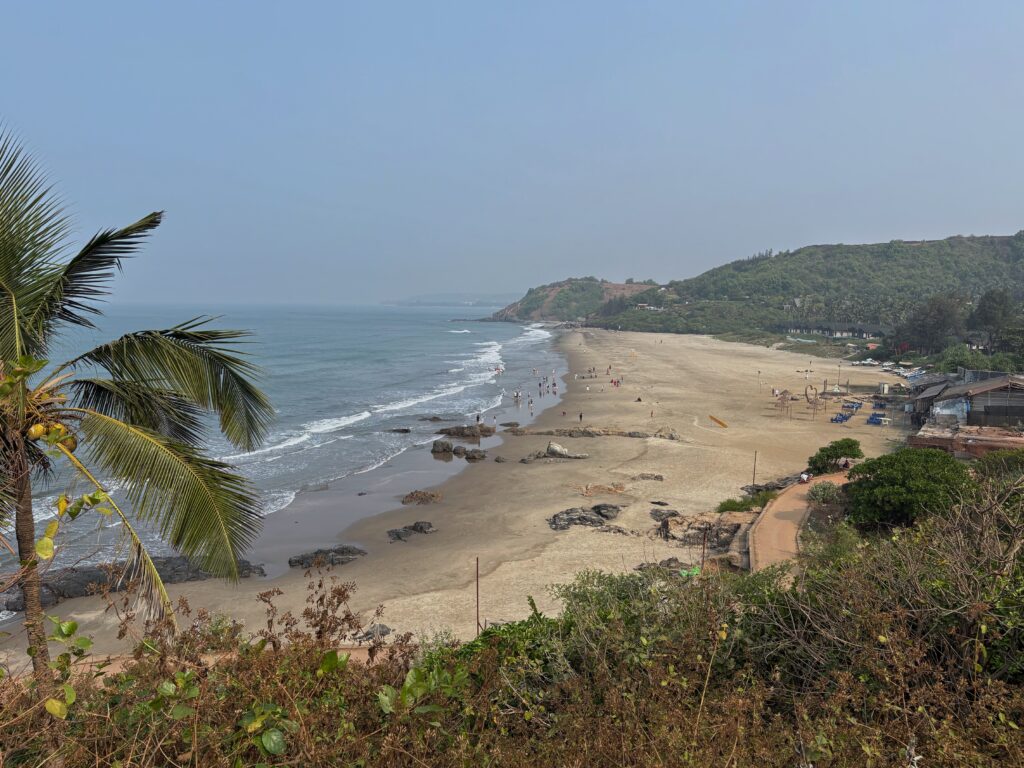
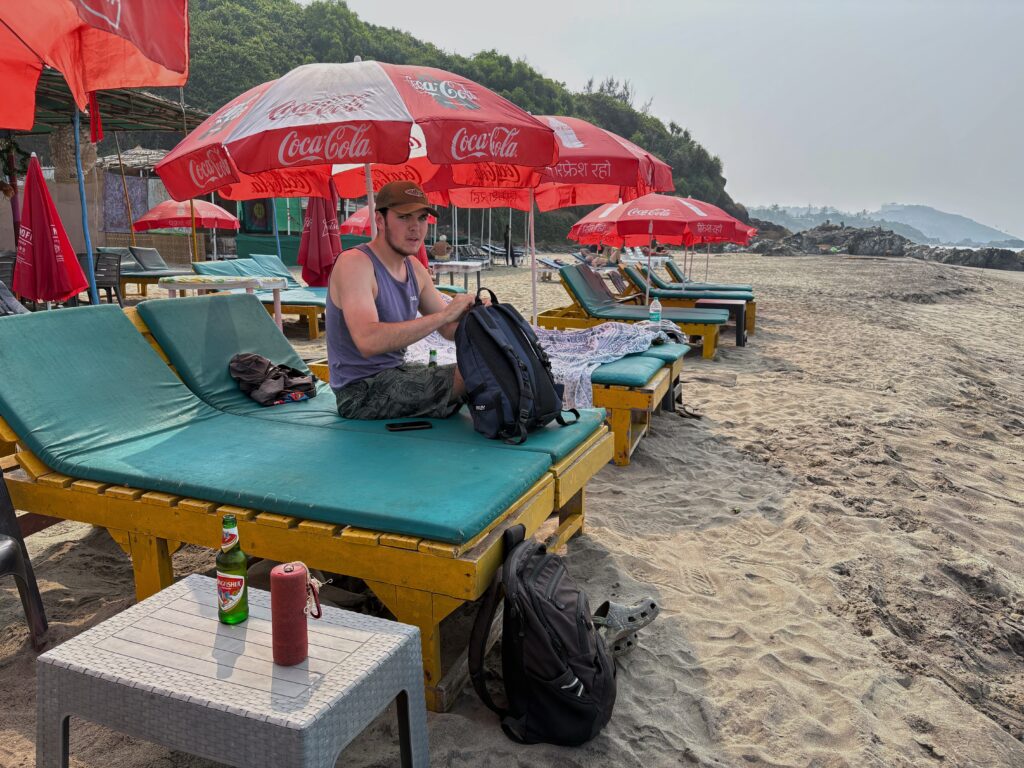
The next morning, we headed to Vagator Beach in North Goa. Goa is generally divided along north-south lines, with the north being the more developed “classic” Goa that most people have heard of, complete with hippies, expats, and all-night electronic and trance parties. South Goa is less developed and calmer, described as having cleaner beaches. As we couldn’t yet check into our hostel, we abandoned our bags and headed to the beach for a day of kicking back. The sunshine, sand, and warm tropical waters didn’t disappoint. After walking north until we found a more secluded offshoot of the main beach, we hit the water and then some beers as we lounged the day away under a beach umbrella on padded chaise lounges.
In the later afternoon, we decided to explore in the opposite direction and, after rounding a point at the far end of the beach, found ourselves on Little Vagator. More swimming and more beers followed, and eventually, it was time to find more delicious Goan food. This time I tucked into the Pork Vindaloo I had been salivating over since our dinner in Fontainhas. It did not disappoint, and the clean, shaded beachside eatery only enhanced the experience. As the sun faded into the sea, the shoreline came alight as the various restaurants flipped on colourful string lights, and beachgoers began playing with recently purchased laser pointers or other glowing toys sold by wandering hawkers. Eventually, spent from a lazy day of beach walking, swimming, and sunshine, we retreated to the hostel and drifted off to sleep.
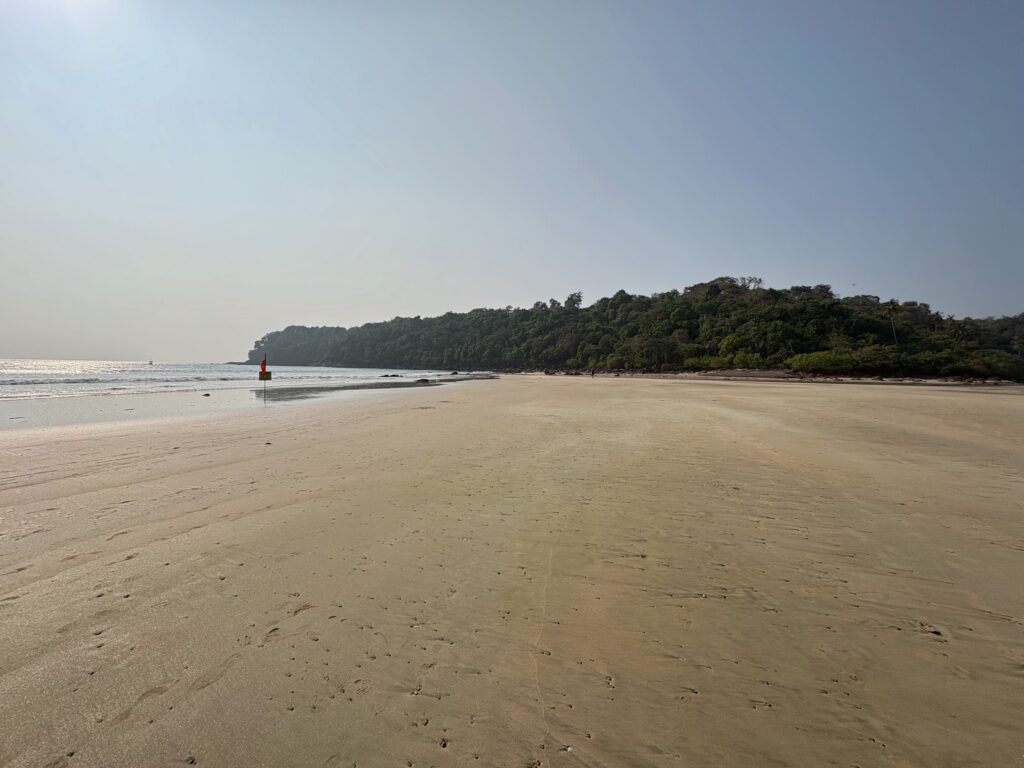
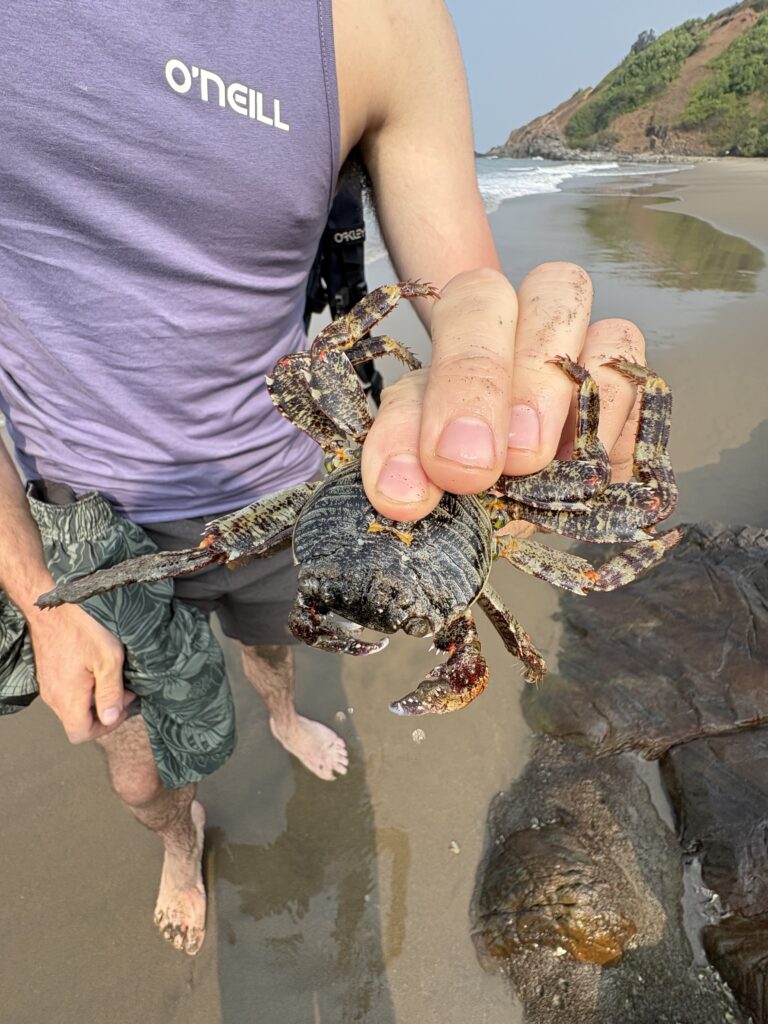
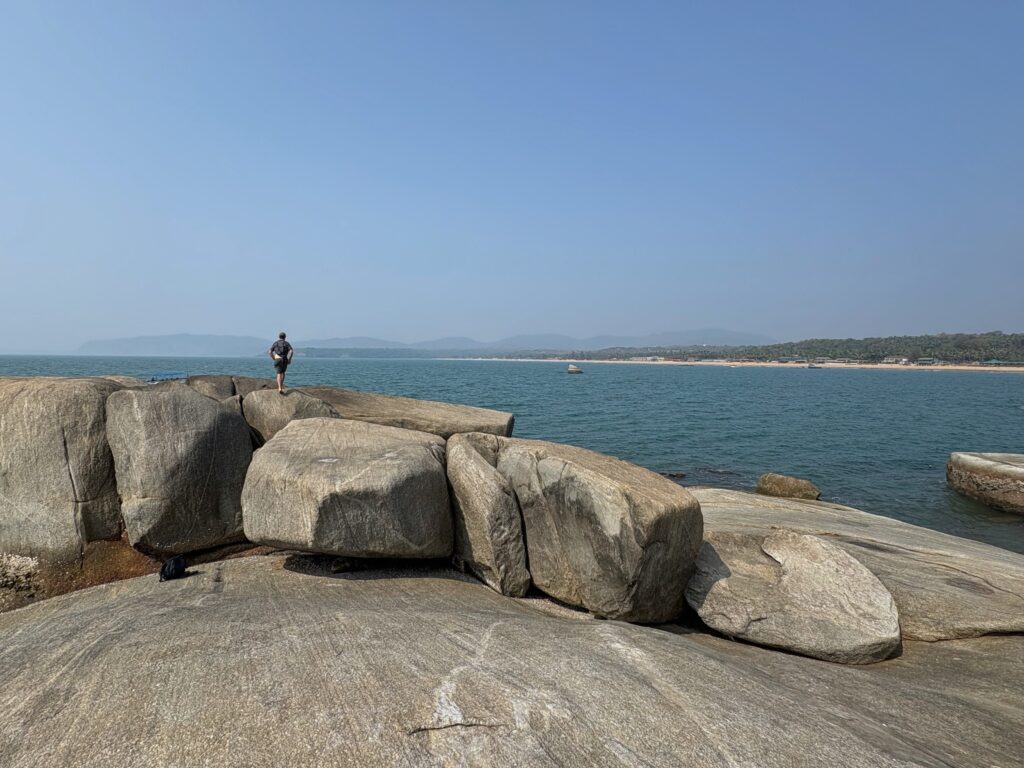
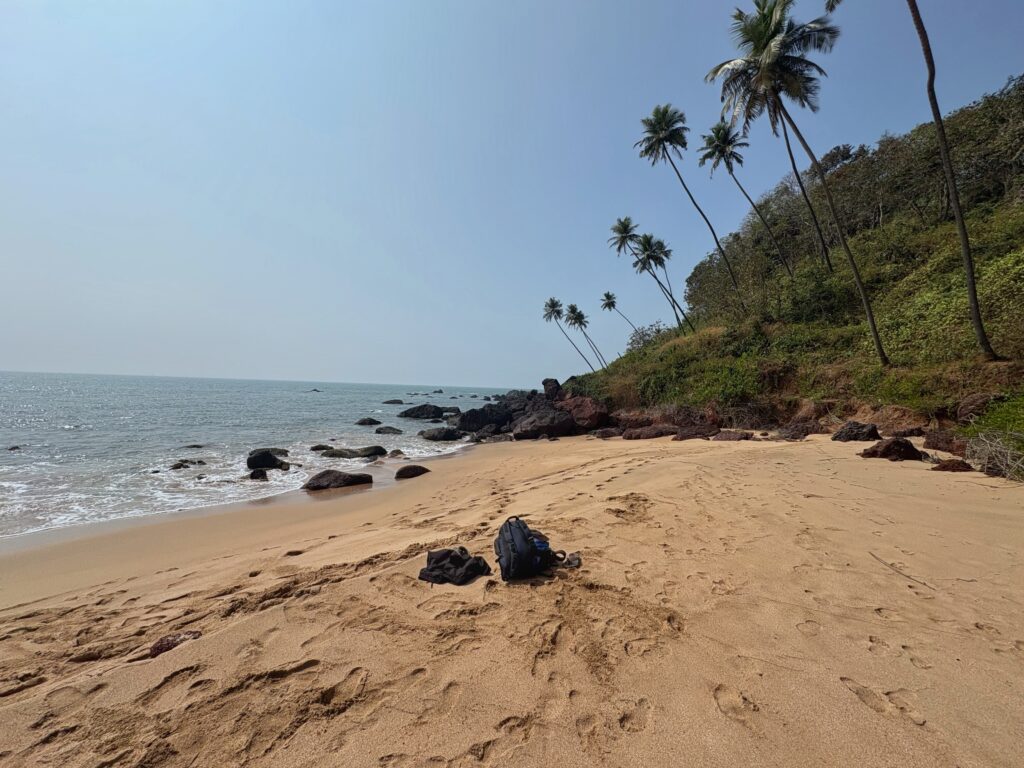
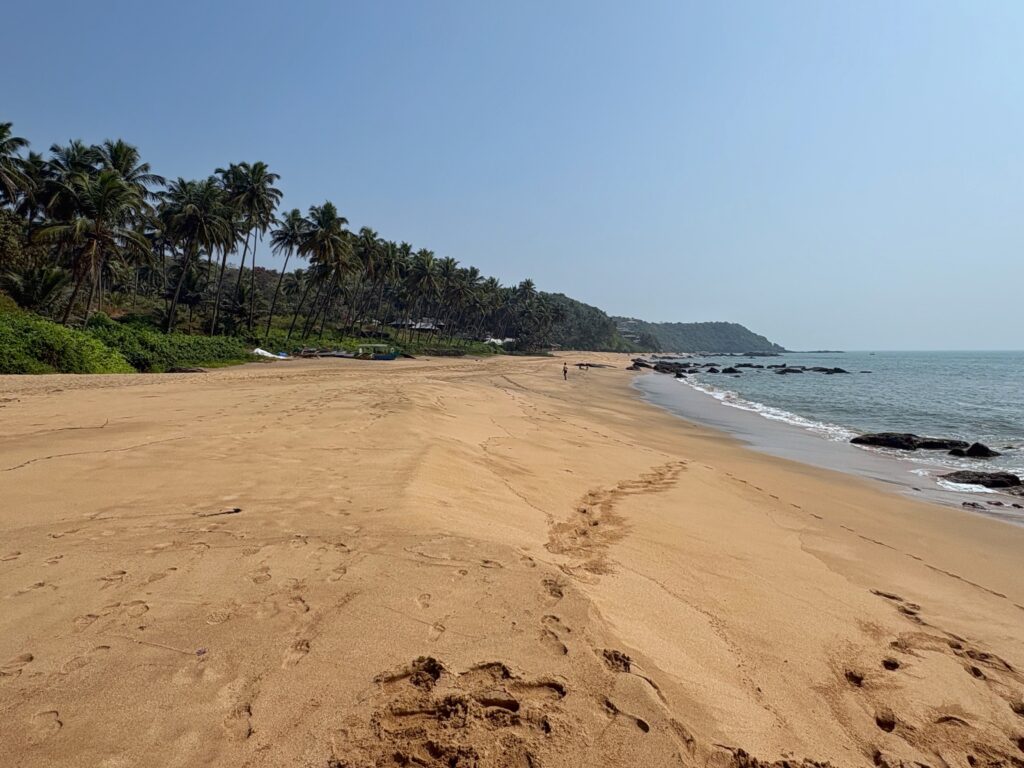
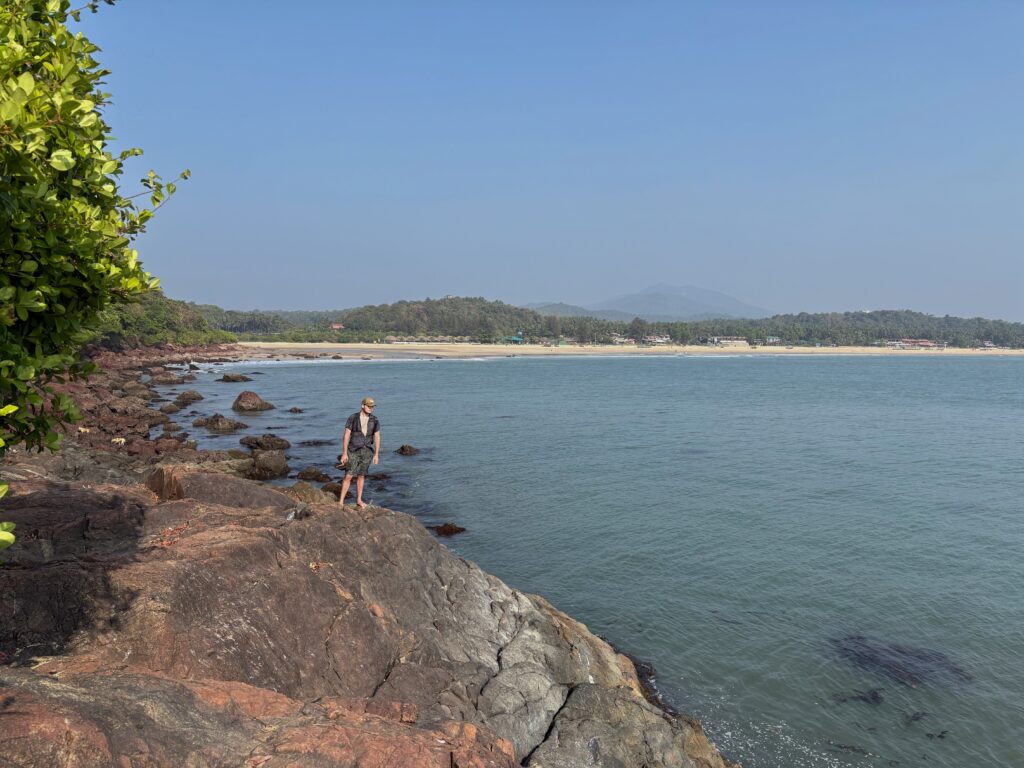
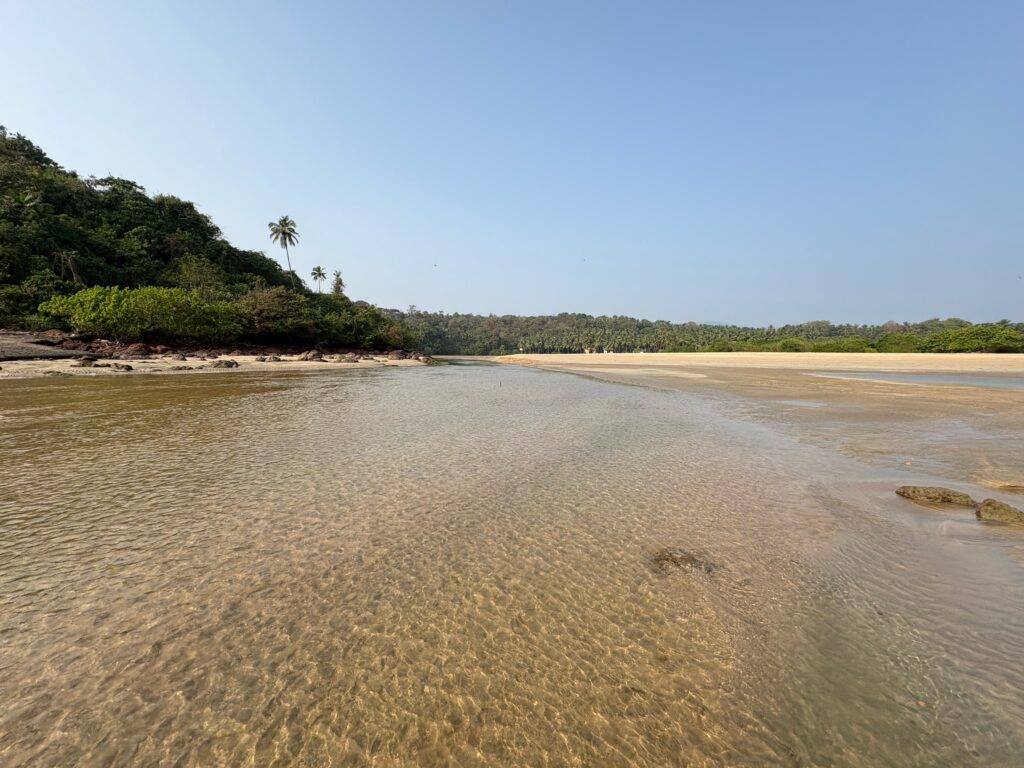
The following morning, we took our leave of the north and headed south to the reputedly lovely and peaceful Agonda Beach. As we arrived at our beach resort and began to take in the swaying palm trees and the long, broad, sandy beach—which seemed relatively deserted compared to Vagator—we knew we would love Agonda. We soon found ourselves strolling south down the beach until we arrived at the far end, at a giant boulder-encased section of the shore. Mylo has not lost his passion for the beach and the catching of crabs that I can vividly recall from his childhood. He caught at least three different species of small shore crab within 15 minutes and was soon busy scrambling over the boulders and picking through tide pools. We tried to snorkel here, but the turbidity of the water made it fruitless. We eventually made the three-kilometre trek back past our resort to visit the extreme north end of the beach, where a small river rushes out over the sand to meet the sea, beyond which rocky, jungle-clad cliffs begin.
The next day, we made our way to Cola Beach, just to the north of Agonda around the headland a few kilometres. We were advised to bring water and snacks, as Cola Beach was said to be more primitive. This, however, proved to be far from the truth; this pretty, narrow, winding beach was busier than Agonda, had several of its own resorts, and two restaurants. We headed a couple of kilometres further to the north end, which was more sparsely populated, and enjoyed playing in the surf and swimming. We eventually made our way back to one of the restaurants to find a beachfront table and dig into some delicious chilli prawns, vegetable pakoras, and, of course, a cold beer.
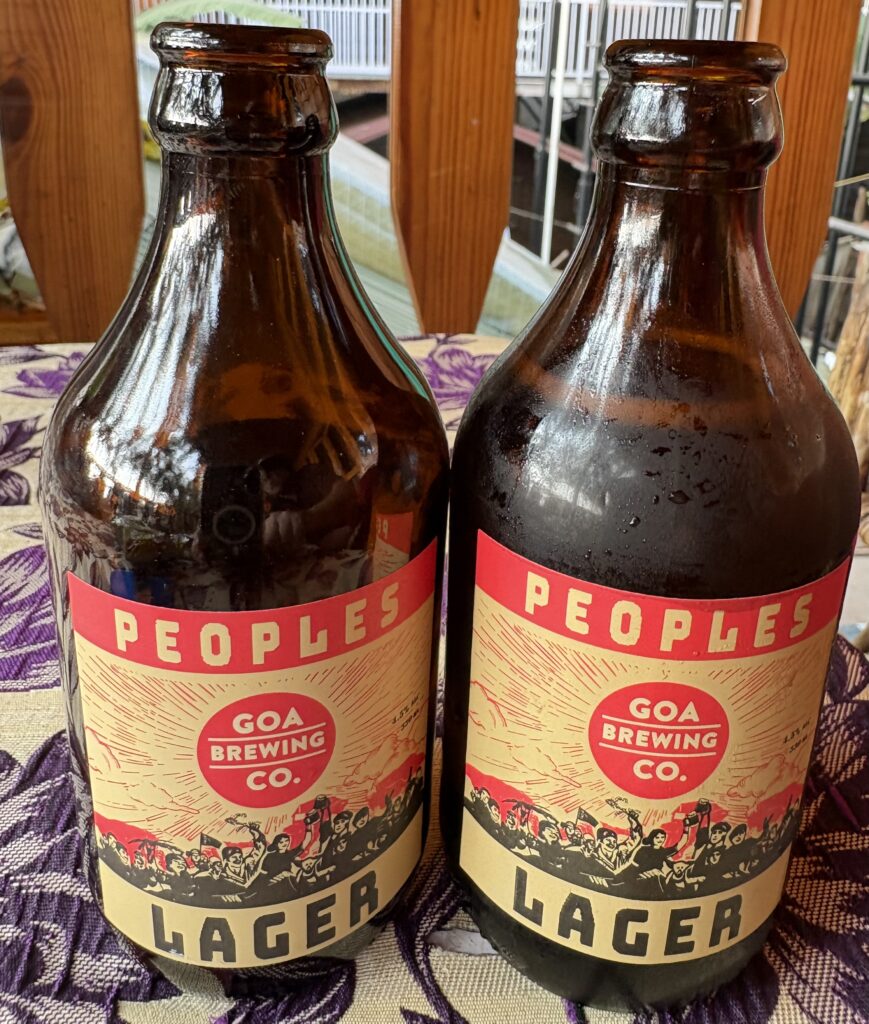
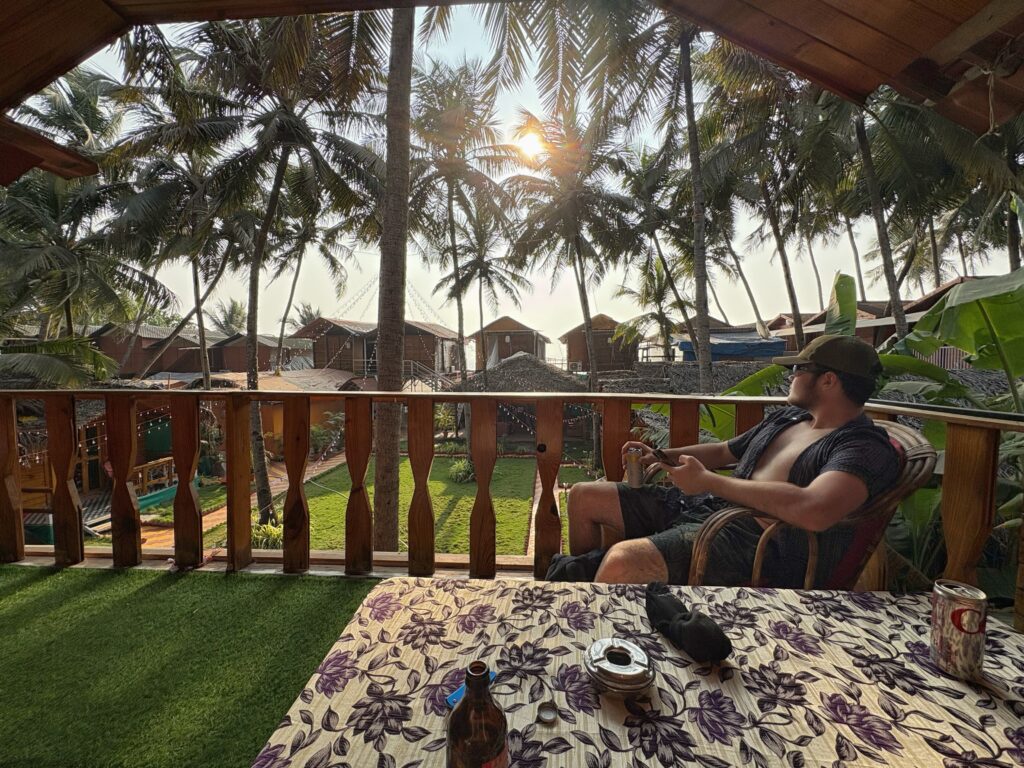
Rather than spend money on a bouncy auto-rickshaw ride home, we elected to seek the jungle cliff path we were previously warned was easy to lose and would take an hour or more to traverse. A local pointed out the start of the correct path, and after no time at all, we had descended through the steep jungle portion and emerged at the base of the cliff. From here, it was a fairly easy rock and boulder scramble along the shoreline for another kilometre until we were reunited with the sand of Agonda. Having received a solid dose of sunshine, we happily retreated to our private, palm-shaded, garden-view upper patio, where we fell in love with Goa’s own People’s Lager—the first and best rice beer I have ever had.
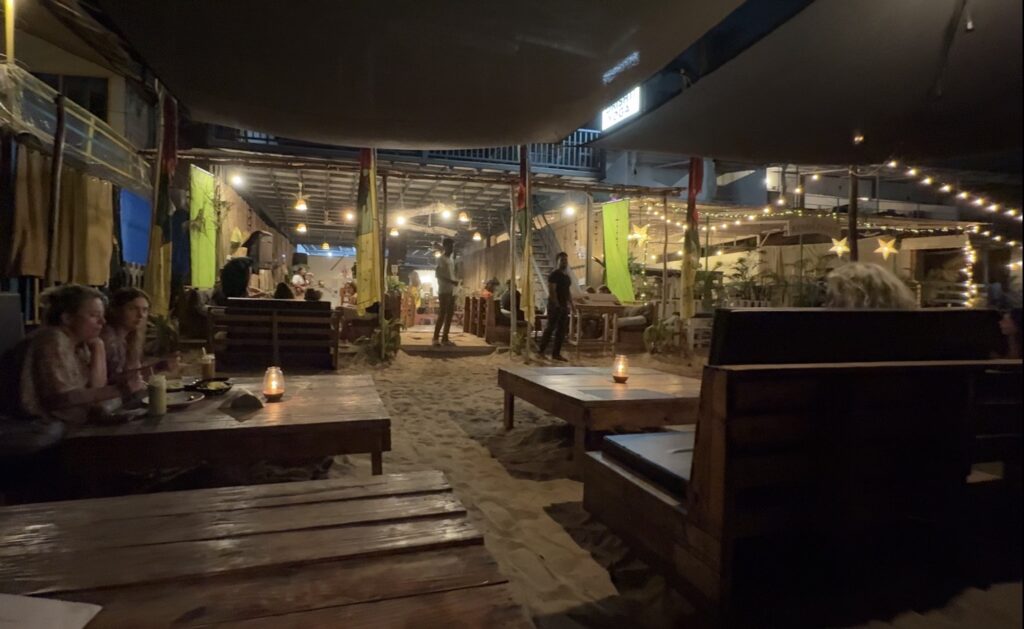
For our second evening at Agonda, we elected to grab an auto-rickshaw and head to the nearby Patnem and Palolem beaches to our south. We had heard word of a possible reggae night at a beachside restaurant and yoga retreat in Patnem, so, unable to resist, we made our way there. We arrived just after the show started at 7 pm with a local artist named Wind Pawan singing and playing guitar. The songs didn’t quite seem to be reggae at all, so we researched nearby eateries for good Goan food and soon found ourselves at Meena’s Kitchen. The homemade-style prawn curry didn’t disappoint, especially teamed up with lemon rice and garlic-cheese rotis. After dinner, we strolled back to the beach and were delighted to hear Wind admirably cranking out some reggae classics, ripping it up on his electric guitar, and treating the crowd to an extra half hour of music that included some great original numbers.
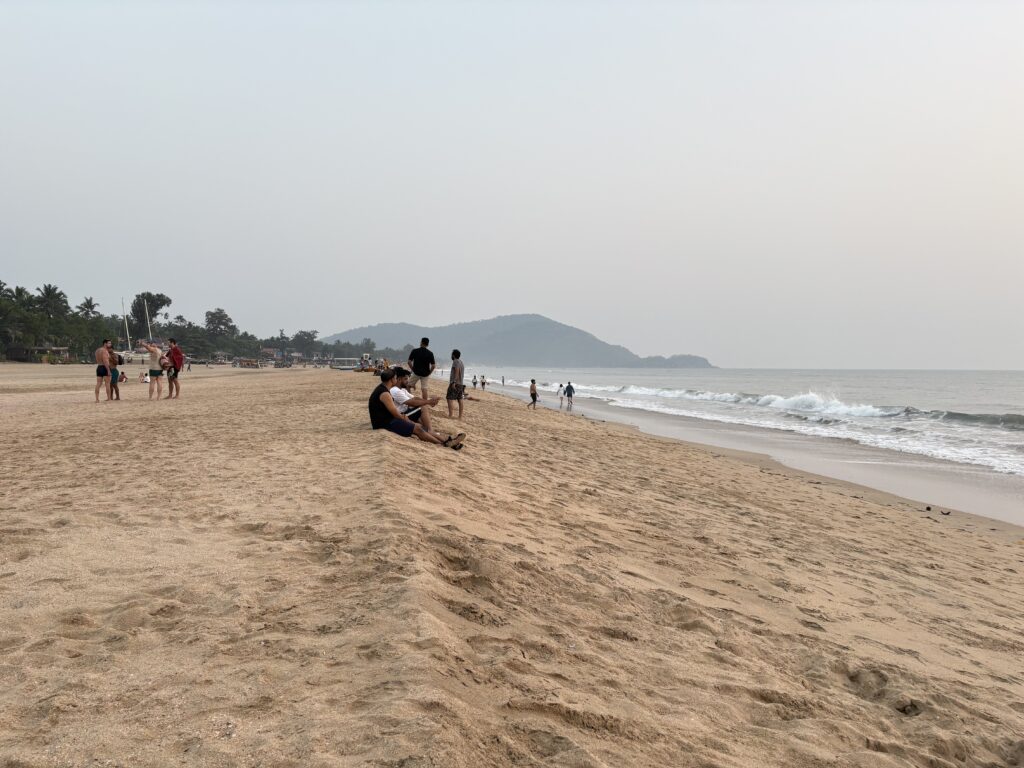
We spent our final day in Goa walking Agonda Beach from end to end, stopping to swim whenever the desire took us. This time we noted the nests of Olive Ridley turtles that have been individually fenced off and posted with the number and date the eggs were laid. We also learned that the lights along Agonda’s various resorts and eateries are dimmed at night to avoid disorienting the nesting turtles and their hatchlings, who rely on the natural reflection of the moon and stars on the ocean to find their way to the water. Without these measures, artificial lights can lure the tiny turtles inland toward the road, leading to exhaustion or predation. Seeing the community’s dedication to protecting these ancient visitors was a heartening reminder of the delicate balance between Goa’s vibrant tourism and its natural wonders.
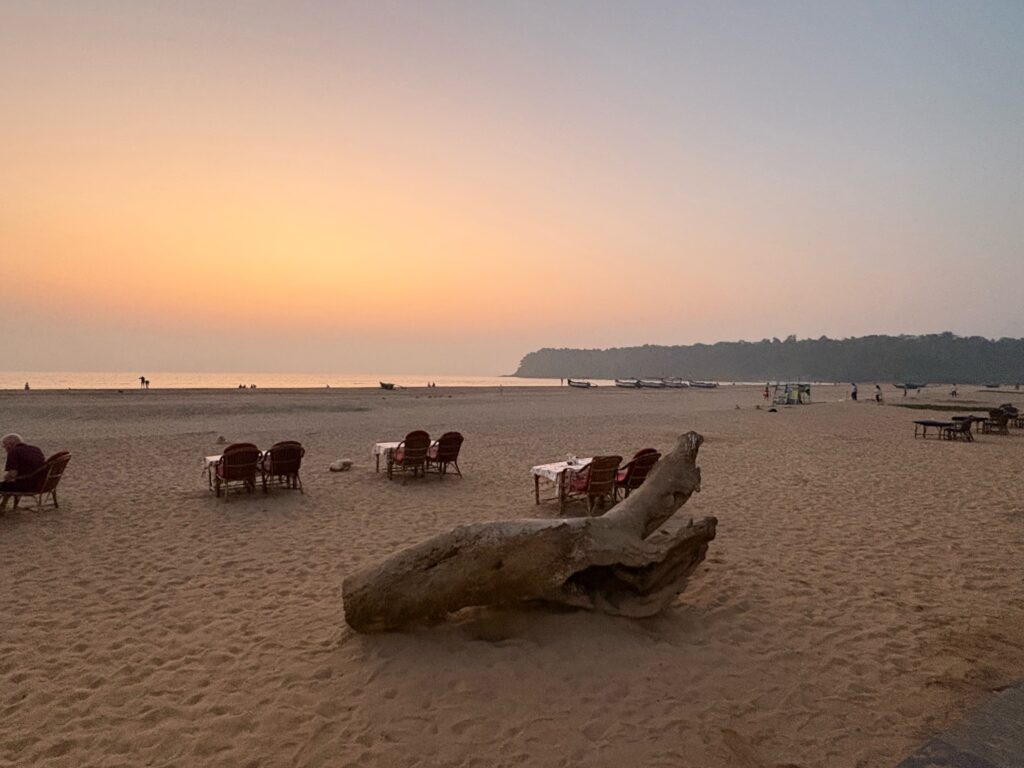
As the sun slowly sank towards the sea, casting a golden glow over the swaying palms, we felt a deep sense of ‘susegad’—the local concept of contented relaxation. Whether it was the spicy complexity of the Xacuti, the thrill of a jungle scramble, or the simple joy of a cold People’s Lager on a shaded patio, Goa had provided the perfect sanctuary. We left the beach with sand in our shoes and a quiet promise to return to these shores again, fate willing. Shortly after, we took a one-hour cab ride to the Karwar station to catch our overnight southbound train to Kochi, Kerala.