The Rise and Ruin of Empires: Exploring Badami and Hampi
We were up early to get to the airport for our flight from Raipur to Hubli, with a hectic change of planes in Hyderabad that left no time for grabbing breakfast or lunch. Upon reaching the small city of Hubli, we negotiated a cab to take us another two hours to the town of Badami, where we would begin our explorations of the ruins of the Chalukyan Empire. The drive took us past green fields of cotton, sorghum, and colourful sunflowers, and the sky seemed a little clearer here, allowing us to see further into the distance.
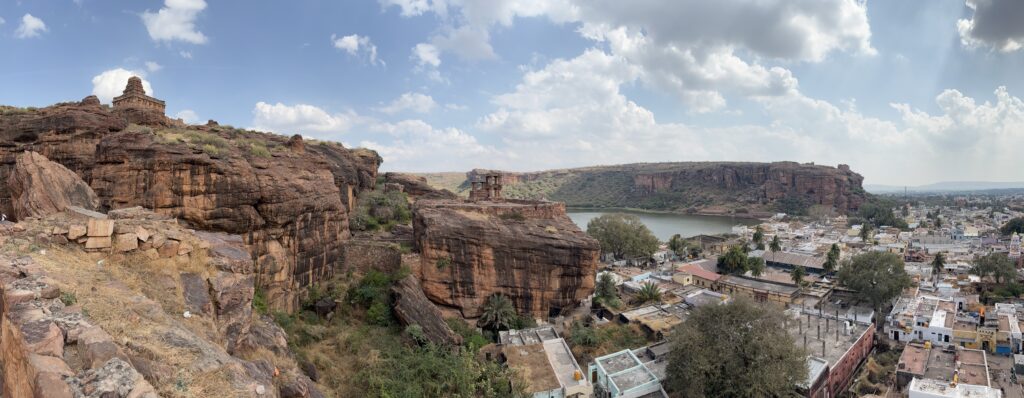
As we neared Badami, we were impressed by the large, flat-topped red rock cliffs that appear to wrap around the town in a horseshoe shape. We continued a short distance into the countryside to reach our accommodation for the next two nights at Dharani Farm Homestay. We were welcomed warmly by our host and shown to our unique little brick cabin, with its high ceiling and large glass windows along the upper half. A set of ladder-like stairs led to a small sleeping platform that Mylo was immediately drawn to for its tree-fort-like appeal.
With limited time left for exploring, we made a quick trip into town to purchase water and other supplies before returning to the farm. The property itself is focused on agroforestry, with species such as teak, betel, white sandalwood, coconut, and a variety of fruits, all managed according to a sustainable, green philosophy.
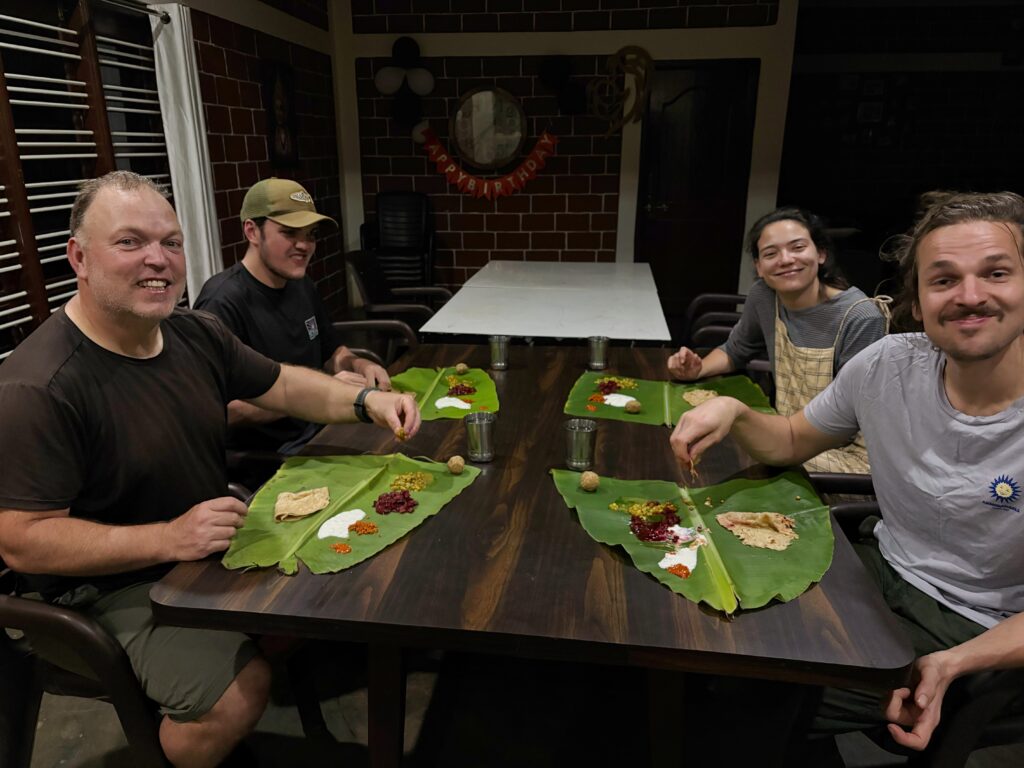
While food is often served on multi-compartmented metal thali trays in central and northern India, in the south the tradition is to serve meals on a large, freshly cut banana leaf. Various elements of the meal—such as curd, idli, sambar, rice, chapati, and assorted bean and lentil curries and chutneys—are laid out individually on the leaf. Using one’s hand, you scoop or mix the various items to eat, somewhat akin to a painter selecting or blending colours on a palette board.
Our dinner at the farmhouse was served in exactly this manner and provided a simple, tasty, yet not overly spicy meal. As is traditional in India, our hosts continually topped up the dishes as we ate, leaving us incredibly full and pleading for mercy by the end.
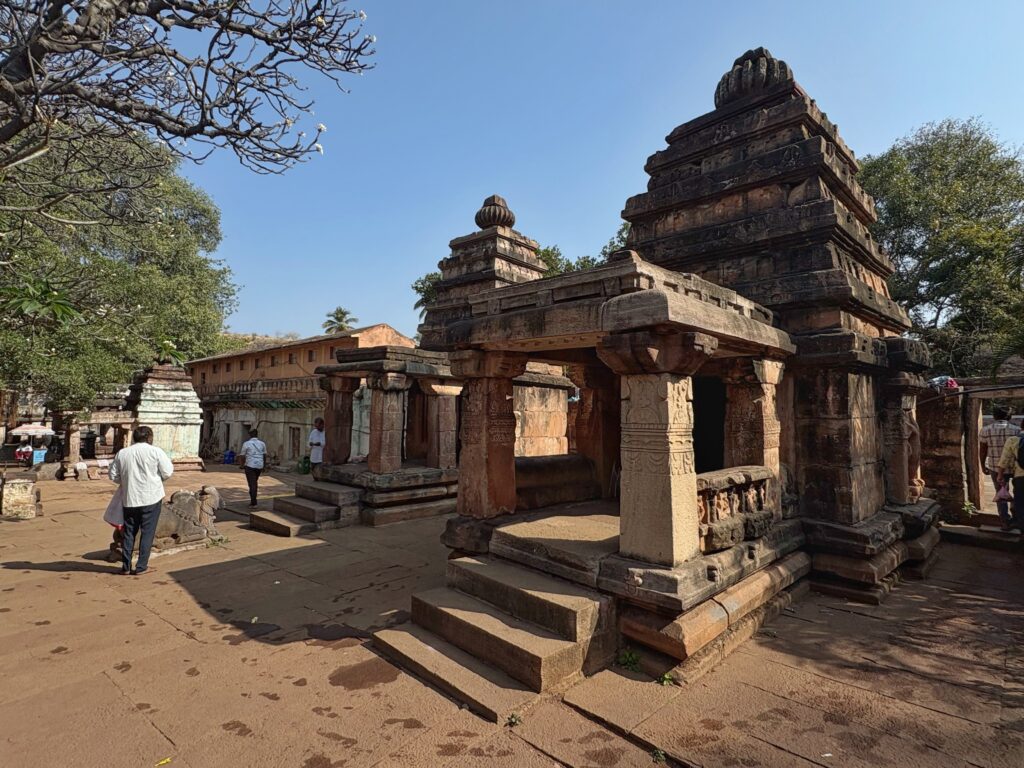
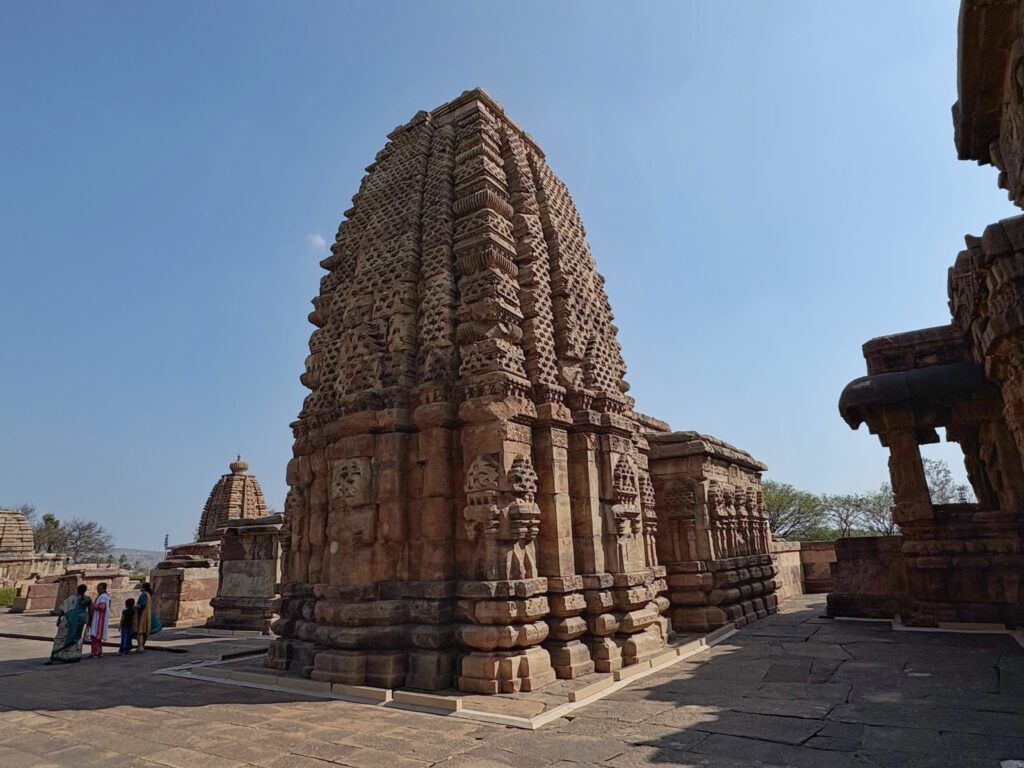
The following morning, we set out to explore several of the key attractions in and around Badami. Our first stop was the Mahakuta group of temples, built by the early Chalukyan kings between the 6th and 8th centuries CE. The Chalukyan Empire spanned roughly the 6th to the 12th centuries and controlled much of the Deccan Plateau as well as a large portion of India’s western coastline, with Badami serving as one of its early capitals. The Chalukyans were also a notable maritime power, with a navy that facilitated trade.
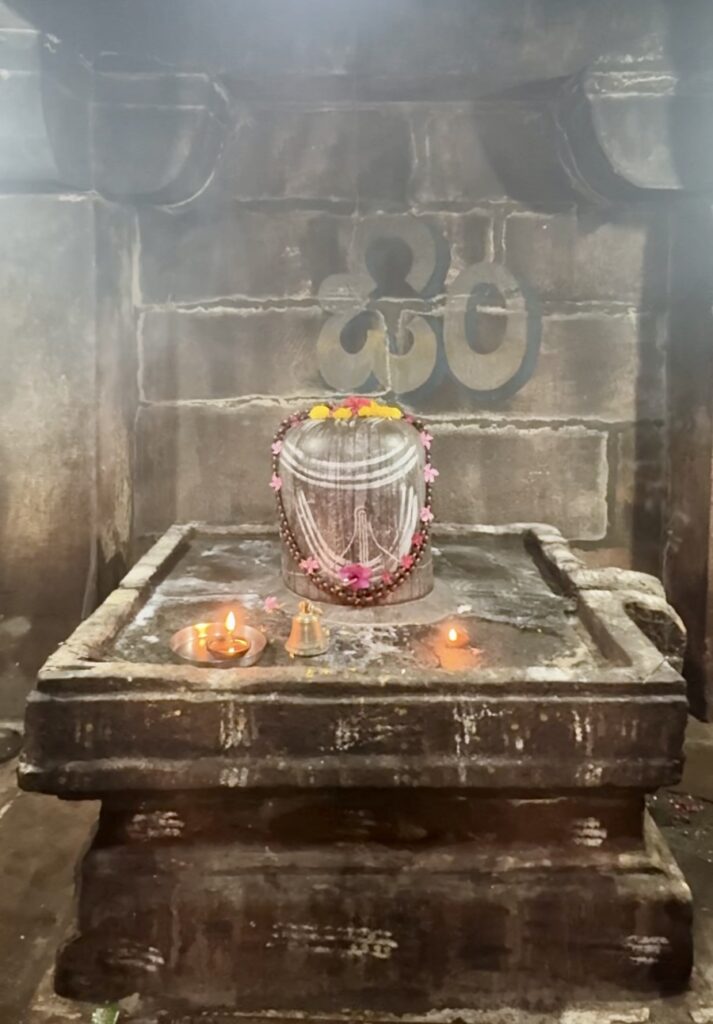
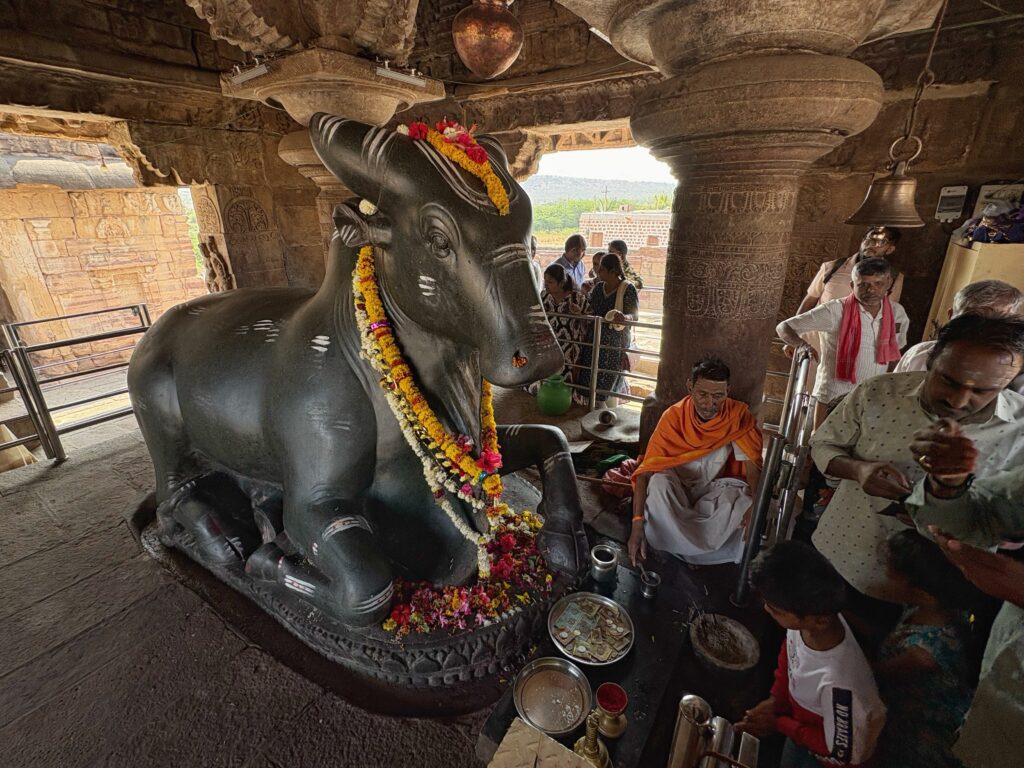
Mahakuta’s temple complex and pilgrimage centre is dedicated to the Hindu deity Shiva and, due to its spiritual significance, is often referred to as the “Varanasi of the South.” We joined the ancient chanting emanating from one of the temples—“Om Namah Shivaya”—which is believed to remove negative energy, provide emotional stability, calm the mind, and protect against negative forces. Who couldn’t use more of that?
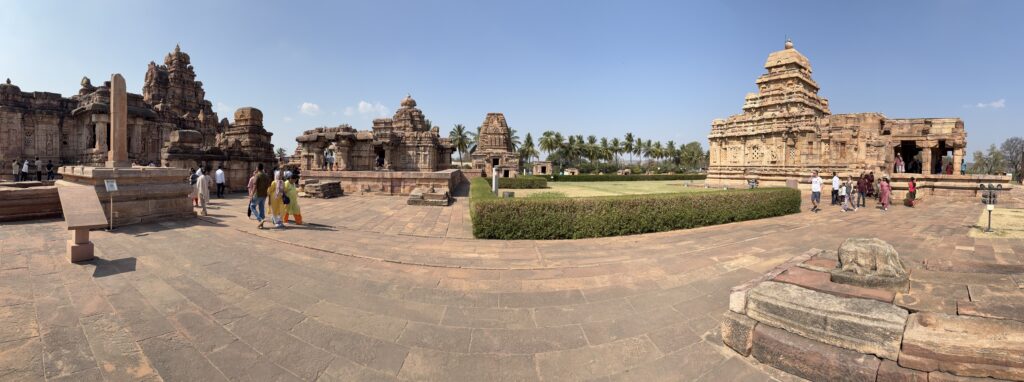
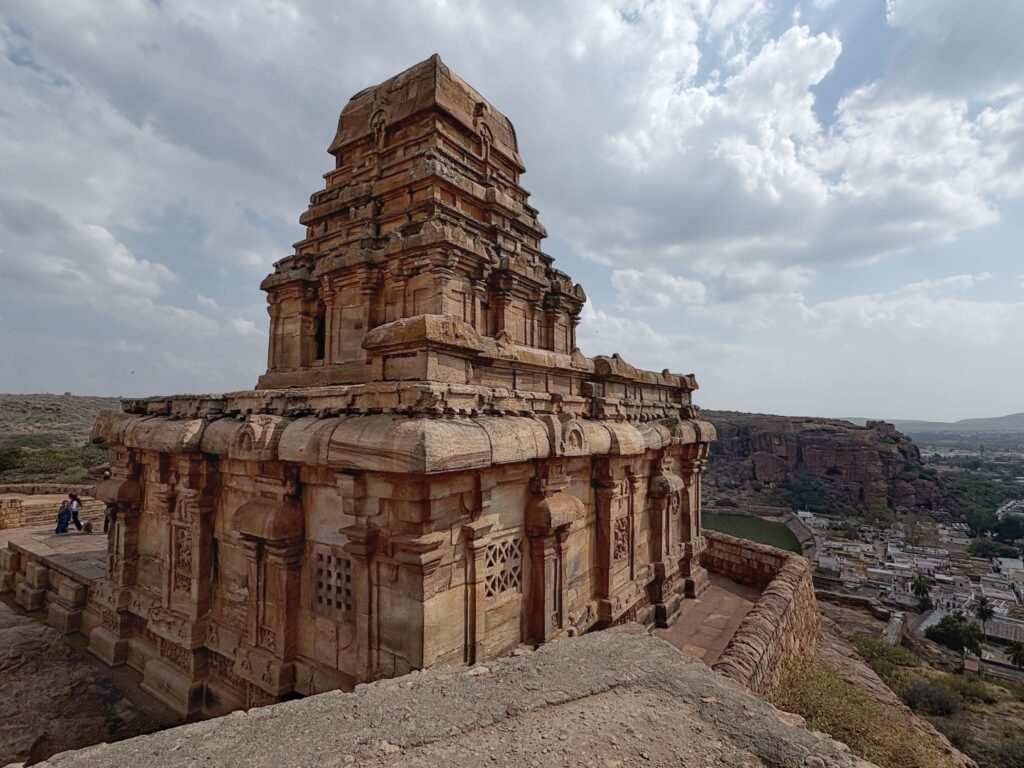
Our next stop was the UNESCO World Heritage Site of Pattadakal. This stunning collection of 7th- and 8th-century temples is renowned for its fusion of North Indian (Nagara) and South Indian (Dravidian) architectural styles. Its auspicious location on the banks of the Malaprabha River—where the river turns northward toward the Himalayas and Mount Kailash—gives it particular spiritual importance. Due to its sanctity, Pattadakal was chosen as the site for royal coronation ceremonies, with its name translating as “Stone of Coronation.”
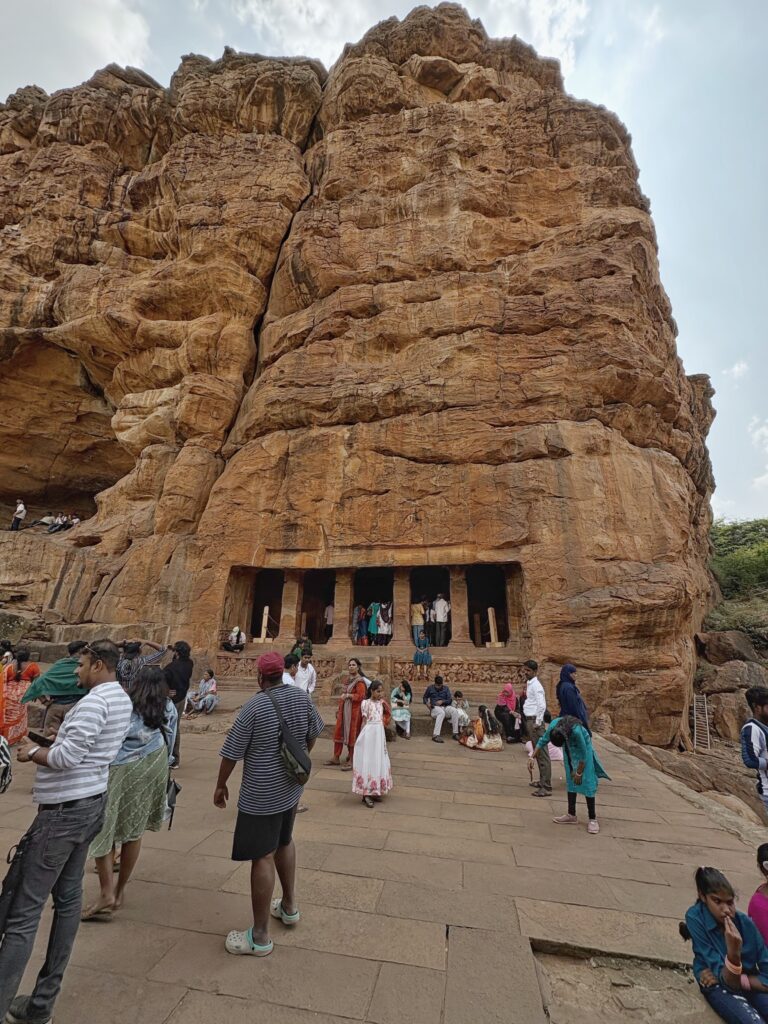
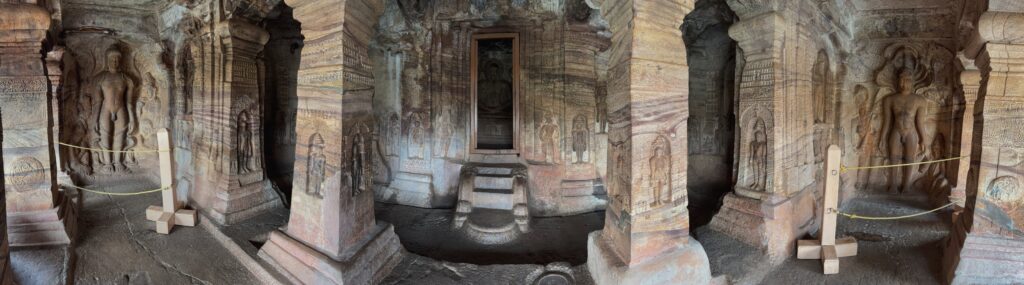
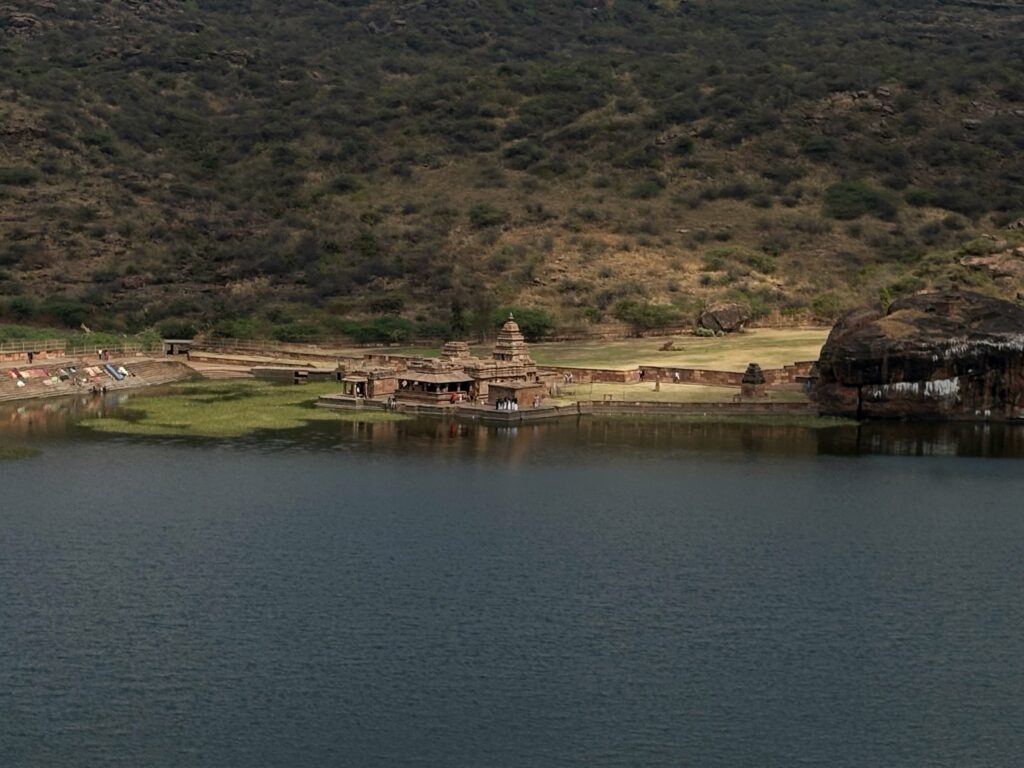
Undaunted by the intense heat, we spent the afternoon in Badami proper, visiting the horseshoe-shaped cliffs that encircle Agastya (AKA Vatapi Lake) and house the famed Badami Caves, the lakeside Bhutanatha Temple, and Badami Fort. We began by climbing the steps to the Badami Caves, carved into the red sandstone cliffs. The four caves date from the 6th and 7th centuries and are reminiscent of other rock-cut caves we have visited on this journey. Their appeal lies in the richly coloured stone, their elevated position above the lake, and the welcome shade provided by both the caves themselves and their north-facing orientation.
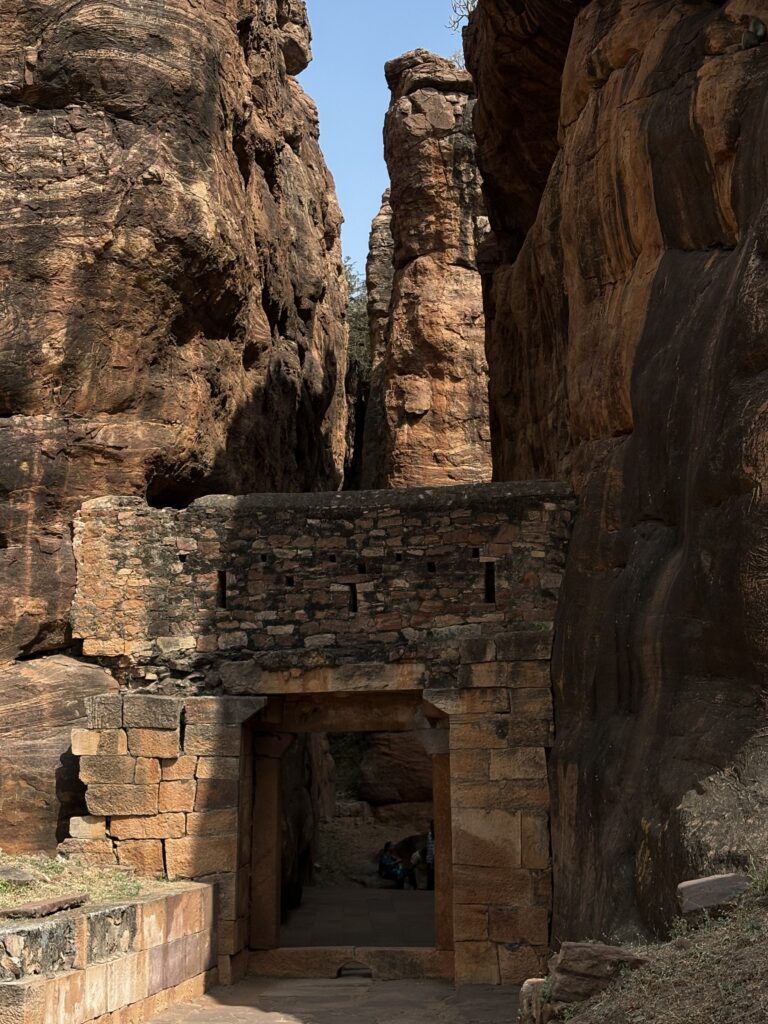
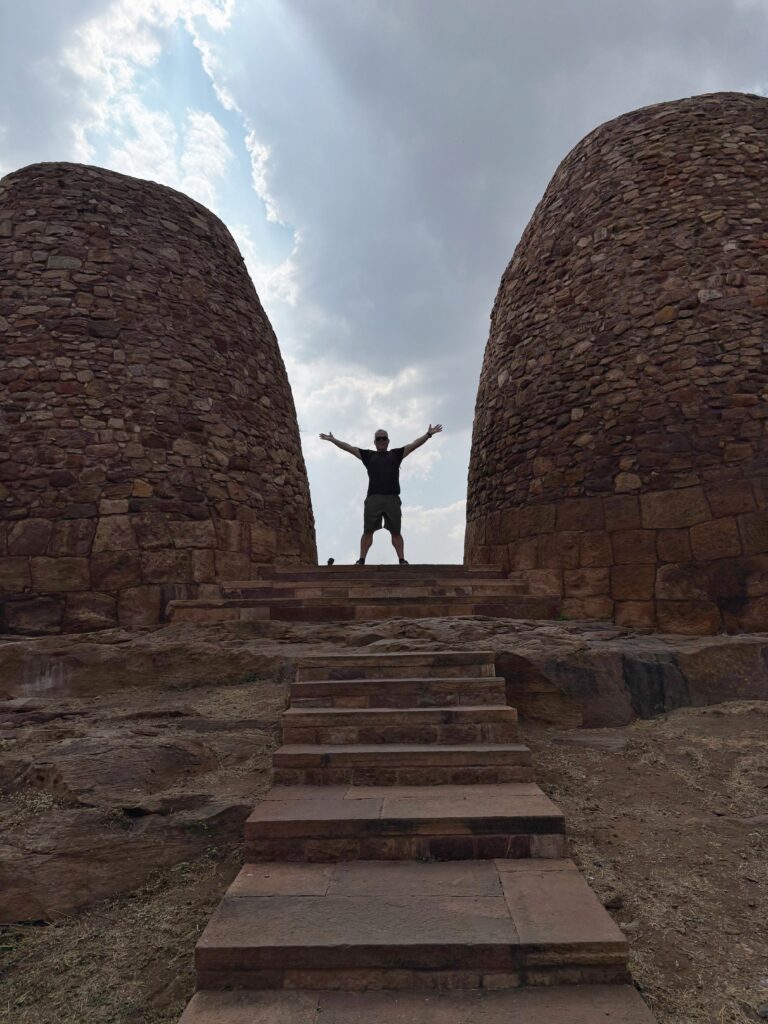
We then headed north along the lakeshore, navigating troops of marauding monkeys and wandering pigs, to reach the base of the opposing cliffs. Another stepped climb led us through narrow slot canyons to the hilltop Badami Fort. From the summit, we were rewarded with expansive views of the town and lake below. Cooling clifftop breezes offered relief from the heat as we explored the ruins, including large granaries, rock-cut reservoirs, and a massive underground chamber. Together with the fort’s double defensive walls, these features allowed it to withstand prolonged sieges. Built in the 6th century, the fort served as both a royal residence and a strategic citadel for the early Chalukyan dynasty.
The next day, we hired a car for the three-hour drive east to the modern village of Hampi. The surrounding region was once the heartland of another great southern Indian power: the Vijayanagara Empire. Its capital city, also named Vijayanagara, sprawled across both banks of the Tungabhadra River around present-day Hampi, benefiting from natural defences and a reliable water supply.
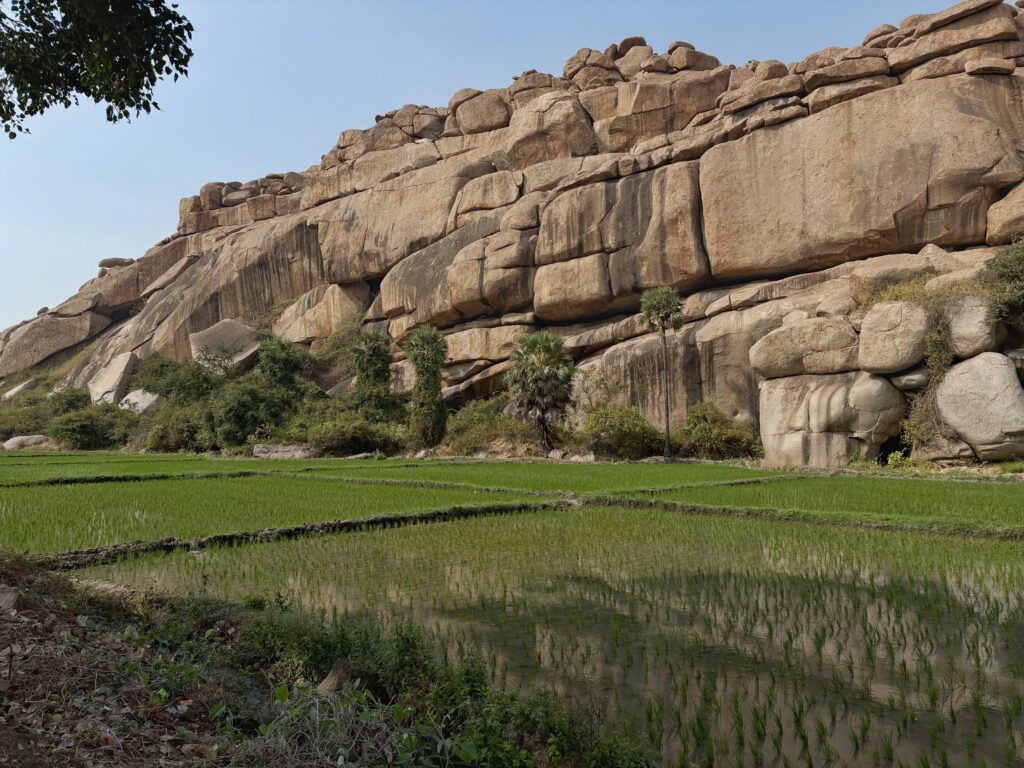
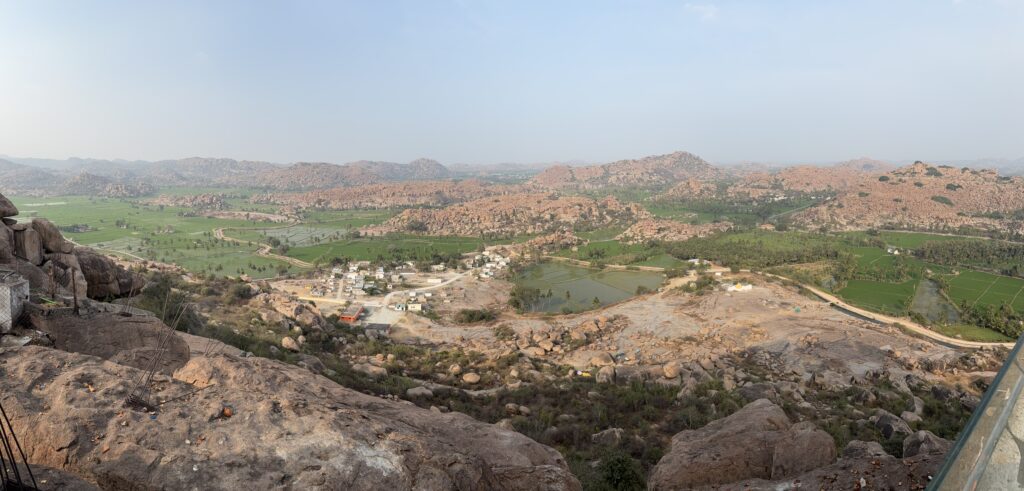
The landscape here feels almost otherworldly, dominated by vast, naturally stacked granite boulders sculpted over millennia into gravity-defying forms. The bedrock is among the oldest and most stable on Earth, dating back as far as 3.6 billion years. Between the rock-strewn hills lie flat, vividly green expanses of rice paddies, palm groves, and banana plantations.
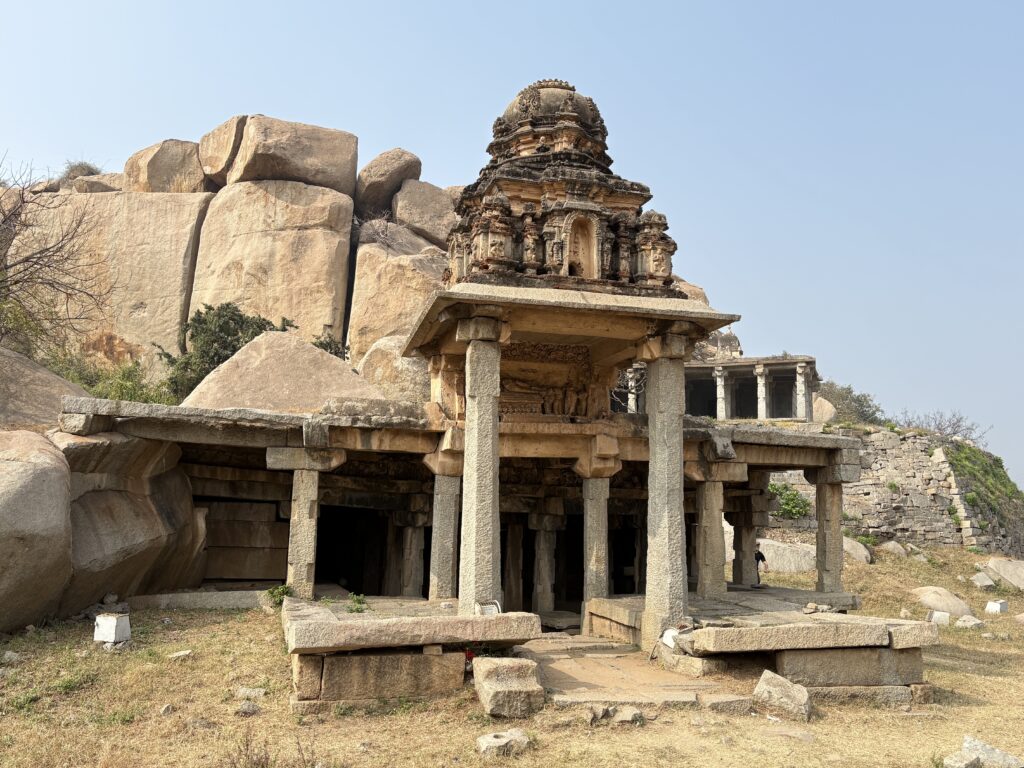
We spent our first day in Hampi exploring the north bank of the Tungabhadra River. Hiring an auto-rickshaw for the day allowed us to move easily between sites as we explored temples, caves, hilltop viewpoints, and other remnants of the Vijayanagara Empire. The empire flourished from 1336 to 1646 CE as a powerful South Indian Hindu kingdom and served as a bulwark against Islamic incursions from northern India.
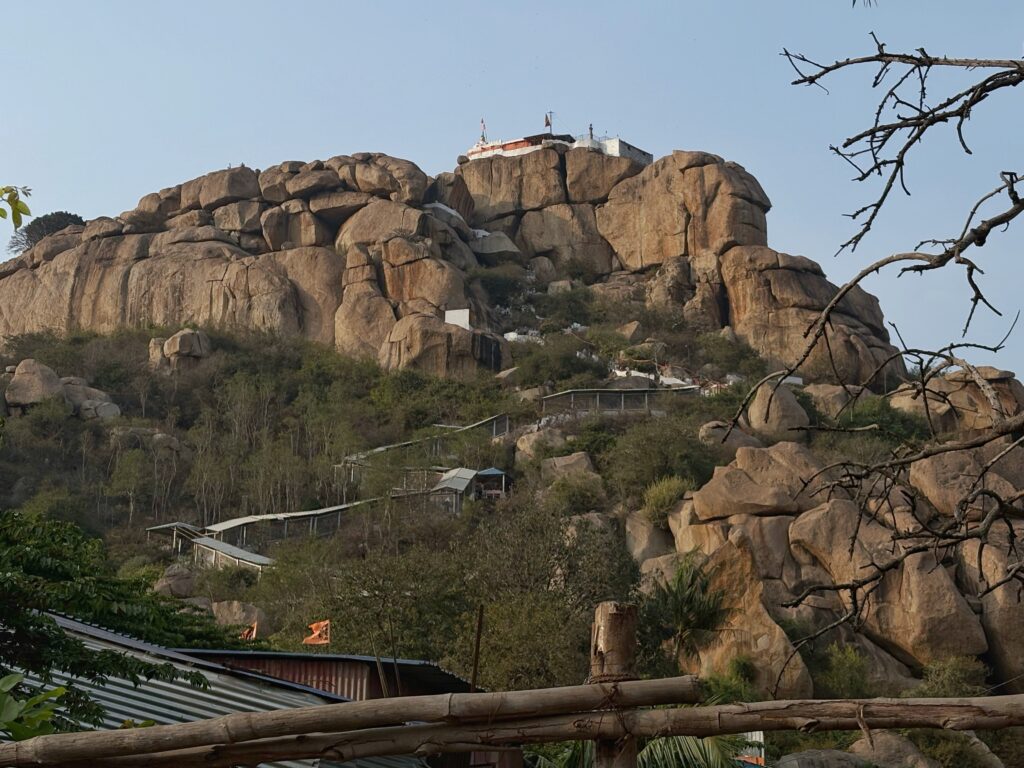
By late afternoon, we reached our most physically demanding site: the Anjanadri Hill Temple, also known as the Monkey Temple. It is believed to be the birthplace of Hanuman, the monkey-faced Hindu god symbolising devotion, strength, and celibacy. Hanuman is a central figure in the Indian epic Ramayana, which recounts the story of Rama’s quest to rescue his wife Sita after her abduction by the demon king Ravana from the kingdom of Lanka, traditionally identified with present-day Sri Lanka.
Hanuman possesses the power to change his size at will, fly across oceans, and carry entire mountains. In the Ramayana, he serves as scout, messenger, and lifesaver. We climbed the 575 steps to the hilltop temple in the peak of the afternoon heat and were rewarded with strong winds at the summit. Along the arduous ascent, we joined pilgrims calling out “Jai Shri Ram,” the chant echoing back and forth to bolster resolve. The phrase translates as “Victory to Lord Rama” or “Hail Lord Rama,” reflecting the deep connections between this region and the epic’s events.
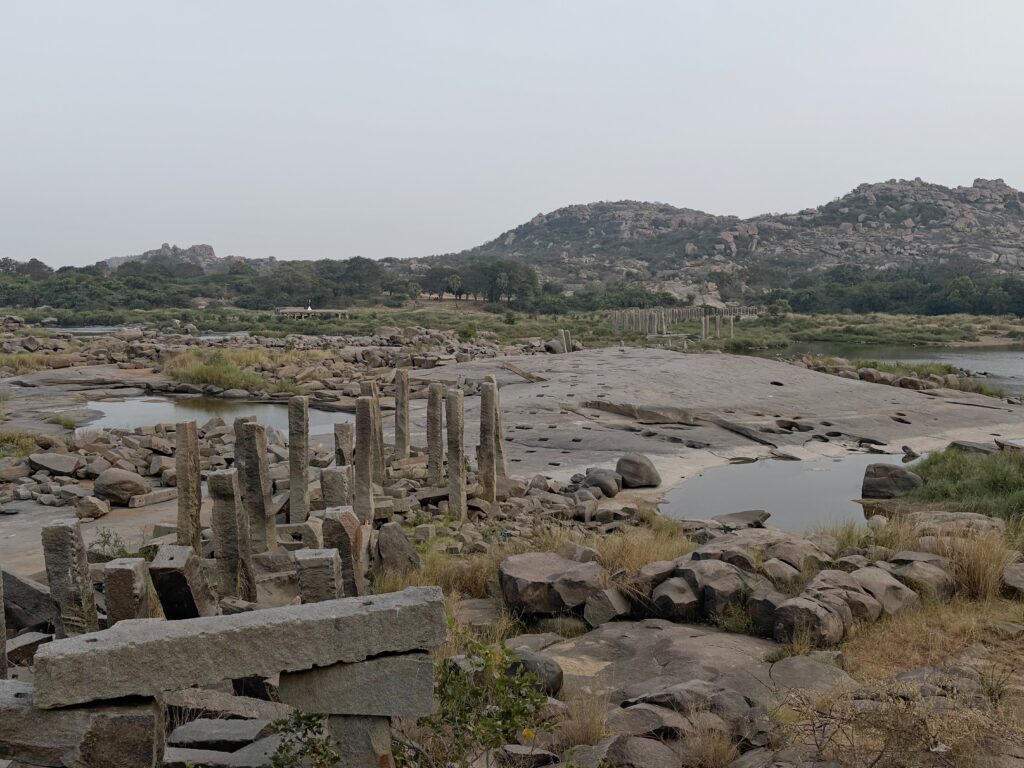
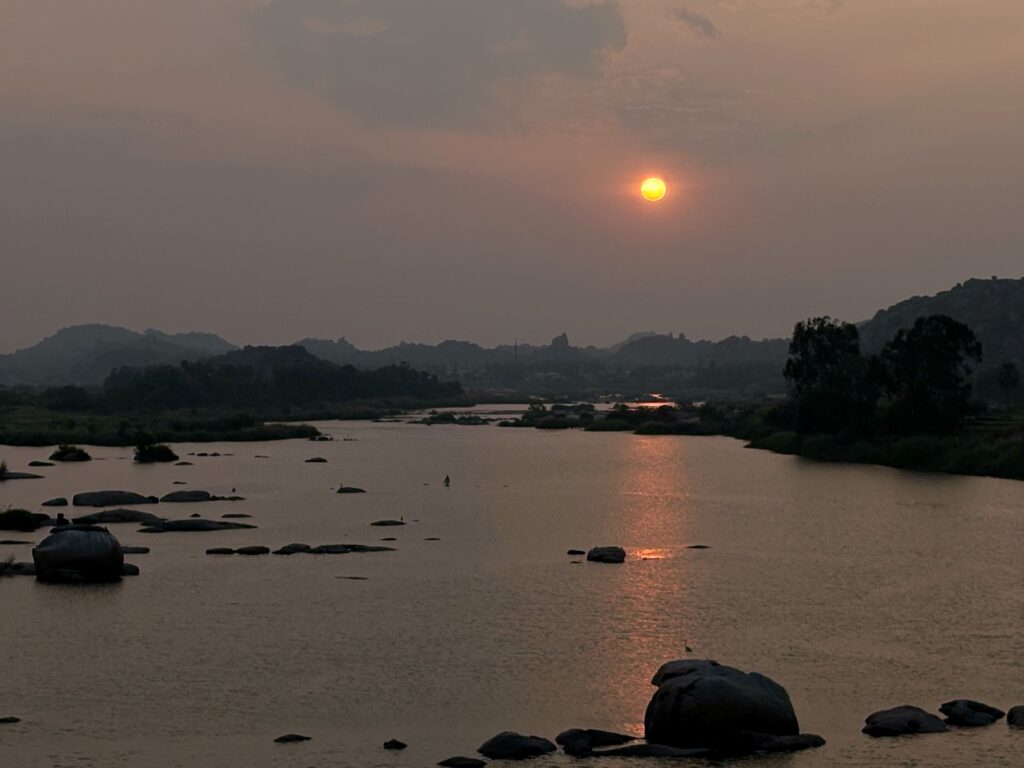
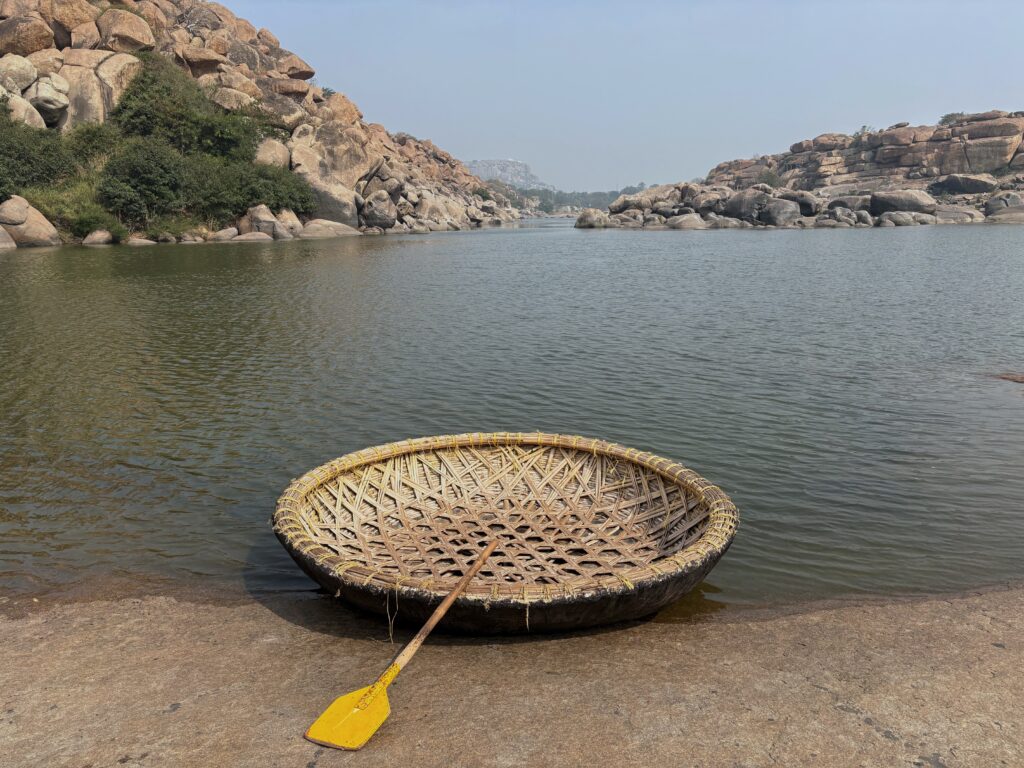
Later that afternoon, we lingered along the riverbank, washing our dusty feet—a necessity after going barefoot to enter most temple sites. As the sun sank, we sat with our feet dangling over a temple wall, gazing down at the Tungabhadra River and the fallen and still-standing columns of what must once have been a grand bridge leading to the royal quarters, temples, and markets of Vijayanagara.
At its height, the city was the second largest in the world, surpassed only by Beijing, with an estimated population of around 500,000. It was a thriving hub for traders from across Asia, the Middle East, and Europe. Portuguese visitors in the 16th century described Vijayanagara as a metropolis of extraordinary wealth, sophisticated infrastructure, and immense scale.
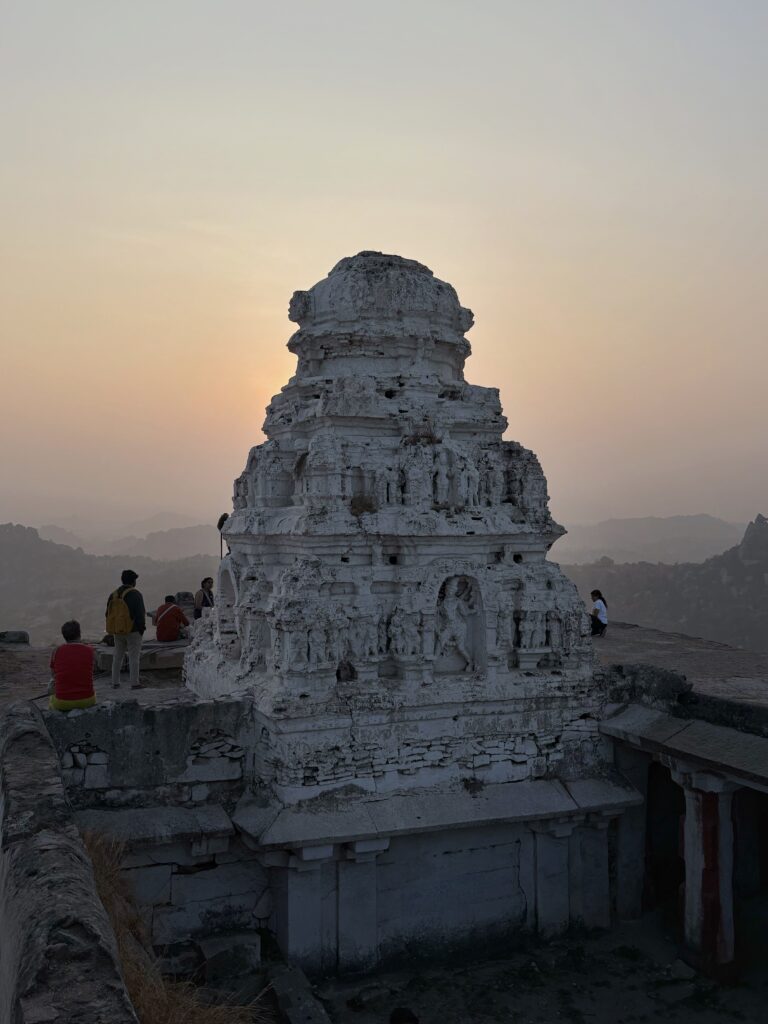
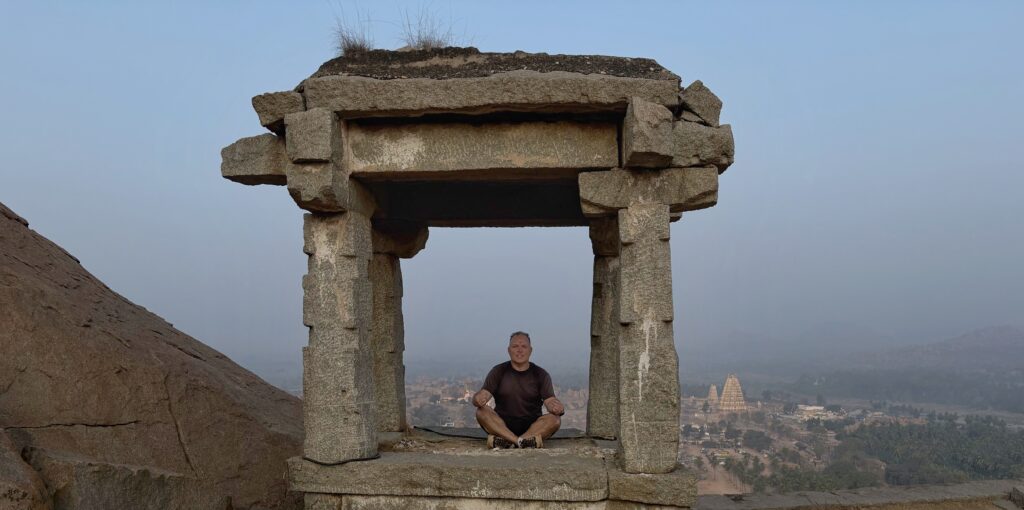
On our second and final day in Hampi, we rose early to climb Matanga Hill and reach the Veerabhadra Temple for sunrise. The cooler morning temperatures made the ascent of roughly 600 stone steps far more manageable than the previous day’s climb. The sunrise was sublime, as the fiery orange sun emerged through the morning haze and gradually illuminated the surrounding landscape.
We were awestruck by the sheer scale of the ruins stretching in all directions. While the climb itself was steep, the greatest challenge was fending off marauding rhesus macaques, which boldly mingled among visitors in search of unattended packs, open pockets, or any food they could snatch.
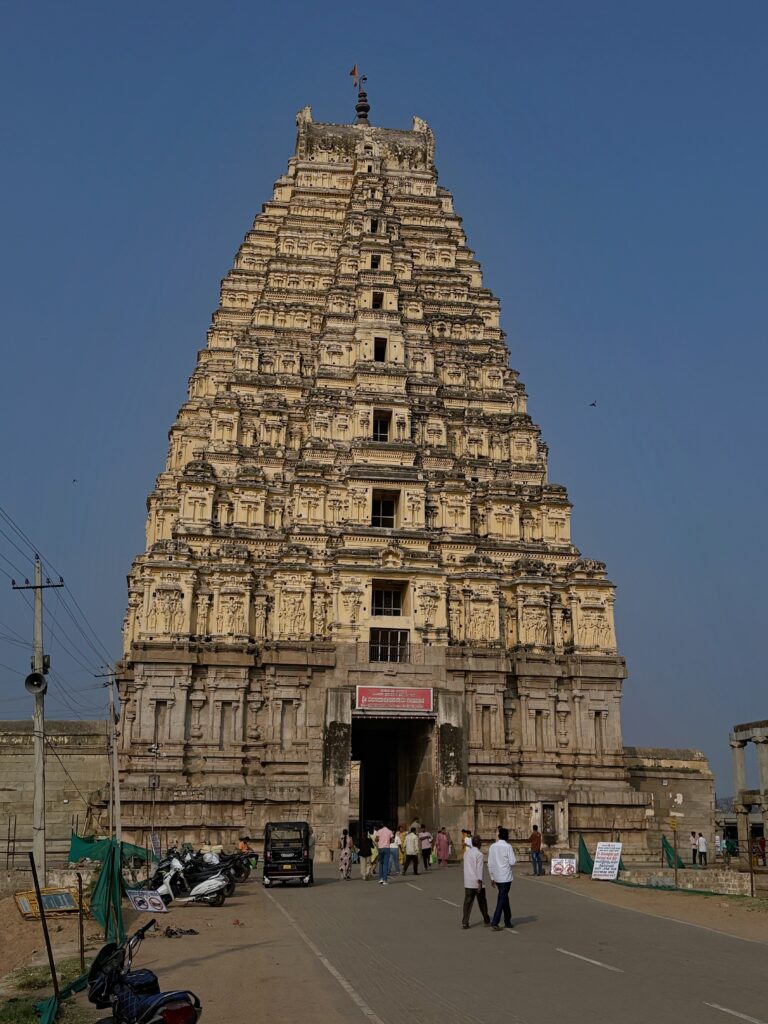
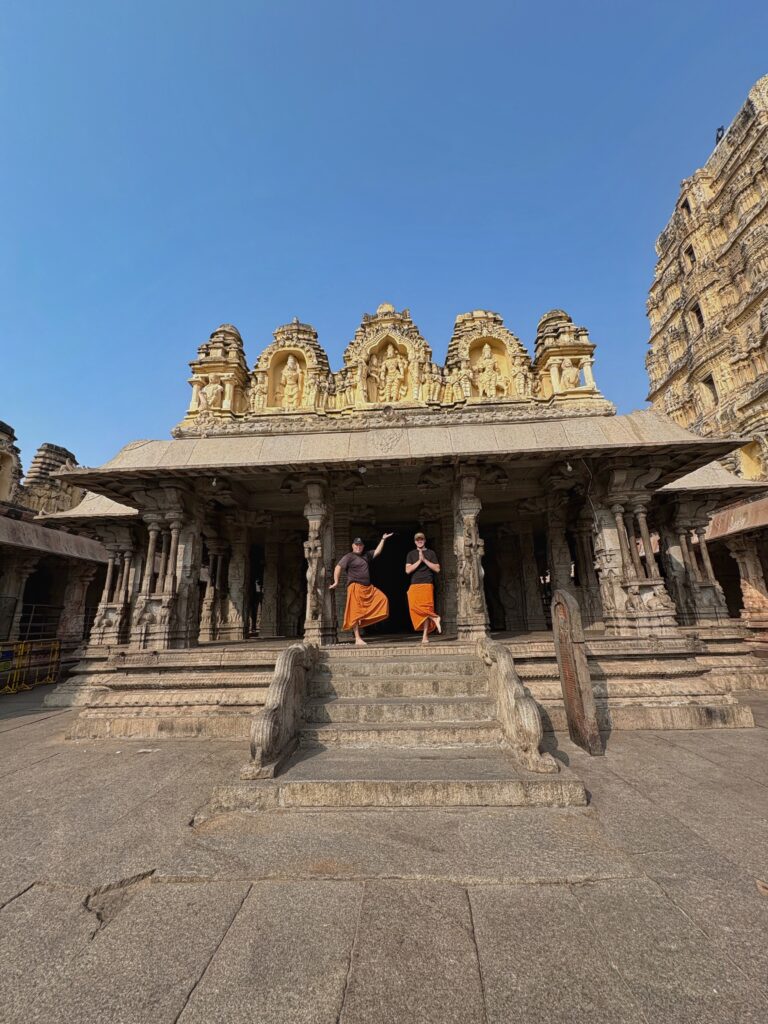
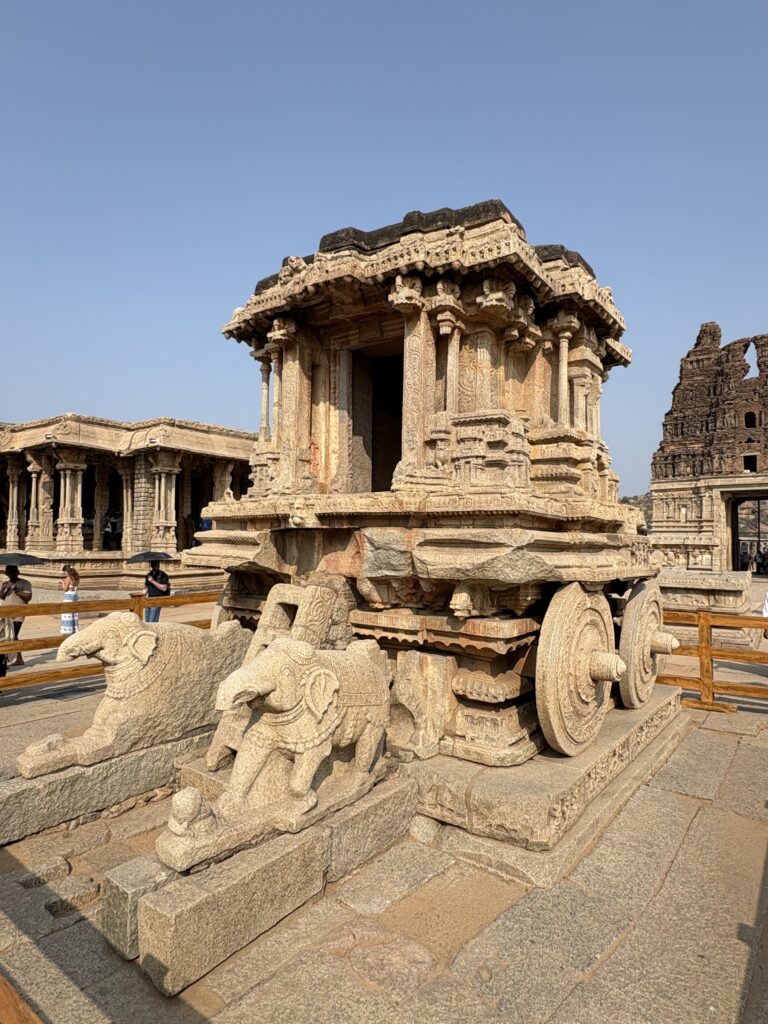
After a chai and a few bananas for breakfast, we continued exploring the south bank of the Tungabhadra. Our next stop was the Virupaksha Temple in the centre of Hampi, one of India’s oldest continuously functioning temples, with an uninterrupted history of worship dating back to the 7th century CE. As we were wearing shorts, we were required to rent lungis—orange-coloured cotton wraps—which our auto-rickshaw driver-guide helped us fasten correctly.
To enter the temple proper, we passed through the imposing eastern gopuram, rising approximately 50 metres high in multiple tiers. One of the temple’s highlights is an architectural marvel that uses a pinhole-camera effect to project an inverted image of the gopuram onto an interior wall.
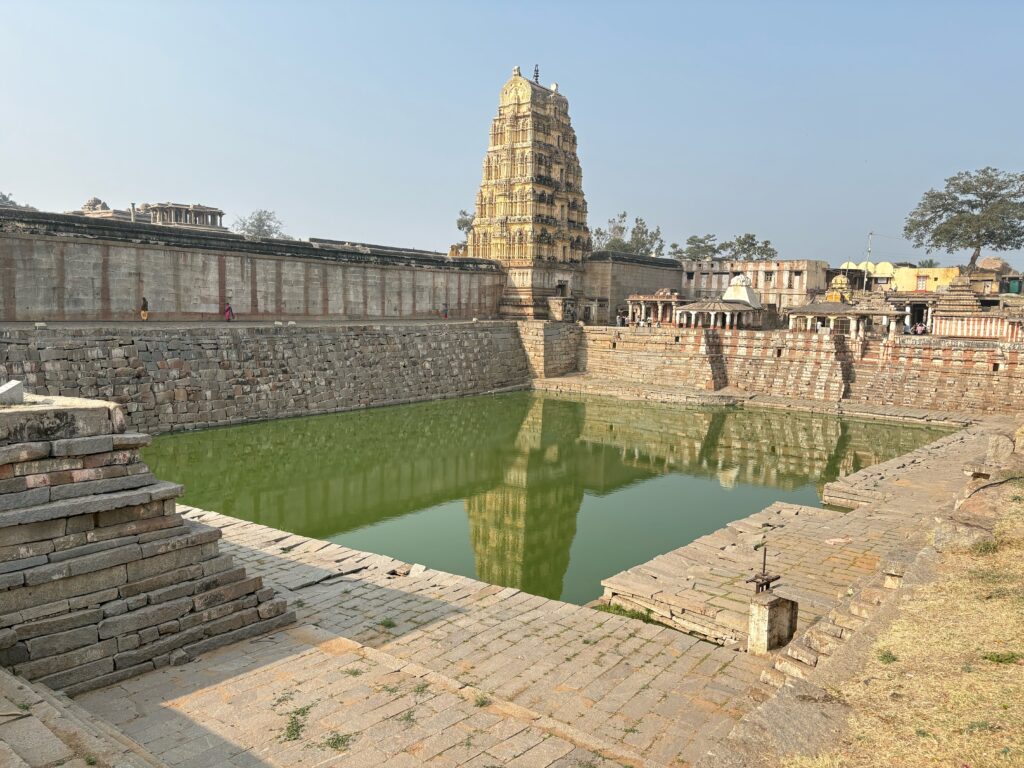
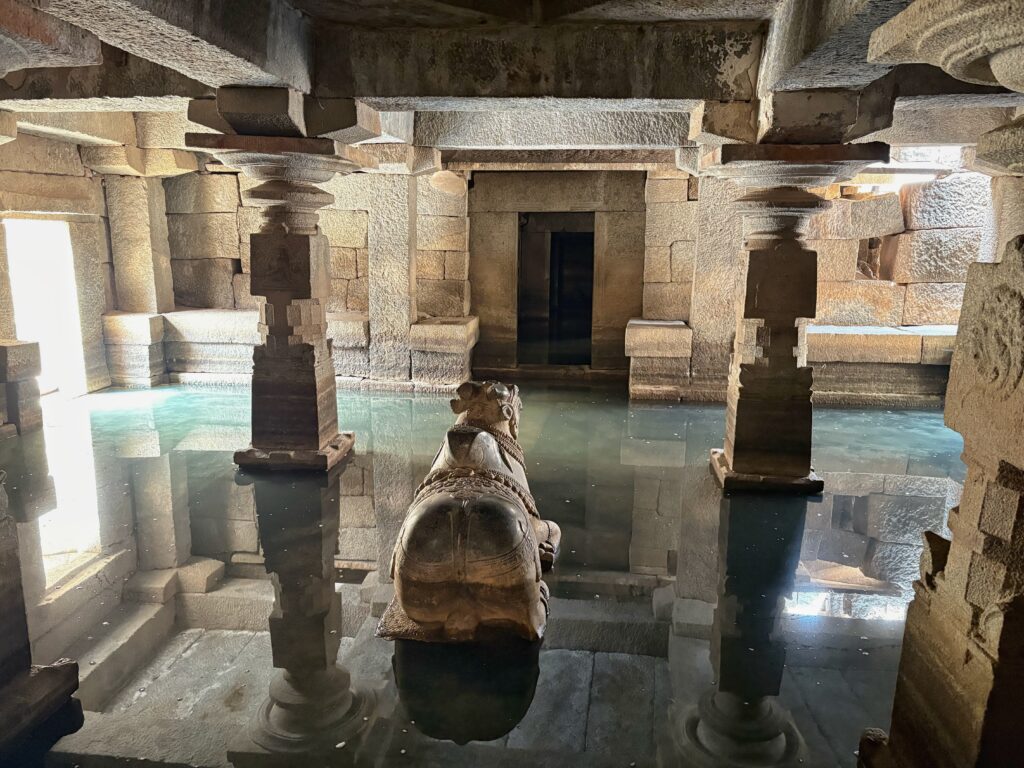
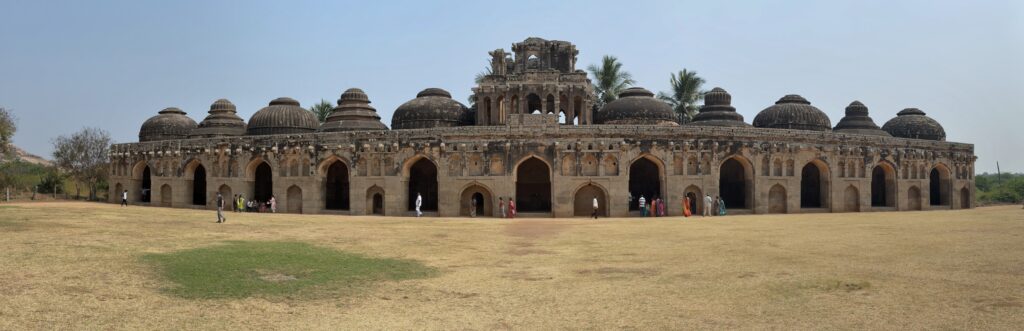
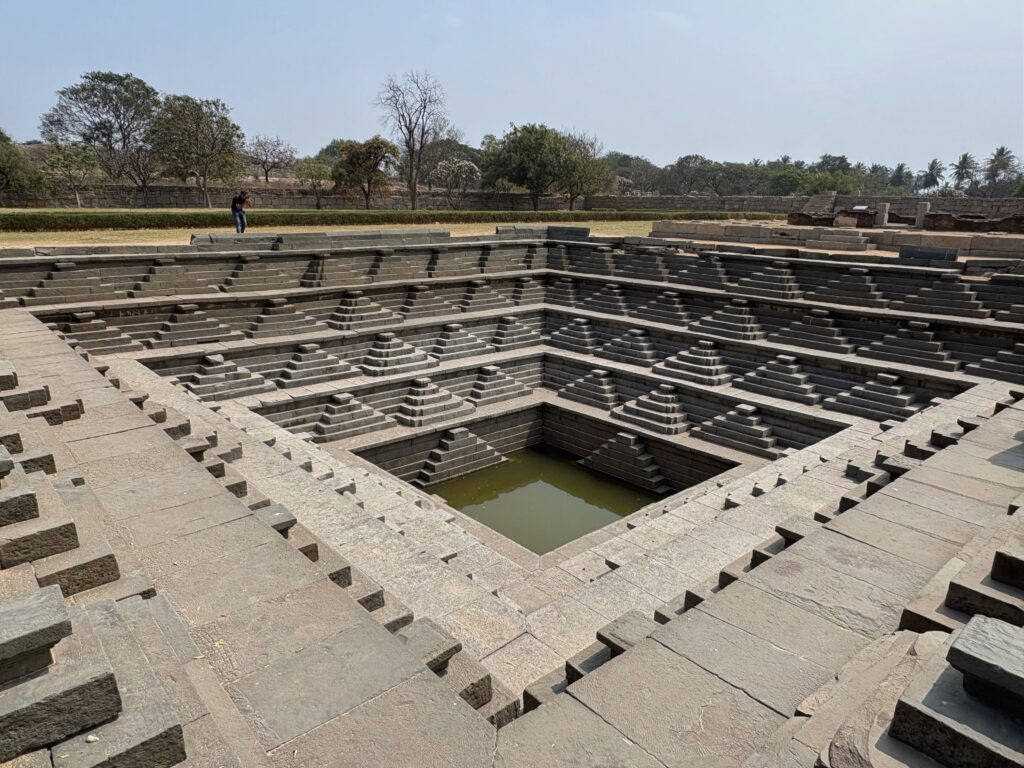
For the remainder of the day, we shuttled between various south-bank archaeological sites, continually struck by the immensity of the former city and imagining what it must have been like to witness it in its prime. Highlights included vast colonnaded markets—once filled with traders from distant lands—a unique sunken temple partially submerged in water, and the royal quarter, which housed the palaces of Vijayanagara’s kings, queens, and nobility. This area also contained an intriguing underground passage and chamber believed to have served as the royal treasury.
With our imaginations full of imagery from the Ramayana and the former majesty of the Vijayanagara Empire, we felt deeply satisfied with our Hampi experience. We returned to our peaceful rural accommodation at Shankar Homestay to collect our bags before boarding an overnight train, drawn onward by the beckoning beaches of Goa. Our hosts kindly allowed us to use our room—still vacant—for a final shower and some rest before heading to the station