Where Tigers Roam: A Safari Through the Wilds of Pench and Kanha
Fortuitously, our overnight bus from Aurangabad to Nagpur fell behind schedule, delivering us around 7 a.m. and granting an unexpected extra hour of rest. English functions as India’s common language, largely due to the impracticality of mastering the country’s hundreds of living languages. Hindi is an official language, but locals explained that the many regional dialects mean mutual comprehension is never guaranteed—even among Hindi speakers. English, while useful, is far from universal, and many who speak it do so only at a basic level. As a result, information is often gathered by committee and judged accordingly. In our case, a small council consisting of the conductor, his assistants, and a few passengers eventually agreed on where we should disembark, and we spilled out onto the streets of Nagpur.
After an all-night bus ride with no onboard washroom, our first priority was obvious. These situations always bring a degree of anxiety when travelling in India—especially if the last restaurant was questionable or your stomach begins to rumble as you board. A small supply of Imodium is essential to avoid worst-case scenarios, and one of the reasons I generally prefer trains to buses. Fortunately, we were quickly directed to a gas station with usable washrooms.
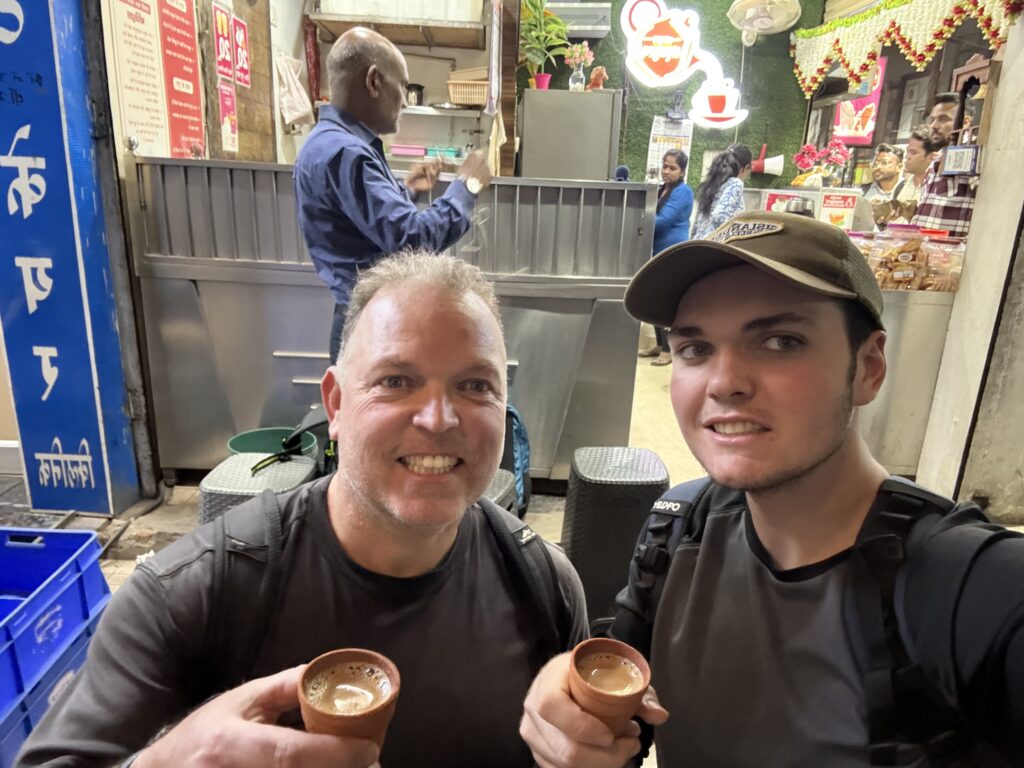
Next came the hunt for an ATM that would accept one of the handful of debit cards we carried. Luck struck again: a State Bank of India branch stood just across the street, and both of our cards allowed the maximum withdrawal of 10,000 rupees ($152 CAD) each. Just outside, a chai walla—a small roadside stall—took care of our next concern with a steaming, energizing cup of chai. This was something I had been especially looking forward to upon returning to India. No version I’ve tried at home compares. Boiled for safety and infused with ginger, cardamom, sugar, and milk, it cost roughly fifteen cents and tasted infinitely better.
Our final task in Nagpur was arranging transport to Pench National Park, roughly 80 kilometres—or two to three hours—away on Indian roads. Uber technically services the route, but that doesn’t guarantee a willing driver, especially if there’s little chance of securing a return fare. Lakshmi, the Hindu goddess of fortune, smiled on us: a driver accepted almost immediately, and we were soon on our way.
We arrived at Mowgli’s Den Resort near Pench’s Turia Gate, hoping our reservation still existed. The manager informed us it had been cancelled because we hadn’t prepaid, despite Booking.com advising us that prepayment was unnecessary and that the request could be a scam. After allowing him a brief rant about us—and Booking.com—I simply asked whether he wanted to rent us a room. He did. In fact, without Booking.com’s commission, we ended up with a better rate and a better room. Whatever frustrations marked our arrival vanished, and all subsequent interactions were cordial.
We had booked three safaris in Pench, hoping to encounter Bengal tigers, leopards, and a wide range of other wildlife. Two safaris operate daily: one beginning shortly after sunrise and ending around 11:30 a.m., and another running from 3:00 p.m. to sunset.
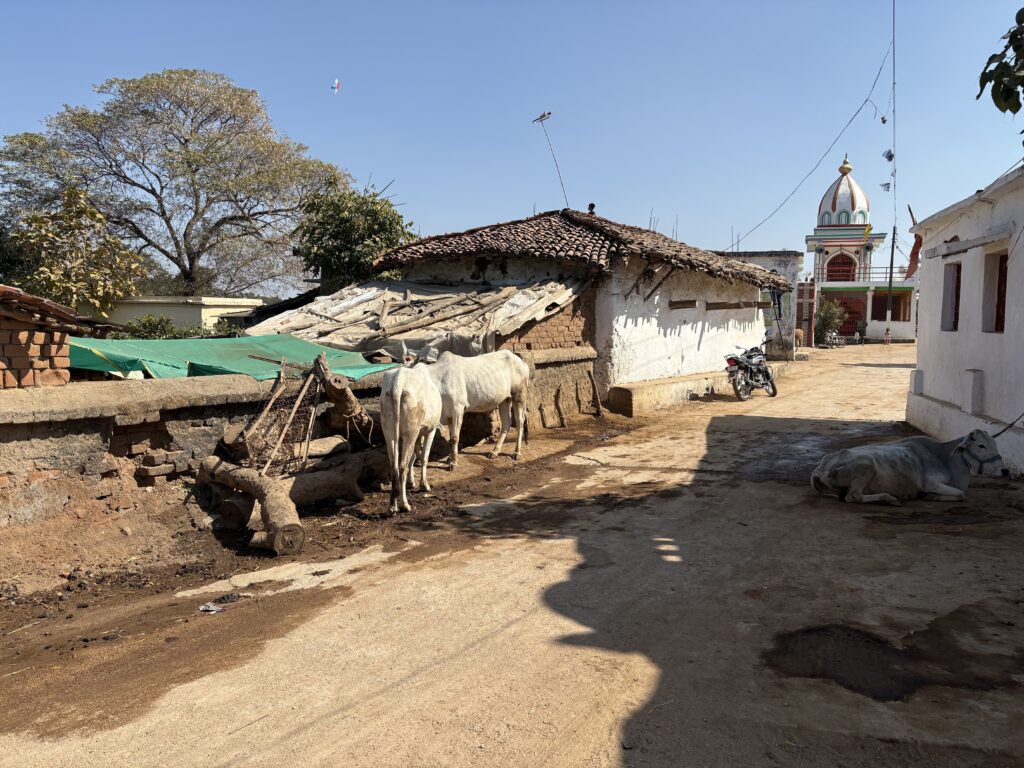
With time to spare before our afternoon safari, we walked about a kilometre into the nearby village. Life here was simple: hand pumps for water, small brick homes, cows and goats wandering freely, and shade structures built from forest wood and leaves. Among the few shops selling basic goods sat a souvenir stall—and, unexpectedly, a wine store.
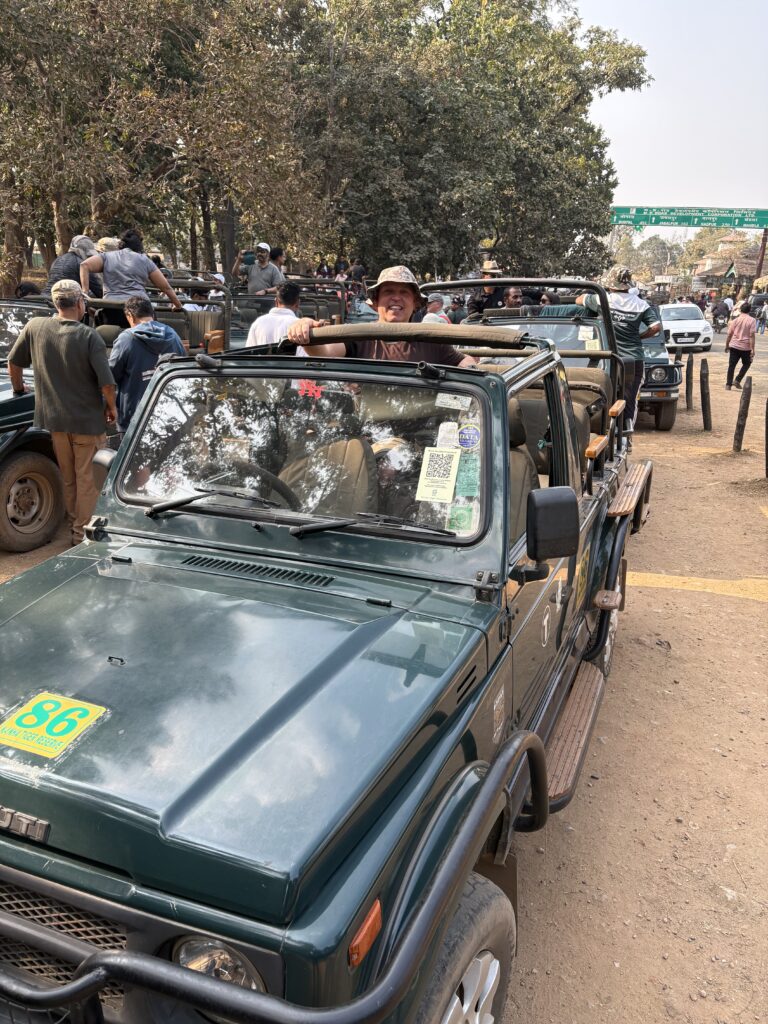
We assembled at the park gates in our assigned gypsy, one of dozens lined up with drivers and guides. On trips like this, I avoid travelling with bulky DSLR equipment, relying instead on the impressive capabilities of an iPhone. It was therefore disappointing to learn that a recent Supreme Court ruling banned mobile phones in India’s national parks. Local entrepreneurs had already adapted, offering camera rentals. After a brief discussion, we somewhat begrudgingly paid the $15 fee, armed ourselves with a 55–200 mm lens, and set out to find a tiger.
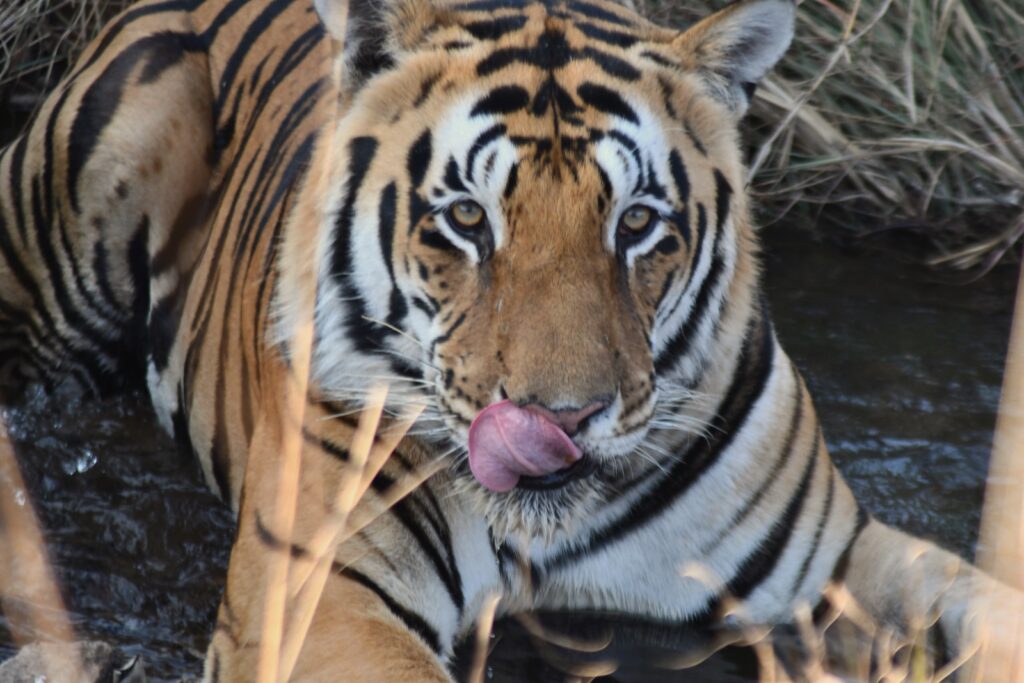
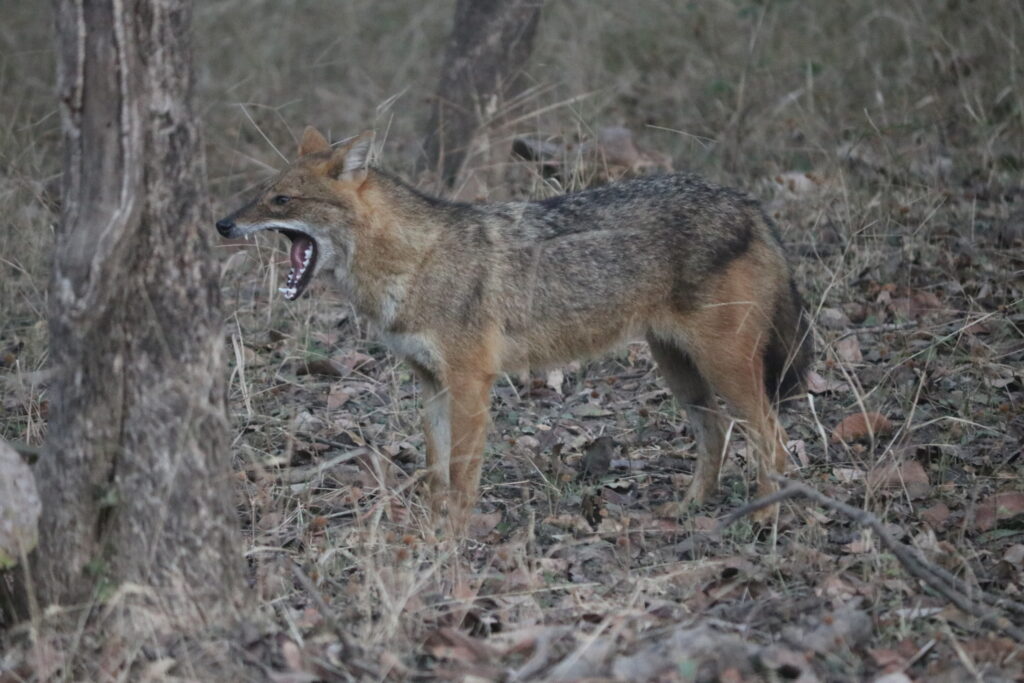
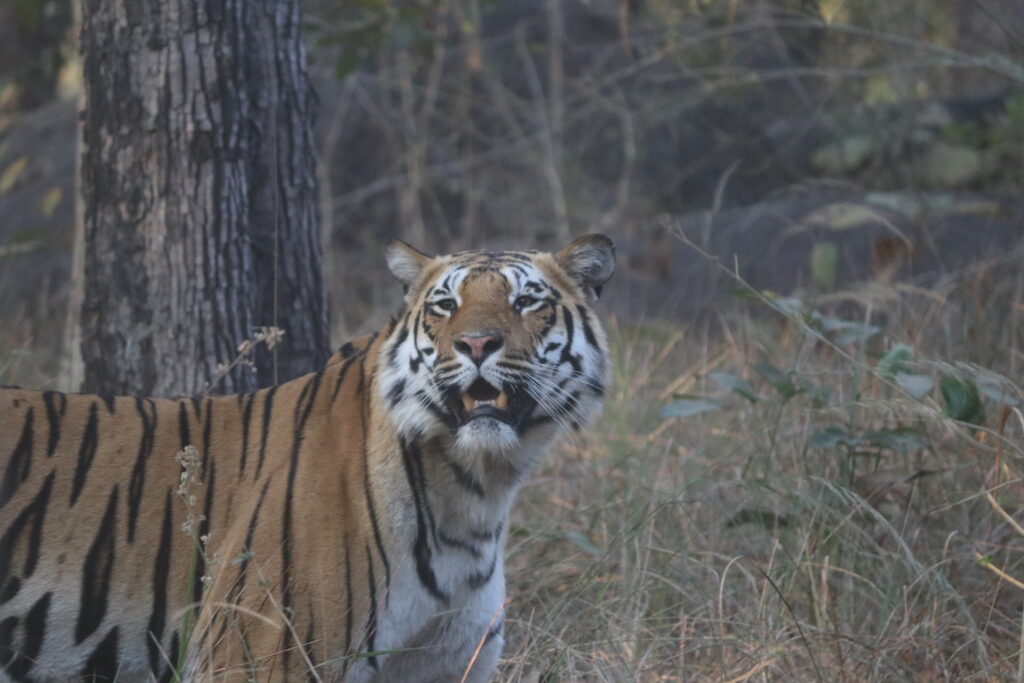
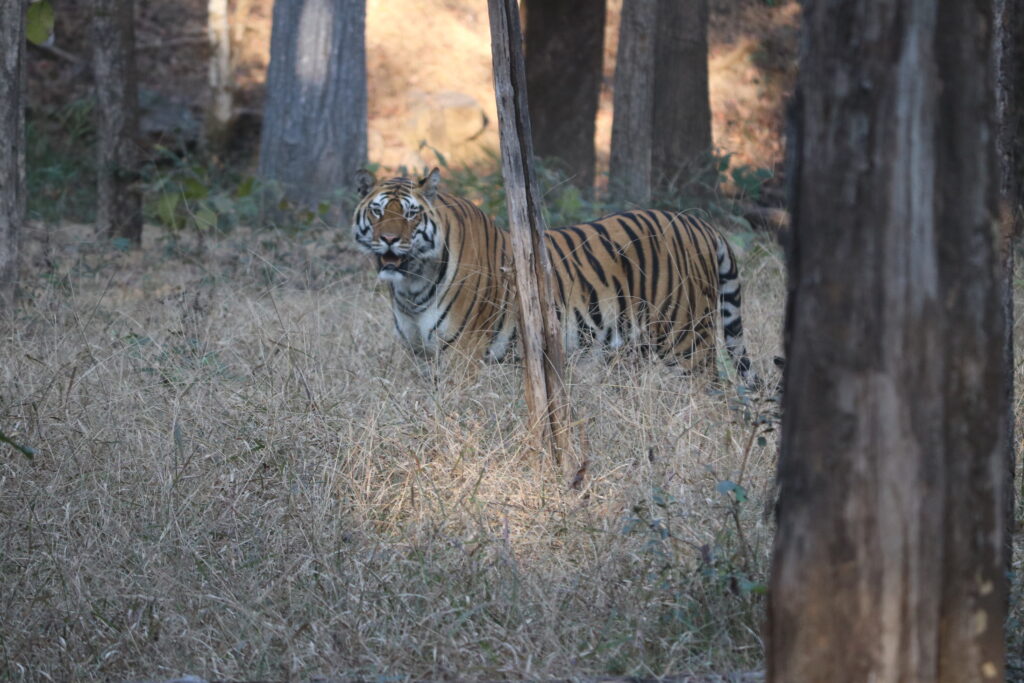
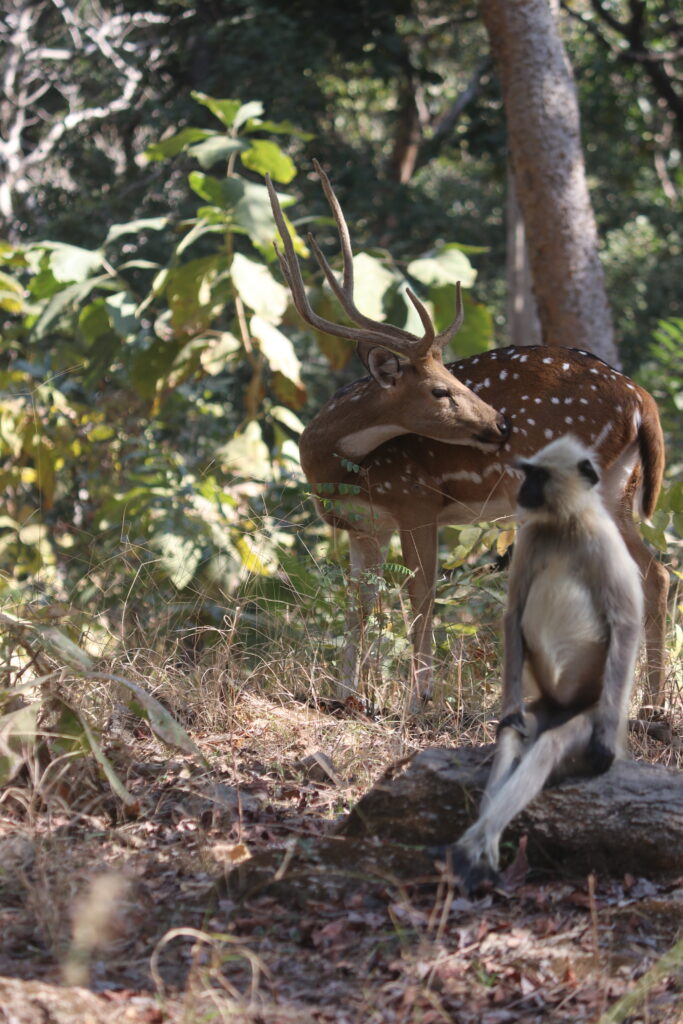
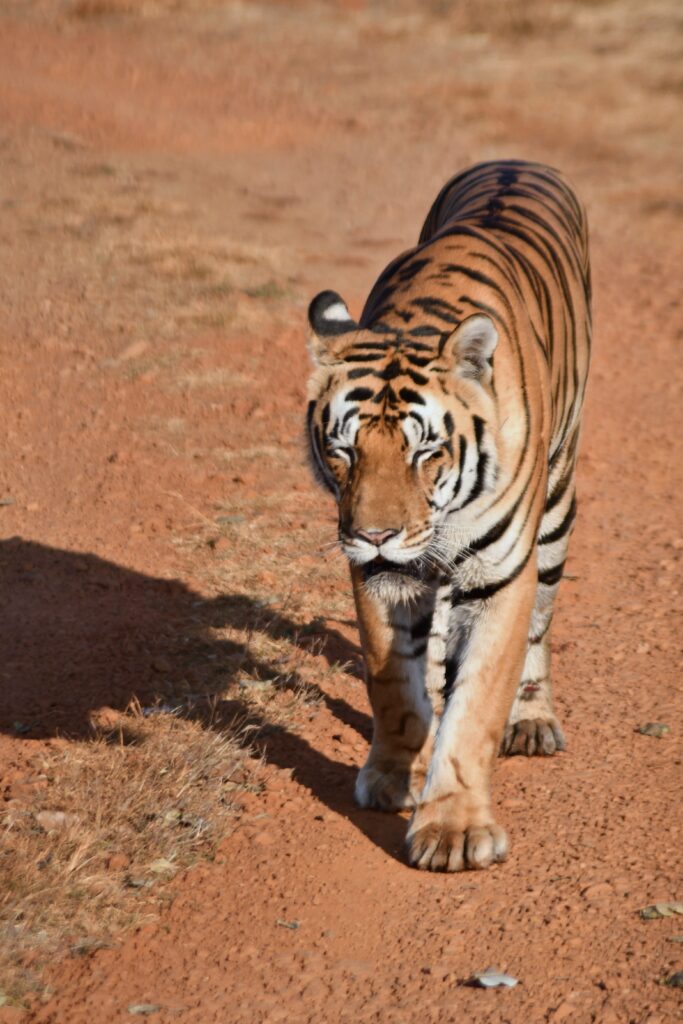
The safari delivered immediately. Golden jackals appeared near the entrance, followed by herds of chital deer and the welcome calm of green forest—an antidote to India’s constant noise. Eventually, we spotted our first Bengal tiger at a distance. India holds roughly 75 percent of the world’s remaining wild tiger population and remains the species’ last true stronghold. Fewer than 5,000 tigers remain nationwide, but their numbers are increasing thanks to effective conservation efforts. As tigers expand into buffer zones, the government continues to add protected land and relocate affected villages.
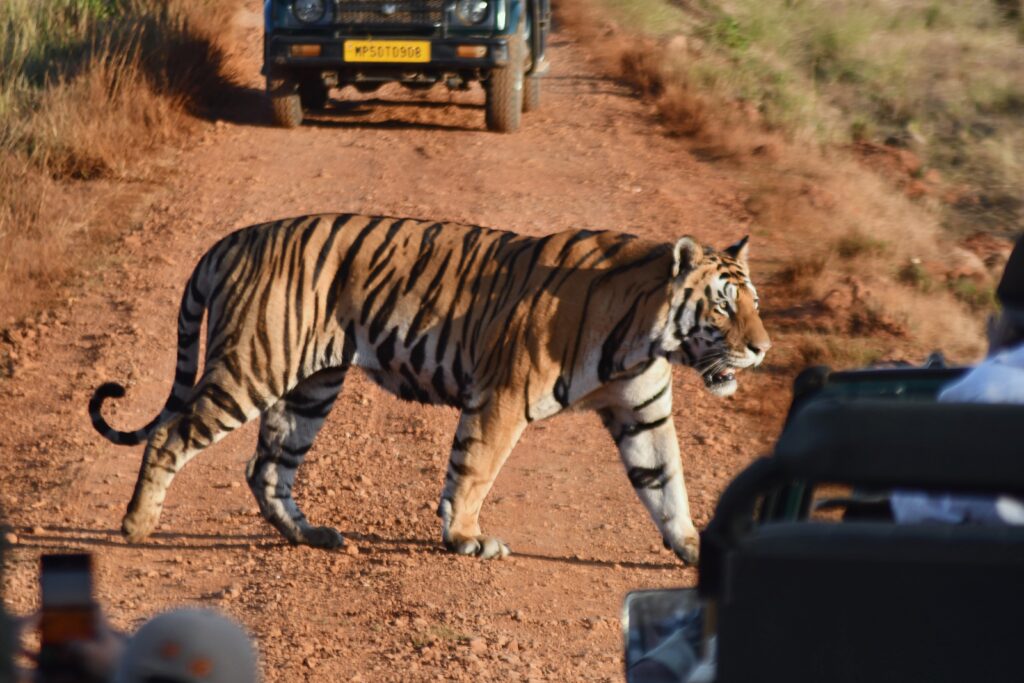
Our second morning safari brought us much closer to a tiger, watching him cross the track directly in front of our jeep before vanishing into dense vegetation. Despite rapid repositioning through the maze of forest tracks, we lost him. Tigers that make it past their two year milestone are formally given names, and this tiger was known as “X” due to his stripe pattern.
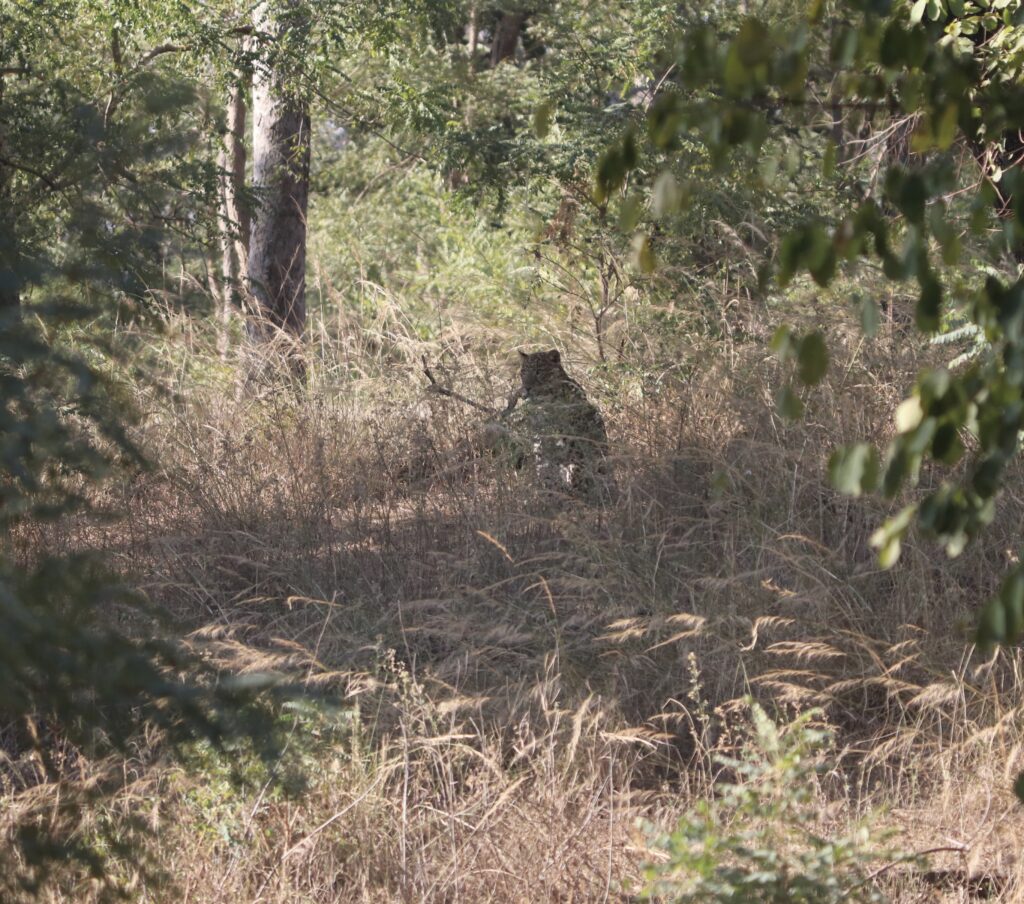
Later, we encountered a leopard lying nearly invisible in the grass just off the track. After several minutes, he rose, stalked silently, and then exploded into motion after a chital deer. Though the final moment was hidden from view, the deer’s cry confirmed the outcome. As our adrenaline ebbed, we continued on, spotting crested serpent eagles, white-bellied sea eagles, and other wildlife before joining the usual late-morning gathering of jeeps at the park canteen for chai, Maggi noodles, pakoras, and assorted fried snacks.
That afternoon, we explored another zone. Only a limited number of gypsies are permitted per zone, and just 20 percent of the park is accessible to visitors—the remaining 80 percent reserved entirely for wildlife.
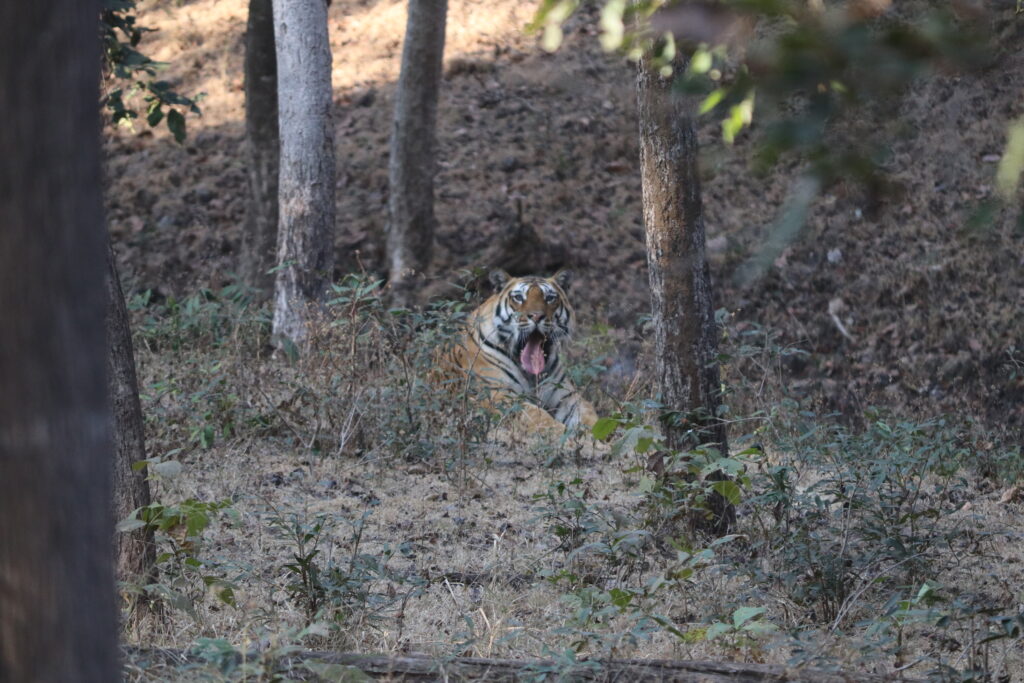
An hour and a half in, I spotted a crouching tiger roughly 150 feet away. Swastik Junior rose, yawned, and then crossed the road in front of us before disappearing into the hillside. The encounter earned celebratory high-fives—and more than a little praise for spotting him as we nearly passed him by. On our return, we were treated to a final brief sighting of a tigress named Baghinnala
With four tiger sightings and a leopard under our belts, Pench delivered beyond expectations.
The following morning, we travelled 185 kilometres north to Kanha National Park, arriving at Tiger King Resort without issue despite earlier booking uncertainties. Over three days, we had arranged four safaris and looked forward to exploring a new landscape and expanding our list of species.
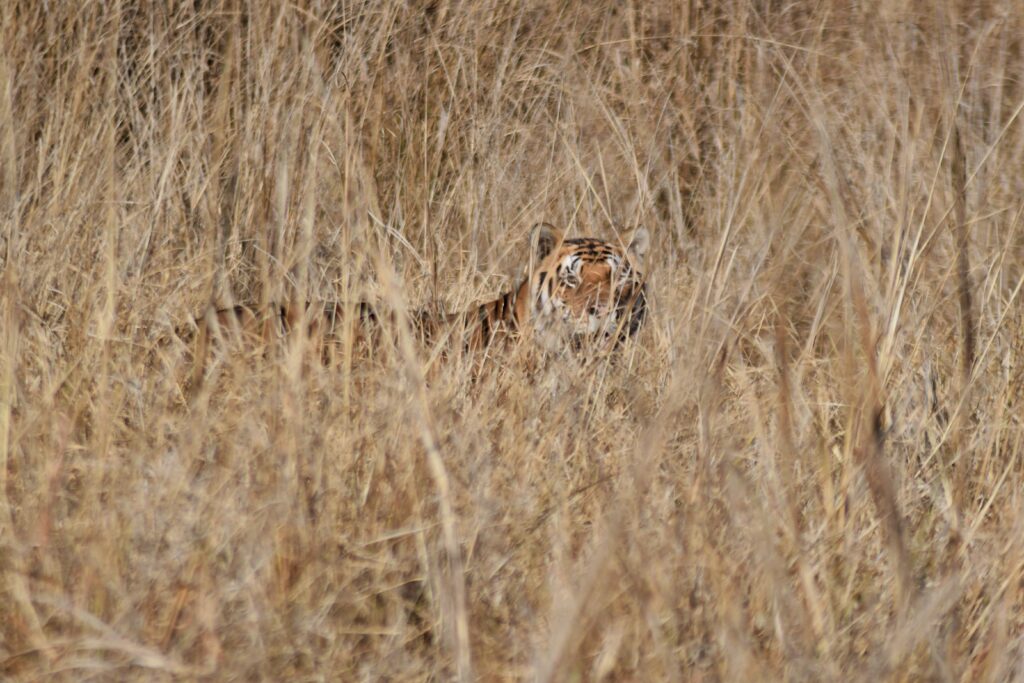
Our first Kanha safari took place in the Sarhi zone, a mosaic of forest and open grassland. These grasslands are prime hunting territory, allowing tigers to stalk prey—deer, antelope, and wild boar—under cover of tall grass. About an hour and a half in, our guide paused as alarm calls rang out from chital and swamp deer. Using alarm calls is the primary method of locating tigers in India’s reserves, as each prey species produces a distinct warning sound. Chital deer and grey langur monkeys often cooperate, alerting one another to danger. Langurs further aid deer by dropping fresh leaves from the canopy, which the deer feed upon below.
Soon after, a large male tiger named Junior Bajrang emerged from the grass. As he moved in and out of view, he suddenly launched into powerful leaps, attempting to snatch one of the scattered deer. The hunt failed, and overheated from the effort, he approached within ten feet of our jeep, lying down in a shallow creek to cool and drink. After several minutes, he rose and ambled slowly along the road toward us. While tigers typically ignore vehicles, allowing such a powerful animal to approach an open jeep is unwise. Over the course of 45 minutes, we repositioned repeatedly, tracking his movement across grassland and forest. It was the most intimate tiger encounter we had experienced.
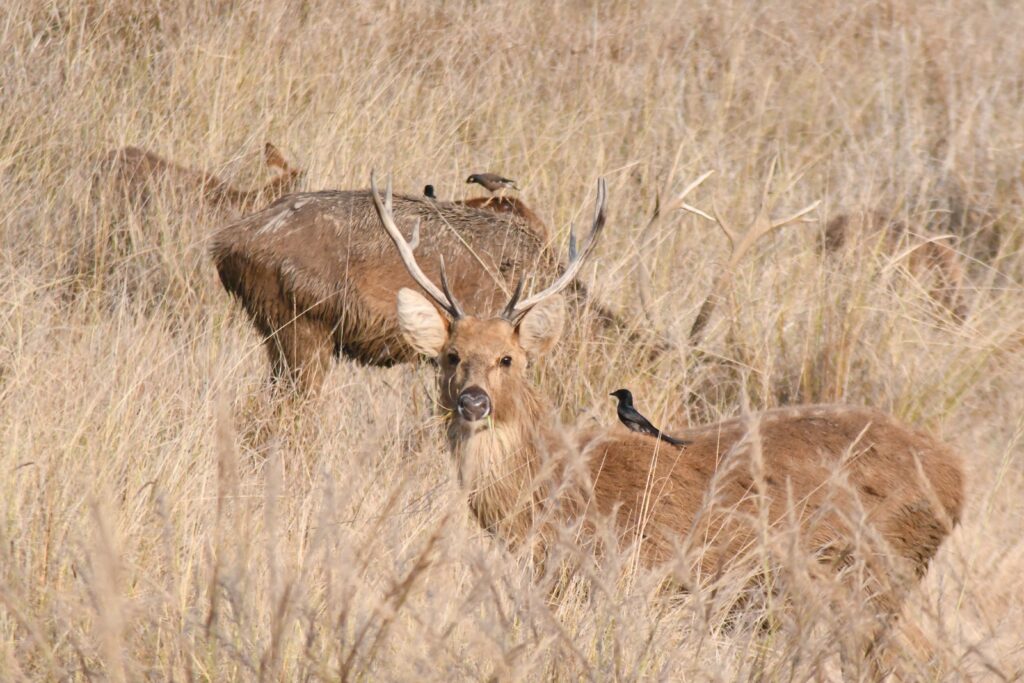
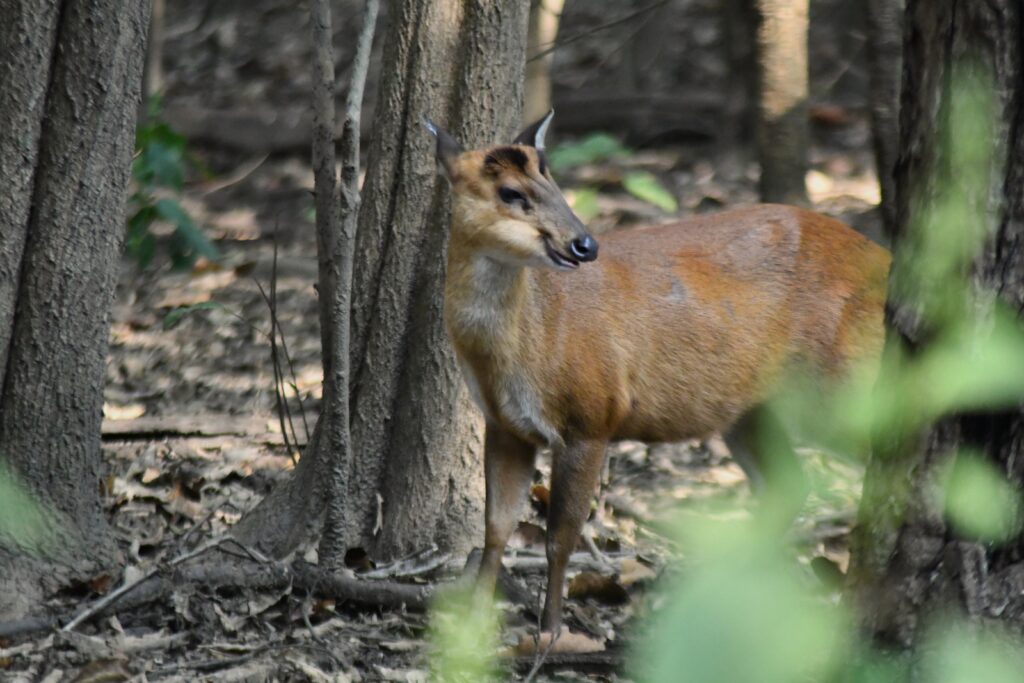
Over the next day and a half, we explored Kanha’s remaining zones, encountering diverse habitats and wildlife. I added two new deer species to my list: the diminutive barking deer and the swamp deer, or barasingha. The barasingha are endemic to Kanha and once teetered on the brink of extinction, with just 66 individuals remaining in the 1970s. A successful breeding program has since raised their numbers to around 5,000, with reintroductions now underway elsewhere in India.
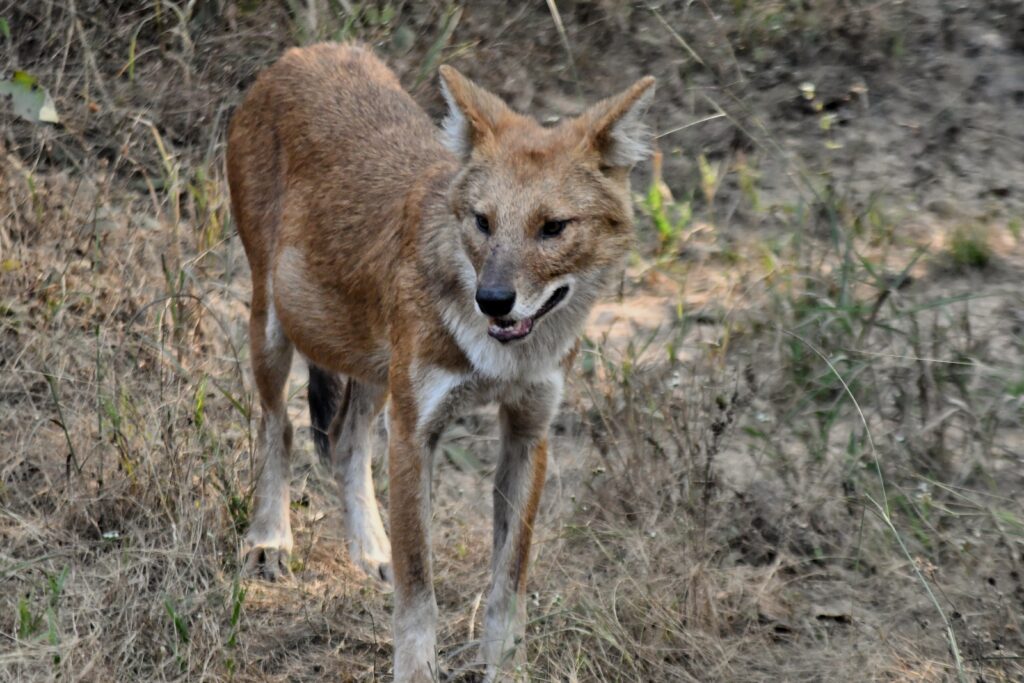
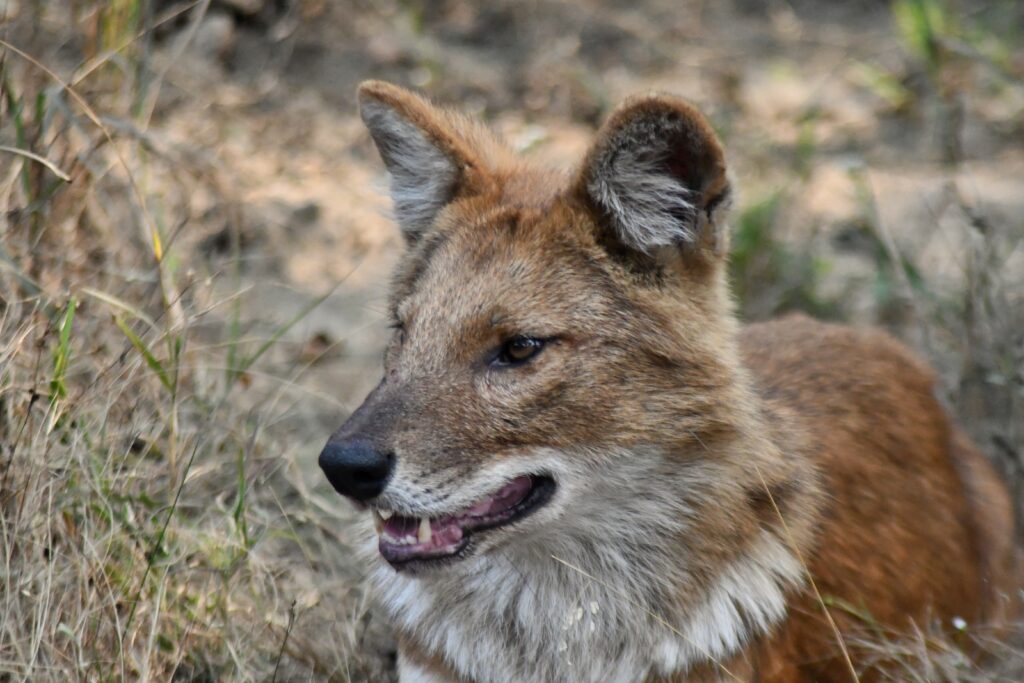
Another highlight was a rare close encounter with Indian wild dogs, or dholes. Found across South and Southeast Asia, they are notoriously elusive, with an estimated global wild population of just 2,500.
Exuberant from our safari successes but sore from countless hours jostling over dirt tracks, it was time to move on. We left Kanha behind and set out on a five-hour drive to Raipur—our gateway to the next chapter of the journey: a four-day jungle trek in the forests of Chhattisgarh.